Cumbres & Toltec Scenic Railroad
New Mexico. LATE MAY THROUGH LATE OCTOBER.
Details
- Where
- NM. No street address stated. Directions
- When
- daily trains out of Antonito and Chama.
- Getting there
- Our Chama, NM depot is on US Highway 64/84, 47 miles east of Pagosa Springs, Colorado, 95 miles west of Taos, and 108 miles north of Santa Fe. The station is in the center of town along NM Highway 17.
- Fees
- Each ticket is subject to a 7% non-refundable Historical Preservation Fee.
- Hours
- The Antonito depot is open from 7:30 a.m. to 6:00 p.m. during the regular season. The Chama depot is open from 7:30 a.m. to 7:00 p.m. during the regular season.
- Access
- Allow plenty of time to arrive at your originating station by 20-30 minutes before the boarding time shown on your ticket. Our trains and motor coaches leave promptly.
- Walk-in or reserve
- Yes. However, the trains often sell out, so we recommend advance purchase.
- Website
- cumbrestoltec.com
- Managed by
- Cumbres & Toltec Scenic Railroad Commission.
- Established
- 1880.
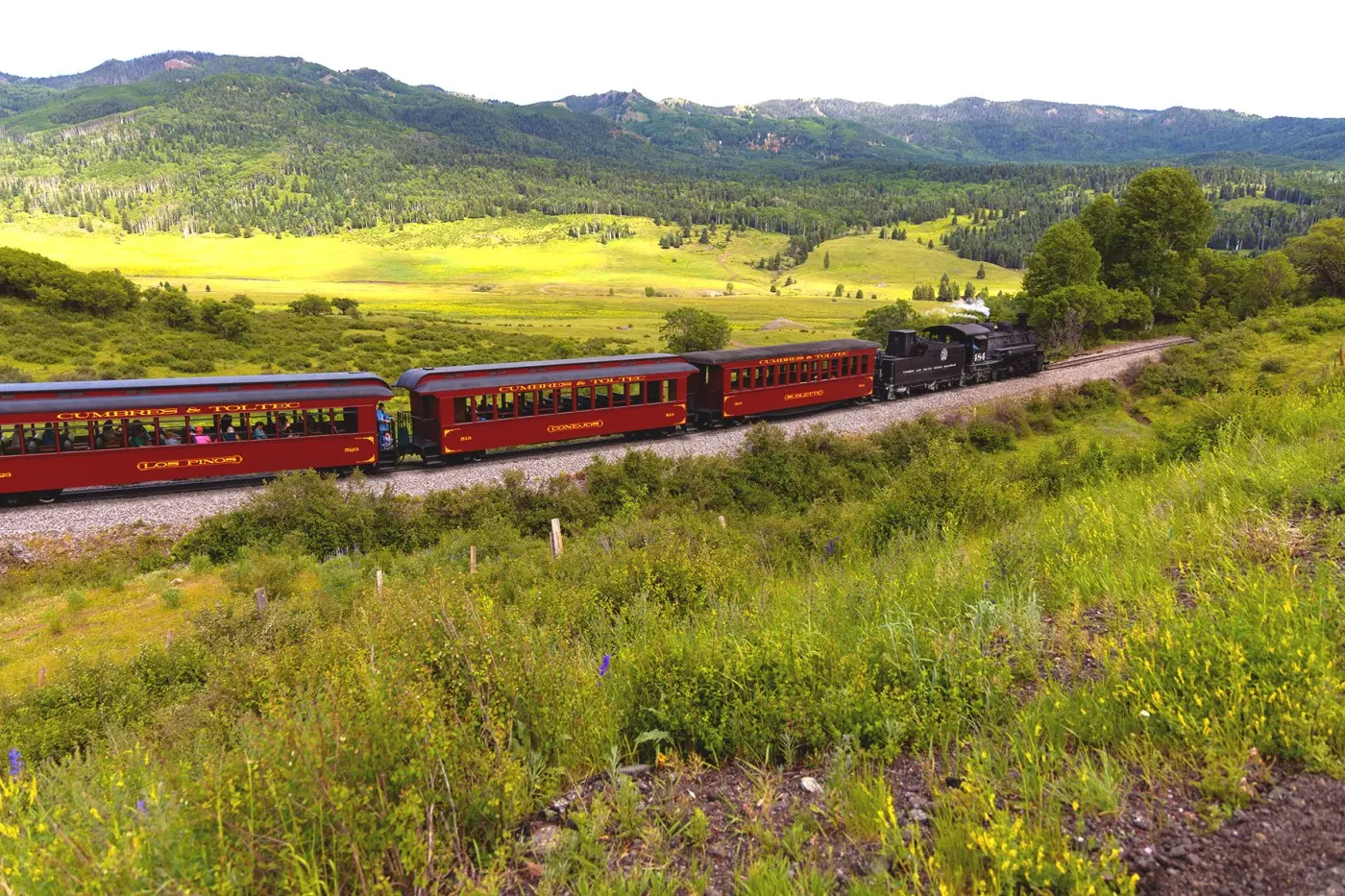
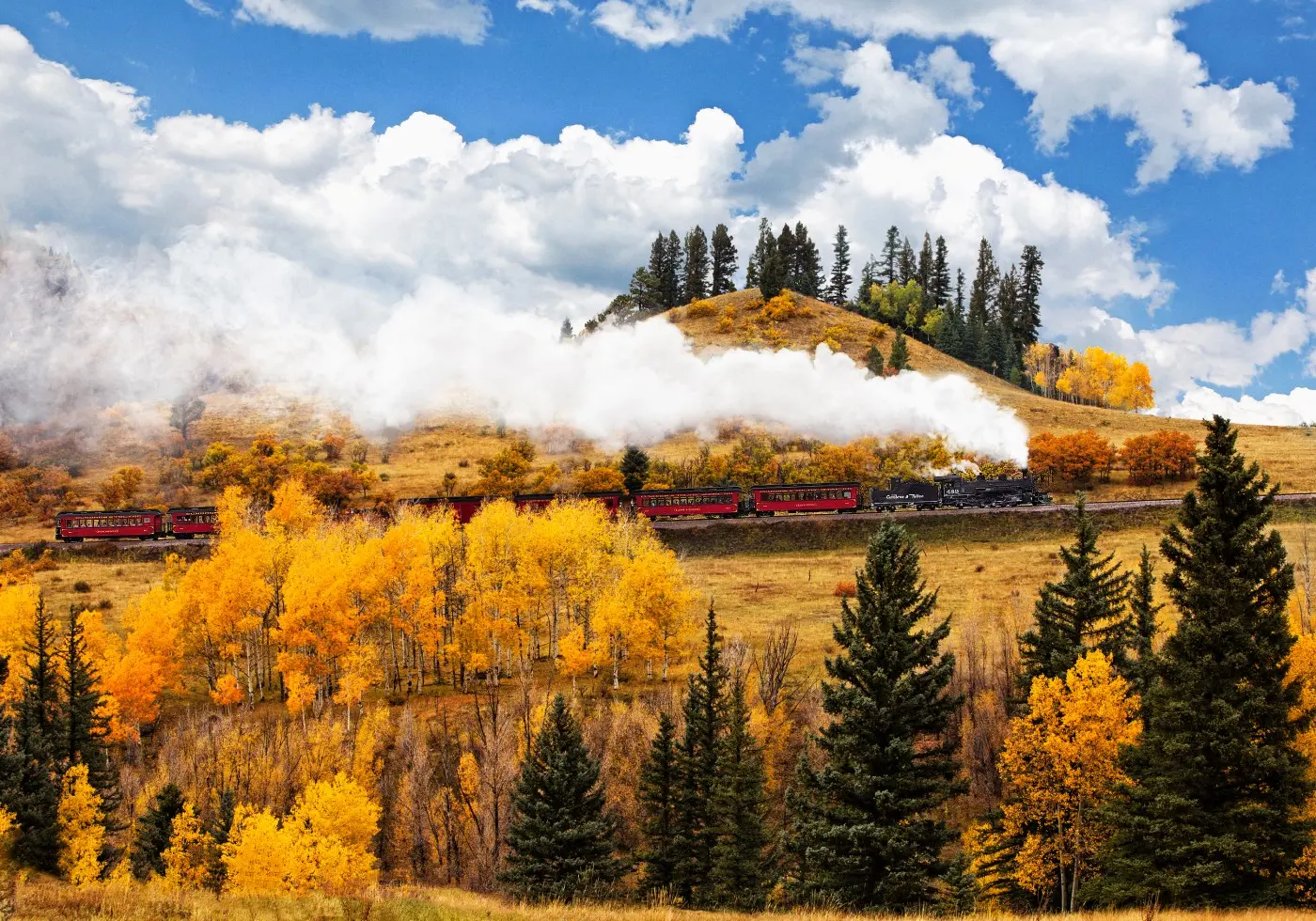
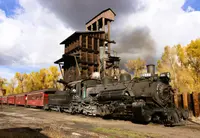
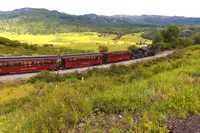
From late May through late October, a steam locomotive and a string of narrow-gauge cars stand ready each morning at two depots. One is in the center of Chama, New Mexico, along New Mexico Highway 17. The other is on the southern edge of Antonito, Colorado, where U.S. 285 meets Colorado 17. The rails are three feet apart. The 64 miles of track between the depots run over Cumbres Pass and along the rim of Toltec Gorge. The pass stands 10,015 feet above sea level and is the highest pass reached by rail in the United States. The line crosses the Colorado–New Mexico border eleven times, and the National Historic Landmark nomination notes that it sometimes crosses several times within a few hundred feet. Trains leave both ends daily. The full run takes about seven hours, including lunch, and a motorcoach carries riders back to their starting depot in a little under an hour. The 2026 season runs through October 25.
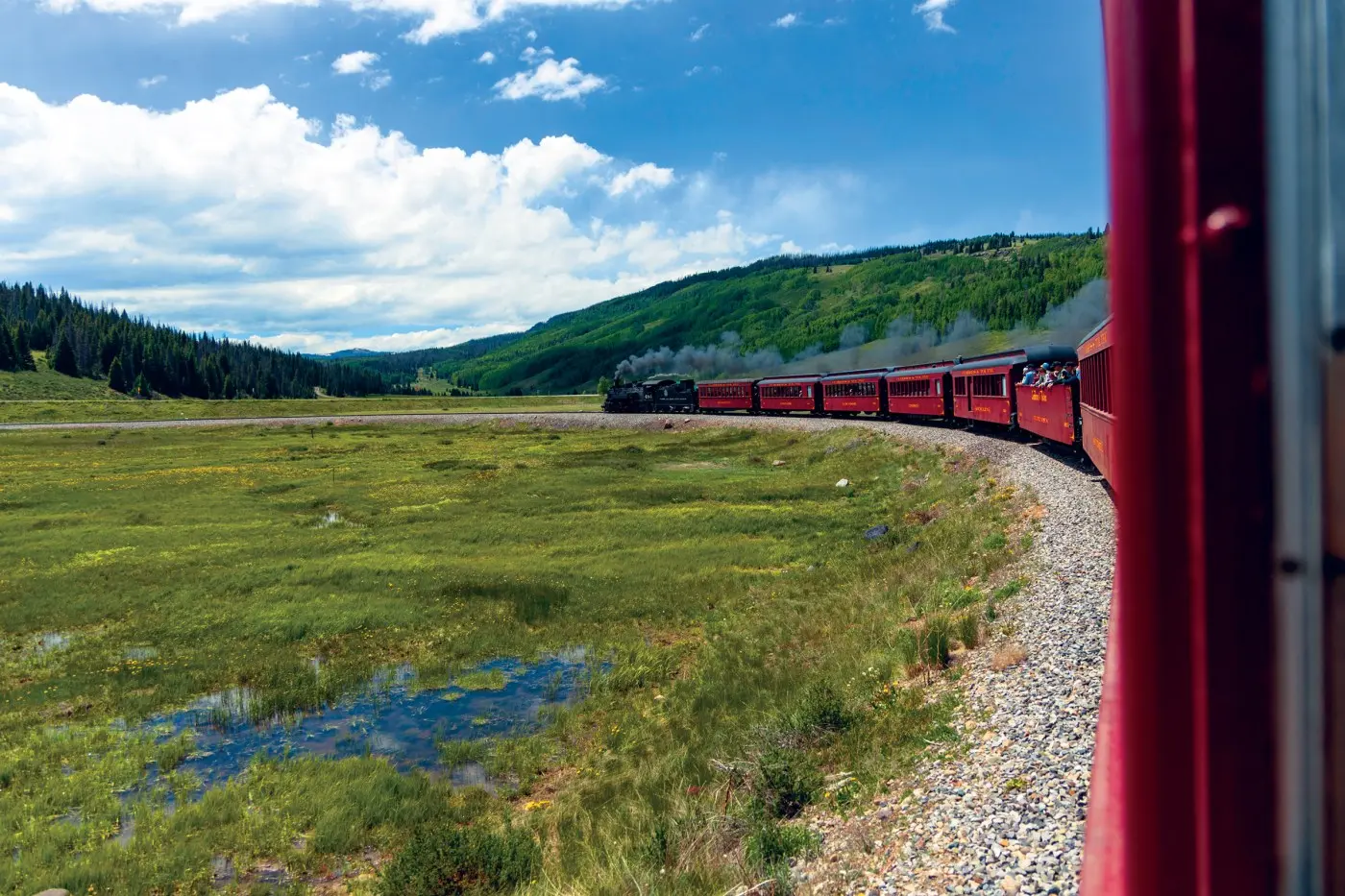
Riders choose among three classes. The Parlor car is a Victorian-style car with mahogany panels, oversized windows and a personal attendant, and it is for riders 21 and older. The Deluxe car has café tables for two or four. Coach has padded benches and windows that open to the mountain air. Every train carries a concession car selling popcorn, chips, coffee and hot chocolate, and an open gondola car that any passenger may use. Once the conductor has punched the tickets, riders may walk from car to car and stand on the end platforms, holding the railing through the long curves. More than 30 volunteer docents ride the trains and tell the history, legends and lore of the line.
The four percent out of Chama
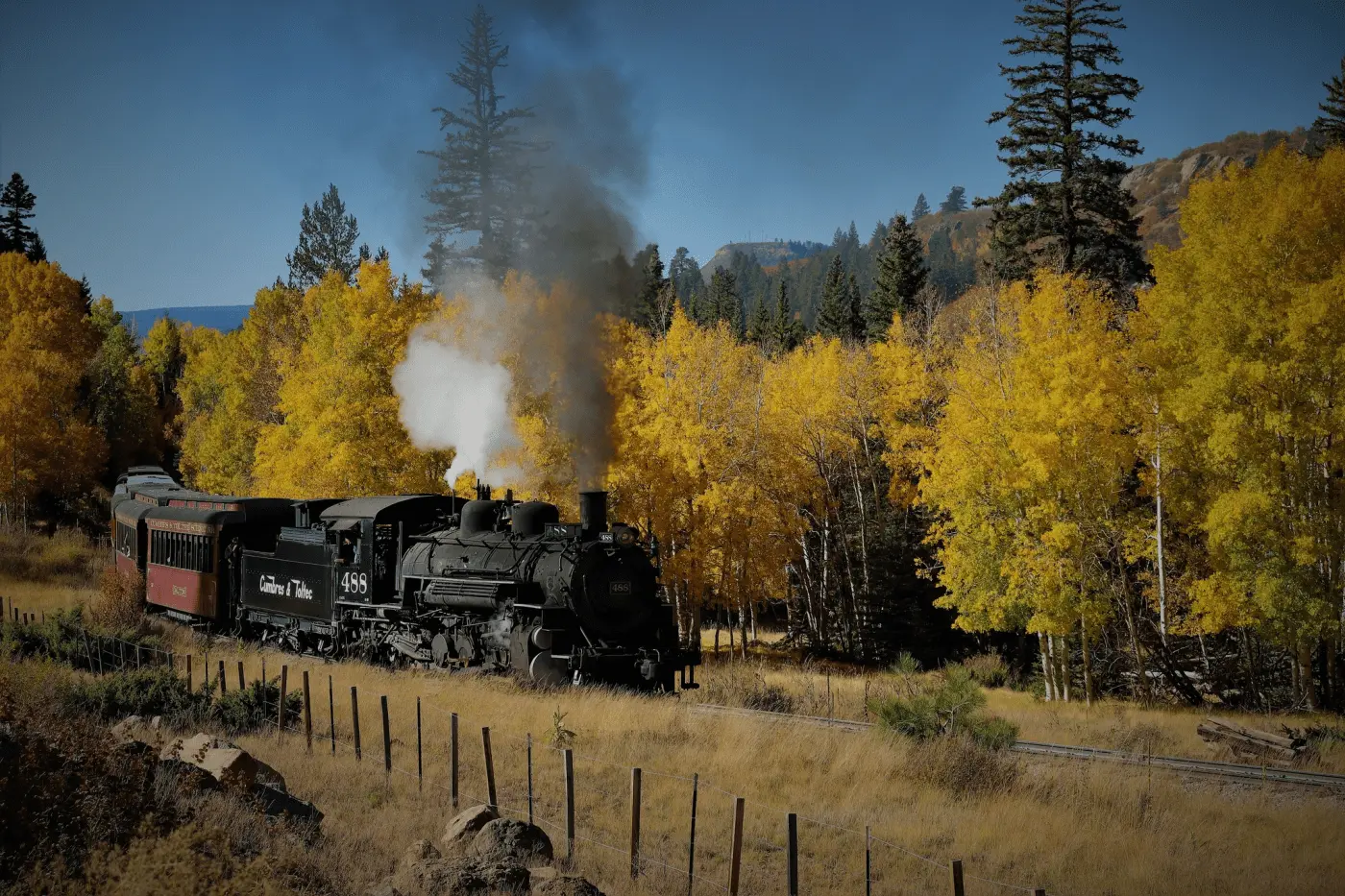
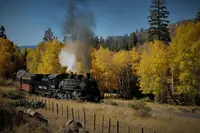
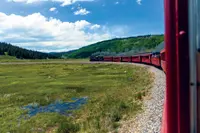
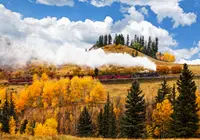
Eastbound from Chama, the climb begins almost at once on a 4 percent grade. The first landmark is what remains of the Lobato sheep ranch: rolling meadows, and a high trestle over Wolf Creek. Aspens line the grassy hills, and the railroad says deer, elk and bears are plentiful. As the train climbs, the view behind takes in the whole Chama Valley. Near the summit the train hugs a sheer rock face. Above, the aspens give way to dark conifers and alpine meadows, and the railroad notes snow flurries can fall even in summer. An old section house stands at the top of the pass, one of many original buildings left along the route.
Beyond the summit, Tanglefoot Curve loops so tightly that the locomotive seems about to meet the caboose. The American Society of Civil Engineers also records a stretch where the track doubles back on itself twice to make a grade, known as “The Whiplash.” The highest bridge on the line is Cascade Creek Trestle, 137 feet above the creek on seven 54-foot spans. Where it could, the railroad was built on south-facing slopes so the sun would melt the heavy winter snow. In the early years the snowfall at the pass led the railroad to buy rotary snowplows, which ran ahead of the engines and kept the line open year round.
The Antonito end begins on flat ground in the San Luis Valley. The train crosses Ferguson’s Trestle, named, the railroad says, for a man who was hung there. It then climbs onto a lava mesa, a remnant of the mountains’ volcanic past. At Sublette, New Mexico, an abandoned railroad town, the locomotives still take on water. Next comes Toltec Gorge. Mud Tunnel is a 342-foot bore through volcanic clay that flows when wet, so it is lined throughout with timber. Phantom Curve takes its name from a rock spire that casts a ghostly shadow. At Rock Tunnel the train runs along a narrow ledge where the view is straight down to the Rio de los Pinos.
Sources give the gorge different depths. The railroad’s route guide says 800 feet, the Friends of the railroad say 600, and the American Society of Civil Engineers says 1,000. The railroad’s own advice on which half to ride is evenhanded. Many riders prefer the geology between Antonito and Osier. Others prefer to hear the locomotive work up the 4 percent from Chama in the cool mountain air.
Turkey and cobbler at Osier
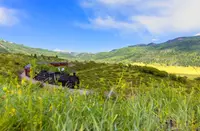
Midway along the line, at 9,637 feet, the train stops at Osier, Colorado, an old townsite in a mountain meadow, for about an hour. Lunch is included on the All Aboard, Limited and One Way trips. Beginning with the 2026 season, it has been served by From the Wagon, a chuckwagon outfit led by John “Bit” Pruitt and Donna Pruitt. Bit Pruitt has more than 30 years as a chuckwagon cook. The buffet is all-you-can-eat:
- sliced turkey breast and meatloaf
- mashed potatoes with brown giblet gravy, green beans and stuffing
- a salad bar
- a rotating soup, such as chicken tortilla or butternut squash and apple
- peach and apple cobbler, chocolate and carrot cake, and brownies
- sweet and unsweetened iced tea, lemonade and water
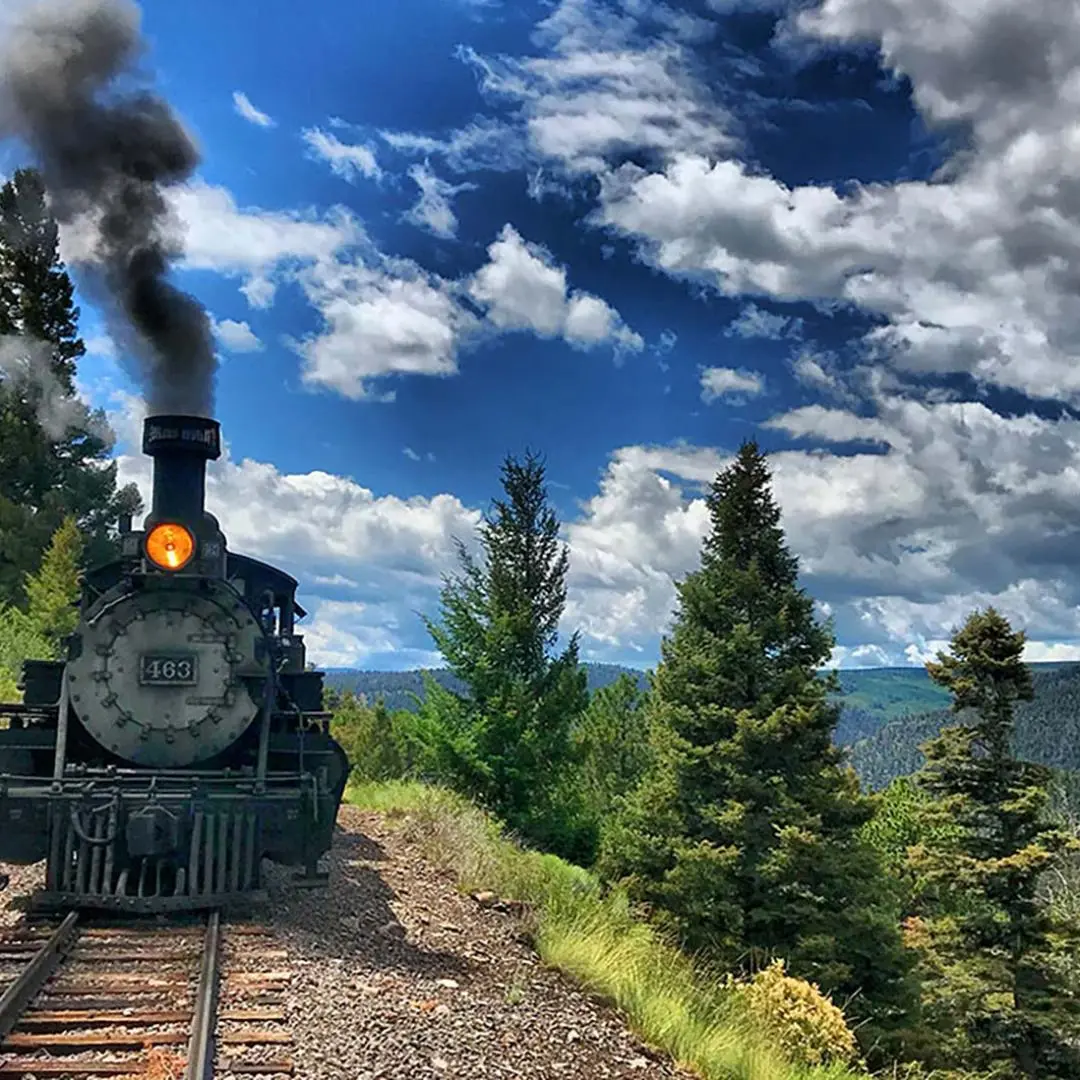
On September 26, 2026, a special evening train called The Wagon Train left Antonito at 1 p.m. behind Locomotive No. 463. It pulled historic coaches, a Railway Post Office car and an open gondola to Osier. Fred Hargrove, a singer-songwriter and cowboy poet from the San Luis Valley, played aboard, and From the Wagon served beef tips, margarita chicken and apple cobbler at the station.
Engines in the yards
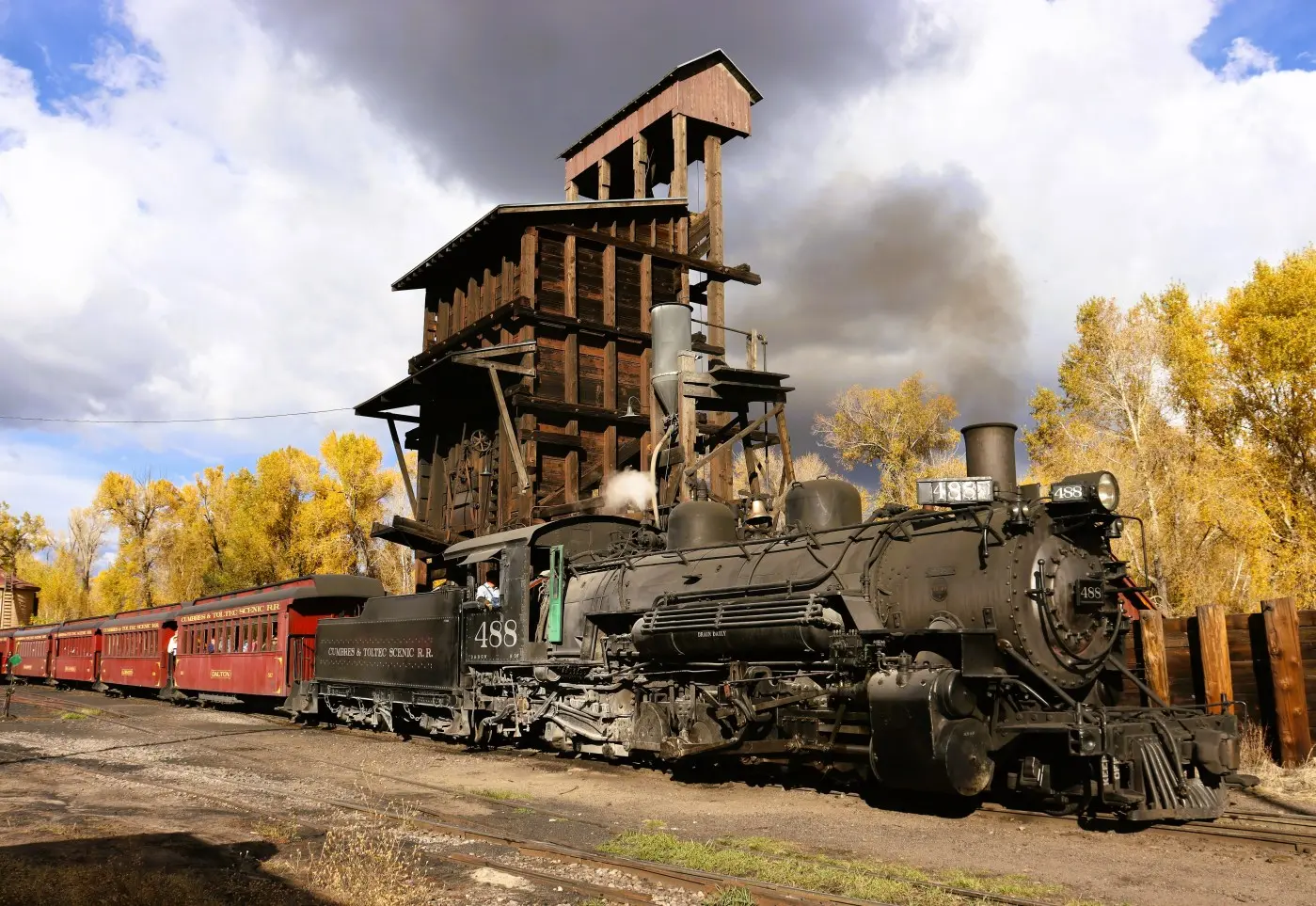
Rolling stock fills the rail yards at both depots. Visitors can walk them on self-guided tours, using a map in the railroad’s app or brochures from the depots. The Friends have handed out tens of thousands of these brochures, in English and in Spanish.
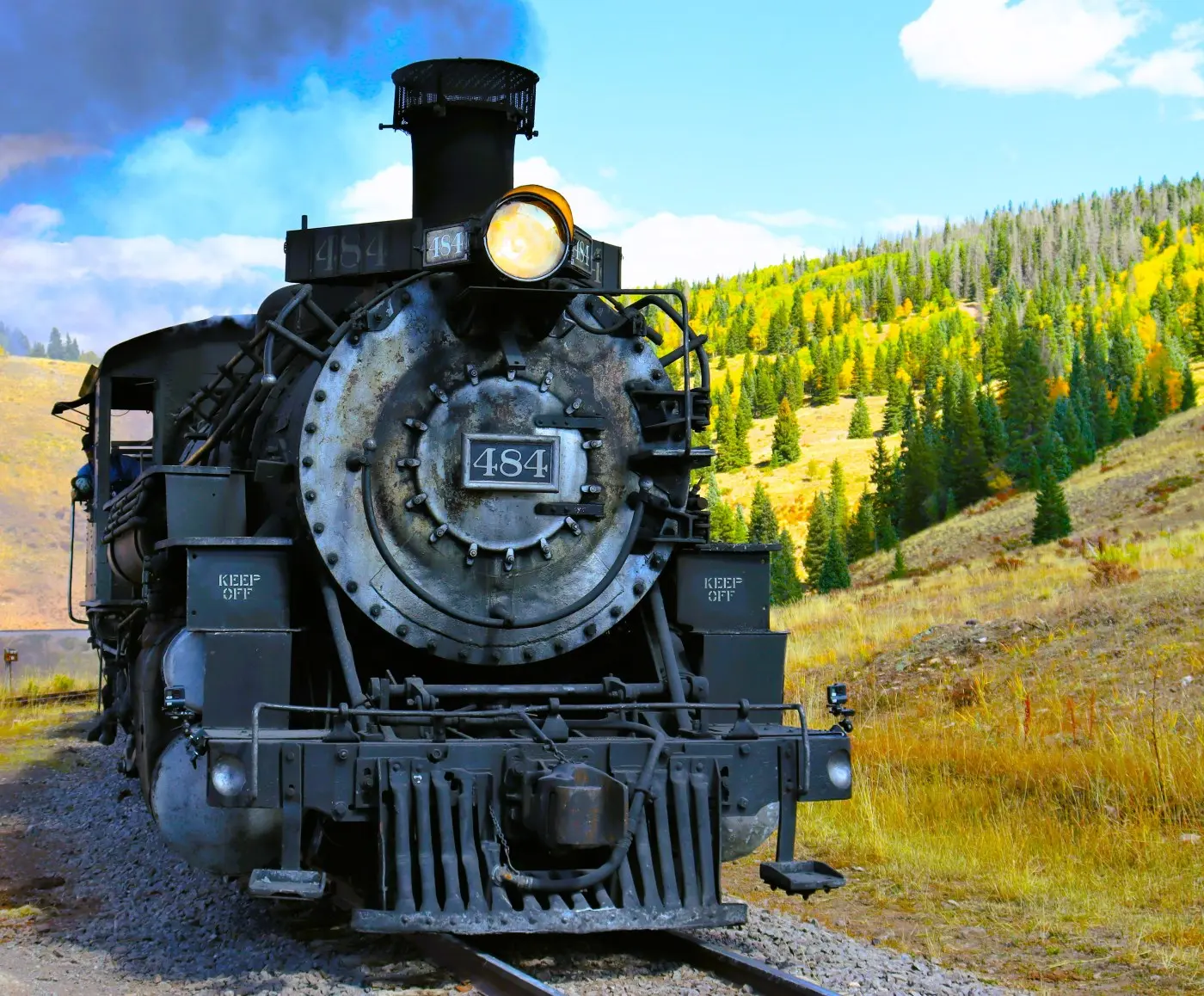
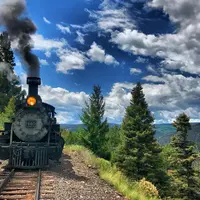
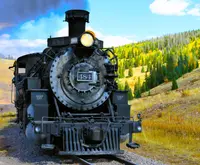
The railroad has five operating steam locomotives:
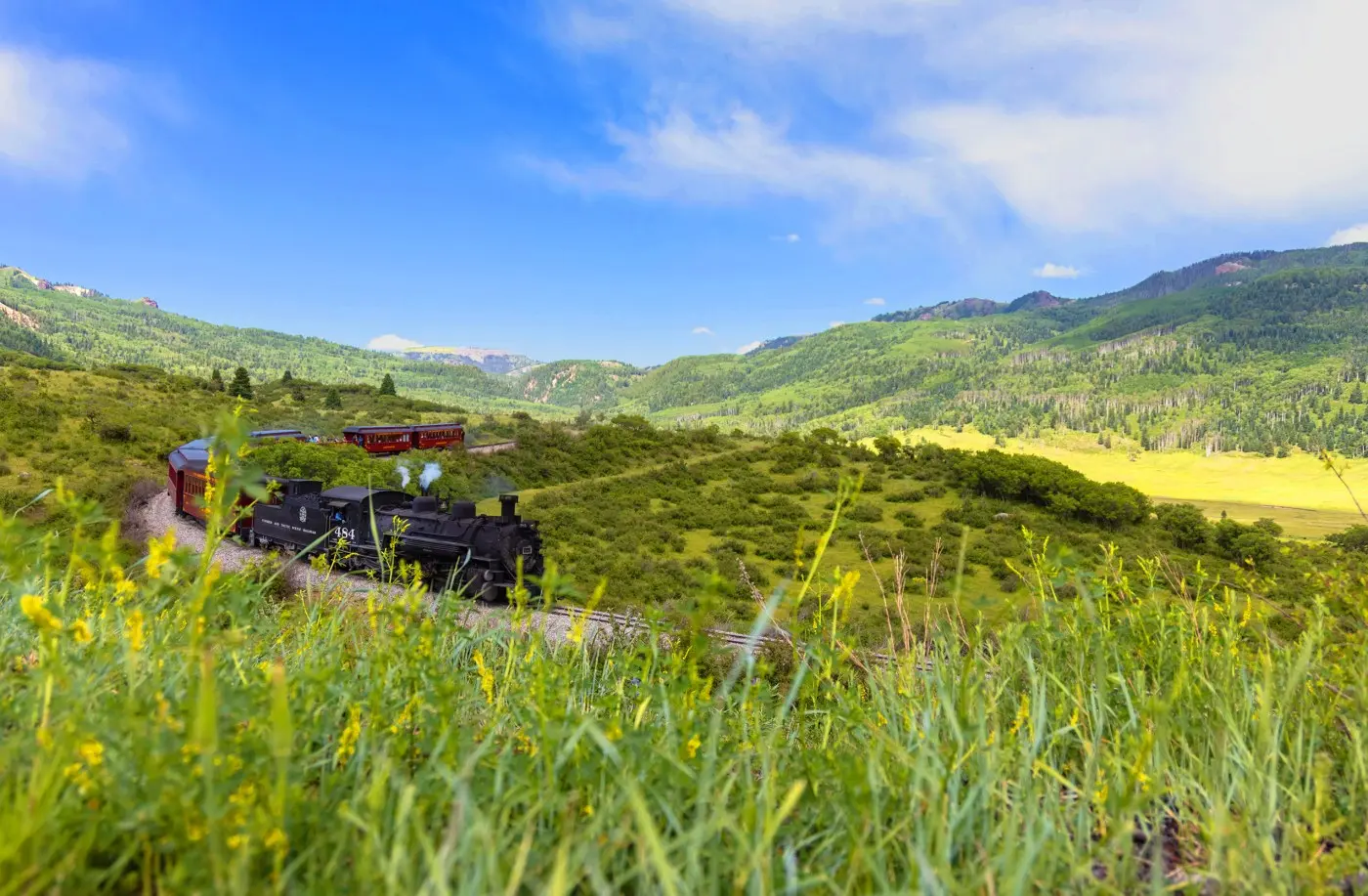
- Nos. 484, 487 and 488, which burn coal
- No. 463, which burns coal and returned to service in 2013
- No. 489, which joined the line in 2008 after reconditioning and was converted to oil before the 2021 season
No. 483 stands on display at Chama but does not run. No. 315, a coal burner owned by the Durango Railroad Historical Society, runs on the line as a guest.
In late September 2026, No. 315 pulled a photographers’ charter in memory of Thomas Artzberger. He had served as the historical society’s chief mechanical engineer for the engine and spent much of his life keeping it running. The next morning at 6 a.m., No. 315 and No. 168, both Baldwin locomotives, left Antonito as a doubleheader for a sunrise stop at Ferguson. Seats were limited to 60, and proceeds went toward restoring Locomotive 492. On weekends in October 2026, Galloping Goose No. 5 also runs the line. This self-propelled railcar was built from automobile parts in 1933 for the Rio Grande Southern, which used Geese to keep its mail contract to the mining towns without the expense of a steam train.
Silver, gas, and an abandonment
General William Jackson Palmer first conceived the Denver & Rio Grande as a north–south line from Denver to Mexico City. According to the landmark nomination, the westward advance of the Atchison, Topeka & Santa Fe in 1878 turned the Rio Grande west, toward Salt Lake City and the mining towns of the central Rockies. The San Juan Extension was built to reach the silver district of the San Juan Mountains. Work on the railbed west of Antonito began in late 1879. The railhead reached Antonito in April 1880 and Chama on December 31 of that year. The nomination says that of several routes studied, Cumbres Pass “appears” to have been chosen because it lay near coal deposits at Monero.
The line was built to three-foot gauge, like all of the Rio Grande at the time. The Friends give the reasons: narrow gauge could take tighter turns, fit where wider track could not, and cost less to build. Ernest Ingersoll rode the line for his 1885 book The Crest of the Continent and wrote: “Six miles ahead lay the canon of which we had heard so much - the Toltec Gorge, whose praises could not be overdrawn.”
In 1890 the Rio Grande began converting parts of its system to standard gauge so it could exchange cars with other railroads. Then Congress repealed the Sherman Silver Purchase Act in 1893, silver mining collapsed, and the traffic over the San Juan Extension never justified conversion. The line kept running for lumber and the remaining mines. With few passable roads, residents depended on it for travel and freight through the 1920s. That decade brought the line’s last major upgrades. The American Society of Civil Engineers says the new locomotives and cars ordered then are all still in service. Passenger trains ended in 1950. A post-World War II boom kept freight moving, in natural gas by the railroad’s account and in oil by the Friends’. The cargo included livestock and crude oil into the 1960s.
In September 1967 the Rio Grande filed to abandon its remaining narrow-gauge lines, except the 45-mile Silverton Branch. Permission came in July 1969. That decision ended the last use of steam locomotives in general freight service in the United States. Most of the track was soon torn up, but railway preservationists and local civic interests worked to save the most scenic part of the line.
In 1970 Colorado and New Mexico jointly bought the Antonito–Chama line. The two states also bought the rolling stock, buildings and tools. The railroad says nine steam locomotives, more than 130 freight and work cars, and the Chama yard and shops cost $547,120. The landmark nomination puts the total at a little over $570,000, just under $9,000 a mile. The new owners named the line the Cumbres & Toltec Scenic Railroad to tell it apart from the Silverton Branch, which the Rio Grande still ran. That branch was sold in 1981 and became the Durango & Silverton.
Tourist trains began in 1971 and have run every year since. The line was listed on the National Register in 1973. In 1974 Congress authorized an interstate commission of four members to run it, two from each state, appointed by the governors. On October 16, 2012, Interior Secretary Ken Salazar designated the old San Juan Extension a National Historic Landmark. The landmark spans Rio Arriba County in New Mexico and Conejos and Archuleta counties in Colorado. The nomination observes that “Taking the better part of a day to traverse 64 miles would have been familiar to railroad passengers throughout the United States at any time between the 1840s and the 1940s.”
A refrigerator car in Chama
At first the two states turned day-to-day operations over to a contracted operator. By 1980, much of the unused historic property was falling into decay. Bill Lock, an Albuquerque attorney, approached the railroad about starting a volunteer preservation program. In 1981 he and a friend repaired and repainted an old refrigerator car body that had served as a bunkhouse in Chama. They came back to renovate the only caboose the railroad had been allowed to buy from the Rio Grande. By 1987 more than 70 volunteers were turning out to restore rolling stock in the Chama yard. In 1988 they incorporated as the Friends of the Cumbres & Toltec Scenic Railroad.
The Friends now hold six week-long work sessions a year, with hundreds of volunteers painting cars, cleaning up property and stabilizing structures along the line. In the summer of 2012, volunteers gave 14,000 hours. The docents who ride the trains come from the same organization.
The fiftieth anniversary of state ownership was postponed a year by the coronavirus pandemic. On August 21, 2021, so much steam rose from the Antonito depot that the town looked to be on fire. Four nineteenth-century engines were running at once. Two were Rio Grande engines, No. 168 from 1883 and No. 425 from 1893. The other two, the Eureka and the Glenbrook, had been brought from Nevada. Both were built in 1875 and burn wood, and they carry kerosene headlights. Railroad commissioner Scott Gibbs said the visiting engines would need 80 cords of pine for the anniversary week. Stathi Pappas, chief operations manager and head of restoration, said, “Instead of going to the zoo and seeing something in captivity, it’s like going on a safari and seeing everything in its natural habitat.” That morning Max Casias of Antonito rode on a locomotive as it was backed into the passenger cars it would pull out of the yard.
Notable Events
- 1879Construction of the San Juan Extension railbed west of Antonito started in late 1879. irma.nps.gov
- 1880The railhead reached Antonito in April of 1880, and Chama on December 31 of the same year. Although several routes were studied, Cumbres Pass appears to have been chosen for the route's proximity to coal deposits at Monero. irma.nps.gov
- 1890A portion of the San Juan Extension was converted to standard gauge to accommodate interchanging cars with other rail lines. friendsofcumbrestoltec.org
- 1893With the repeal of the Sherman Act in 1893 and its devastating effect on the silver mining industry, traffic over the San Juan Extension failed to warrant conversion to standard gauge. cumbrestoltec.com
- 1920The line saw its last major equipment and infrastructure upgrades. friendsofcumbrestoltec.org
- 1950Although passenger service ended in 1950, the discovery of natural gas helped extend the line's usefulness for hauling freight - including livestock and crude oil - through the 1960s. asce.org
- 1967In September 1967, the D&RG filed to abandon the remainder of its narrow-gauge lines, with the exception of the 45-mile Silverton Branch. irma.nps.gov
- 1969In 1969 the Interstate Commerce Commission granted the Rio Grande's request to abandon its remaining narrow gauge main line trackage, thereby ending the last use of steam locomotives in general freight service in the United States. cumbrestoltec.com
- 1970Colorado and New Mexico jointly purchased 64 miles between Antonito and Chama for operation as a scenic railway. achp.gov
- 1970Nine steam locomotives, over 130 freight and work cars, and the Chama yard and maintenance facility was purchased for $547,120 in 1970. cumbrestoltec.com
- 1971The states' purchase paved the way to launch the scenic railroad. friendsofcumbrestoltec.org
- 1971The Cumbres & Toltec Scenic Railroad began regular heritage railroad operations in 1971 and has operated as a tourist line every year since then. irma.nps.gov
- 1973The Denver & Rio Grande Railroad San Juan Extension was listed on the National Register of Historic Places in 1973 (NRIS 73000462). irma.nps.gov
- 1974The railroad is operated for Colorado and New Mexico by the Cumbres & Toltec Scenic Railroad Commission, an interstate agency authorized by an act of Congress in 1974. cumbrestoltec.com
- 1980Much of the unused historic property was falling into decay. friendsofcumbrestoltec.org
- 1981Bill and a friend repaired and repainted an old refrigerator car body that had served as a bunk house in Chama. friendsofcumbrestoltec.org
- 1987Work parties grew to over 70 volunteers restoring historic rolling stock in Chama yard. friendsofcumbrestoltec.org
- 1988Friends incorporated to preserve, restore and interpret the railroad as a living museum. achp.gov
- 2007An updated National Register nomination accepted in 2007 (NRIS 07000374) clarified those boundaries and provided additional resource documentation. irma.nps.gov
- 2012Designated a National Historic Landmark by the Secretary of the Interior October 16, 2012. irma.nps.gov
- The last boom for the line resulted from demand for oil. friendsofcumbrestoltec.org
- Lock and friends returned to renovate the only caboose the railroad was allowed to purchase from the Rio Grande. friendsofcumbrestoltec.org
People
- Carol O’Saben, Anniversary attendee from Flagstaff.
- Caroline, Russ Murphy's wife; railroad anniversary attendee from Tennessee.
- Max Casias, Antonito resident pictured riding on the locomotive as it backed into passenger cars.
- Russ Murphy, Railroad anniversary attendee who traveled from Tennessee.
- Scott Gibbs, Railroad commissioner.
- Stathi Pappas, Chief operations manager and head of restoration at Cumbres & Toltec.
- Yasmine Sealy, Anniversary attendee from Flagstaff.
- Bill Lock, Albuquerque attorney who approached the railroad about establishing a volunteer preservation program.
- William Jackson Palmer, built the Denver & Rio Grande, of which the San Juan Extension is a segment.
Sources
- cumbrestoltec.com
- cumbrestoltec.com/about-us
- cumbrestoltec.com/faq
- cumbrestoltec.com/wp-content/uploads/sites/7582/2026/05/CTSRR_Brochure_2026.pdf
- facebook.com/cumbrestoltecscenicrailroad
- cumbrestoltec.com/cumbres-toltec-history
- irma.nps.gov/DataStore/DownloadFile/740947
- asce.org/about-civil-engineering/history-and-heritage/historic-landmarks/cumbres-and-toltec-scenic-railway