Crystal Gold Mine
Kellogg, Shoshone County, Idaho. Crystal Gold Mine: A Long, Rich Legacy; 7 days a week May 1 - October 31.
Details

- Where
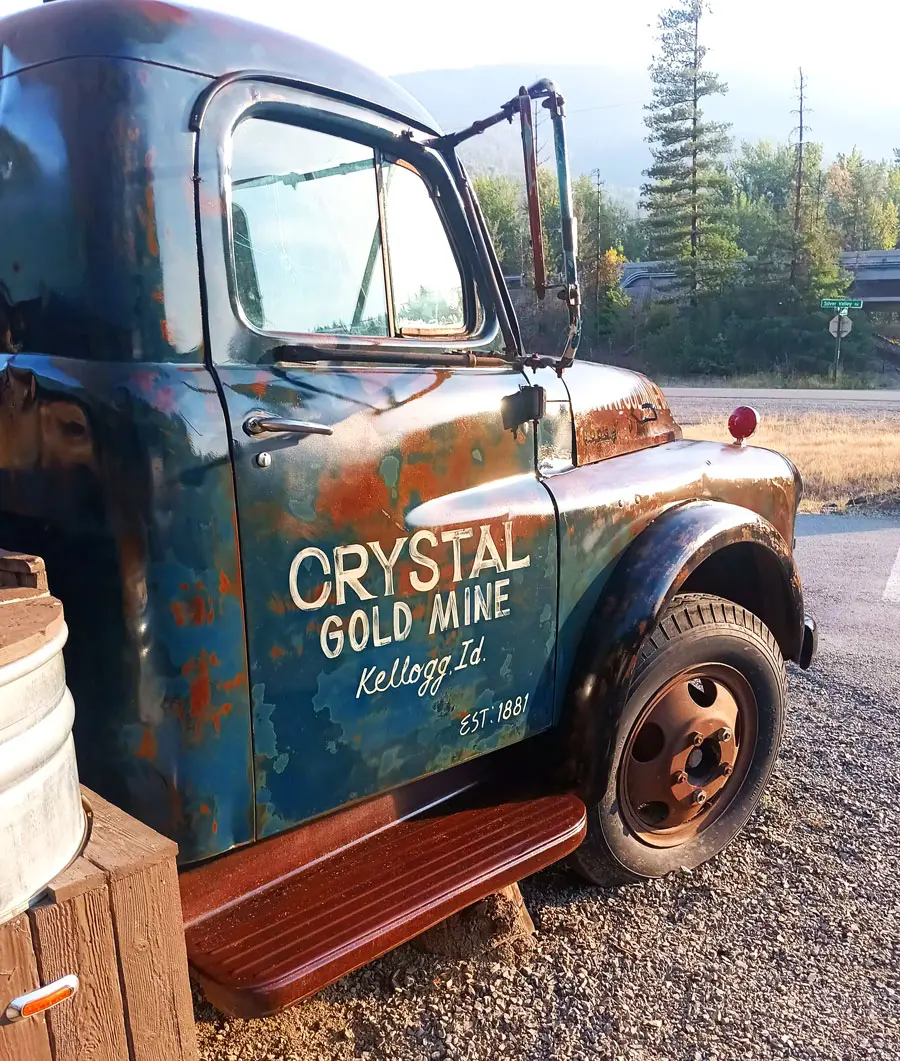
- 51931 Silver Valley Road, Kellogg, ID 51931. Directions
- When
- Tours depart regularly throughout the day; last tour is 1 hour before closing.
- Getting there
- Easy On/Off Interstate 90 Crystal Gold Mine can be reached by taking Idaho Exit 54 on Interstate 90 to the Miner's Memorial (located on the North side of the freeway). Turn left (west) on Silver Valley Road, and go two miles.
- Fees
- Adults $29.00; Child (4-12 yrs.) $18.00; Child (under 4 yrs.) FREE; group rates and combo deals.
- Hours
- Summer (May 1 - Sept. 7): 9am - 6pm; Fall (Sept. 8 - Oct 31): 10am - 4pm.
- Access
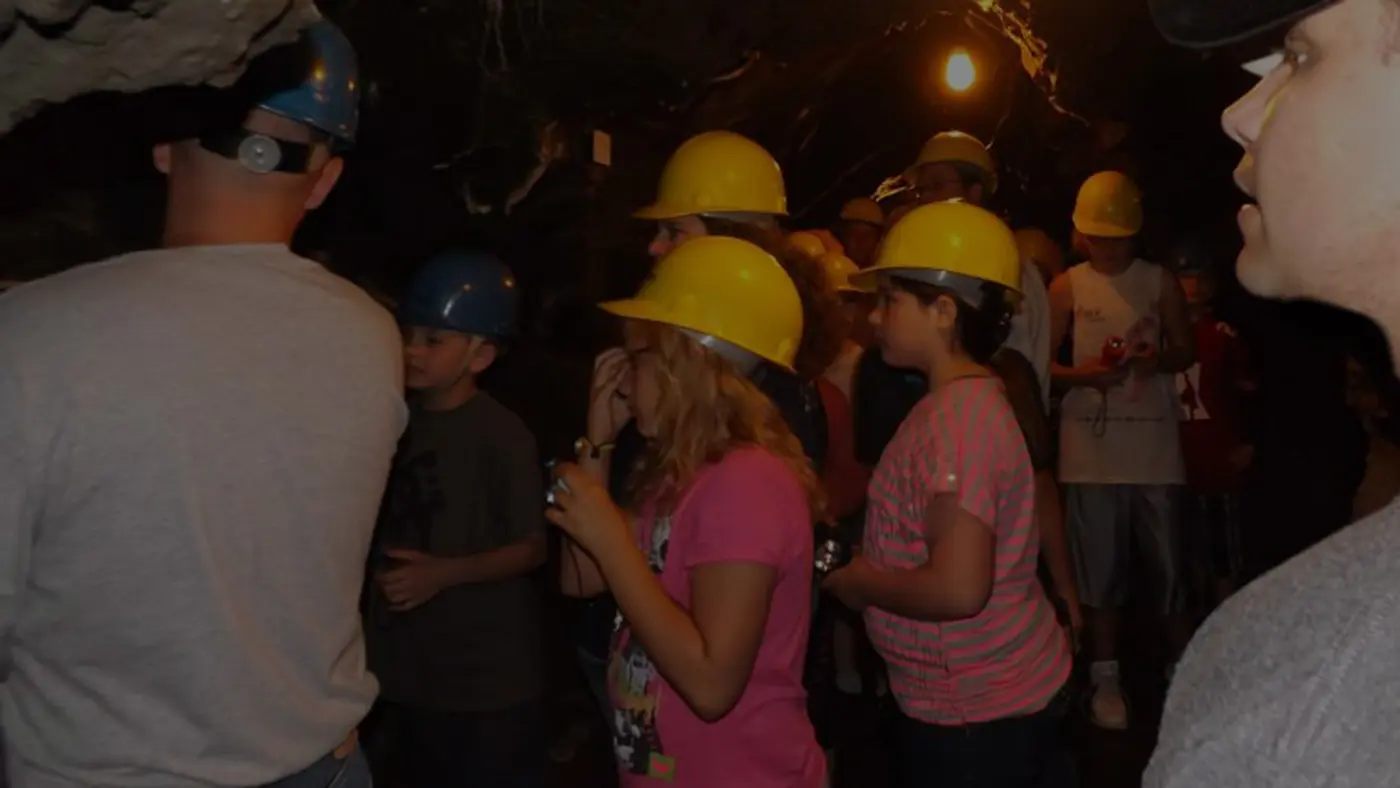
- Tours use well-lit concrete walkways and do not require any climbing, crawling, or stooping.
- Walk-in or reserve
- Walk-ins welcome. Reservations encouraged, but not necessary.
- Managed by
- the Dole family.
- Established
- Established in 1881.
To reach the Crystal Gold Mine, leave Interstate 90 at Exit 54 near Kellogg, Idaho, and go to the Miner’s Memorial on the north side of the freeway. Turn west on Silver Valley Road and drive two miles. The mine runs into a Shoshone County hillside beside the interstate. Ray Cropp, a former owner, has told tour groups that the South Fork of the Coeur d’Alene River lies on the other side of the freeway. The operator describes the mine as nine hundred feet underground and calls it one of the first hard-rock mines in the Silver Valley.
Rails in the concrete
Tours leave throughout the day. In 2023 the show-mine register ShowCaves listed a tour at about thirty minutes. The walkways are concrete and well lit, and visitors do not have to climb, crawl, or stoop. The floor was poured level with the old track, so the original iron rails now run embedded in the walk. On a 2013 tour filmed by C-SPAN, Cropp pointed out that miners with iron rails “were doing pretty good,” since other crews made their rails of wood. The cart was pushed by hand: “Empty mine cart uphill, full mine cart downhill.”
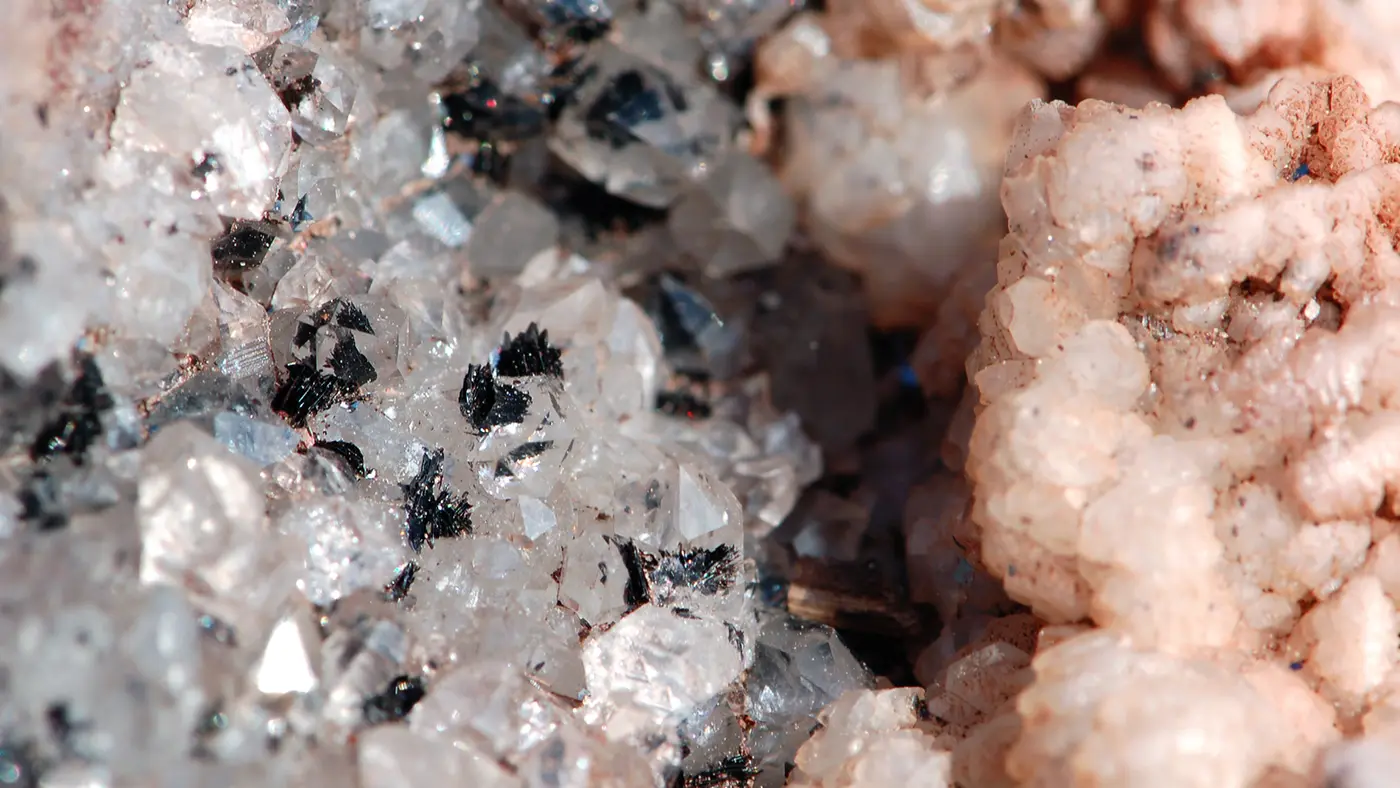
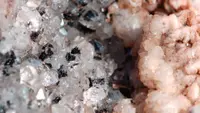
According to the operator, the walls are coated with stalactite crystals of smithsonite in an array of colors, and the mine takes its name from them. Wire silver remains in the quartz vein, and there is gold “to be seen and touched.” ShowCaves states that the crystals grew during the last hundred years. Cropp told his group that the mineral is named after James Smithson and is fragile and rare to see. Some of the crystals are growing longer with the moisture. “People refer to these as bacon crystals,” he said. “They look like strips of bacon.” Orange iron shows along the rib. At certain spots of soft yellow ore, guides ask visitors not to pick at the rock but let them rub it, and those spots have worn smooth. Beside one sits a chunk of cubic, sharp-edged mineral that Cropp called brittle. “All that glitters is usually not gold,” he said.
On the tour, guides drill with hand steels and the hammers called single jacks and double jacks. They show how the miners traced the quartz vein and tested it for gold by 1880s methods. In 2013 Cropp demonstrated the stroke: hit the steel, turn it a quarter turn, hit it again. Without the quarter turn the steel hangs up. A crew began with a short starter drill and moved to longer ones. Miners saved their drill cuttings in pans to check the rock for gold outside. Before drilling they scaled the walls, tapping the rock and listening for a solid, sharp sound. A hollow sound meant loose material to be pried off. A blacksmith-made candlestick holder found in the mine shows how miners wedged their light between rocks. The Diggings, a mining news site, reported in 2016 that guides switch off the electric lights at one point to show how dark the tunnel was by candle. Farther in, a ladder built out of trees descends where the workings go down sixty feet. Cropp said nobody has been to the bottom. A hoist bucket was found there as well.
Pans, paint, and a sideshow
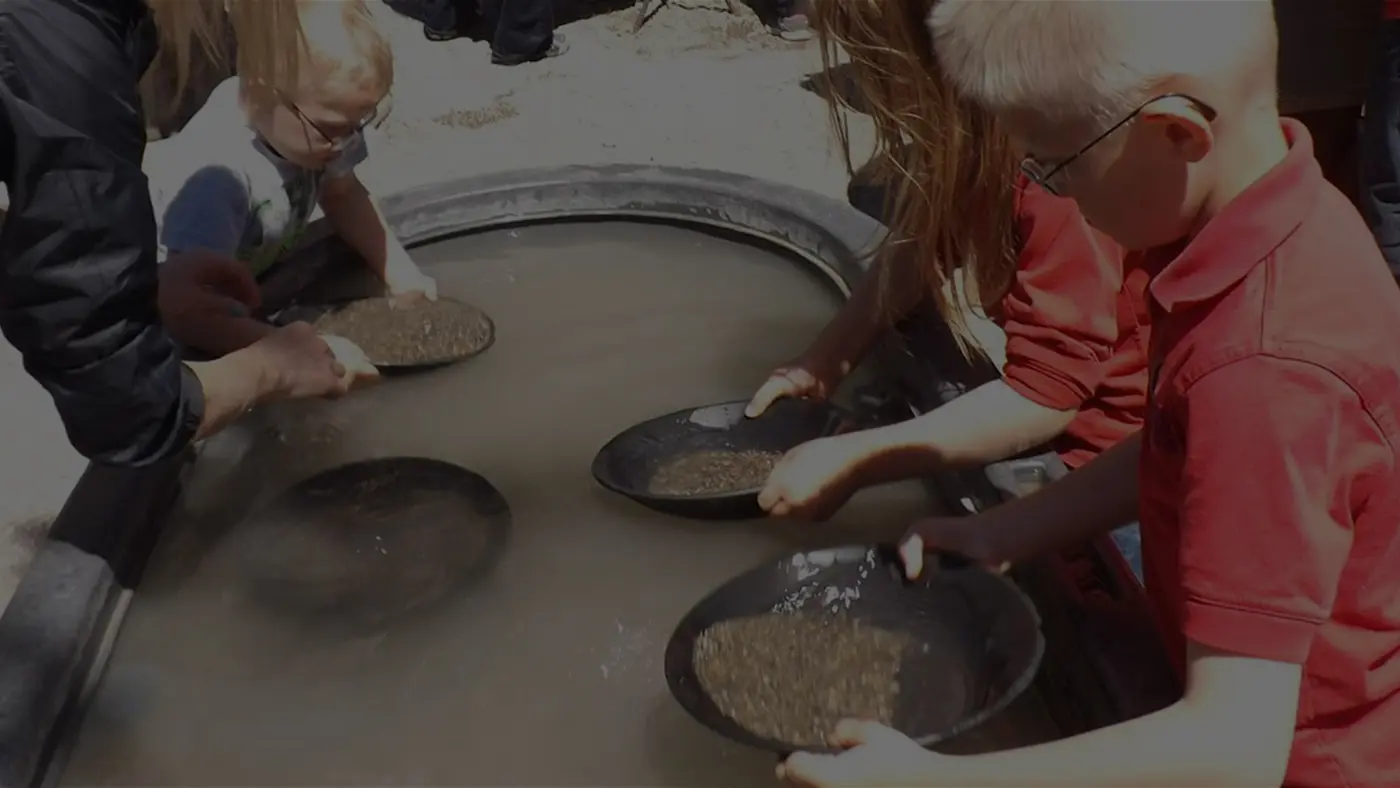
Back on the surface, every tour includes up to half an hour of gold panning, with tools and instruction supplied, and entry to the Miner’s Museum, which covers the mining history of the Silver Valley. For gemstone mining and a fossil dig, visitors choose among bags of pay dirt, each sold with an identification card and a keeper bag. The Sideshow Museum displays recreations of sideshow performers of the great circus era. At the shooting gallery, a BB machine gun fires one hundred shots per play, and anyone who shoots out the red star on the paper target wins a prize. At Paint-A-Bug, visitors spray paint graffiti on the mine’s vintage Volkswagens, with one can included. The Miner’s Treat Trailer sells snacks, and the gift shop stocks minerals, gems, jewelry, hats, and shirts. The property also has an RV park with tent and RV sites. The operator lists a Wild Mine Tour as coming soon. It would enter the Monitor Mine, which lies above the Crystal and has been dormant for decades.
A hillside blasted shut
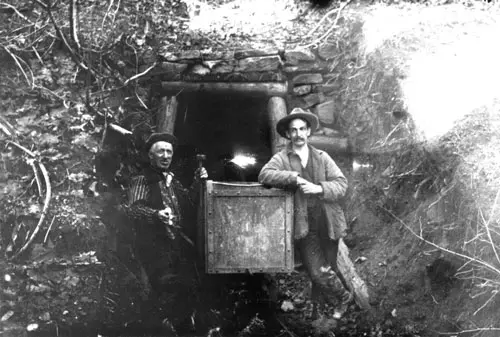
Accounts agree that the story begins with Tom Irwin, a gold prospector who found a gold-bearing vein in the Silver Valley in 1879. The Shoshone County history index credits him with discovering the Crystal mine. The operator says Irwin built a cabin near the mine and that the cabin served as a landmark for many years. The operator also quotes a history that denied him credit: “Tom Irwin, a gold prospector, discovered a quartz vein and built a cabin at Montgomery Gulch in the spring of 1879. This cannot be verified as the quartz mine cannot be found.” The operator’s own position is that “we do not know for sure who mined this mine, but know that Tom was in the area.” ShowCaves says Irwin worked the vein alone for three years but adds that no remains connect him to it. A 1999 Spokesman-Review story gives a different account. It says the only historical references to Irwin are letters written by Andrew Pritchard, another early prospector. According to those letters, five men worked the mine and lived in a cabin at nearby Montgomery Gulch.
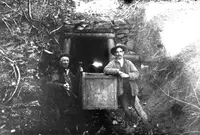
The paper describes their methods. The men worked by candlelight, drilled holes by hand with a single jack, and loaded them with nitroglycerin dynamite. They pushed the ore out in a metal cart, then ground it and panned it. “(Irwin) came in about 75 feet and found what he was looking for. Not many mines hit a payday at 75 feet,” Bill Lane, who later owned the mine, told the paper. Lane said some of the high-grade ore left behind would have been worth $20,000 a ton at 1999 prices. ShowCaves gives the ore at up to seventy ounces per ton. Cropp’s tour adds that before 1884 the valley’s silver ore was barren waste, with no price and no place to process it, so the miners were after gold alone. ShowCaves dates the valley’s silver discovery to 1885. That year, it says, Noah Kellogg’s donkey wandered uphill while he slept, and while looking for the animal he saw sunlight glittering on an outcrop of galena.
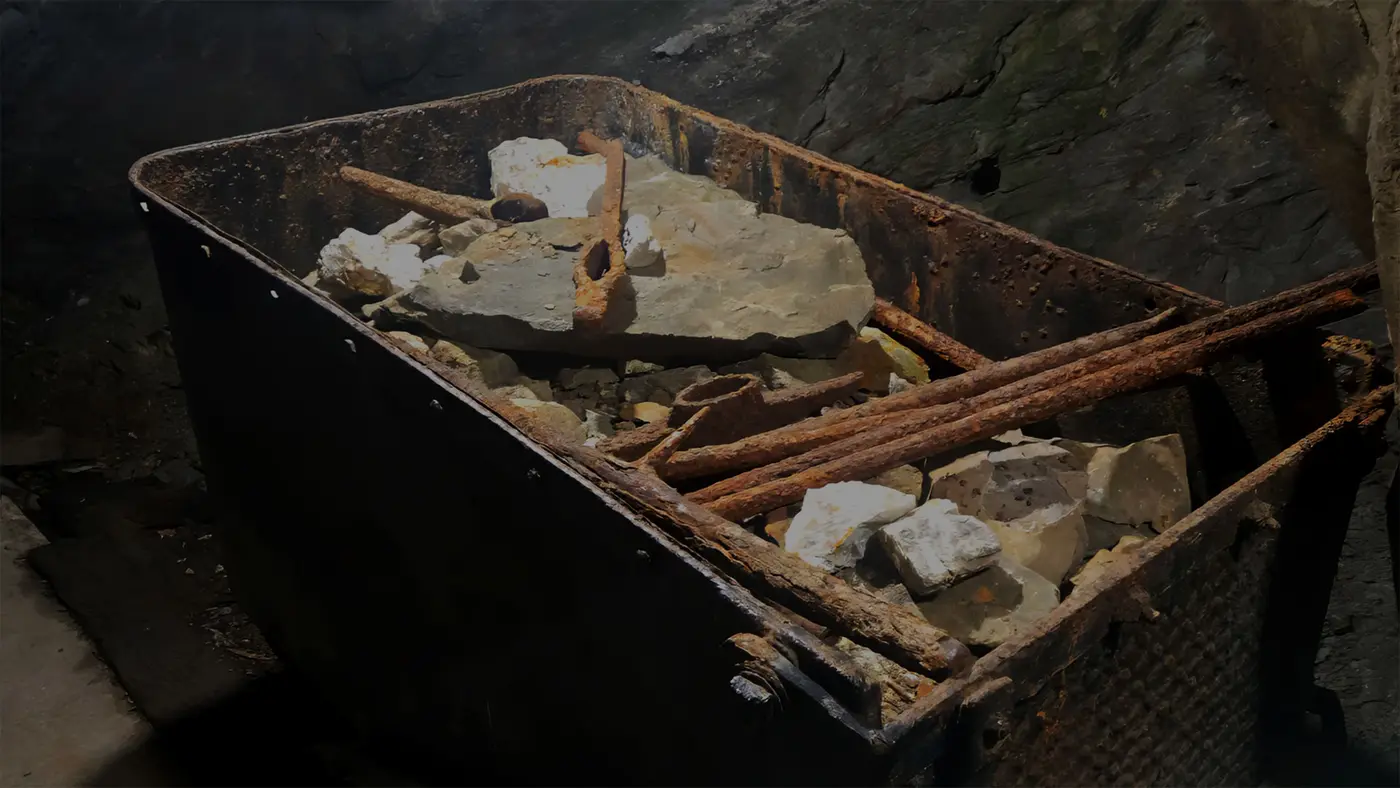
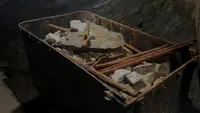
The miners then blasted the hillside down over the entrance, leaving the track, an ore cart, and tools sealed inside. The Spokesman-Review dates the closing to 1881, when Irwin left the area. ShowCaves dates the abandonment to 1882, and the operator gives the mine’s establishment as 1881. All the accounts read the buried equipment as a sign that the miners meant to return. Lane thought they went back East to get their families and died of disease along the way. Cropp offered a similar theory in 2013. Debbie Yeoman, a tour guide in 1999, wondered whether robbers ambushed and killed the whole party on its way home. “It has the makings of a good story,” Lane said.
The spring that was a mine
Workers building Interstate 90 in the 1960s exposed the portal, but ShowCaves notes that nobody took notice. In 1991 the landowner saw water seeping from the hillside. He hoped it was a spring and dug in, with a backhoe according to Cropp, and found a tunnel instead. Then he covered it with a sheet of plywood. Local residents thought the tunnel ran about fifty feet.
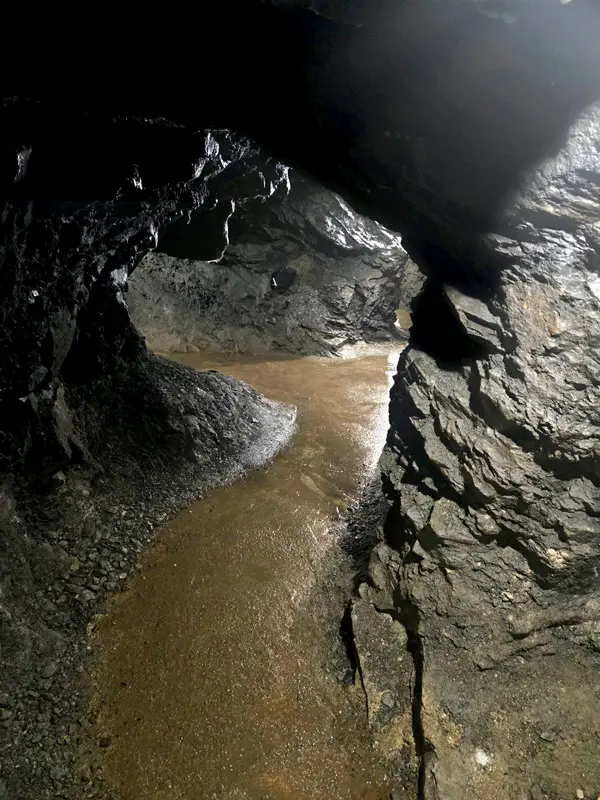
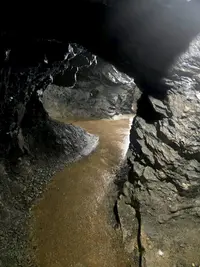
That same year Bill Lane, a Butte, Montana, native and former contract miner, sold two mining-related businesses in Aberdeen, Washington, with his wife, Judy. The couple spent five years crossing the Northwest in search of a mine to restore as a retirement business. Lane wanted an older, smaller mine near a major highway. Irwin’s mine met both requirements, and the Lanes bought it in 1996. Lane went in with a flashlight, wading through waist-deep water along a track that runs 550 feet into the hill. He found old tools, candle stubs, and a rusting ore cart. “I saw it much as they must have,” he said. While scaling the ribs he also found high-grade ore that had been left behind. The Lanes named the mine for its smithsonite crystals and opened it to visitors along with an RV park. The opening year varies by source: The Spokesman-Review and ShowCaves give 1998, and Cropp said 1997. Judy Lane told the paper that “the true value of the mine is not the dollar value of the gold, but the history and what you can learn from it.” Bill described the tourists who saw his sign and pulled off the interstate as the vein he was mining.
Judy Lane died in 2010. The operator writes that Bill tried to carry on without her but his heart was not in it. In 2011 he blocked the property entrances with fallen trees and left for Arizona. In February 2012, Raymond and Sherry Cropp learned the property was for sale again. Ray Cropp was born in Kellogg and came from a family with a long mining history in the area. The Cropps reopened the mine in April 2012 and ran it for about a decade. After they retired, Ray Cropp published The Crystal Gold Mine: In the Silver Valley of Idaho “The Big Blind Special!” The Dole family bought the mine and RV park in 2022. The original entrance still stands on the hillside but is no longer safe to use.
Notable Events
- 1879The Shoshone County history index lists the Crystal mine in Kellogg among the Silver Valley mines, discovered by Tom Irwin in 1879. shoshone.idgenweb.org
- 1881Irwin, of whom little is known, concealed the entrance when he left the area; the mine stayed hidden until 1991. spokesman.com
- 1882ShowCaves dates the abandonment of the mine to that year, and records that when he left, the miner blasted the hillside down to hide the mine with his track, mine car and tools inside. showcaves.com
- 1960sThe mine portal (entrance) was exposed during the building of Interstate 90. goldmine-idaho.com
- 1991The owner saw water seeping out of the hillside and, hoping it was a spring, dug into the portal and discovered more of the mine. goldmine-idaho.com
- 1996Bill and Judy Lane, a retired miner and his wife, bought the property, uncovered the rest of the mine and rejuvenated it as a tourist attraction and RV park. goldmine-idaho.com
- 1998ShowCaves records that the mine opened to the public that year, after the property was sold to the present owner who restored it. showcaves.com
- 2011Bill Lane shuttered the property entrances with fallen trees and left for Arizona. goldmine-idaho.com
- 2012Ray and Sherry Cropp purchased and reopened the mine. goldmine-idaho.com
- 2013Owner Ray Cropp gave a tour of Crystal Gold Mine, one of the first hard rock mines in Coeur d'Alene's mining district. He spoke about the history of the mine and how it was re-discovered after being abandoned more than a century ago. c-span.org
- 2022Crystal Gold Mine and RV Park was bought by the Dole family. goldmine-idaho.com
People
- Bill Lane, retired miner who with his wife uncovered the rest of the mine and rejuvenated it as a tourist attraction (1996).
- Judy Lane, co-owner devoted to educating others about gold mining in the Silver Valley (until 2010).
- Raymond Cropp, Kellogg-born owner who purchased and reopened the mine with Sherry Cropp and later published a book on its history (2012).
- Sherry Cropp, co-owner who purchased and reopened the mine (2012).
- Tom Irwin, gold prospector who discovered the gold bearing quartz vein and mined the gold alone for three years; ShowCaves states it is unknown if this really was his mine, as no remains connect him (1879).
- Andrew Pritchard, early prospector whose letters are the only historical references to Irwin.