Crow Fair
Crow Agency, Big Horn County, Montana. Celebration of Apsáalooke (Crow) culture.
Details

- Where
- Crow Fair Powwow Grounds, 1701 Heritage Rd, Crow Agency, MT 59022. Directions
- When
- Next fair August 18th - 23rd, 2027.
- Getting there
- Via I-90 from the west or U.S. Highway 212 from the south.
- Fees
- Free admission to everyone.
- Access
- No public camping at Crow Fair unless a family invites the visitor into its encampment.
- Walk-in or reserve
- Everyone is welcome; no fee to enter.
- Website
- crowfair.org
- Managed by
- Crow Fair Pow Wow Non-Profit Organization and Crow Tribe.
- Established
- 1904.
A sign at the entrance to the Crow Fairgrounds reads “Pedestrians and Horses Have Right of Way.” Beyond it, for a week each August, the ground at Crow Agency fills with lodges. Crow Agency is the tribal headquarters of the Crow Reservation, on the Little Bighorn River just south of Hardin. The fair’s own history counts more than fifteen hundred tipis and as many tents, housing extended Crow families and their guests, with ten thousand Crow and intertribal visitors staying in the encampment. A Crow Fair events page on Facebook says “at least 1200 teepees.” Sheridan Media, covering the 2024 fair, put the attendance at around ten thousand people a year. The fair’s homepage calls the place “Teepee Capital of the World & Largest Outdoor Indigenous Gathering.”
Twenty-one poles to a lodge
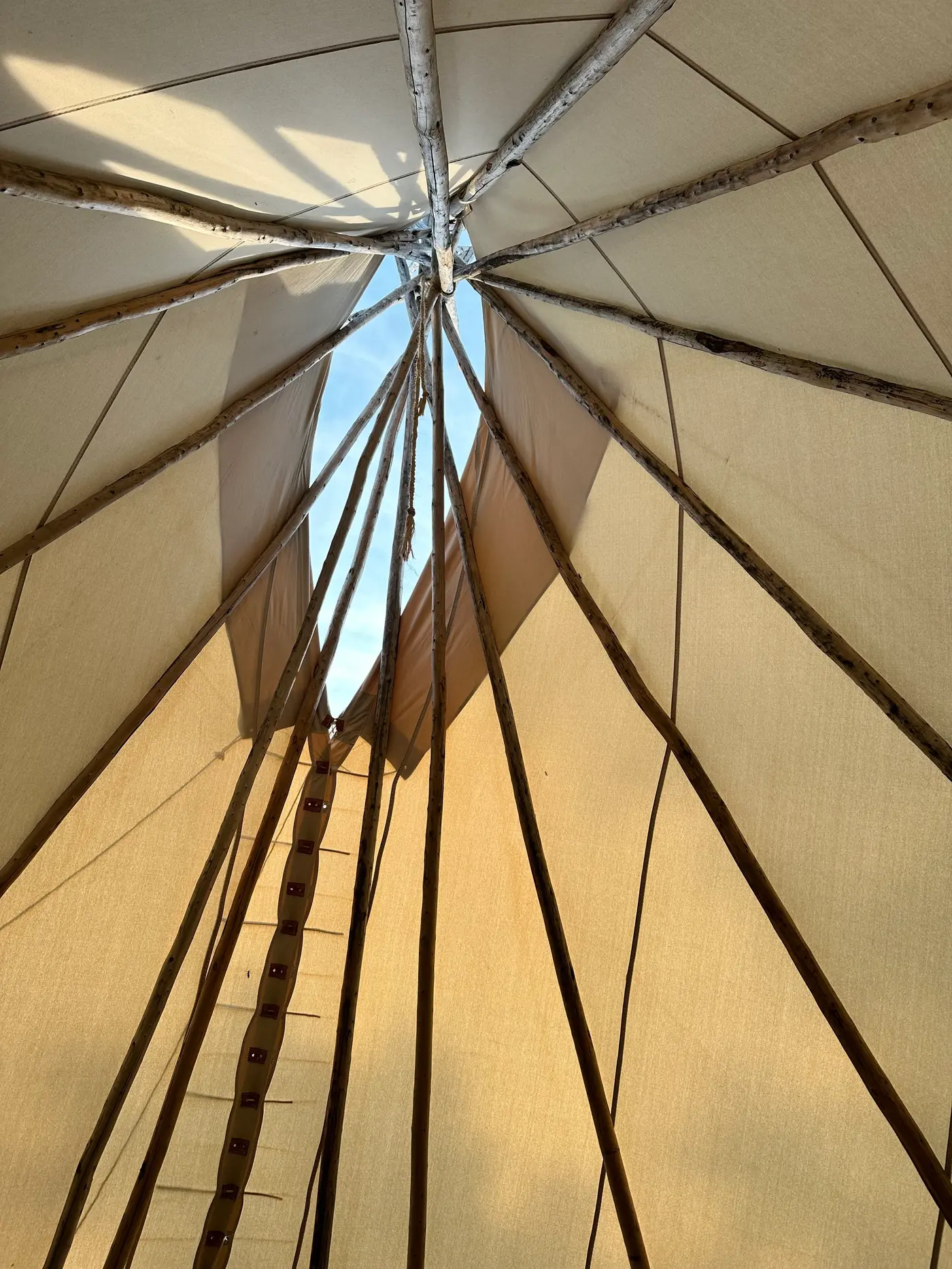
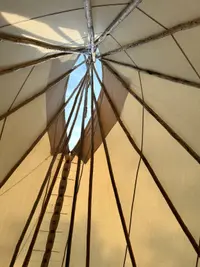
Families move to camp during the week before the fair. Tipi poles harvested in the Pryor or Big Horn Mountains are hauled in, 21 poles to each tipi. Campsites are laid out by reservation district, and a family often holds the same site for decades. Some sites have been held since the 1920s. A camp centers on a common shade roofed with leaves or canvas. Under it stand four to six tables, each with a fully equipped kitchen and camp furniture. Four or five tipis are pitched on either side. Horses for parading and riding are kept in a camp corral. Naming and achievement ceremonies are held in camp, along with birthday and anniversary feasts. The Crow Tribe Tourism Office writes of “the smell of coffee welcoming friends and family to each camp.”
The Montana Historical Society’s notes on its Crow photograph collection record that the tribe was known for having the biggest and best decorated teepees, painted with animal and bird images. The canvas now stands beside other shelters. The 2024 Sheridan Media report noted modern camper trailers and wall tents among the lodges. In the fair’s 107th year, KTVQ reported more RVs on the campgrounds. Ruby Zier told the station her family would sleep in a teepee but had brought a camper for her 79-year-old mother, as it had for five years. “A lot of people do bring campers here for the elders to camp because they were never able to before,” she said.
The encampment belongs to the families. The fair’s lodging page states that there is no public camping unless a family invites a visitor to share its space. Hotels and RV parks are in Hardin, fifteen minutes away, and in Billings, forty-five.
Parades at ten, drums after dark
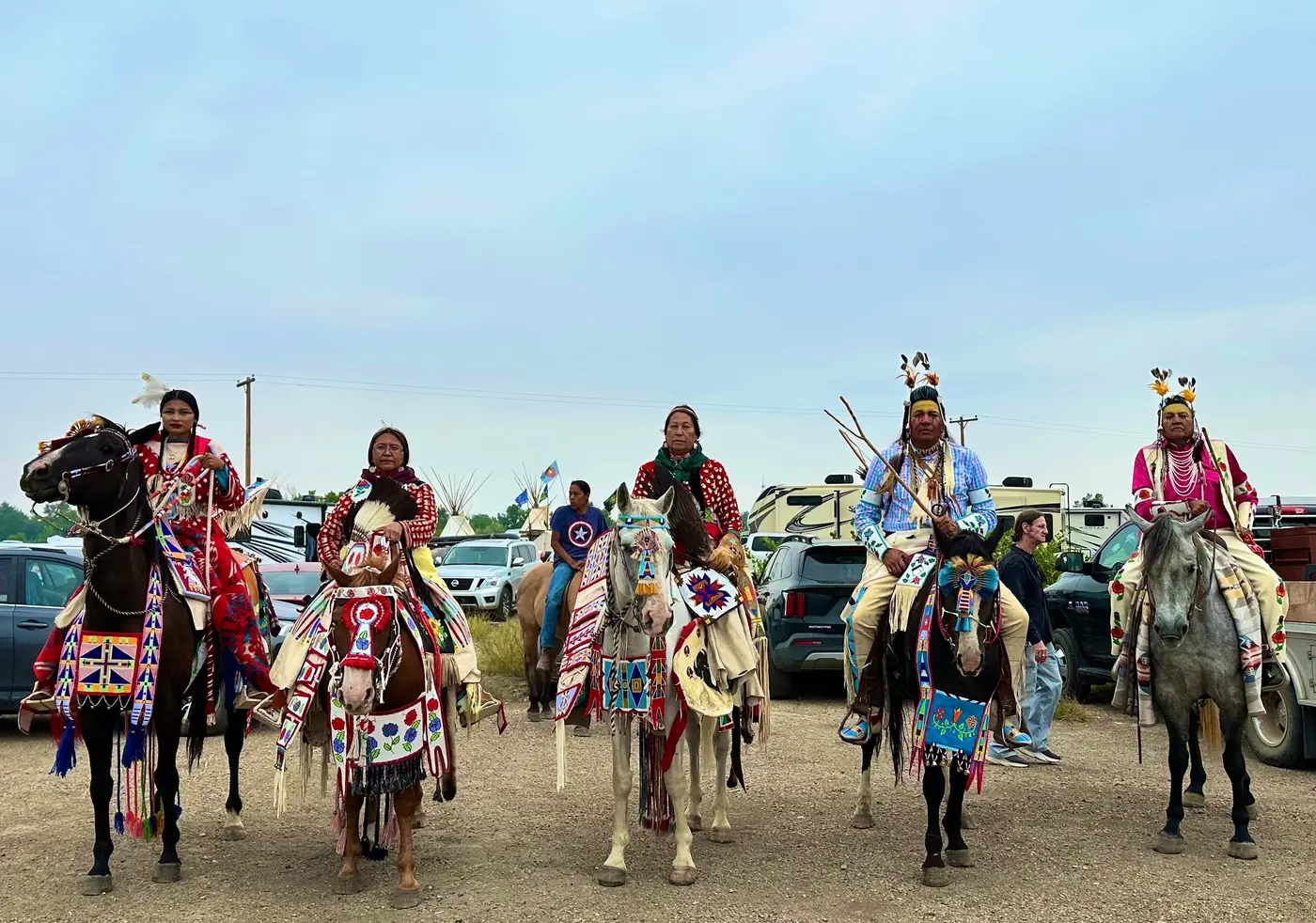
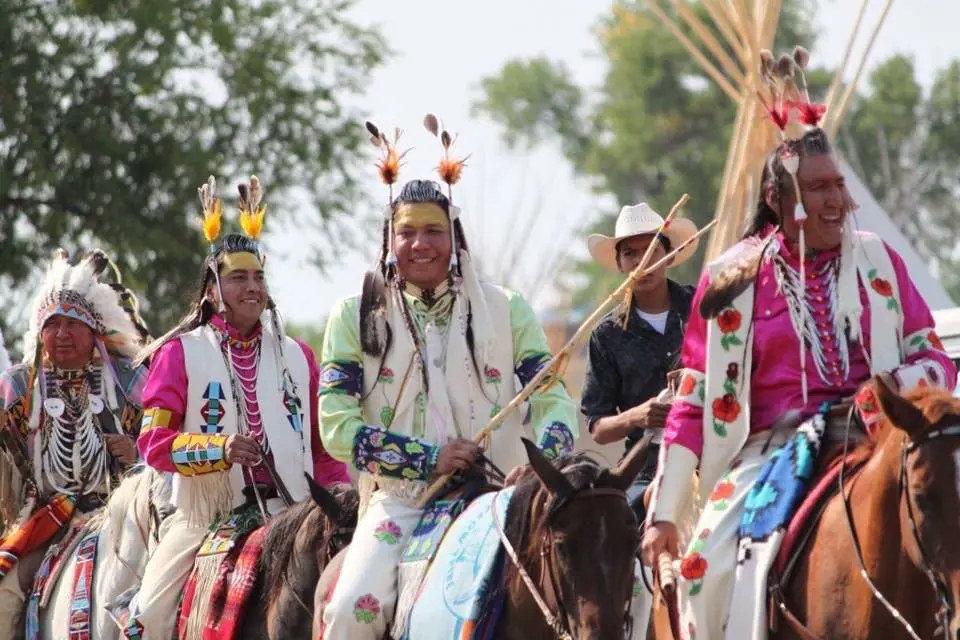
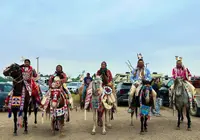
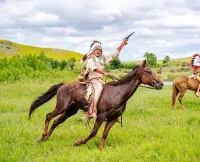
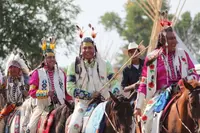
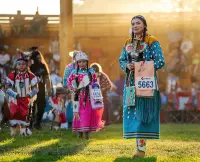
Friday through Sunday, the parade steps off at 10 in the morning. The fair’s history traces it to the processions of moving camp in the buffalo days, when the Apsáalooke followed the herds across the northern plains. A color guard of Native American veterans leads, followed by the Crow Nation’s elected officials and the fair royalty: Miss Crow Nation and six district princesses. The Parade Manager and outriders marshal 150 to 200 Crow riders in full regalia. Prizes are given by category:
- traditional old-time saddles for men, women, boys, and girls
- men’s war bonnets
- men’s tie-bows
- western hats for men and boys
- western saddles for women and girls
Decorated cars, pickups, and flatbeds carry families in regalia and compete for prizes as well. The tourism office describes horses, beadwork, and banners that represent clans.
The royalty are chosen each early fall in a Miss Crow Nation pageant. Past royalty serve as judges, scoring introductions given in the Crow language, talent, public speaking, and past fair participation. Through the year the titleholders travel to college and tribal powwows and invite the public to Crow Fair. At the fair they sponsor dance specials. The 2026 Saturday program listed:
- a Brother and Sister special for dancers ten and under, from Kinzleigh Spotted Horse, Miss Tiny Tot Crow Nation
- a Men’s and Women’s Veterans special with jackets, from Chlo’e Yellowmule, Mighty Few District Princess
- a Switch Dance special for ages 6 to 17, from Samone Birdinground, Big Horn District Princess
- a Visiting Royalty special, from Mary Jane Birdinground, Miss Teen Crow Nation
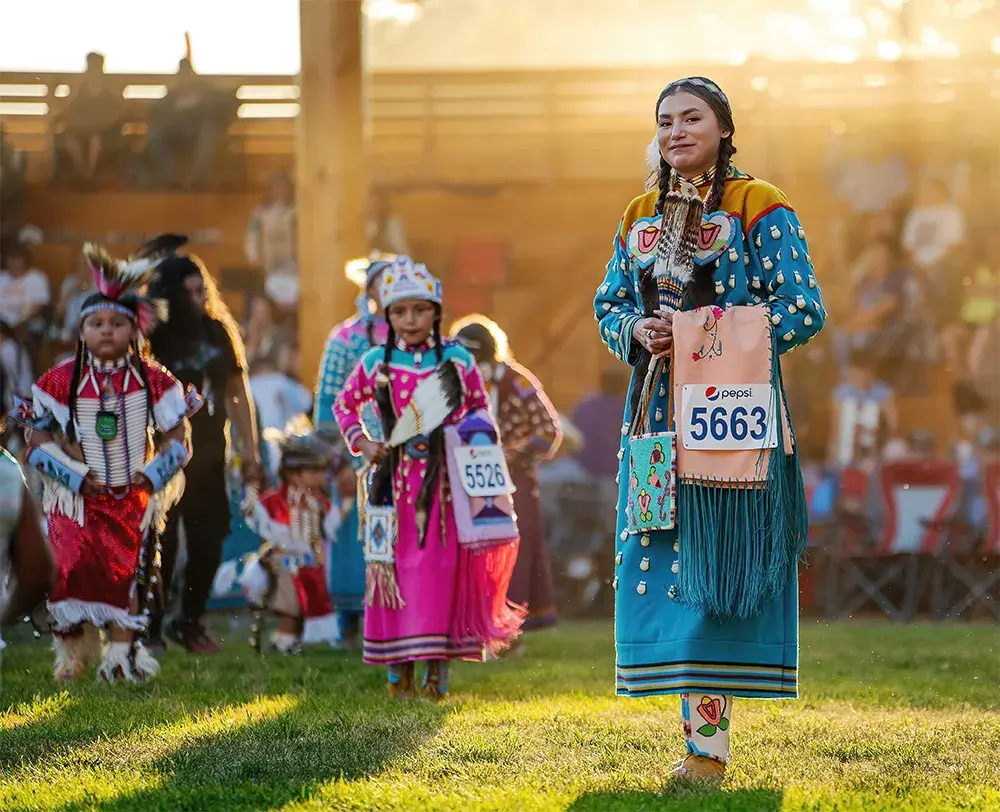
Afternoons belong to the Crow Fair Arbor, where the Intertribal Powwow runs Friday through Sunday. Masters of Ceremonies call a grand entry of eight hundred dancers behind the color guard and royalty. Intertribal dancing follows, then the contests: traditional and fancy dancing for men, women, boys, and girls, with grass, chicken, and fancy dancing among the men’s categories. Tiny tots and golden-age dancers compete too. Fifteen to twenty drum groups from across Indian Country encircle the arena, accompany the dancing, and compete for drum prizes. On the 2026 Saturday, drum roll call came at 12:45 p.m. and grand entry at 1:00. At the 4 p.m. supper break the Oklahoma City Pow Wow Club held a gourd dance. Several honor dances with honor songs and giveaways are held each evening, and the tourism office notes that dancing runs late into the night.
Thursday and Monday are Crow Days, with Crow dance contests, specials, and honoring ceremonies. Head Dancers from each district bring the young First Dancers into the Hot Dance Circle. Giveaways, ceremonial gifts to clan relatives, are planned by family leaders and managed by clan Announcers or Camp Criers. Several often run at once. Gifts include Pendleton blankets, quilts, shawls, and fabric, and, the fair’s history notes, prized horses.
Around the arbor, stalls hold Indian arts and crafts and food outlets. A lighted avenue running west carries more vendors and food trucks. The tourism office lists beadwork, quillwork, traditional clothing, and contemporary art for sale. There is a rodeo, horse racing, and Indian relay, with Mark Real Bird listed as rodeo general manager and Whitney Holds for racing. Fair week also includes a 5K fun run called the Teepee Creeper.
An agent’s fair and the leaders’ terms
The fair’s history was compiled by Dr. Janine Pease. In her account the fair began in 1904 as a country fair meant to encourage the Crow people to become self-supporting farmers. The Federal Indian Service Agent organized a show of crops and livestock grown by Crow farmers and ranchers. District farms and the boarding and day schools brought their best produce and stock. The Crow leaders asked for horse racing and hot dances. The agent and the leaders struck a deal, and together these made the Crow Fair of 1904.
The Montana Historical Society names the agent as Samuel G. Reynolds. It says his fair displayed agricultural and ranching products and arts and crafts, and welcomed all Great Plains tribes to the reservation for a parade and a pow-wow. In that account, rodeo and racing came in later years. A 2017 Crow Reservation timeline from Montana’s Office of Public Instruction dates the Annual Crow Fair to 1903. Danielle Arnoux, who is of Crow and Blackfoot heritage, gave Sheridan Media an older beginning. Families gathered near the center of the reservation each fall to pick chokecherries. They camped for days, traded family news, raced horses, paraded, and danced. The fair, she said, evolved from there.
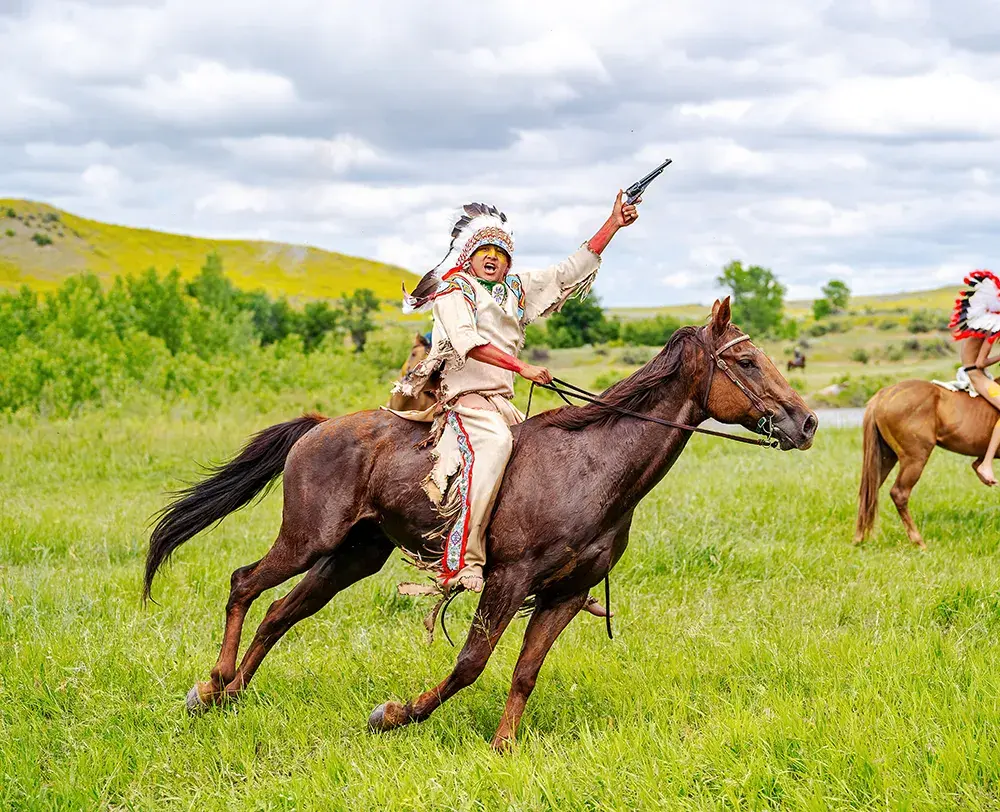
The fair’s history carries its parading back further. On June 25, 1805, the Canadian trader Francois Larocque wrote of “some 654 (Crow) men, wearing brightly decorated buckskin clothing, carrying painted rawhide shields, and sitting astride their prize ponies.” He watched them file past Hidatsa and Mandan villages on the Knife River. In 1832 George Catlin sketched a Crow warrior on a rearing horse and wrote that “no part of the human race could present a more picturesque and thrilling appearance on horseback.”
Big Medicine’s allotment and the arbor
Under the Dawes Allotment Act, the fairgrounds were first allotted in the early 1900s to Big Medicine, Chief of Police. Edward Big Medicine inherited the land. After his death it passed to his children, Annie, Grace, Donna, Ethel, Marietta, Maxine, Charlotte, Walter-Merle, and Willard Big Medicine, the last allotted owners. In the 1970s the Big Medicine family sold the land to the Crow Tribe to ease conflict among tribal members over camping space. The campgrounds are now a Tribal Reserve held in trust by the Bureau of Indian Affairs. Edward’s sister Juanita kept her share, and her family still occupies the land around the grounds.
The fair has been broken three times, by the history’s count. No fair was held during World War II. During the controversy over construction of Yellowtail Dam, the tribe split into two factions, and each held its own fair. The River Crow met on the traditional grounds at Crow Agency, and the Mountain Crow in the Valley of the Chiefs at Lodge Grass. The Crow nation cancelled the 2020 fair during the Covid-19 epidemic.
In 2022 the Frank White Clay administration and advisors led by the Crow architect Daniel Glenn designed a new arbor. Built with private funds, it was finished for Crow Fair 2023. It has natural wood pillars and surfaces, stair-step tiers for camp chairs, an announcers’ stand, lighting for night powwows, and what the fair calls a world class sound system. The arbor serves tribal events through the year.
In 2024, Sheridan Media reported, Brinna Jo Melendrez became the first woman general manager of the Crow Fair Pow Wow in 105 managers. For several years before, she had managed the parades and helped raise funds. Noel Two Leggins, identified by KTVQ as executive director, told the station he hoped to build an RV campground and add space. “I encourage the teepee. I do see RVs. However, the space is limited,” he said. He also worried about the young. “I’m just so happy to see that we still have a community that knows how to put up the teepee.”
The 2027 fair is set for August 18 to 23. Moving-out day falls on the Tuesday after the fair. That same Tuesday, the camp elects the next year’s General Manager, Rodeo Manager, Racing Manager, and Parade Manager.
Notable Events
- 1900sChief of Police Big Medicine was the original allotment steward and owner of the fairgrounds under the Dawes Allotment Act. crowfair.org
- 1903The timeline dates establishment of Annual Crow Fair to this year. opi.mt.gov
- 1904Agent Samuel G. Reynolds created Crow Fair to display agricultural and ranching products and arts and crafts. archiveswest.orbiscascade.org
- 1970sThe family sold the land to the Crow Tribe to reduce conflicts over camping space. crowfair.org
- 2020The Crow nation cancelled the fair during the epidemic. crowfair.org
- 2022Frank White Clay's administration and advisors led by Crow architect Daniel Glenn designed an entirely new arbor. crowfair.org
- 2023Private funds completed construction of the arbor for the fair. crowfair.org
- 2024Brinna Jo Melendrez became the first woman general manager of Crow Fair Pow Wow. sheridanmedia.com
- No Crow Fair was held during World War II. crowfair.org
People
- Bud Lake, Attended Crow Fair and talked to tribal elders to learn Crow history and culture.
- Samuel G. Reynolds, Agent who created Crow Fair (1904).
- Annie, Edward Big Medicine's child; one of last allotted fairgrounds owners.
- Big Medicine, Chief of Police; original allotment steward and owner of Crow Fair Grounds (early 1900's).
- Charlotte, Edward Big Medicine's child; one of last allotted fairgrounds owners.
- Daniel Glenn, Crow architect leading new arbor design (2022).
- Donna, Edward Big Medicine's child; one of last allotted fairgrounds owners.
- Edward Big Medicine, Heir to fairgrounds land.
- Ethel, Edward Big Medicine's child; one of last allotted fairgrounds owners.
- Frank White Clay, His administration participated in new arbor design (2022).
- Grace, Edward Big Medicine's child; one of last allotted fairgrounds owners.
- Juanita, Edward Big Medicine's sister; retained her share of land around the fairgrounds.
- Marietta, Edward Big Medicine's child; one of last allotted fairgrounds owners.
- Maxine, Edward Big Medicine's child; one of last allotted fairgrounds owners.
- Walter-Merle, Edward Big Medicine's child; one of last allotted fairgrounds owners.
- Willard Big Medicine, Edward Big Medicine's child; one of last allotted fairgrounds owners.
- Brinna Jo Melendrez, First woman Crow Fair Pow Wow general manager; previously managed parades and fundraising (2024).
- Danielle Arnoux, Crow and Blackfoot heritage; explained the fair's beginnings.
Sources
- ktvq.com/news/theres-a-change-crow-fair-balances-teepee-tradition-with-modern-comfort
- visitcrowcountry.com/crow-fair
- crowfair.org
- visitcrowcountry.com/get-here
- visitmt.com/events/crow-fair-powwow-parade-52874
- facebook.com/visitcrowcountry
- instagram.com/visitcrowcountry
- visitcrowcountry.com/wp-content/uploads/2025/04/Crow-Fair-2025-Poster.pdf
- visitcrowcountry.com/wp-content/uploads/2025/04/Crow-Fair-2025-Categories.pdf
- visitcrowcountry.com/wp-content/uploads/2025/04/Crow-Fair-2025-Specials.pdf
- facebook.com/crowfaircelebration
- crowfair.org/about
- crowfair.org/about-3
- crowfair.org/about-4
- crowfair.org/about-5
- crowfair.org/about-2-1-2
- crowfair.org/about-2-1
- crowfair.org/about-1-1
- crowfair.org/about-2-1-1
- facebook.com/profile.php?id=61565429450119