



Crescent Moon Ranch Cabin
Sedona, Yavapai County, Arizona. Ranch house; Year-round.
Details

- Where
- 333 Red Rock Crossing Rd, Sedona, AZ 86351. Directions
- When
- Check in: 2:00 pm; Check out: 11:00 am.
- Getting there
- From Phoenix, going north on Interstate 17 take the Sedona exit (Exit 298) onto Highway 179 North. Go through the Village of Oak Creek and into Sedona. Take Arizona Highway 89a west (left) through Sedona to Upper Red Rock Loop Road. Turn left and proceed to Chavez Ranch Road and turn left. Road becomes gravel; go through locked gate to Ranch House at the end of the road on the right.
- Fees
- $200 per night (up to 10 people).
- Access
- Access to the house is via a combination lock box on both the gated road and on the front door to the house. Potable water is available at this site.
- Walk-in or reserve
- Required. May be made through Recreation.gov or calling 1-877-444-6777.
- Phone
- 928-282-4119
- Website
- fs.usda.gov
- Managed by
- US Forest Service.
- Coordinates
- 34.82536, -111.80223.
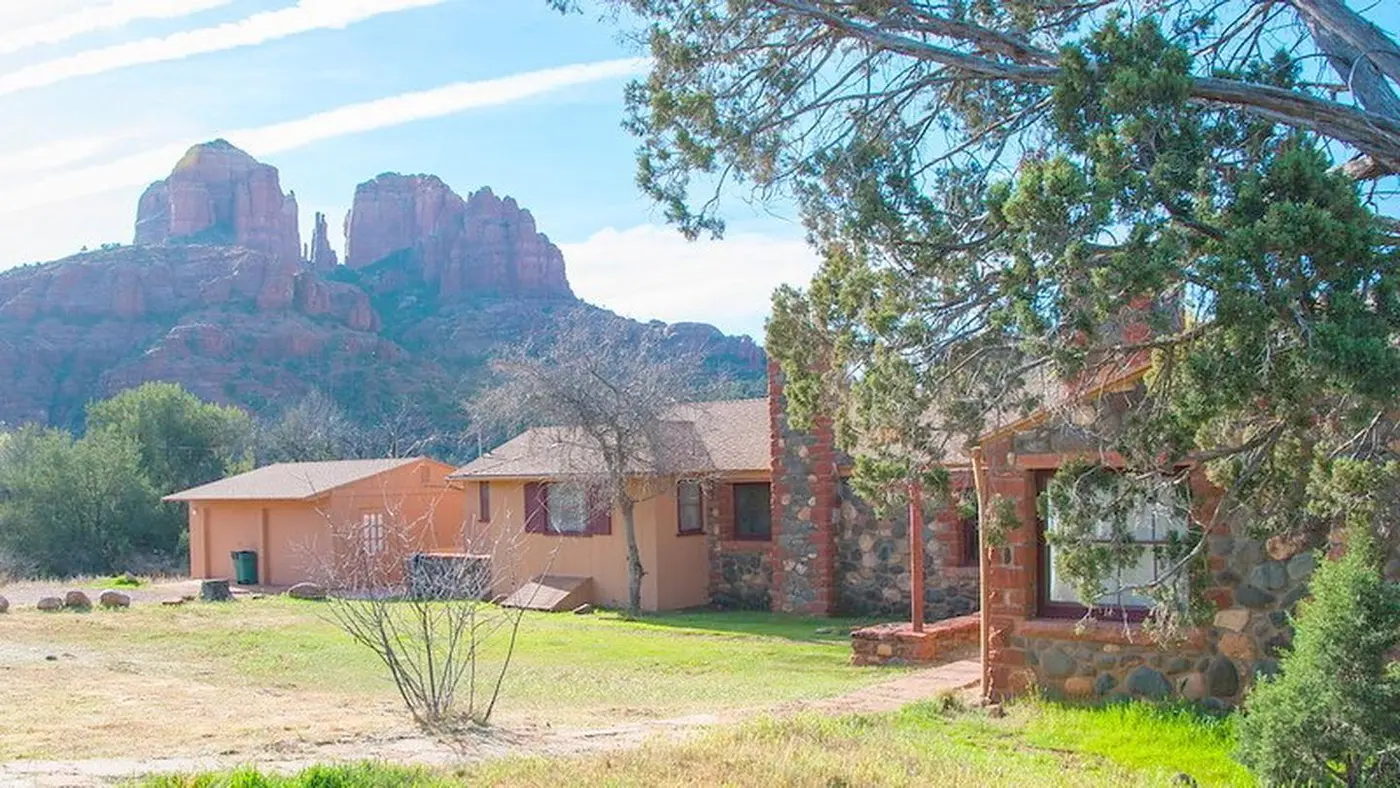
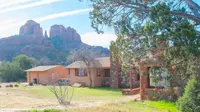
West of Sedona, Chavez Ranch Road turns to gravel and runs through a gate that is kept locked at all times. Renters receive the combination with their reservation. A second lock box, on the front door, holds the house key. The house at the end of the road is one story and L-shaped. Its north face is laid up in river cobbles from Oak Creek, with corners, sills and lintels of locally quarried red sandstone. Three massive stone chimneys rise from a low-pitched roof, and glass blocks frame the main entry under a partial trellis. Below the house the land falls to Oak Creek, and across the water stands Cathedral Rock.
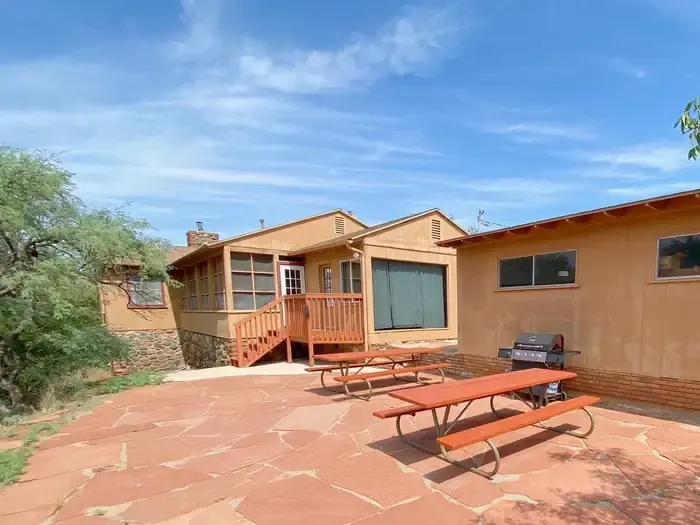
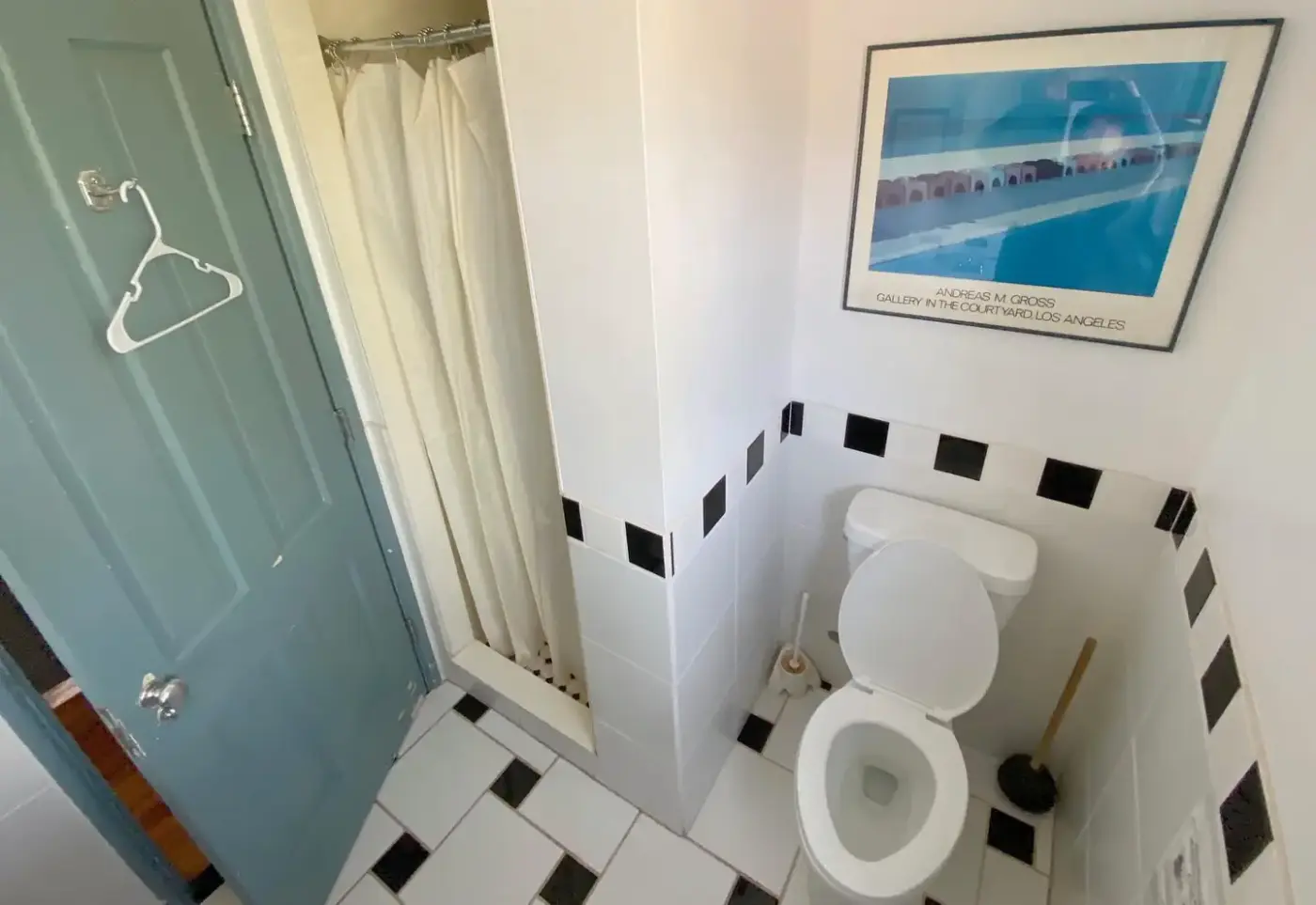
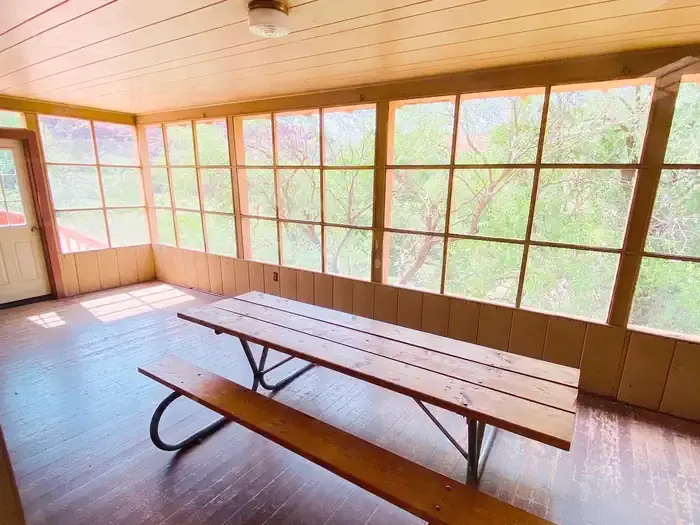
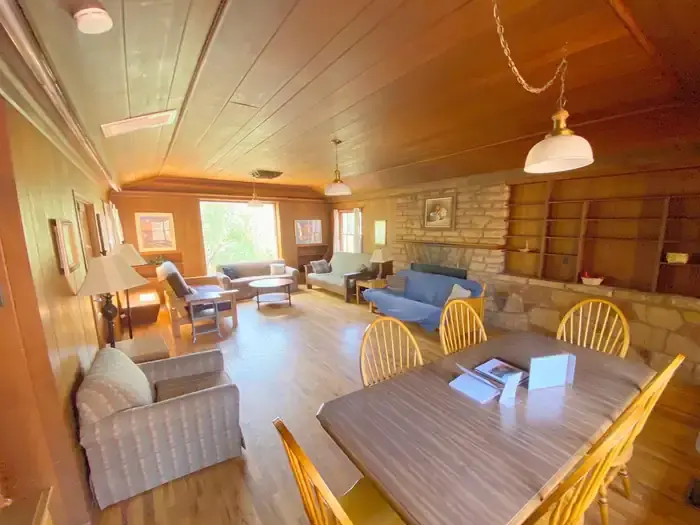
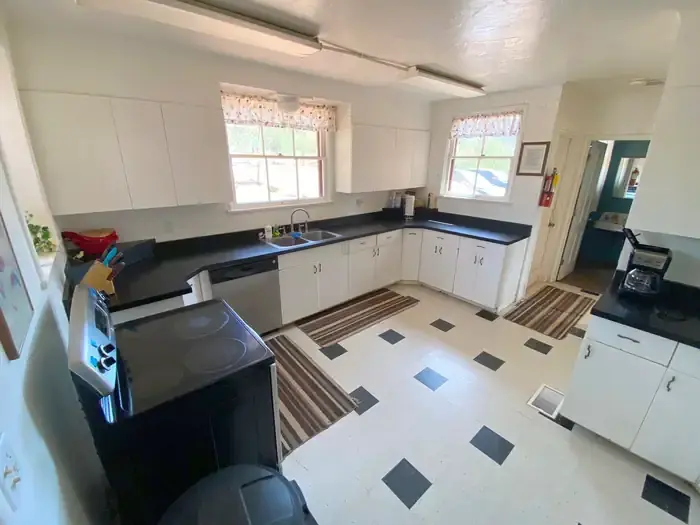
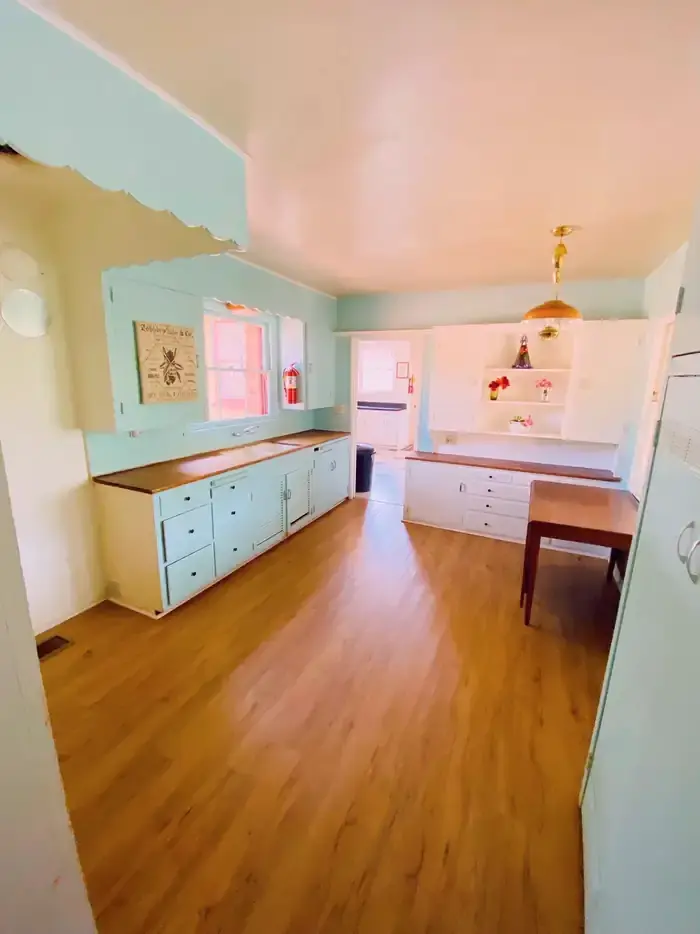
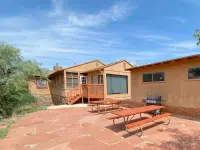
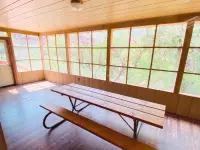
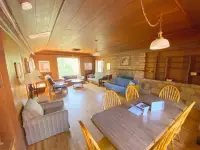
The Coconino National Forest rents the Crescent Moon Cabin year-round to one party of up to 10 people. The house has three bedrooms, three baths, a great room, an enclosed sun porch and two kitchens. Arizona Highways writes that the smaller kitchen was once used for canning. Guests bring their own bedding, towels and food, and they pack out their own trash. Outside are a grill, a picnic table and a vault toilet. Pets are not allowed, cell service is limited, and quiet hours run from 10 p.m. to 6 a.m. A cabin manual inside the house answers visitors’ questions, and volunteers clean the house weekly.
The house Lescher & Mahoney drew
The National Register nomination for the property states that the house keeps its historic floor plan and finishes. The floors are stone, oak and linoleum. Most walls are plaster, with accent walls of stone or redwood, and the ceilings are random-width redwood, ponderosa pine and plaster. The rooms listed in the nomination include a vestibule, a service entry, a master bedroom, a guest room, a trunk room, a pantry and a maid’s room. The roof was originally covered in redwood shingles. The Forest Service replaced them with composition shingles after 1980. When the agency removed asbestos from the house, it replaced or covered the board-and-batten siding on the maid’s quarters with plywood made to look like vertical boards.
Volunteers refinished the floors, re-glazed the original windows and refurbished the kitchen cabinets. “Even the small things in the house are preserved, including the original window locks and doorknobs,” Justin Loxley, the Red Rock Ranger District’s volunteer coordinator and manager of Crescent Moon, told Arizona Highways. The magazine describes a worn picnic table on the large screened porch and says that at night the sounds there are Oak Creek and crickets. A flagstone patio sits above the creek, and from it the rising sun can be seen reaching the red spires of Cathedral Rock.
The house stands at about 4,000 feet, in high desert at the foot of the Mogollon Rim. The adjacent Crescent Moon Day Use Area charges a separate fee and has picnicking, swimming, fishing and wading in Oak Creek. Arizona Highways reports that the Cathedral Rock vortex is free to visit for anyone who feels inspired to go.
A wheel on Dumas Ditch
The ranch occupies three benches between Oak Creek and a sandstone mesa. Dumas Ditch divides the lower bench from the middle one. Its course can be traced by a line of cottonwoods, and berry vines spill over the stone wall on its downslope side. Homesteader John Lee is believed to have started the ditch in the 1880s, and David Dumas rebuilt it. Foreman Claire Jones lined parts of it with concrete in the 1930s and 1940s. By 1980 the ditch was so choked with sediment and its lining so broken that it could no longer carry water. The Forest Service cleaned and repaired it.
Farther down the ditch stands the Fitz Steel Overshoot Water Wheel. Claire Jones assembled it for Andrew Baldwin in 1936. The wheel is built entirely of metal and has curved buckets, and water entered it near the top. The Register nomination gives its size as about 2 feet wide and slightly over 14 feet in diameter, while KNAU calls it a 12-foot-diameter wheel. It generated electricity for the house. It also filled a small tank used for fire suppression, landscaping and laundry, and it pumped water to a wooden tank and a concrete reservoir that irrigated the upper orchard. The nomination notes anecdotal evidence that the reservoir also served as a swimming pool. The one-room pumphouse attached to the wheel still holds an original 1930s General Electric generator marked “General Electric Thyrite Meter Protector Model 9LA12B, Schenectady, N.Y.” The Sedona Heritage Museum has separate exhibit text stating that Baldwin’s friend Howard Hughes supplied him with a generator to make electricity.
The day-use area opens only the wheel, a nearby well house and the lower-bench fields to the public. The other historic structures stand in closed areas. These include a blacksmith shop, a packing shed built on the site of the original homestead house, and a hay barn. The accounts of the barn differ. Cronkite News calls it “Lee’s hay barn,” and Arizona Highways calls it Lee’s original homestead barn. A Sedona Red Rock News caption says the old barn is the only building left from the original homestead. The Register nomination, however, dates a hay barn to about 1947 and says it was built for Jane Baldwin. No fruit trees remain on the ranch. Johnson grass covers the lower bench and mesquite has spread over the upper two, but old furrows and berms can still be seen in the ground.
From OK Ranch to Palo Bonito
HistoriCorps writes that the land was historically inhabited by Apache, Western Apache, Hopitutskwa, Pueblo and Hohokam peoples. The Prescott cattleman John H. Lee took up the 160 acres around 1880. He built a dwelling, dug the ditch and grew grain for his stock. He called the place the OK Ranch after the brand he used on his cattle. The patent came on February 10, 1896, and that August Lee and his wife, Lenora, sold the homestead to Elizabeth Ragsdale Howard.
Howard had lived along Oak Creek for about 15 years by then. She was the widow of Abraham James, a squatter who died in 1881 before he could legally claim his land in what is now central Sedona. In 1891 she married Charles Smith Howard, known as Bear Howard for his part in killing off the bears of upper Oak Creek Canyon. According to the Sedona Red Rock News, a bear later killed him. Legend has it that the 54-year-old widow soon tired of the 74-year-old hunter and his three large bear dogs, and that she particularly objected to his habit of giving away her cattle. The couple separated within three months. Elizabeth kept the cattle and Bear kept the dogs. She lived on the ranch from mid-1896 to early 1902, running cattle and working as the local midwife. She also built a barn there, and a modern slump-block building now stands on its site.
In 1902 the Schnebly family bought the ranch for speculation. They sold it in 1904 to Marion M. Palmer, who sold it in 1905 to Henry Schuerman and David E. Dumas. The two families raised their children on the ranch and built a school there. They planted vegetable gardens and orchards of peach, apple, apricot and plum. The Red Rock News puts the count at 1,500 fruit trees by 1916. The National Park Service says the whole Red Rock district of lower Oak Creek had about 15,000 fruit trees by early 1916 and calls the Dumas-Schuerman ranch the heart of that district. A cannery opened on the ranch in the 1910s and was run by Eugene Baron. It let local growers sell beyond Jerome and the Verde Valley. KNAU reports that the main road from Jerome to Sedona ran through the property and that the ranch became a social hub for dancing and dining. The blacksmith shop went up between 1915 and 1919.
Schuerman died in 1920 after a long illness, and David Dumas fell ill and died that summer. When Margaret Dumas died in 1925, the ranch passed to their heirs. One of them, M. O. “Ollie” Dumas, a Jerome dentist, used it as winter range for his cattle, bought out the other heirs and rented out the land. From 1919 to 1922, John Loy rented acreage there and ran a truck farm, and his stepson Nick Duncan spent part of his childhood on the place. During the Great Depression the orchards declined under a series of renters.
Andrew E. Baldwin, a Verde Valley entrepreneur, bought the ranch in 1936 and renamed it Palo Bonito. The Park Service says the house was part of a larger real estate plan and was meant to project an image of western refinement to prospective clients. Baldwin hired the Phoenix firm of Lescher & Mahoney, which had already designed the Orpheum Theatre, Brophy College Chapel and Phoenix City Hall. Arizona Highways, Cronkite News and the Red Rock News all give 1938 as the year the house was built. The Register nomination says Royal William Lescher drew the plans in May 1939 and that the house was built that year. The Baldwins’ peaches won prizes at the county fair. Andrew Baldwin died in 1943 before his plans were carried out, and Jane Baldwin then rented the ranch to Claire Jones. The 2.7-mile Baldwin Trail off Verde Valley School Road is named for Andrew Baldwin, and Red Rock Crossing is also called Baldwin’s Crossing.
Lois Duncan’s Crescent Moon
In 1953 the ranch was sold to Lois Kellogg Maury, a Connecticut heiress. Since 1941 she had spent part of each year at her Pinnacle Peak ranch in what is now Scottsdale, where she ran a finishing school for debutantes and rented cabins to visitors. She hired Nick Duncan as her ranch manager, and the two married in 1955. They kept the orchards, raised horses and Suffolk sheep, and in the early 1960s added a horse barn. Lois Duncan gave the ranch the name of her Pinnacle Peak place, Crescent Moon. Both ranches were named for Rabindranath Tagore’s The Crescent Moon, a collection of Bengali children’s poems first published in 1913.
In 1966 Lois Duncan received permission to found a center devoted to Sri Aurobindo at the ranch. She died in 1970. After a dispute that followed her death, Nick Duncan bought back the acreage held by the religious order and razed the building there, known as Purani house. By the late 1970s, KNAU reports, tourism had replaced agriculture as Sedona’s cash crop. In 1980 Nick Duncan sold the ranch to the Trust for Public Land, and the Trust deeded it to the Forest Service later that year. The sources give different reasons for the transfer. The Park Service says the Duncans wanted the ranch kept for public use. Arizona Highways says the purchase kept it from commercial development. The Register nomination says the Forest Service acquired it to build a recreation site to replace one at Red Rock Crossing that the flood of 1978–1979 had destroyed.
The Forest Service sponsored a HABS-HAER study of the ranch, published in 1999. In 2014 it demolished the foreman’s house. The OK Ranch Historic District was listed in the National Register of Historic Places in 2018. The district covers 45.19 acres and includes 30 resources, 18 of which contribute to its historic character. KNAU reported that it was the Coconino National Forest’s first such listing in more than 20 years.
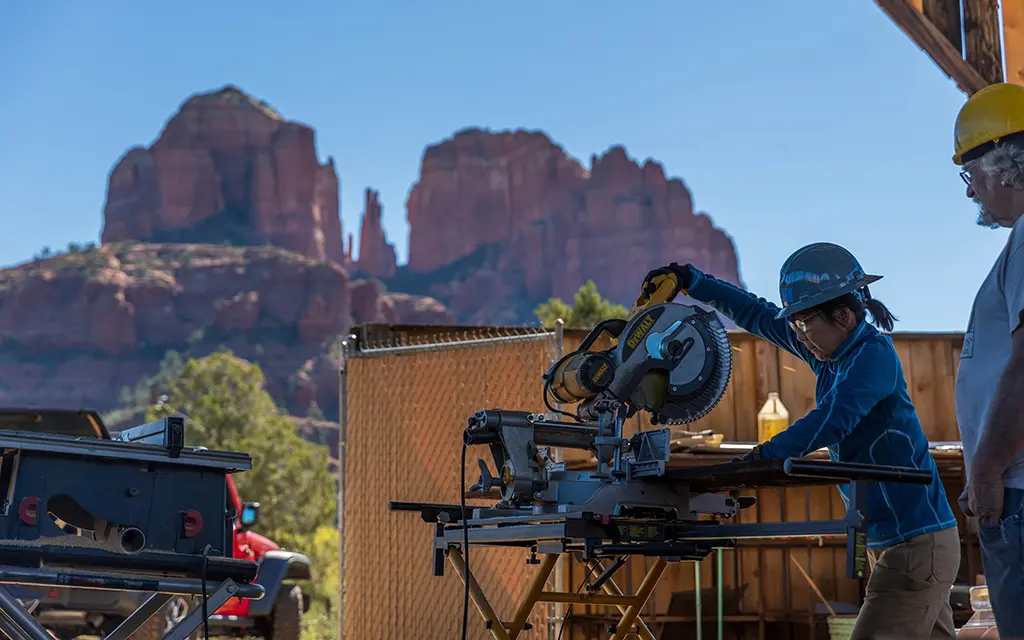
HistoriCorps first brought volunteers to the ranch in 2016, working alongside youth from the Arizona Conservation Corps. The group’s partnership with the forest began in 2021, and that year its crews repointed the masonry on the blacksmith shop and the waterhouse. On October 24, 2022, Cronkite News photographed the crews at work. Pete Specht cut lumber for a new hay barn fence while Yumi Shimizu learned to run a circular saw, and Brian Brogie scraped rust from the water wheel before applying a weathering treatment. Over three weeks that October the volunteers put a new roof on the packing shed and restored the siding on the hay barn. “They also are good about asking, ‘Are you comfortable up on the roof? Are you comfortable using that tool?’” said volunteer Randy Hurley. HistoriCorps scheduled crews to return in 2026 to work on the barn’s roof, doors and siding.
Notable Events
- 1880Lee entered the land and filed for a homestead. npgallery.nps.gov
- 1880Prescott cattleman John Lee named the Oak Creek property the OK Ranch in 1880 and patented the 160-acre ranch 16 years later under the Homestead Act of 1862, according to the Coconino National Forest. redrocknews.com
- 1896Lee and Lenora sold the homestead to Elizabeth Ragsdale Howard. npgallery.nps.gov
- 1896Lee received the property patent. npgallery.nps.gov
- 1902Howard sold the ranch to T. C., J. M., and W. F. Schnebly. npgallery.nps.gov
- 1905Palmer sold the ranch to Henry Schuerman and David E. Dumas. npgallery.nps.gov
- 1910sA cannery opened on the ranch, expanding the markets available to local farmers. npgallery.nps.gov
- 1915The blacksmith shop was constructed during Dumas and Schuerman ownership. npgallery.nps.gov
- 1916The Dumas and Schuerman families created a successful orchard that had 1,500 fruit trees by 1916. redrocknews.com
- 1920Schuerman died after a long illness. npgallery.nps.gov
- 1920David Dumas became ill and died. npgallery.nps.gov
- 1925The ranch passed to Dorette Schuerman, Helene Owenby and the Dumas children after Margaret Dumas died. npgallery.nps.gov
- 1936Verde Valley entrepreneur Andrew Baldwin bought the property in 1936 and rechristened it Palo Bonito. historicorps.org
- 1936The tank stored irrigation water for Baldwin's peach orchard. npgallery.nps.gov
- 1936Claire Jones assembled the water wheel and pumphouse for Baldwin. npgallery.nps.gov
- 1938Andrew and Jane Baldwin built the current home in 1938. redrocknews.com
- 1939The ranch house was constructed while the Baldwin family owned the property. npgallery.nps.gov
- 1939Lescher drew and Mahoney checked the ranch house plans. npgallery.nps.gov
- 1943Baldwin died before realizing his plans; Jane Baldwin then rented the ranch to Claire Jones. npgallery.nps.gov
- 1947A hay barn was constructed for Jane Baldwin. npgallery.nps.gov
- 1953Lois Kellogg Maury became the new owner. npgallery.nps.gov
- 1953In 1953, the Baldwins sold Palo Bonito to Louis Maury, a Connecticut heiress. redrocknews.com
- 1955Maury married Nick Duncan and the ranch became their home. npgallery.nps.gov
- 1960sNick and Lois Duncan added a horse barn. npgallery.nps.gov
- 1966Lois received permission to found an Aurobindo center at the ranch. npgallery.nps.gov
- 1970Following Lois Duncan's death and a dispute, Nick Duncan repurchased the religious-order acreage and razed Purani house. npgallery.nps.gov
- 1980In 1980, the U.S. Forest Service purchased the property to keep it from being commercially developed. arizonahighways.com
- 1996After a tree limb fell on the packing shed, the Forest Service repaired it with compatible material. npgallery.nps.gov
- 2014The foreman's house was demolished following Section 106 consultation. npgallery.nps.gov
- 2016HistoriCorps' first phase of work at Crescent Moon Ranch was in 2016, when volunteers from the general public worked alongside youth from Arizona Conservation Corps (AZCC). historicorps.org
- 2018The OK Ranch Historic District was listed in the National Register of Historic Places. nps.gov
- 2021In 2021, officials with the Coconino National Forest partnered with the nonprofit HistoriCorps to help maintain the ranch's historic structures. cronkitenews.azpbs.org
- 2022Over three weeks in October, HistoriCorps crews replaced the packing shed roof, restored the siding on the hay barn and treated the waterwheel for rust. cronkitenews.azpbs.org
- The ranch and orchards declined while rented to various parties. npgallery.nps.gov
People
- Abraham James, Elizabeth Howard's earlier husband; died before legally claiming his central Sedona property (died 1881).
- Andrew E. Baldwin, Purchased ranch (1936).
- Birdie Dumas Carlet, Dumas heir to ranch (1925).
- Charles Smith Howard, Bear Howard; married later ranch owner Elizabeth (1891).
- Charlie Smith, Locksmith said by a previous owner to have occupied a house on the property.
- Claire Jones, Crescent Moon Ranch foreman (hired 1937, worked 16 years).
- D. G. Dumas, Dumas heir to ranch (1925).
- David E. Dumas, Co-purchaser with Henry Schuerman (1905).
- Dorette Schuerman, Inherited an interest in the ranch (1925).
- Elizabeth Ragsdale Howard, Purchased the homestead (August 1896).
- Eugene Baron, Operated the ranch cannery.
- Helene Owenby, Inherited an interest; daughter of Dorette Schuerman (1925).
- Henry Schuerman, Co-purchaser with David E. Dumas (1905).
- J. M. Schnebly, Purchased ranch with T. C. and W. F. Schnebly (1902).
- Jane Baldwin, bought the ranch with Andrew Baldwin (1936).
- John H. Lee, First recorded Euro-American settler; Prescott cattleman.
- John Loy, Nick Duncan's stepfather; rented acreage and operated a truck farm (1919-1922).
- Lenora, Lee's wife; sold the homestead with him (August 1896).
- Leslie Joseph Mahoney, Partner in Lescher & Mahoney, the firm selected to design Baldwin's home.
- Lois Duncan, renamed the property Crescent Moon Ranch.
- Lois Kellogg Maury, New ranch owner (1953).
- M. O. “Ollie” Dumas, Jerome dentist; used ranch for cattle winter range and bought out other interests.
- Margaret Dumas, Resided at the OK Ranch with David (late 1905).
- Marion M. Palmer, Buyer from the Schnebly family; held ranch for speculation (1904).
- Nick Duncan, managed the ranch for Maury (lived at the OK Ranch 1919-1922).
- Rabindranath Tagore, Author of The Crescent Moon, source of the ranch's name.
- Royal William Lescher, Partner in Lescher & Mahoney, the firm selected to design Baldwin's home.
- Sri Aurobindo, Spiritual figure whose center Lois was authorized to found at the ranch (1966).
- T. C. Schnebly, Purchased ranch with J. M. and W. F. Schnebly (1902).
- W. F. Schnebly, Purchased ranch with T. C. and J. M. Schnebly (1902).
- Andrew Baldwin, bought the ranch and built the current home (1936).
- Charles "Bear" Howard, married ranch owner Elizabeth Ragsdale; hunted bears in Oak Creek Canyon.
- Elizabeth Ragsdale, owned the ranch and lived there (1896-1902).
- Howard Hughes, supplied Baldwin with a generator to create electricity.
- John Lee, Prescott cattleman who named the property the OK Ranch (1880).
- Louis Maury, Connecticut heiress who bought Palo Bonito (1953).
- Marion Palmer, bought the ranch (1904).
- Ollie Dumas, used the ranch as a winter range for his cattle, bought out his siblings and rented out the ranch and orchards.
- Theodore Carlton Schnebley and Sedona Schnebly, bought the ranch for speculation (1902).
Sources
- fs.usda.gov/r03/coconino/recreation/crescent-moon-cabin
- recreation.gov/camping/campgrounds/233888
- nps.gov/places/ok-ranch-historic-district.htm
- historicorps.org/crescent-moon-ranch-az-2026
- cronkitenews.azpbs.org/2022/12/16/historicorps-volunteers-preserve-crescent-moon-ranch-sedona
- arizonahighways.com/business/crescent-moon-ranch
- redrocknews.com/2025/07/18/take-a-hike-indoors-into-history-at-sedona-heritage-museum