
Cole M. Rivers Hatchery
Trail, Curry County, Oregon. Fish hatchery; March - October.
Details

- Where
- 200 Cole M. Rivers Drive, Trail, OR 97541. Directions
- When
- dawn to dusk; 7 days a week.
- Getting there
- Take Hwy. 62 from Medford toward Crater Lake National Park to milepost 29 at Casey State Park. Turn north on Takelma Drive. Travel 3/4 mile to Cole M. Rivers Drive. Turn right and follow the road across the Rogue River to the hatchery, located on the east side of the Rogue River.
- Access
- Aging infrastructure continues to cause problems at the hatchery, but Cole Rivers Hatchery continues to operate under full production; the owner reports in-hatchery issues in the past two years that have or will impact angler opportunity.
- Walk-in or reserve
- No reservation is required to visit; recommended to call ahead for the spring fin-marking visit window, late February to early April.
- Phone
- (541) 878-2235
- Website
- myodfw.com
- Managed by
- Owned by USACE and operated under contract by Oregon Department of Fish & Wildlife (ODFW).
- Established
- 1973.
- Coordinates
- 42.665, -122.68.
From Highway 62 at milepost 29, by Casey State Park, Takelma Drive runs north three-quarters of a mile to Cole M. Rivers Drive. The drive crosses the Rogue River to the hatchery on the east bank. The hatchery stands about half a mile below William Jess Dam and Lost Creek Reservoir, at 1,545 feet, 30 miles northeast of Medford. The Medford Mail Tribune puts its entrance 157 miles from the sea.
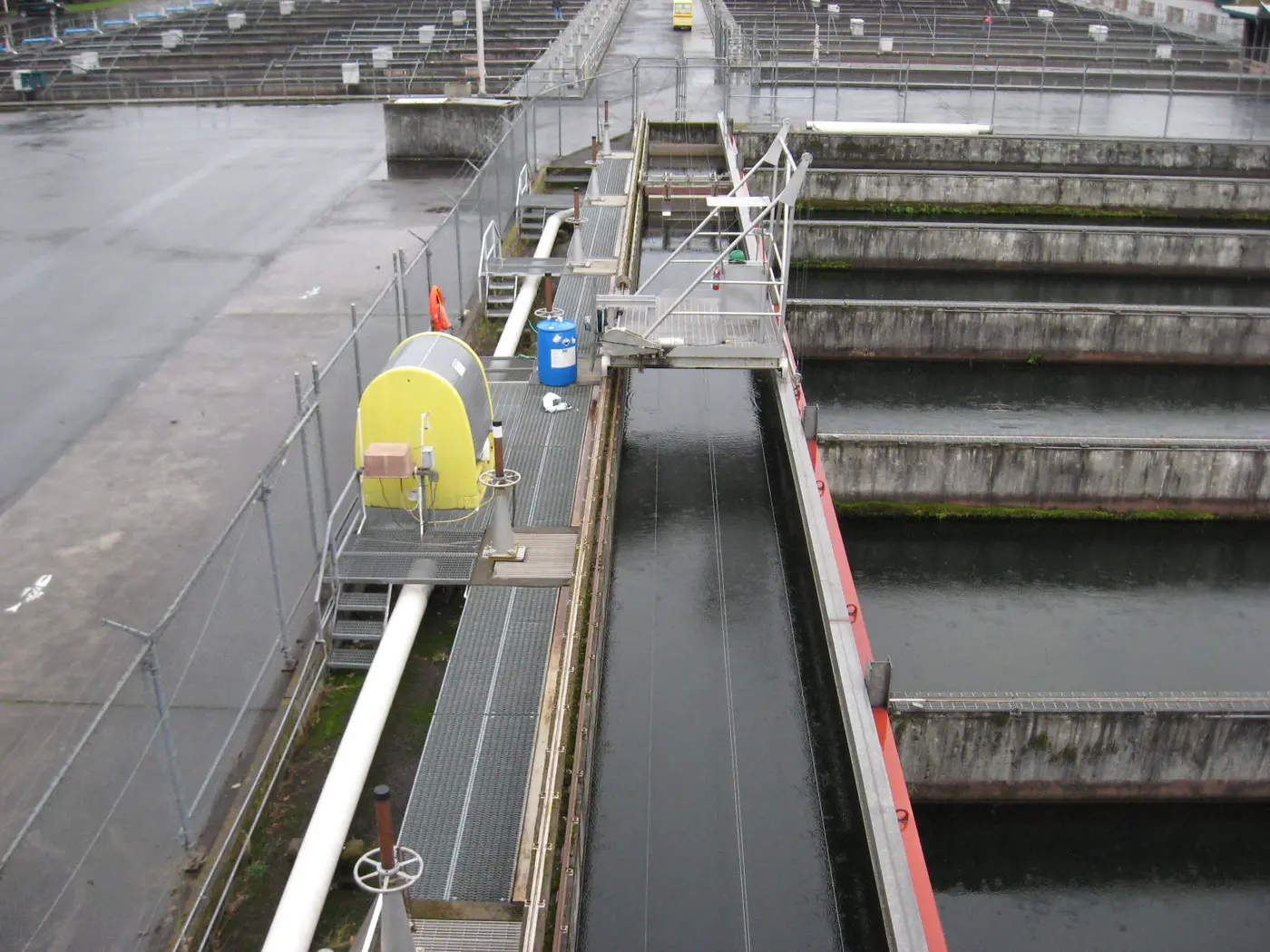
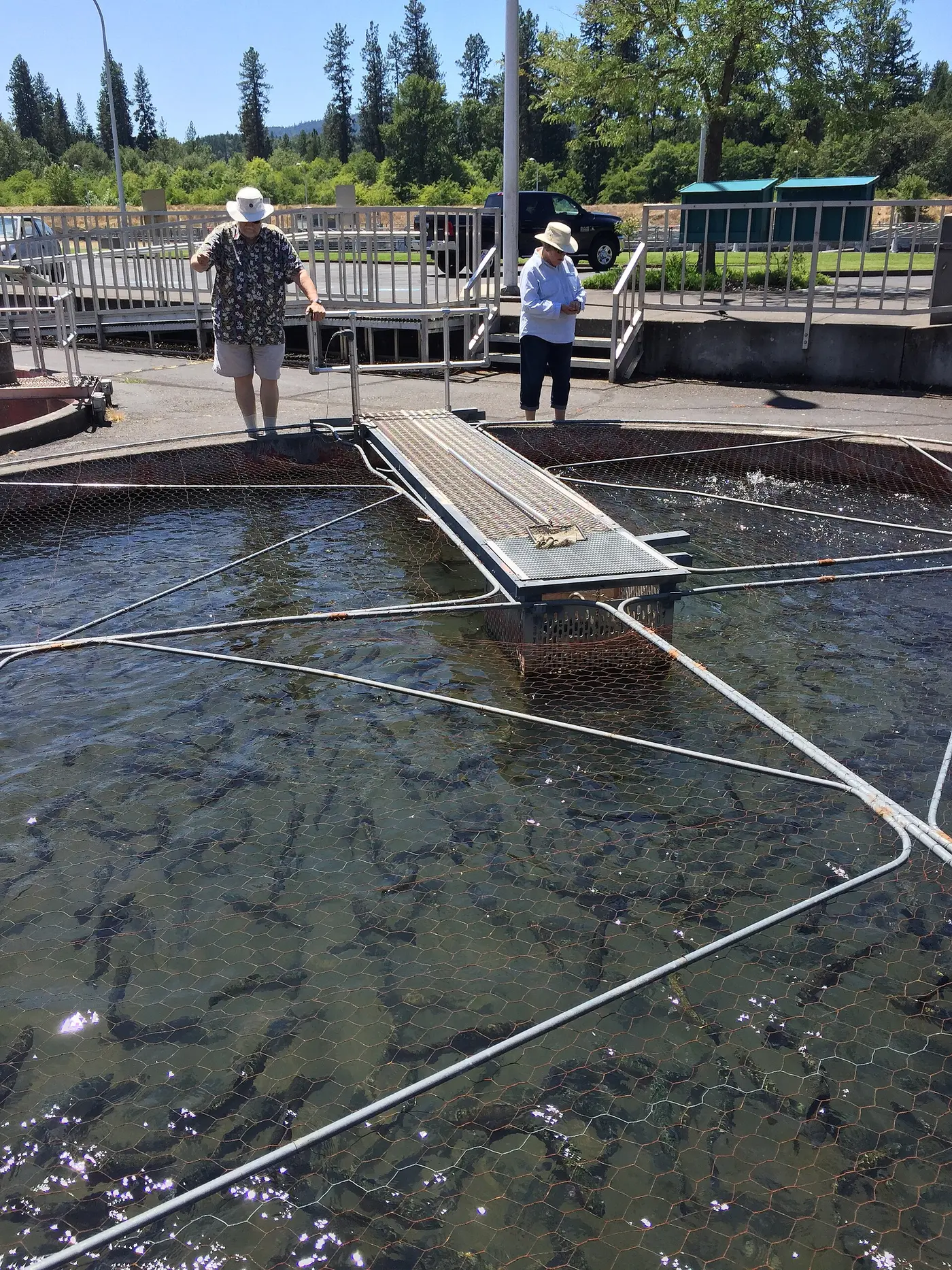
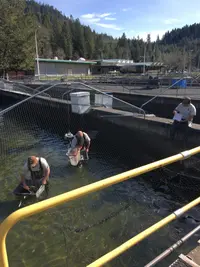
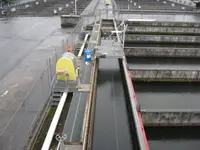
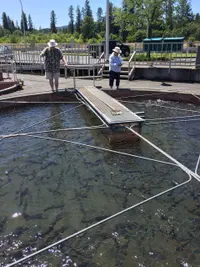
An observation deck stands over the collection pond and the adult holding ponds. The fish reach that pond by a ladder. Migrating adults enter, climb, and are trapped, hatchery returns and naturally produced swim-ins alike, and a barrier weir at the pond ends their way upstream. Winter steelhead are taken there from late February through early June. A viewing room looks onto the spawning area, where the adults are spawned and the eggs set to incubate. Display ponds hold trout and steelhead raised on the place. Birds of prey, wading birds and waterfowl work the ponds and the river edge.
Anglers fish the Hatchery Hole for winter and summer steelhead, coho and spring Chinook in authorized seasons. The grounds also have a boat ramp for small boats, trails, restrooms and a camp host. Casey State Park, next door, keeps day-use picnic and boating grounds.
Fin clips and the weekly count
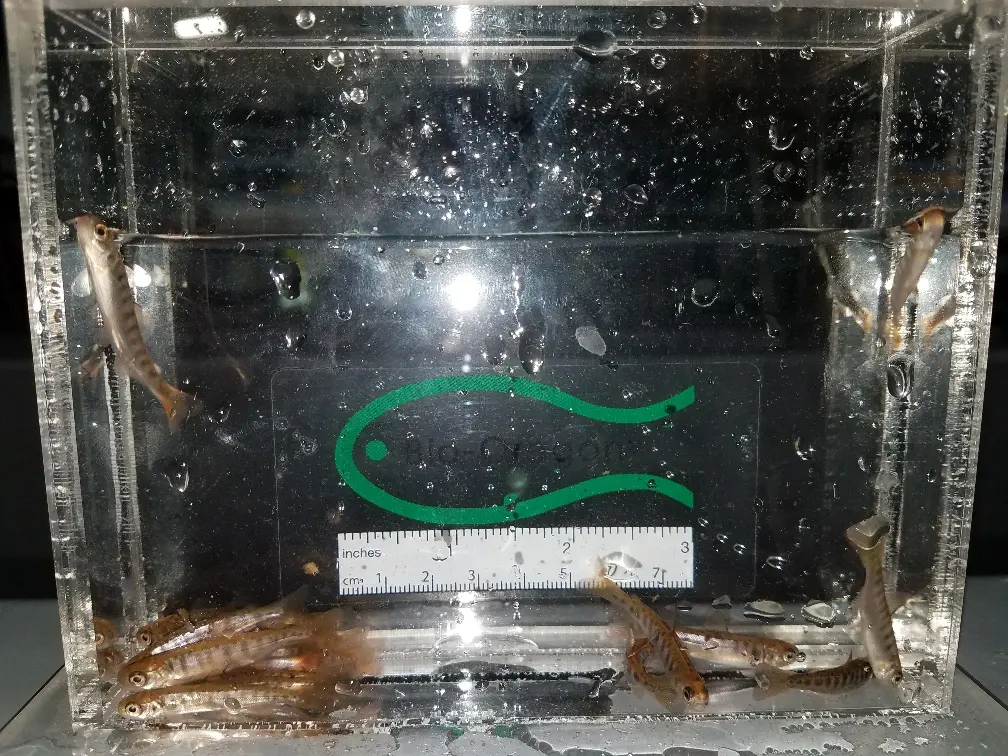
The hatchery raises spring and fall Chinook, coho, summer and winter steelhead, and rainbow trout. ODFW calls it the largest producer of hatchery fish on the Oregon coast. Its annual goals run to 1,703,250 spring Chinook smolts, 75,000 coho, 220,000 summer steelhead, and 132,000 winter steelhead each for the Rogue and the Applegate. In 2016 a staff of 14 full-time and five seasonal employees did the work.
Winter steelhead smolts leave in late April or early May. The screens are pulled from the rearing ponds and the fish go into the river on their own. The next day the stragglers are crowded out.
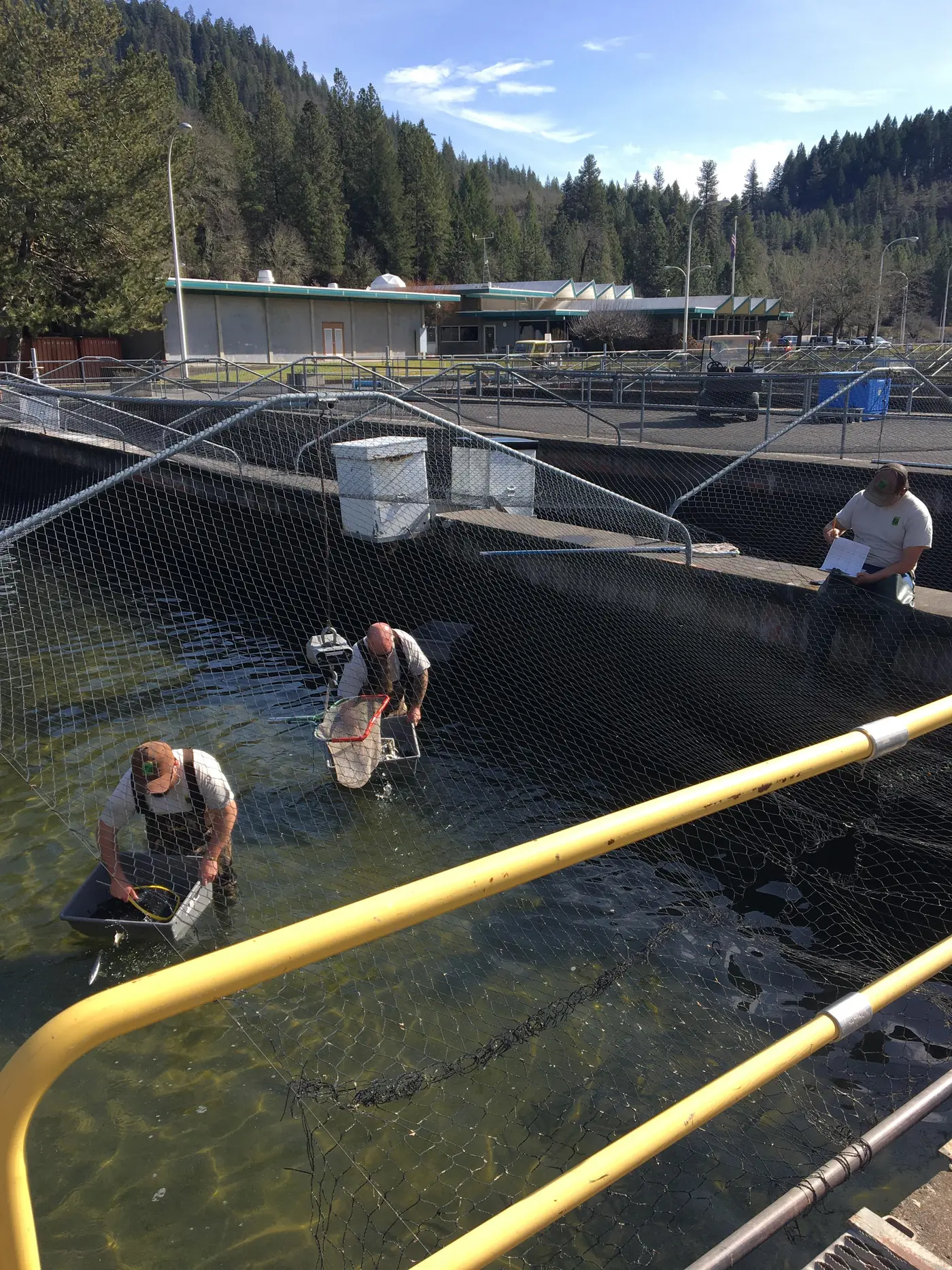
Since 2007 every release has been adipose fin-marked. An automated process in a marking trailer does the clipping, and the trailer moves around the state. It has lately reached Cole Rivers in March. The public may watch the marking, which generally runs from late February to early April. ODFW asks visitors to call ahead.
Roughly once a week the fish are counted out of the pond and ladder and sorted. The season’s return to date is then set against a 10-year running average. The Corps of Engineers reads the counts on a recorded telephone line, after the water conditions for Lost Creek and Applegate reservoirs.
A hatchery ordered before the dam
The dam came out of floods. A Rogue Basin flood control project was started in 1935. In Steve Beyerlin’s account, it heated up in 1956, after the Flood of 1955. At a public hearing in Grants Pass on 15 November 1956, testimony held that “any flood control plan detrimental to the fishery resource would be unacceptable, both locally and to the Federal and State fishery agencies.” The Rivers and Harbors Act of October 23, 1962, authorized the project, two years before the Christmas Day Flood of 1964.
The Final Environmental Impact Statement for Lost Creek Dam, dated May 8, 1972, set down what the dam would cost the fish: “The project will effectively isolate the upstream drainage area from use by anadromous fish. Maintenance of anadromous and resident fish populations will be dependent upon the fish hatchery (Cole Rivers) for artificial spawning and rearing.” An 11-mile stretch of free-flowing stream would go under the lake. The statement estimated that the river above the dam gave spawning ground to 13,020 spring Chinook and 500 summer steelhead. The hatchery was then under construction and due to be finished in January 1973. It was to produce 425,100 pounds of fish a year, enough to cover those losses and the losses from the Corps’ dams planned on Elk Creek and the Applegate. Its list of species included kokanee.
Beyerlin gave a briefing to Curry County in 2019, and by his account the hatchery was ordered built and operating before the dam could be. Construction finished in 1973, and work on the dam began. William Jess Dam was completed in 1977. It blocked 10 miles of the mainstem and parts of the Middle and South forks.
The sources date the hatchery’s start differently. The Southern Oregon Historical Society dates the Corps’ handover of the hatchery to the State of Oregon to 1973. The Mail Tribune has written both that it went online in 1973 and that it has operated since 1974. The Corps still owns it, and ODFW runs it under agreement. Elk Creek Dam, one of the three the hatchery was built to answer for, has since been removed.
In 1980 Medford troopers caught two men taking chinook salmon from the hatchery and lodged them in jail. The local papers ran the story, and what had become almost a daily problem dried up overnight.
Biologist on the Rogue
The hatchery is named for Cole M. Rivers, a biologist on the Rogue for 20 years. In 1961, as a Grants Pass game commission fish biologist, he reported on Rogue River angling to the Jackson County chapter of the Izaak Walton League. In July 2021 Dan Van Dyke, ODFW’s Rogue district fish biologist, wrote of a drought summer and turned to Rivers for the worst one on record. Van Dyke wrote that, according to Rivers, the drought years of 1930 and 1931 created havoc with fish life, and fish loss was reported from almost every part of the basin.
Returns, algae, and a failed power line
Beyerlin’s 2019 figures traced the spring Chinook. By his count, hatchery adults returning to the pond averaged 19,643 a year in 1981–1990 and 24,518 in 1991–2000, against the goal of 13,020. From 2005 through 2018 they averaged 4,881. Naturally produced spring Chinook entering the pond were not counted until 2016.
The Hatchery Hole had opened to fishing in the early 2000s, when hatchery spring Chinook returns ran well above broodstock needs. ODFW put emergency angling rules on it in 2017 and again in 2020 after poor returns of early fish. From May 1 through July 31, 2021, all angling there was closed. Van Dyke wrote that the closure was meant to secure broodstock “during a continued downturn in performance,” and to free the Oregon State Police to patrol the upper Rogue, where wild spring Chinook hold in summer.
The hatchery’s operation was set to go out for competitive bidding in 2017. Corps officials in Portland instead sought a sole-source agreement for ODFW to keep raising and releasing 2.8 million salmon, steelhead and trout. In December 2018 ODFW reported a loss of fish eggs and gave excess algae and aging infrastructure as the likely cause. Alex Rachowicz of Rogue Valley Anglers Fly Shop in Medford recalled fish losses in 2018, 2020 and 2021. In 2020 the Archie Creek Fire destroyed Rock Creek Hatchery, its production moved to Cole Rivers, and pond space grew short.
In April 2021 the main power feeder failed. It was a direct-buried cable 4,675 feet long, running nearly a mile from the Lost Creek dam generators, and the Mail Tribune called it 50 years old. Crews found multiple faults along one 2,270-foot section. Splices did not hold, and the whole line had to be replaced. Generators ran the hatchery, but they could not heat the water in the hatch house.
In February 2022 manager David Pease said about 2 million spring Chinook fry should have been out of the hatch house by January 1, but they were too small. “It’s going to effect everything,” he said. The Corps had also tried to tap into Pacific Power, but the attempt stalled on the need for a new generator and electrical panel. “We decided that wasn’t going to be a viable option,” said Corps spokesman Tom Conning. The hatchery ran on new power on 21 August 2023.
The Corps lists more trouble: a water delivery and treatment system it calls ineffective and insufficient, with poor water behind disease outbreaks, low-oxygen events and fish loss; concrete wearing on the raceways and the ladder; roofs with substantial leaks. In 2023 ODFW reported the loss of 866,694 steelhead fry. The agency found the cause in human error at ODFW, compounded by infrastructure that made the risk hard to isolate. All the sac fry for Rogue summer steelhead were lost, and the loss reached into the 2024 half-pounder fishery and the 2025 adult fishery. ODFW had held back 82,000 summer steelhead smolts in 2022 and released them in April 2024 to soften the blow.
Congress put more than $5 million toward repairs in fiscal years 2022 and 2023. Sens. Jeff Merkley and Ron Wyden secured $4.06 million, which covered the power line, a transformer and new roofs and paid for a water system design without building it. In 2026 another $9,460,000 was set aside to rebuild the water supply. The Corps expects that work to be finished in 2035.
On August 12, 2024, a trail camera at the hatchery caught two people. They returned August 27 at about 8 p.m., wearing motorcycle helmets, and entered the stream around the fish trap trying to spear or gaff salmon. The two in the photographs later came forward, and State Police investigators cleared them. In 2025 masked figures came to the outflow fish trap before dawn. Troopers found the camera’s antenna ripped off and the camera pushed aside. ODFW staff found the lock on the trap cut and an unknown number of salmon netted from it.
Notable Events
- 1962The Rogue Basin Flood Control Project was started in 1935 and heated up in 1956 just after the destructive Flood of 1955; its authorization came in the Rivers and Harbors Act of October 23rd, 1962, two years before the Christmas Day Flood of 1964. cms6.revize.com
- 1972The Final Environmental Impact Statement for Lost Creek Dam said the project included the construction of Cole M. Rivers Fish Hatchery, work then in progress and to be completed January 1973, capable of producing 425,100 pounds of fish per year. cms6.revize.com
- 1973The Medford Mail Tribune wrote that ODFW has raised the salmon, steelhead and trout promised by the Corps since Cole Rivers went online in 1973. oregonlive.com
- 1973The Southern Oregon Historical Society anniversaries index lists Cole Rivers Fish Hatchery as turned over to State of Oregon by Corps of Engineers, dated 1973. research.sohs.org
- 1974The Medford Mail Tribune reported the hatchery has operated since 1974 to mitigate for wild salmon and steelhead lost by the construction of Lost Creek and Applegate dams, as well as the since-removed Elk Creek Dam. yahoo.com
- 1977William Jess Dam was completed in 1977, inundating lost spawning habitat and blocking 10 miles of the mainstem and portions of both the Middle Fork and South Fork of the Rogue River. cms6.revize.com
- 1980Two men in southwest Oregon were arrested and lodged in jail by Medford troopers when caught taking chinook salmon from Cole Rivers Hatchery; local newspapers ran the story and what had become almost a daily problem dried up overnight. oregonnews.uoregon.edu
- 2000sThe Hatchery Hole opened as a fishing opportunity in the early 2000s when returns of hatchery spring Chinook were well above broodstock needs. dfw.state.or.us
- 2007Since 2007 all releases at Cole Rivers have been adipose fin-marked; the hatchery strives to remove the adipose fin on 100 percent of its hatchery spring Chinook, summer/winter steelhead and coho. myodfw.com
- 2016Counts for naturally produced (wild) spring Chinook entering the hatchery collection pond were not counted or made available until 2016, 2017 and 2018. cms6.revize.com
- 2017ODFW enacted an emergency angling rule at the Hatchery Hole in 2017 and again in 2020 due to poor returns of early returning fish. dfw.state.or.us
- 2017Corps officials in Portland opted to seek internal approval to enter into a sole-source agreement with ODFW to continue raising and releasing the 2.8 million salmon, steelhead and trout as mitigation, after operation of the hatchery was set to go out for competitive bidding that month. oregonlive.com
- 2018ODFW's 2018 news release index carries the item Excess algae and aging infrastructure likely cause of fish egg loss at Cole Rivers Hatchery dated December 14, 2018, with a second posting December 12, 2018. dfw.state.or.us
- 2018Alex Rachowicz of Rogue Valley Anglers Fly Shop in Medford said fish losses at the hatchery occurred in 2018, 2020 and 2021. rv-times.com
- 2020Pond space became limited after fish production at Rock Creek Hatchery was transferred to CRH because the Archie Creek Fire in 2020 destroyed Rock Creek. web.archive.org
- 2021ODFW closed the hatchery hole fishery to help ensure it met broodstock needs for the hatchery spring chinook program during a continued downturn in performance, and to let Oregon State Police focus enforcement elsewhere in the upper Rogue. dfw.state.or.us
- 2021In April 2021 the main electrical power feeder from Lost Creek Dam to the hatchery failed; it is a 4,675-foot-long underground direct buried cable and multiple faults were isolated within a segmented 2,270-foot section, so the entirety of the line needed replacement. web.archive.org
- 2023ODFW concluded that the kill at Cole Rivers Hatchery led to the loss of steelhead that contribute to fisheries in the Rogue and Coos River, and that the loss was caused by human error at ODFW and compounded by infrastructure issues making it difficult to isolate risk. dfw.state.or.us
- 2023Repairs will cost millions, but $4.06 million was secured by Oregon Sens. Jeff Merkley and Ron Wyden, enough to replace a broken underground power line, replace a transformer, replace roofs, and design but not fund a water supply system. rv-times.com
- 2024Some of the lost fishing opportunities in the Rogue will be abated because 82,000 summer steelhead smolts were held back in 2022 and will be released in April 2024. dfw.state.or.us
- 2024Two individuals were first spotted by a trail camera at the hatchery on August 12, 2024, and returned on August 27, 2024 wearing motorcycle helmets, entering the stream around the fish trap at about 8 p.m. attempting to spear or gaff salmon. ktvl.com
- 2025Masked individuals approached the outflow fish trap before dawn; troopers found the trail camera's antenna ripped off and the camera pushed aside, and ODFW personnel found the lock to the fish trap cut and an unknown number of salmon netted from it. ktvl.com
- 2025The two individuals in the photos came forward and were cleared by Oregon State Police investigators, who said they were not seeking additional information from the public. ktvl.com
- 2026$9,460,000 was secured to reconstruct the water supply system for the U.S. Army Corps of Engineers Cole Rivers Hatchery, after recent investments addressed the power supply and other deferred maintenance. newportnewstimes.com
- A total of more than $5M was appropriated to the project through congressional appropriations and the Bipartisan Infrastructure Law, going towards replacing the broken power line, partial replacement of roofs, and beginning the water supply design. web.archive.org
People
- Steve Beyerlin, presented the Unknown Rogue River Spring Chinook Tragedy briefing on the hatchery's mitigation record to Curry County (2019).
- Dan Van Dyke, On Site Lead Contact for the Cole Rivers Hatchery winter steelhead program, District Fish Biologist, Oregon Department of Fish & Wildlife.
- Cole M. Rivers, Biologist on the Rogue River; the hatchery was named in his honor (20 years on the Rogue River (no calendar years stated)).
- Cole Rivers, Grants Pass game commission fish biologist reporting Rogue River angling conditions to the Jackson County chapter of the Izaak Walton league (1961).
- David Pease, Hatchery Manager speaking for Cole Rivers Hatchery on the power failure and the slowed growth cycle; the SOHS index earlier lists him as Assistant Manager, Cole Rivers Hatchery.
Sources
- dfw.state.or.us/fish/HGMP/docs/2016/Cole%20Rivers%20Hatchery,%20Rogue%20River%20Winter%20Steelhead%20Program.pdf
- nwp.usace.army.mil/Missions/Environmental-Stewardship/Fish/Cole-Rivers-Hatchery
- myodfw.com/cole-m-rivers-hatchery-visitors-guide
- dfw.state.or.us/news/2018/index.asp
- dfw.state.or.us/news/2023/05_May/052623d.asp
- dfw.state.or.us/news/2021/04_Apr/042921b.asp
- oregonnews.uoregon.edu/lccn/sn97071090/1961-04-14/ed-1/seq-12/ocr.txt
- oregonlive.com/environment/2017/03/oregon_fish_wildlife_now_expec.html
- cms6.revize.com/revize/currycounty/2019_01_23%20Rogue%20Rover%20Fish%20Loss.pdf
- research.sohs.org/mega-index2?combine=Cole+Rivers+Hatchery&combine_op=allwords