Clark County Fair
Ridgefield, Clark County, Washington. County fair.
Details

- Where
- 17402 NE Delfel Road, Ridgefield, WA 17402. Directions
- When
- August 6-15, 2027.
- Getting there
- Take I-5 or I-205 to 179th Street Exit #9, turn west on 179th Street and follow the signs to parking.
- Fees
- Advance discount tickets through August 6, 2026, ticketing fees included: Adult $11.50, Senior 62+ $9.50, Youth 7-12 $8.50.
- Hours
- Friday-Saturday: 10AM to 11PM; Sunday-Thursday: 10AM to 10PM; carnival opens at noon daily.
- Access
- Fairgrounds renovation funded by $44 million in county bonds; planned work includes parking upgrades, a covered warm-up arena, covered rental pavilion and food court.
- Walk-in or reserve
- Overnight RV camping in the designated campground only, by reservation form; $38 per night with electrical and water, $28 per night self-contained.
- Phone
- 564-397-6180
- Managed by
- Clark County Fair.
- Established
- 1868.
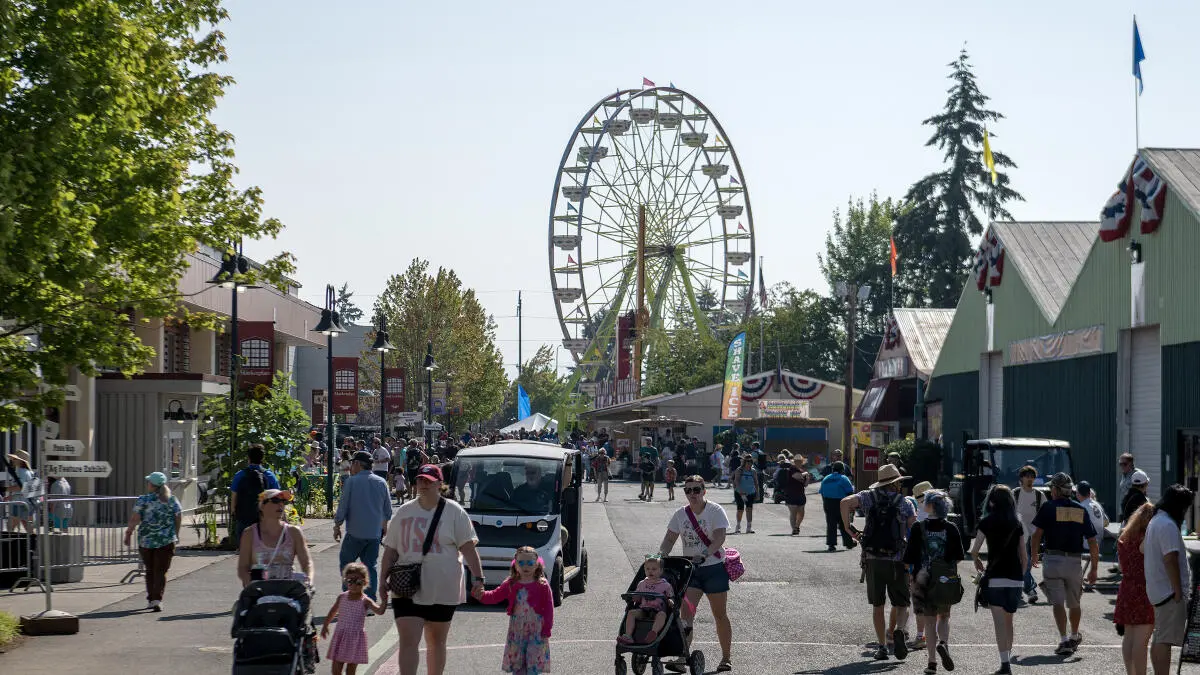
The Clark County Fair runs ten days each August on its grounds at 17402 NE Delfel Road, reached from the 179th Street exit, Exit 9, off I-5 or I-205, then west on 179th Street to the parking lots. The gates open at ten in the morning. The carnival starts at noon. The 2026 fair ran August 7 through 16.
Ten days off 179th Street
Two cowboys called Slim and Curly ride their “trusty steeds” through the grounds as the Fables of the West, spinning tall tales and cracking jokes. On fixed hours the All Creatures Barnyard Racers send animals around a track, at 1, 3, 5 and 7 p.m. in 2026, and the Pirate’s Parrot Show flies from noon on. Break-A-Boyz dance with flips, and Tyzen the Comedy Hypnotist works the evening at 6:30 and 8:30. In South Hall 1, Mars Encounters fills a room with RC rovers, drive-around Mars explorers and a space station-style obstacle course, with live shows by Destiny the Mars Rover. Elsewhere on the grounds are DogTown, the Kids’ Park, Curly the Camel & Friends, a History Wall and the Antique Equipment Association.
The contests need no sign-up. Fairgoers step up to eat watermelon, hot dogs, donuts, cheeseburgers and pie, and the smallest enter the Diaper Derby, the Toddler Trot and the Pretty Baby contest. In the barns and halls, 4-H, FFA and Grange Youth members show their work, and a junior livestock auction is held. Mickey Webb, who became fair director in 2018, told Clark County Today: “I didn’t know a sloth had three stomachs until I went through the 4-H educational exhibit.”
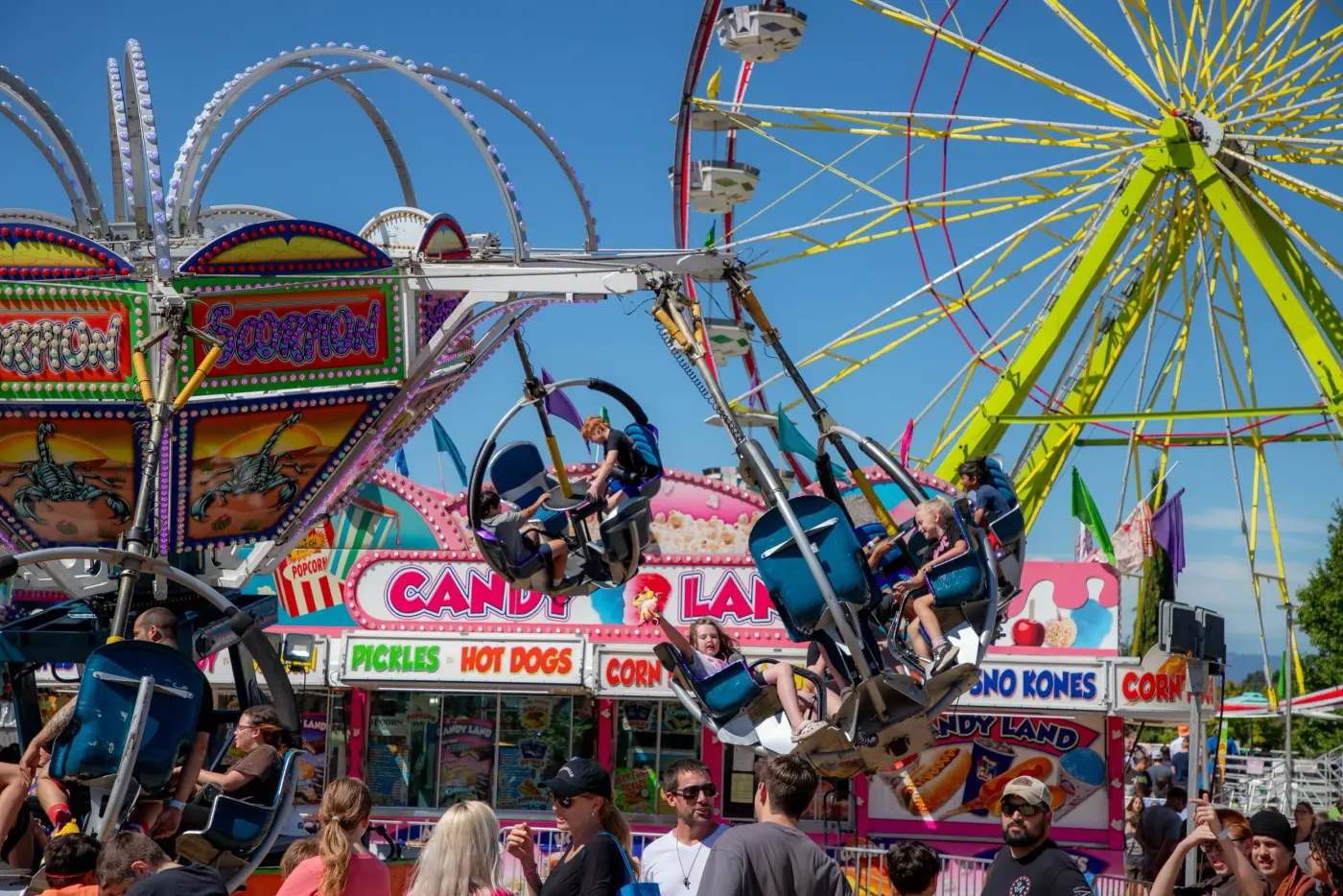
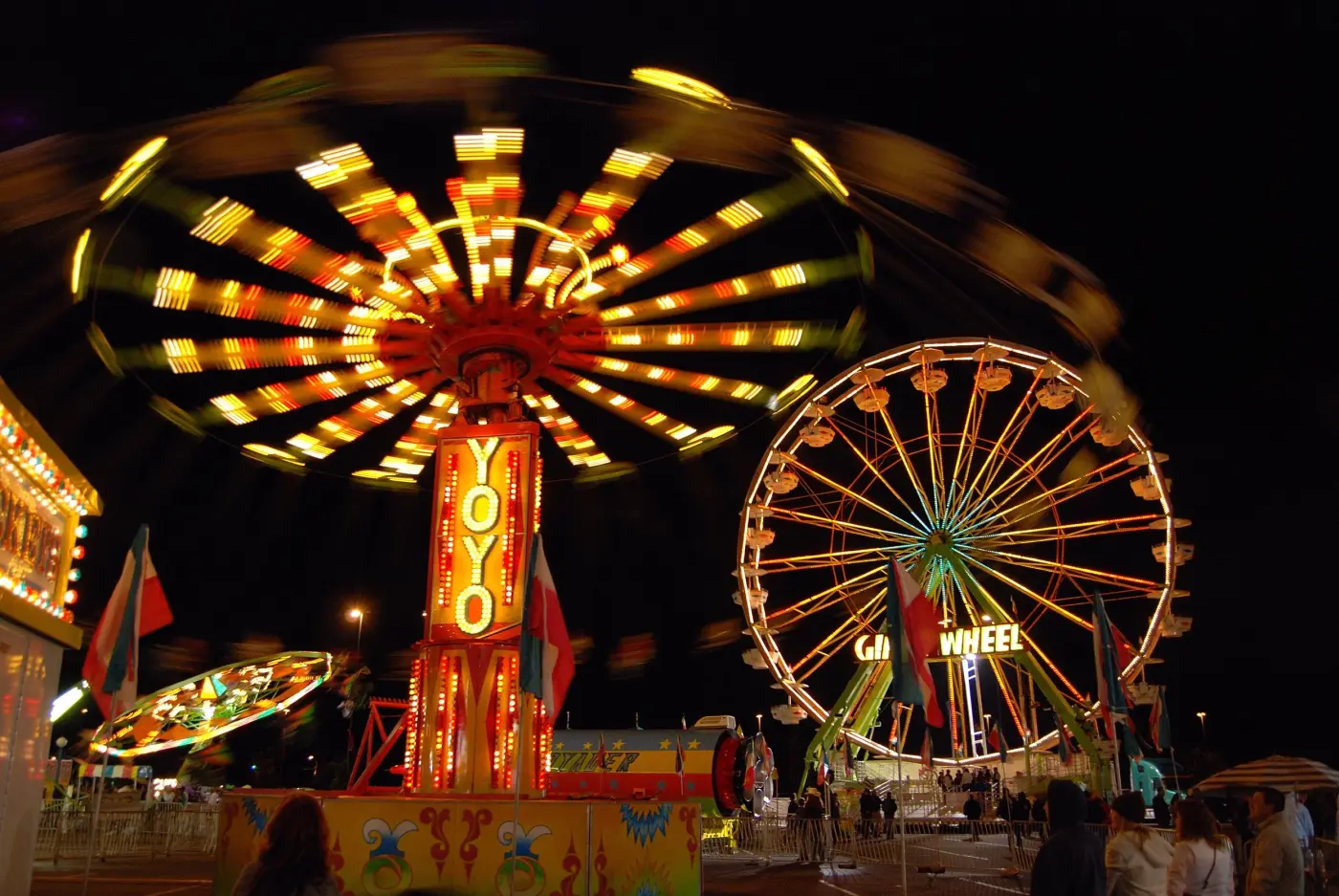
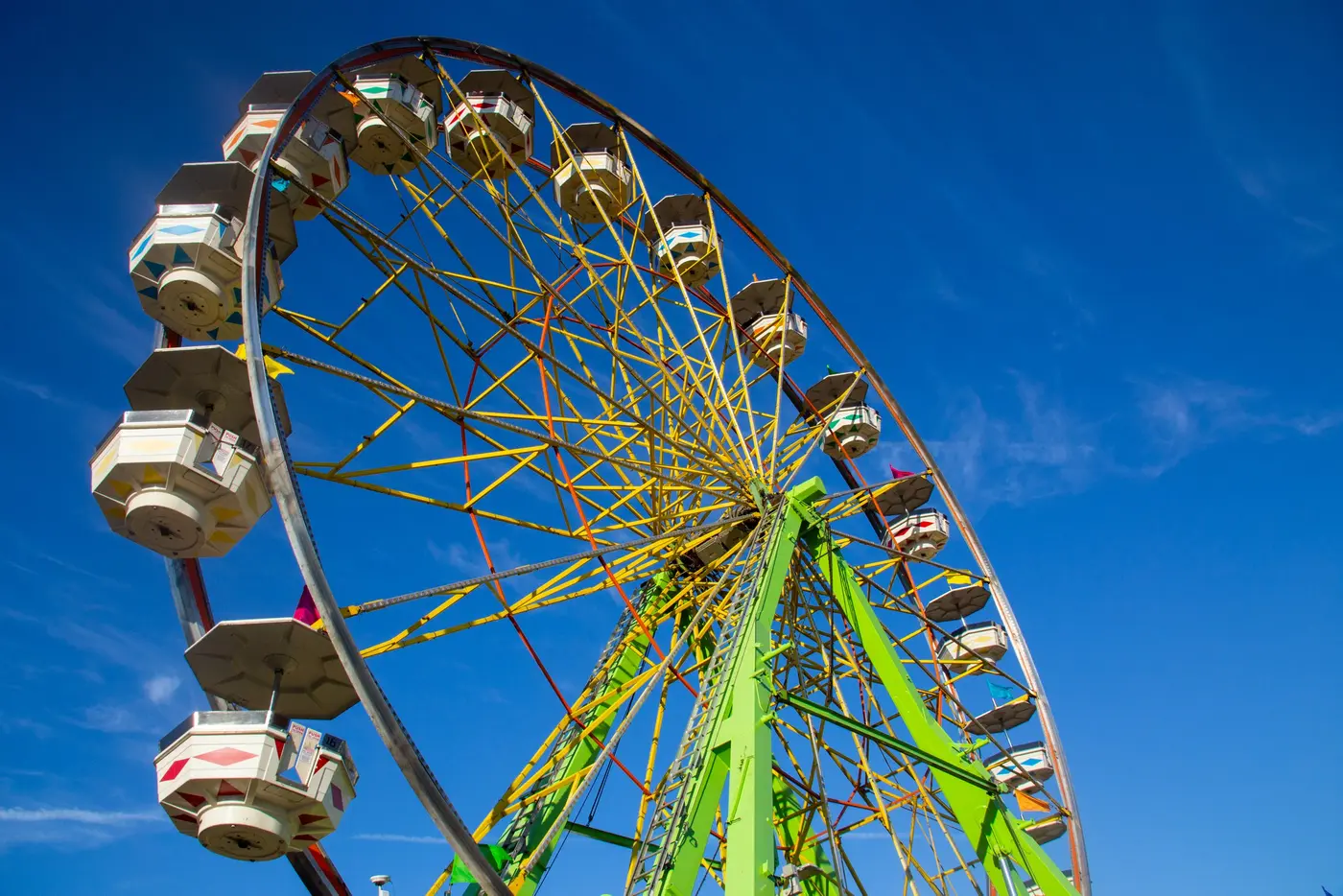
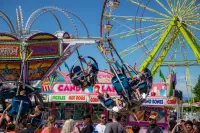
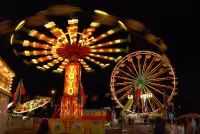
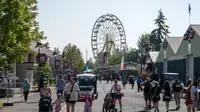
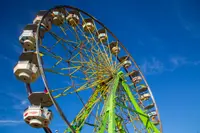
The midway carries the Area 51 Gravitron, where wall climbing is not permitted, along with the Century Wheel, the Zipper, the Ring of Fire and the Zillerator Coaster. Smaller children ride the Americana Merry-Go-Round, the Tea Cups and Jumbo Dumbo. Most rides take four to seven tickets, and the ride operator decides who may safely ride.
The Grandstand after dark
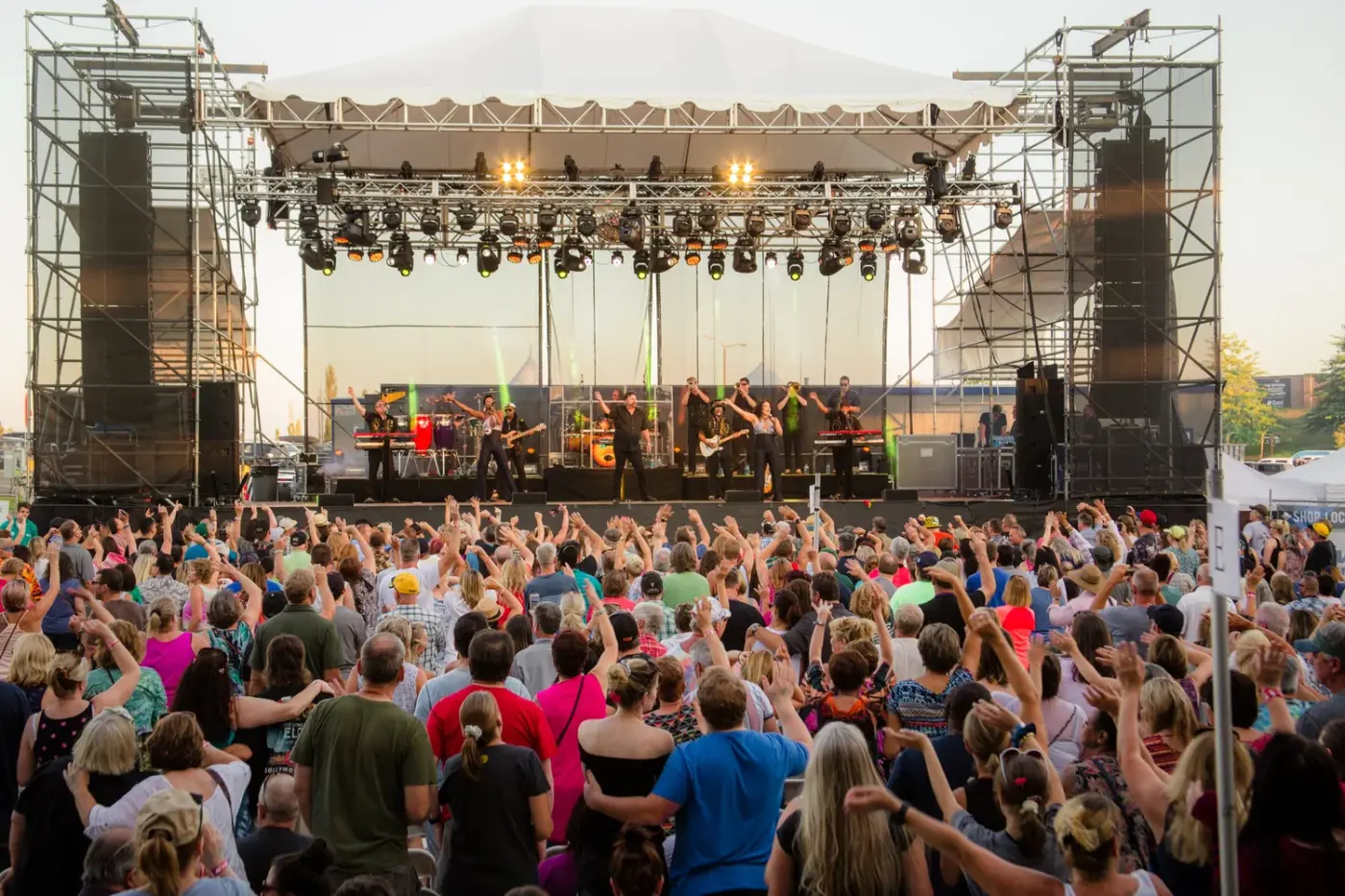
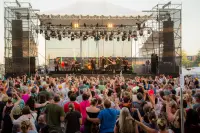
Evenings belong to the Grandstand. Seats there are free and taken first-come, and reserved seats in front of the stage sold for $38 to $48 with fair admission included. The 2026 concerts filled the first weekend at 7 p.m.: the country act Midland on Friday, August 7, the I Love the ‘90s tour on Saturday, and Collective Soul on Sunday, August 9.
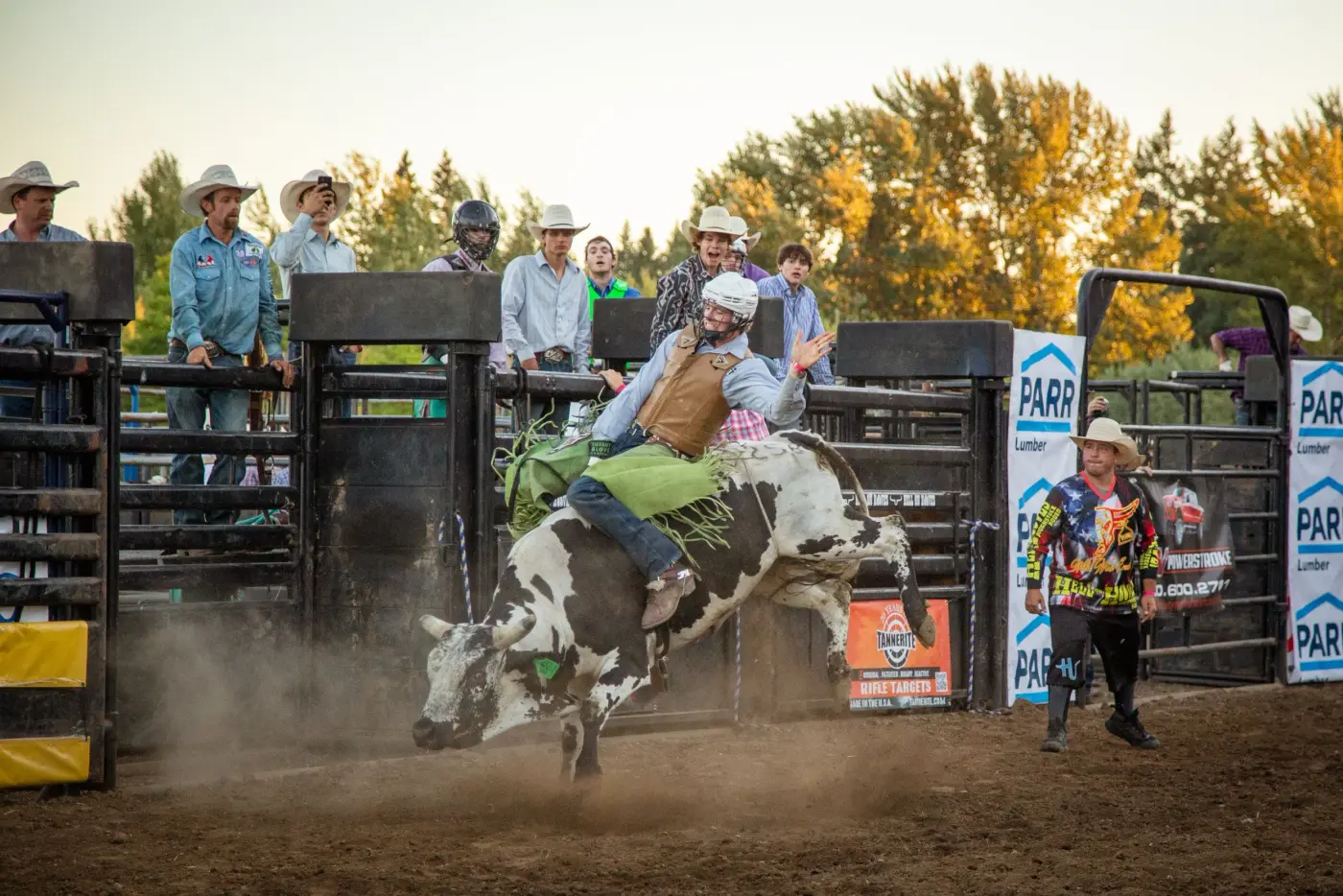
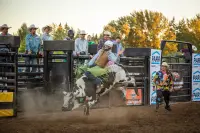
The Hell on Hooves Tour followed. Its Extreme Bull Riding ran Monday, August 10, and its Rough Stock Rodeo of broncs, bulls and barrel races ran Tuesday, August 11. Each afternoon before them came Mutton Bustin’. Children over four and under 50 pounds were weighed at sign-up and rode sheep at the east side of the Grandstand. The fifteen fastest went on to a final run that night during the bull riding or rodeo, and the winner took a belt buckle.
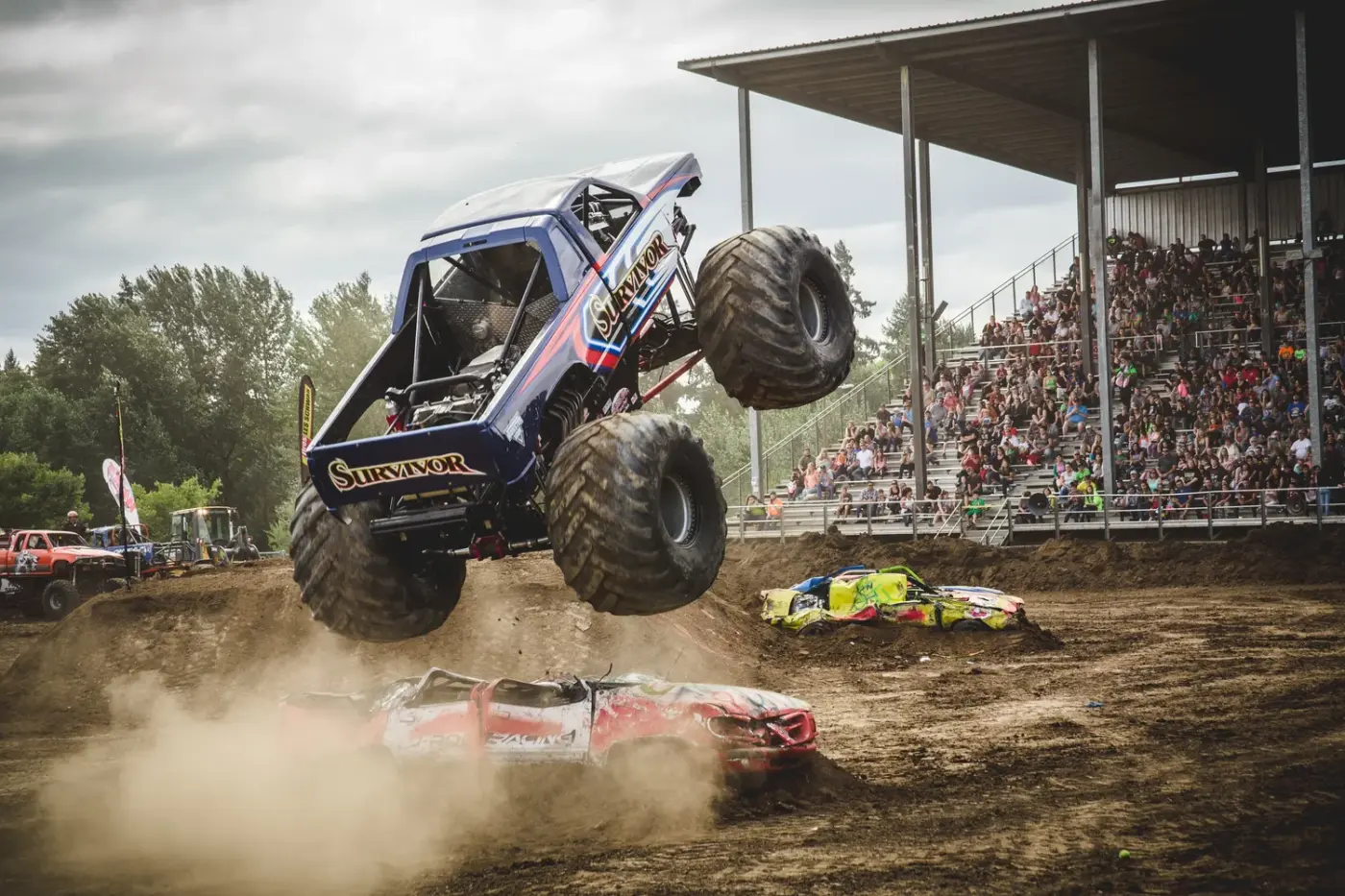
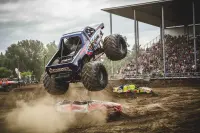
Engines held the rest of the week. Side-by-side racing ran Wednesday. Monster Trucks ran Thursday and Friday, among them Megasaurus, which the fair describes as “a fire-breathing robotic Tyrannosaurus Rex built on a Sherman tank chassis” that “crushes and devours full-size cars.” Tuff Trucks closed the fair on the last weekend, with local drivers taking everyday trucks over obstacles. The fair dropped the demolition derby for 2026. It added a second day of Monster Trucks and moved Tuff Trucks to the weekend “so that more local drivers can participate.” Monster Truck rides cost $10 before and after the shows. Food stands line the Grandstand Plaza and the South Midway, and the rodeo and races can be watched from the Beer & Wine Tent east of the Grandstand.
A park in Vancouver, a hill, a dairy farm
The first Clark County Fair was held on October 21, 1868, in Esther Short Park in Vancouver, sponsored by the Clark County Agricultural and Mechanical Society. The park, land Esther Short had donated for public use, covers about a tenth of the present fairgrounds, by The Reflector’s reckoning from county GIS data. On March 19, 1881, the Society incorporated with $5,000 in capital and bought 28 acres on Harney Hill. It built a 40-by-60-foot pavilion and a race track, and that October the fair met there.
The name changed with the decades. In 1910 the fair was the Harvest Show, back in Esther Short Park with exhibits in buildings and 16 tents. In 1914 it became the Columbia River Interstate Fair, timed, according to The Columbian’s America 250 section, to the 90th anniversary of the Hudson’s Bay Company, and opening day drew 10,000 people. In 1915 it was the Clarke County Fair and Dahlia Show. The same Columbian section describes a 1925 legislative correction that dropped the “e” from Clarke.
The fair’s own history and the Columbian’s place-name history disagree on the late 1920s. The fair’s history puts the 1928 fair in Battle Ground, with 3,000 to 4,000 people and a “Maggie” contest to see who could throw a rolling pin the farthest, and the 1929 fair in Bagley Park. The Columbian’s account says the fair made its home until 1928 on the dairy farm of Bert Bagley Jr., at Fourth Plain Boulevard and Falk Road. Bagley built a race track there “to spice up the Clark County Fair.” C.H. Falk had donated 10 acres on Fourth Plain Road for a fairground, and visitors rode the streetcar out to Falk station at the edge of his property. After the fair moved north, Bagley kept racing horses and eventually dogs, “to great controversy.” The 1929 fair at Bagley Park drew 15,000 people and still went into debt. The community negotiated the debt down, and fundraising paid off the rest.
Battle Ground, the war, and a fire
The fair association reorganized and bought a permanent site in Battle Ground. The fair’s history gives the year as 1941; the Columbian’s America 250 account says the fair migrated north to Battle Ground in 1940. Tickets in 1941 were 25 cents, or $1 for a season pass. Local boys training at Boeing made aluminum time capsules shaped like eggs.
In 1942 the fair was cancelled for World War II. Rationing and dim-outs stopped the events, but work on the buildings went on. From 1943 through 1945, Victory Fairs were held instead at McLoughlin Heights, smaller gatherings that the Columbian account says served morale and home-front farming. In 1947 the county fair joined with the Battle Ground Community Fair to put on a single event. Horse racing had been part of the fair until 1950, by that account, and gave way to grandstand concerts and motorized shows.
By 1952 the fair had outgrown Battle Ground. John McGillivary offered 40 acres, and William Wineberg offered the Arthur Moulton farm north of Vancouver. In 1953 the Fair Board voted for McGillivary’s land, but the Grange objected over racing and betting, and the board reversed itself. In 1954 fire destroyed the Battle Ground buildings, and the fair opened there one last time that August. In 1955 it opened on the present grounds north of Vancouver, now inside a Ridgefield postal code.
A milkshake machine and a frame of honey
The grounds were built largely by hand. The “E” Livestock Building went up in 1957 on plans and materials donated by Alcoa, with more than $12,000 raised and volunteer labor. In 1959 the Dairy Women’s Booth opened, about the size of a phone booth, after two dairy families borrowed money for a milkshake machine. The county had 200 dairy families then. 4-H members and adult volunteers built the horse barn in 1962. The 1968 fair marked its hundredth year under the theme “One Hundred Years’ Experience… A Thousand Years of Vision” and added 23 acres. The Reflector observed that the fair did not take a new name for its own centennial. It did take one in 1989, when it became the Centennial Fair for Washington’s 100th birthday. That year’s first free pancake breakfast drew 14,000 guests in three hours.
In 1972, because public funds could no longer go to a private organization, the fair deeded its property to the county and the Fair Association ran the fair under a 10-year contract. An 80-acre lease from the Department of Natural Resources enlarged the site, and a Mounted Patrol was formed for security. A 4-H demonstration kitchen came in 1978. In 1985 the Executive Horse Council built 160 stalls for a new horse arena, saving $60,000, and the arena was dedicated on August 3. The fair went to ten days in 1986. The Fair Association approved an amphitheater in 1997, and it was completed in 2003. The fair’s history dates the opening of the Exhibition Hall to March 15, 2005. In 2005 the county hired Fairgrounds Site Management Group to run the grounds year-round, and the Fair Association turned wholly to the fair.
The 150th fair, in 2018, drew more than 270,000 people and opened with a pancake breakfast and a Midway parade. It was the last for John “Gator” Morrison, a retired Air Force colonel who had directed the fair for nearly a decade. He told Clark County Today it began 27 years earlier “with a single frame of honey from a bee hive that I got as a hobby.” He gave up the bees when his allergy to their stings worsened. During the fair he lived on the grounds, sleeping in a parked RV, and his successor Webb said he would keep the practice.
Morrison counted his largest change as moving the concerts out of the amphitheater, where tickets ran $60 to $80, and back into the Grandstand with most seats free. He put the fair’s profit in the last amphitheater year at about $94,000, and in the years after at about $440,000. His rule for the gate price was that it covered the entertainment, “unless you ride it or eat it.” Of the grounds, hemmed in by growth, he said: “One of the reasons this fair is going to get better is that we can’t get bigger.”
The fair was cancelled in 2020 and 2021 for the COVID-19 pandemic and returned in 2022 with more than 285,000 people. The Columbian reported about 267,800 in 2024 and 265,000 in 2025. The 2026 fair drew about 246,000 in near-ideal weather, the fewest since 2019. That August the Clark County Council authorized $44 million in bonds to renovate the grounds, including parking upgrades, a covered warm-up arena, a covered rental pavilion and a food court. The 2027 fair is set for August 6 through 15.
Notable Events
- 1868The very first Clark County Fair was held in Esther Short Park, sponsored by the Clark County Agricultural and Mechanical Society. clarkcofair.com
- 1881The Society incorporated with $5,000 in capital, bought 28 acres on Harney Hill, and built a 40x60-foot pavilion and a race track; the fair was held there that October. clarkcofair.com
- 1910The fair became the Harvest Show, held again at Esther Short Park with exhibits in buildings and 16 tents. clarkcofair.com
- 1914Renamed the Columbia River Interstate Fair; opening day drew 10,000 people. clarkcofair.com
- 1915Renamed the Clarke County Fair and Dahlia Show. clarkcofair.com
- 1925The article describes a legislative correction dropping the e from Clarke County. columbian.com
- 1928Held in Battle Ground, drawing 3,000-4,000 people, with a Maggie contest to see who could throw a rolling pin the farthest. clarkcofair.com
- 1928The page says the fair made its home on Bagley's dairy farm until 1928, then moved north. history.columbian.com
- 1929Moved to Bagley Park; despite 15,000 in attendance the fair went into debt, which the community negotiated down and paid off. clarkcofair.com
- 1940The fair migrated north to Battle Ground. columbian.com
- 1942Fair cancelled due to World War II; rationing and dim-outs stopped events, but building improvements continued. clarkcofair.com
- 1942Blackouts and rationing forced cancellation of the main event; the community hosted smaller Victory Fairs at McLoughlin Heights for morale and home-front farming. columbian.com
- 1947The Clark County Fair joined forces with the Battle Ground Community Fair to host a mutual event. clarkcofair.com
- 1950Horse racing had been a staple of the fair until 1950 and gave way to grandstand concerts and motorized shows. columbian.com
- 1953The Fair Board voted for McGillivary's land, but the Grange objected over racing and betting, and the decision was reversed. clarkcofair.com
- 1954A fire destroyed the Battle Ground buildings; the fair opened there one last time in August. clarkcofair.com
- 1955The fair opened at its new home, the current site north of Vancouver. clarkcofair.com
- 1957The E Livestock Building was built with plans and materials donated by Alcoa, over $12,000 raised, and volunteer help. clarkcofair.com
- 1959The tiny Dairy Women's Booth opened; two dairy families borrowed money for a milkshake machine. clarkcofair.com
- 1962The horse barn was built with help from 4-H and adult volunteers. clarkcofair.com
- 1968The 100-year celebration took the theme One Hundred Years' Experience... A Thousand Years of Vision, and the fair expanded by 23 more acres. clarkcofair.com
- 1972Because public funds could no longer go to a private organization, the fair deeded the property to the county and the Fair Association operated independently under a 10-year contract. clarkcofair.com
- 1978A new 4-H demonstration kitchen and covered machine display area were built. clarkcofair.com
- 1985Construction on the new horse arena began; the Executive Horse Council built 160 stalls, and the arena was dedicated on August 3. clarkcofair.com
- 1986The fair was extended to 10 days. clarkcofair.com
- 1986The ten-day format was locked into place. columbian.com
- 1989Named the Centennial Fair in honor of Washington State's 100th birthday. clarkcofair.com
- 1997The Fair Association approved the amphitheater project. clarkcofair.com
- 2003The amphitheater project was completed. clarkcofair.com
- 2003Demolition began to make room for the new exhibition hall. clarkcofair.com
- 2004The opening of the Clark County Event Center building marked the biggest fair change since moving to the current location. clarkcountytoday.com
- 2005The county contracted Fairgrounds Site Management Group to manage the event center year-round while the Fair Association focused solely on the fair. clarkcofair.com
- 2018The fair celebrated its 150th anniversary with over 270,000 attendees. clarkcofair.com
- 2018John Morrison was stepping away from the fair director position and Mickey Webb was to take the reins. clarkcountytoday.com
- 2020Construction began on three new ticket booths in the Exhibition Hall Lobby. clarkcofair.com
- 2020The fair was cancelled for two years due to the COVID-19 pandemic. clarkcofair.com
- 2022The fair returned with over 285,000 attendees. clarkcofair.com
People
- John McGillivary, offered 40 acres as a new fair site (1952).
- William Wineberg, offered the Arthur Moulton farm north of Vancouver as a new fair site (1952).
- John “Gator” Morrison, retired Air Force colonel stepping away as fair director.
- Mickey Webb, incoming Clark County Fair director succeeding John Morrison.
- Bert Bagley Jr., built a racetrack on his dairy farm to spice up the Clark County Fair.
- C.H. Falk, donated land for fairgrounds on Fourth Plain Road where the Clark County fair was located for a while.