

Clackamas Hatchery
Estacada, Clackamas County, Oregon. Working state fish hatchery open to visitors.
Details

- Where
- 24500 S. Entrance Road, Estacada, OR 24500. Directions
- When
- Visitor's Center open 7:30 a.m. to 4 p.m. daily; hatchery grounds open during daylight hours.
- Season
- Best time to visit late spring to early fall; adult spring Chinook salmon are present June to October and adult winter steelhead March to April.
- Getting there
- On the Clackamas River in McIver State Park, 6 miles west of the city of Estacada, Oregon.
- Fees
- Free to visit; if you are only visiting the hatchery no parking pass is necessary, though the park has a year-round day use fee.
- Access
- No fishing at the hatcheries - ODFW says hatcheries are open to visitors for viewing, and many provide public access to nearby fishing opportunities.
- Phone
- (503) 630-7210
- Website
- myodfw.com
- Managed by
- Oregon Department of Fish and Wildlife, operating the hatchery in the state park under agreement.
- Established
- 1979.
- Coordinates
- 45.2961, -122.3603.
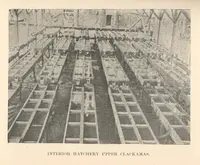
The visitor center at Clackamas Hatchery has an inside display area and a window into the incubation room. Behind the glass stand fiberglass vertical incubators, 17 stacks of 16 trays installed in 1980, where eggs and newly hatched fish are kept indoors. The building is open from 7:30 in the morning to 4 in the afternoon every day. The grounds outside stay open through daylight.
The hatchery sits on the Clackamas River inside Milo McIver State Park, 6 miles west of Estacada, at an elevation of 313 feet. The site covers 17 acres. The Oregon Department of Fish and Wildlife runs it under an agreement with the park, with a staff its 2024 plan puts at 4.0 full-time positions. Daniel Straw was manager in 2017 and 2018. ODFW’s program plan estimates about 20,000 visitors a year. The park charges a day-use fee the year round, but a visitor bound only for the hatchery needs no parking pass. ODFW allows no fishing at its hatcheries.
The trail over Dog Creek
One way in is on foot. A flat, compacted trail of less than half a mile leaves the Riverside Parking Lot, crosses Dog Creek on bridges and ends at the hatchery. The park lists it as wheelchair accessible. On New Year’s Day 2024 a ranger led a free First Day Hike over the route. The Estacada News, announcing it, said walkers stood a good chance of seeing a great blue heron and would visit the largest Pacific yew tree in the nation. ODFW lists birds of prey, wading birds, waterfowl and fish among the wildlife at the station, and a boat ramp, campground, trails and an accessible restroom at or near it. On Estacada Lake, a dammed stretch of the Clackamas, there is a second boat ramp, an ADA fishing dock and a loaner station of life jackets in various sizes.
Ponds, raceways and the trap
Oregon State Parks describes the hatchery grounds as a self-guided tour through the life cycle of Chinook salmon and steelhead. The fish keep their own calendar. Adult spring Chinook are on hand from June to October and adult winter steelhead in March and April, and ODFW gives late spring to early fall as the best time to come. Oregon’s Mt. Hood Territory, the regional tourism office, cautions that “you won’t see salmon spawning as they do in nature,” and sends visitors to the visitor center for the species’ life cycle and the hatchery’s part in it.
Wild and hatchery spring Chinook enter the Clackamas from May through September. Those bound for the station swim of their own accord into the trap. Staff take broodstock toward a yearly goal of 600 adults, collected across the whole run at one male to two females. The fish wait in three concrete adult holding ponds, each 60 feet by 10, built in 1980 and remodeled in 2001. Peak spawning comes in late September. Winter steelhead arrive from February through May and spawn mostly in May. The wild adults among them are spawned alive and returned to the river. Summer steelhead that come back to the trap are not spawned here. They are recycled downstream for anglers or donated to the Oregon Food Bank.
Beyond the holding ponds lie ten concrete raceways, 75 feet by 17, and three asphalt-and-concrete rearing ponds, 300 feet long and 50 wide. Four raceways and two ponds date from 1980, and the rest from 1987. Water comes chiefly from the Clackamas, with a well besides, and passes through each pond and raceway once before it leaves. Under the 2024 plan the station takes in 1,050,000 spring Chinook smolts from Bonneville and Oxbow hatcheries and grows them from 20 to 10 fish to the pound. Every one is fin-clipped and 130,000 are tagged with coded wire, and all are let go into the Clackamas in early March. Coho reared here are sent in mid-October to Klaskanine Hatchery and to net pens at Youngs Bay and Tongue Point in the Columbia estuary.
A dollar lease at Clear Creek
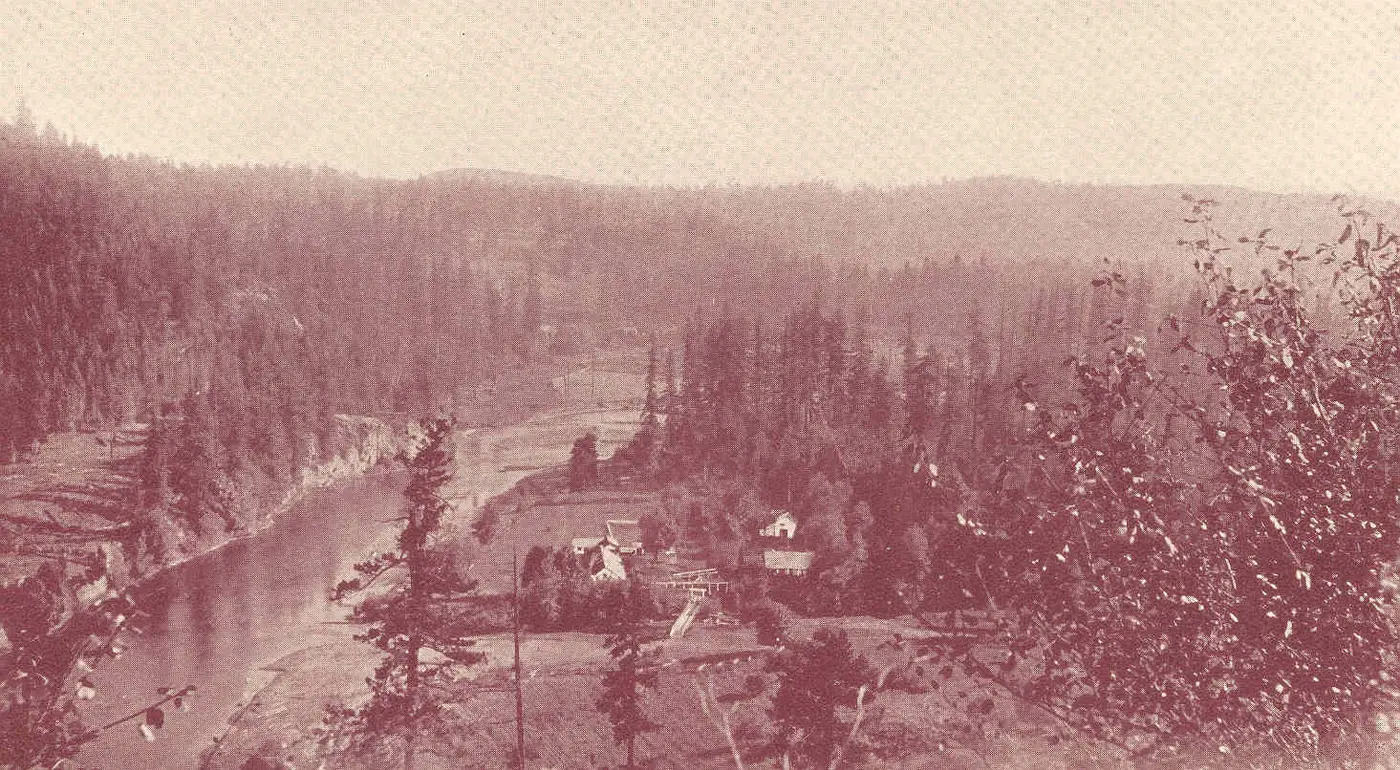
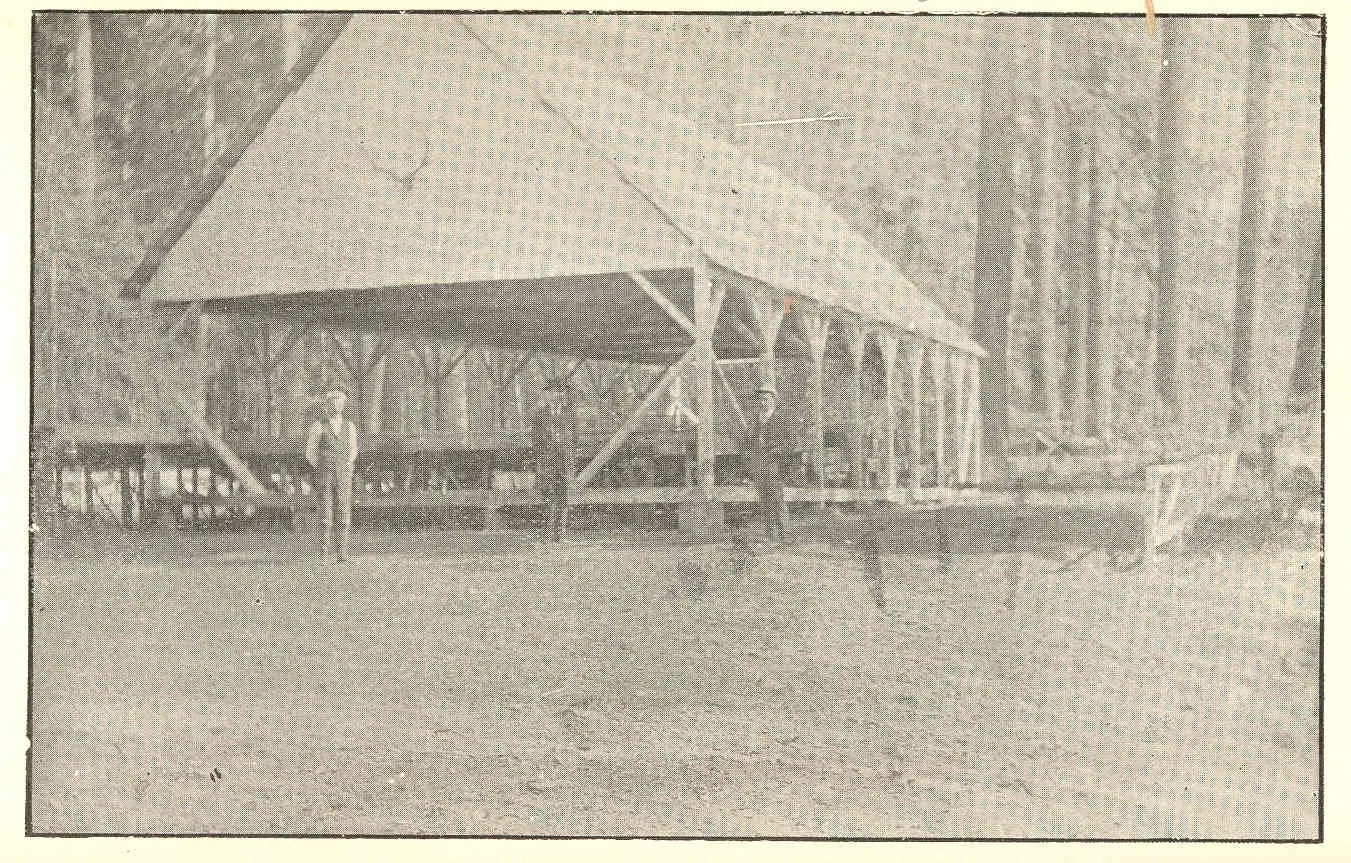
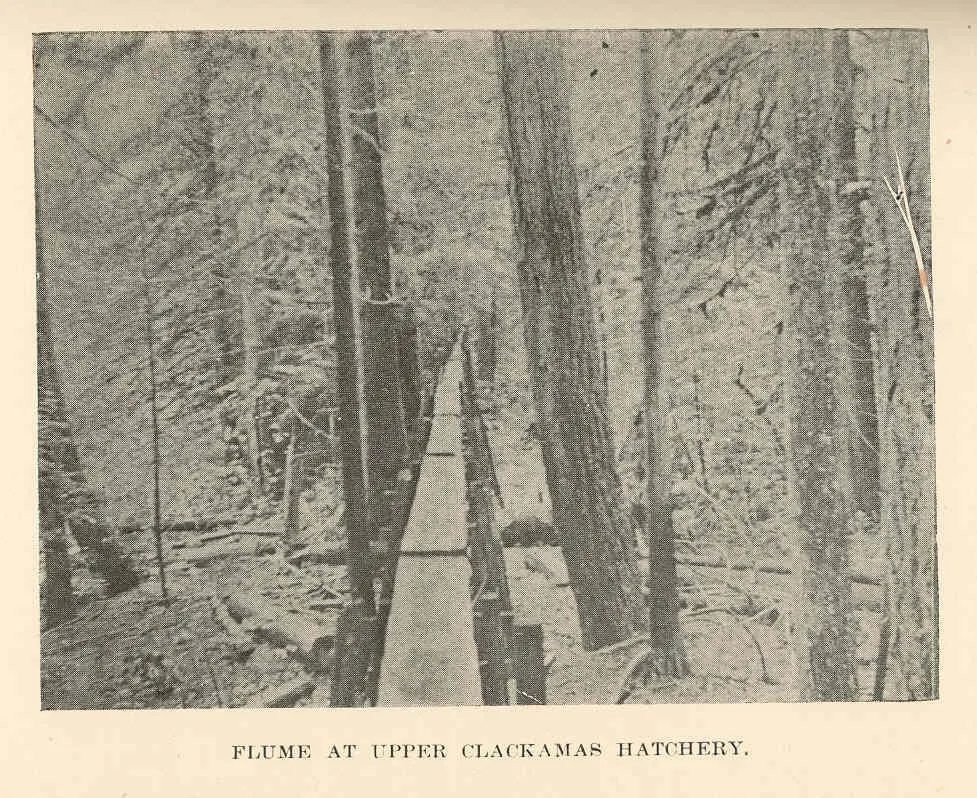
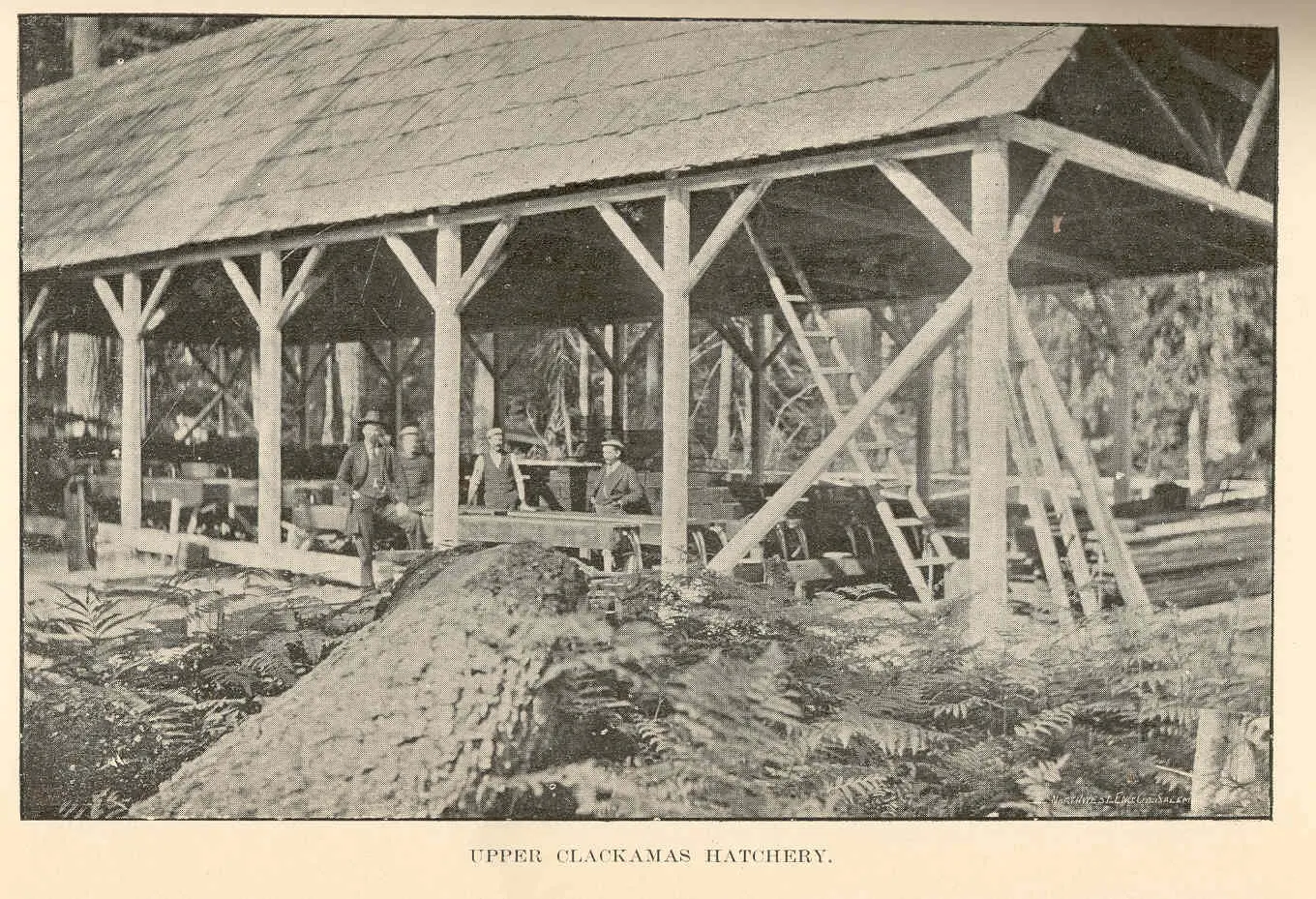
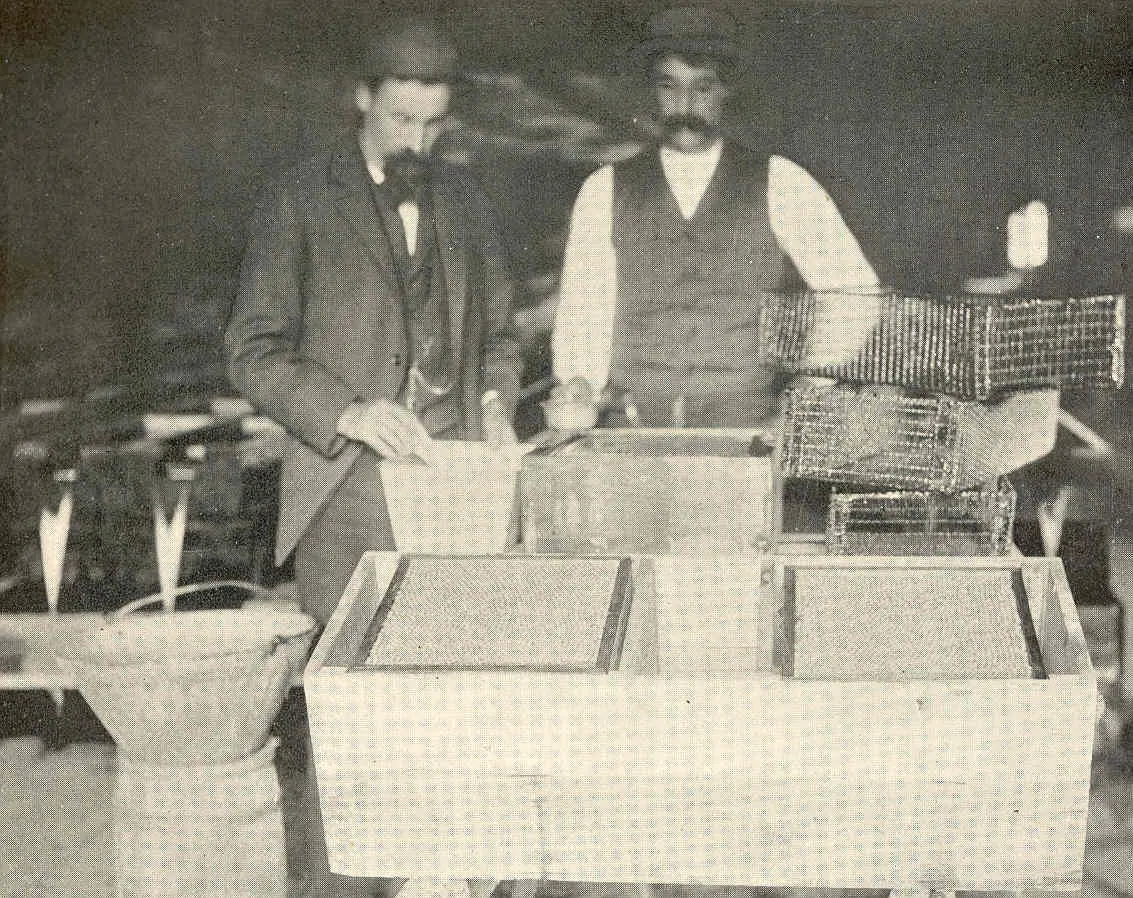
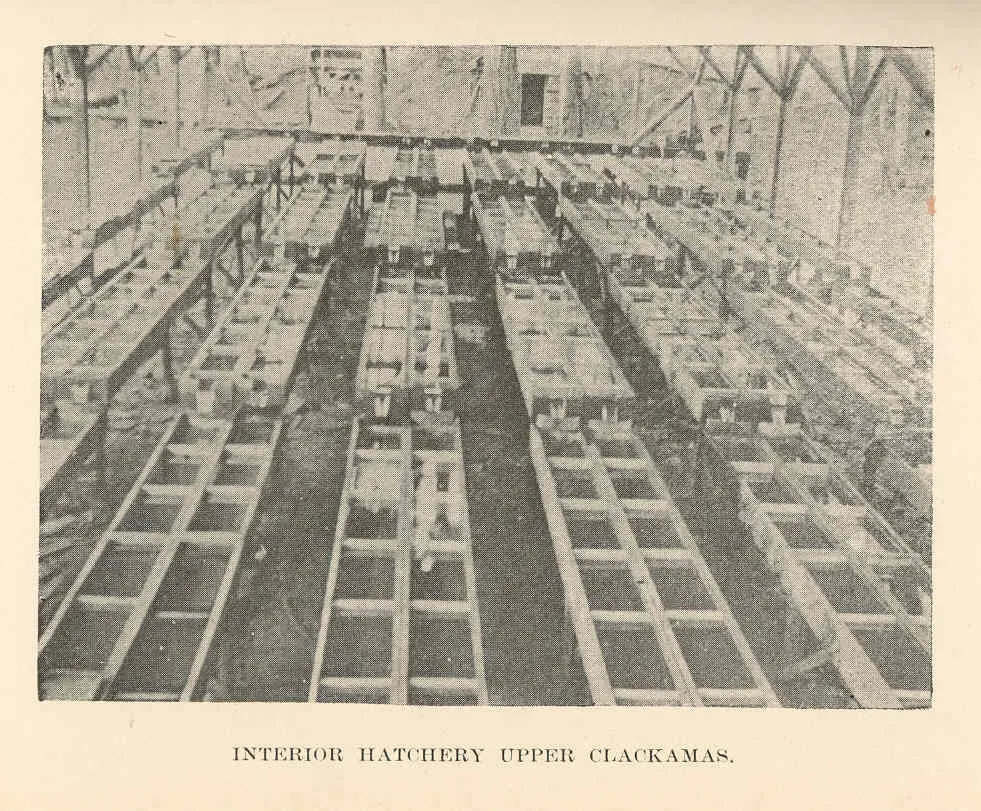
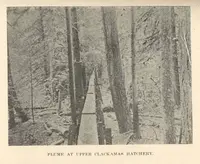
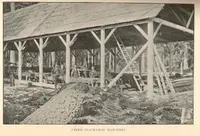
Fish culture on the Clackamas reaches back to the 1870s. In that decade, according to a presentation by ODFW district fish biologist Ben Walczak, cannery men formed the Oregon and Washington Fish Propagating Company and built a hatchery at the mouth of Clear Creek. ODFW’s own timeline records that in 1877 the U.S. Fish Commission built a hatchery on the Clackamas, operated by Livingston Stone.
In April 1887 Oregon’s new three-man State Board of Fish Commissioners leased the Clear Creek hatchery for one dollar. The Legislature had given the board $1,000 to enforce the fish and game laws and run a hatchery for two years. The first season took 15 million eggs and released 1.3 million fry. With no money for a second season, the board turned the operation over to the U.S. Fish Commission. In 1895 Hollister McGuire, the State Game and Fish Protector, began the state’s first fish marking program by clipping the adipose fin on 5,000 Clackamas Hatchery salmon. Thirty-two came back. McGuire drowned on the Umpqua River in 1898 while looking for a hatchery site.
Water from Estacada Lake
The present station began with an agreement between Portland General Electric and the State of Oregon, as Walczak’s presentation tells it. The 2024 plan names its funders as the National Marine Fisheries Service, through the Mitchell Act program to enhance declining Columbia Basin runs, and the City of Portland. The city pays as mitigation for fishery losses from hydroelectric development on the Sandy and Clackamas. The spring Chinook broodstock was founded in 1976 from upper Willamette River fish, taken from above Willamette Falls according to a 2007 U.S. Fish and Wildlife Service review. Production began in 1979. ODFW’s timeline counts the new Clackamas hatchery as bringing Oregon’s state-operated hatcheries to 32 that year. The park around it had been bought from private owners between 1966 and 1975 and named for Milo K. McIver (1897–1962), a member of the Oregon Highway Commission from 1950 to 1962. Grant Schiewe gave the state an added tract in 1987.
The FWS review says early broodstock use is hard to sort out, because hatchery fish were not all marked until the 1997 brood. From that brood on, hatchery fish were kept from passing above North Fork Dam, and since the 2002 return year every spring Chinook in the broodstock has been hatchery-origin. Winter steelhead went the other way. From 1991 their broodstock came from wild Clackamas steelhead captured at North Fork Dam.
In October 2018 the station still pumped its water from the river. ODFW held a right to 50 cubic feet per second but drew around 20. Todd Alsbury, district fish biologist, laid part of the shortfall to hot, dry summers and low water. Because of water conditions, spring Chinook and winter steelhead eggs taken here were shipped to other hatcheries, and the pumps cost about $100,000 a year. “We will be able to fulfill our water right away with the pipeline,” Alsbury said. Straw put it this way: “Cleaner water, more water, less money — all of those are good things.” In 2019 ODFW and PGE built a gravity intake on Estacada Lake. Its screen is two wedge-wire cylinders, each 54 inches across and 80 long, built to federal criteria for salmon and steelhead.
The water was not the whole trouble. Around 10 years before 2021, as the Estacada News put it, staff began to see hatchery Chinook returns fall. “We used to have the highest quality return rates in the Willamette Basin,” Walczak said. Adult hatchery spring Chinook collected at the station numbered 161 in 2018, 229 in 2019 and 784 in 2020. “The hatchery was crashing, but the wild population was performing well,” he said. In late August 2021 ODFW began bringing wild fish into the hatchery stock, so that hatchery Chinook would run and spawn alongside the wild ones. Walczak’s presentation proposed taking 120 wild spring Chinook each year in 2022, 2023 and 2024, and following their offspring with genetic tags. He expected to see effects in three to five years. “We have to be more conservative because we can’t take things back,” he said.
Notable Events
- 1976Broodstock at the facility was founded from upper Willamette River spring Chinook in 1976 and described as managed as a segregated stock since then. clackamasriver.org
- 1979Spring Chinook production began using adult returns from upper Willamette River stock. clackamasriver.org
- 1979Clackamas Hatchery began operation in 1979, funded by NMFS Mitchell Act funds and the City of Portland. dfw.state.or.us
- 1980The facility inventory dates the concrete adult holding ponds to 1980. dfw.state.or.us
- 1987The facility inventory dates six concrete raceways to 1987. dfw.state.or.us
- 1987The City of Portland funds the hatchery as mitigation for fishery losses caused by hydroelectric development in the Sandy and Clackamas River systems. dfw.state.or.us
- 1988The report describes returning hatchery-origin adults as broodstock but cautions that wild-versus-hatchery use during stock development is difficult to determine because fish were not all marked until the 1997 brood. fws.gov
- 1991The integrated winter steelhead program's broodstock originated from wild Clackamas River steelhead captured at North Fork Dam beginning in 1991. fws.gov
- 1997The report dates exclusion of hatchery fish above North Fork Dam to the 1997 brood year and adult returns in 2000-2002. fws.gov
- 1997The report says hatchery fish were not all marked until the 1997 brood, making earlier wild-versus-hatchery use difficult to determine. fws.gov
- 2001The adult holding ponds were remodeled in 2001. dfw.state.or.us
- 2019The facility recently upgraded its intake which involved the construction of a new gravity intake on Estacada Lake, a dammed portion of the Clackamas River, to increase the quantity and quality of water entering the hatchery. isi-screens.com
- 2022For research purposes, annual collection of wild spring Chinook at the Clackamas Hatchery and North Fork Dam traps was proposed for the rebuilding years; the source presents this as a proposal. clackamasriver.org
- Construction on the multi-million dollar pipeline was expected to start next spring and finish in November; this is a forecast, not a completion date. estacadanews.com
- Staff at the hatchery began seeing declining return rates for hatchery Chinook around 10 years ago, as the source phrases it. estacadanews.com
- Integration began in late August to reinvigorate spring Chinook stock; hatchery fish would now run and spawn at the same time as wild fish rather than being spaced apart. estacadanews.com
People
- Daniel Straw, Manager of the Clackamas Fish Hatchery, discussing the planned pipeline's more consistent water supply.
- Todd Alsbury, ODFW North Willamette Watershed District fish biologist explaining the hatchery water-supply problem.
- Ben Walczak, ODFW biologist explaining the hatchery's declining Chinook returns and integration work.
Sources
- myodfw.com/clackamas-hatchery-visitors-guide
- dfw.state.or.us/fish/HGMP/docs/2024/Clackamas%20HPMP%202024.pdf
- stateparks.oregon.gov/index.cfm?do=park.profile&parkId=102
- clackamasriver.org/wp-content/uploads/2022/01/FIS5BWClackHatchPresFinal.pdf
- dfw.state.or.us/agency/history.asp
- fws.gov/sites/default/files/documents/EagleCreekNFHReview_27July2007_508.pdf
- estacadanews.com/2018/10/23/pipeline-will-connect-hatchery-fish-with-more-water
- estacadanews.com/2021/10/07/work-focuses-on-supporting-fish-at-clackamas-hatchery
- isi-screens.com/project/clackamas-fish-hatchery