Clackamas County Fair
Canby, Clackamas County, Oregon. County fair.
Details

- Where
- 694 NE 4th Ave., Canby, OR 97013. Directions
- When
- August 17-21, 2027.
- Walk-in or reserve
- Ticket sales and wristband pre-order offered in advance.
- Phone
- (503) 266-1136
- Website
- clackamascountyfair.com
- Managed by
- Clackamas County Fair & Event Center.
- Established
- 1907.
At one o’clock each afternoon of the Clackamas County Fair, the carnival opens on the east end of the grounds in Canby, on lots cleared of timber in 1956. Ride tickets sell at 60 cents apiece, and a wristband costs $39.50. West of the midway, picnickers in the barbecue grove sit under Douglas firs. Those trees stood on the uncleared ground the Fair Association bought in 1909 for $40 an acre.
The fair runs in the third week of August at the Clackamas County Fair and Event Center. The 2026 fair ran August 18 through 22. The fairgrounds give August 17 through 21, 2027 for the next. The program lists the Canby Rodeo, the carnival, creative exhibits, a talent search, stage entertainment, food, shopping, and livestock. The Fair Board voted unanimously in 2017 to cut the fair from six days to five. The year’s theme was “5 Days of Fun!” Earlier themes include “When I Was Six Years Old” in 1968 and “Just Be-Cows” in 1995. Farther along 4th Avenue, the Canby Historical Society closes its depot museum for fair week.
Quilts, rabbits, and the pine grove
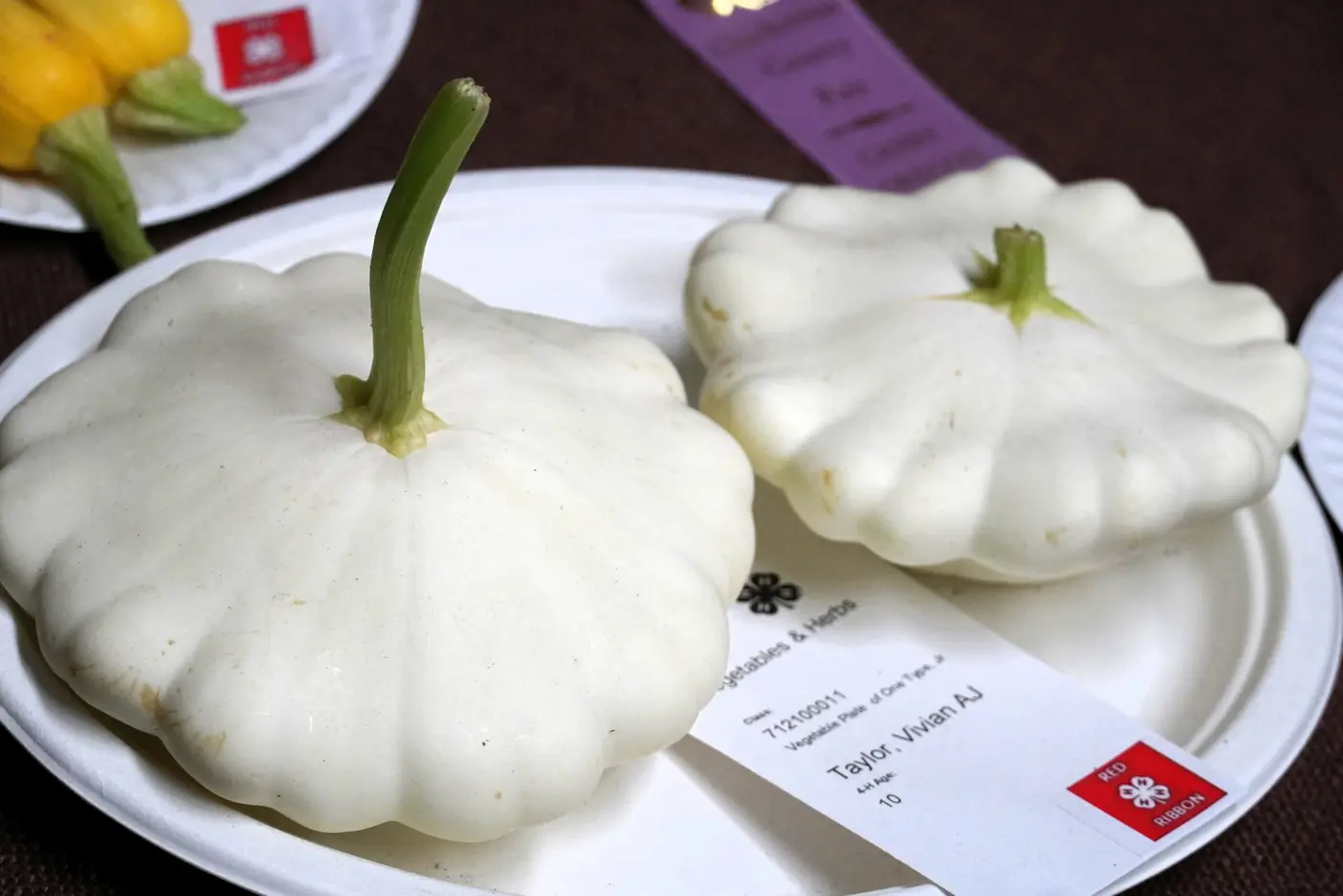
The creative exhibit departments run from agriculture crops and floral to the art gallery, Hobby Hall, Kitchen Cupboard, photography, quilts, and textiles. The Granges put up booths. County residents who enter at least three departments earn points toward King and Queen of the Fair, the titles for the fair’s outstanding male and female exhibitors. The 2026 ceremony was set for 11 a.m. on the last day, Saturday, August 22, on the Main Stage.
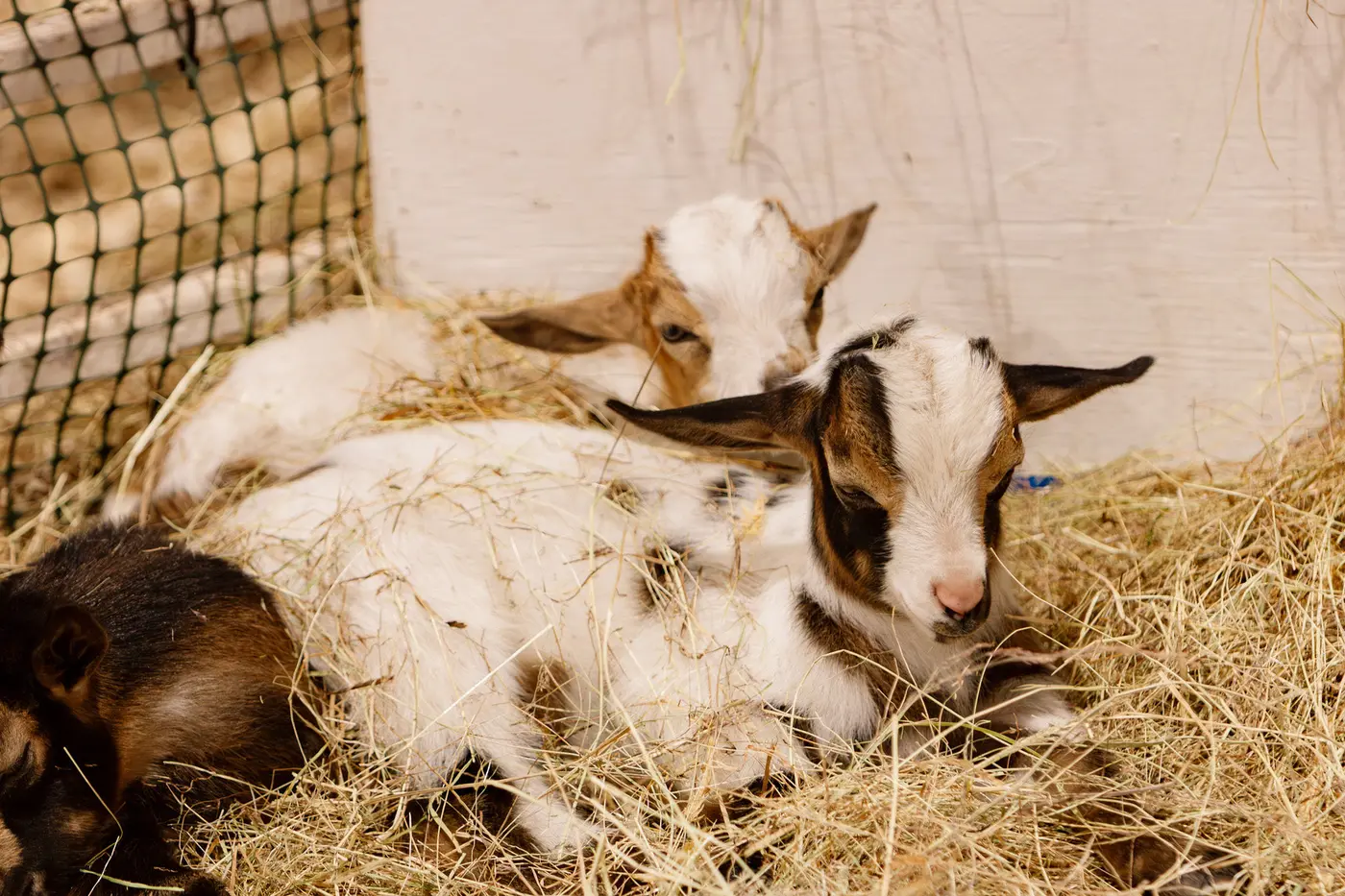
The livestock side, under superintendent Matt Stewart, has a large-animal showring, a small-animal ring, a poultry barn, and a rabbit barn, with 4-H and FFA exhibitors. Fair camping is limited to participants. 4-H families and clubs camp in the pine grove, which the WPA planted in 1930 under John Inskeep. They began camping there in the early 1980s, when motor homes and campers had become common. Before that, 4-H members slept in Horning Hall, a machine shed that volunteers led by George Horning remodeled into a dormitory in 1952. It served that purpose for thirty years.
Many of the grounds’ buildings carry the names of the people who built them or served the fair:
- 4-H Exhibit Hall. In the 1930s this was the Dance Pavilion. On Saturday evenings, dancers young and old came to waltz and fox trot to some of the area’s top bands.
- Cloverleaf Kitchen. Ray Sconce’s volunteers razed the old 4-H kitchen and began building it in 1968–69.
- Ely Arena. Built in 1962–64 and named for Stan Ely, a longtime Fair Board member and former county commissioner.
- Agricultural Crops building. Erected in the fir grove in 1983–84.
- Main Pavilion. Dates from 1924. In 1977–78 its mezzanine became a second floor.
On Arbor Day 2017, 43 commemorative trees were planted, alternating dogwood and crepe myrtle, each with a plaque. Seven plaques remember fallen Clackamas County police officers. Canby Garden Club members Cathy Rae Smith and Vern Hulit inspired the planting.
Four hours in two
The rodeo began with a bad year. After the 1957 fair, the Fair Board reported that “Fair attendance was down, gate receipts were down, and exhibitor participation was down.” The board turned to Craig Landeen, a Canby resident and rodeo promoter. He and his wife, Marilyn, had worked in rodeo across the Northwest, from competing to management. Landeen drew up a list of stock contractors, costs, risks, publicity, and format. Then, as the rodeo’s own history puts it, he “stunned the Fair Board” by proposing to squeeze “four hours of rodeo excitement in only two hours.” The board accepted.
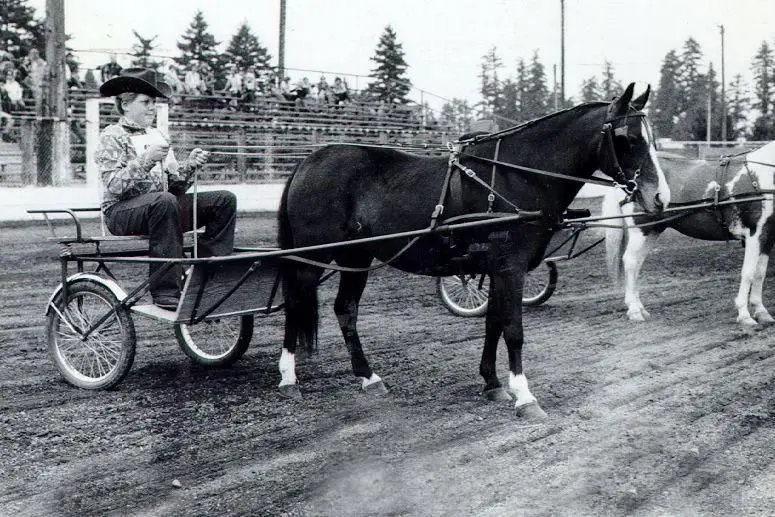
The Canby Rodeo calls its 1958 event the first sanctioned rodeo in Canby, held under the name “Clackamas County Fair Rodeo.” The fair’s timeline calls it the first free rodeo on the grounds. Rodeos and horse shows earlier in the 1950s had charged admission. In 1950 the gate cost 50 cents, plus $1.20 for the grandstand and rodeo show. The two-hour format continues. A more recent change, “same day slack and same day performance,” gives timed-event competitors both of their go-rounds on the same day.
The arena seats spectators in a covered grandstand completed in time for the 2000 fair. It holds 1,096 people and brought total seating to about 4,000. In 2017 volunteers tore down the old announcer stand and rebuilt it at three times its former size. That same year, after 60 years as the Canby Rodeo Arena, the ground became Bob Traverso Arena. The name was announced on August 5, 2017, at the fair and rodeo kick-off party. Traverso served 17 years on the Fair Board, including as its president, and is credited with securing stable funding for the fair. During his 22 years with the rodeo committee, the rodeo rose from amateur level to one of the top tiers in the area and earned the PRCA Remuda Award.
Since 2011 the Miss Rodeo Oregon pageant has partnered with the Canby Rodeo. By its Hall of Fame entry for 2023, it had held twelve pageants here. Contestants ride horsemanship in Traverso Arena, and titleholders make an arena run.
A Model T at ten cents
The fair’s own history dates the first official Clackamas County Fair to 1907, at Gladstone Park, later the Seventh Day Adventist campground. The Gladstone Historical Society tells an older story. It says the Pow-Wow Tree, a broadleaf maple on W. Clackamas Boulevard, marked the entrance to the first Clackamas County Fair in 1860. A year later the first Oregon State Fair was held on the same ground: four acres of Rinearson land that had once been the Clackamas Indians’ racetrack.
In 1908 the new Clackamas County Fair Association sold membership certificates at $5 a share to buy a site in Canby. In 1909 it paid $3,692.50 to the estate of Aaron Wait: $60 an acre for cleared land and $40 for uncleared. The Clackamas County Court added $250 toward development. The first structures were a livestock barn and a temporary grandstand, and a race track was laid out and graded.
A 1915 photograph shows the grounds in use. It includes the original pavilion and a 1913 Model T touring car signed “Fairgrounds 10¢.” There is a horse-drawn water wagon and a tall ladder from which a little dog leaped into a small net. Browning’s Carnival brought a Ferris wheel, a tent housing a “Spanish Bull Fight,” and what appear to be games of chance. Along the racetrack rail, women in long dresses and wide-brimmed hats wait for the next horse race beside men in suits, many of them white, with white shoes and hats. According to a 2024 Oak Grove history, the Oak Grove Girls’ Band, which L.E. Armstrong formed in the summer of 1910, became a regular attraction at the fair, with Jack Warren as its volunteer talent agent.
In 1924 the present Main Pavilion, livestock barns, and grandstand went up. Carl Joehnke, the association’s longtime secretary, invited the public with a list: “The main pavilion, large and convenient; stock barns of the best and latest model; grandstand, commodious and well-arranged; race track, second to none; and water and lighting systems, perfect.” The association ran the fair until 1925, when state law placed fairs under the counties.
Racing money and a February snow
Herman Chindgren, a state representative and Fair Board director, met in 1929 with representatives from four other counties. Together they formed the Oregon County and District Fairs, which he led as president for 22 years. In 1933 he steered a legislative maneuver that approved pari-mutuel racing in Oregon, with all racing money going to the fairs. The 1938 legislature cut that share to three-fifths. The tight money of the Depression years allowed little growth. In 1941 Chindgren promised “ten great departments, each headed by a young, live, enthusiastic superintendent.” During the Second World War, the fair shrank to a youth show.
Peace brought the fair back:
- 1946. The first full fair since 1941, with the theme “Clackamas County On Parade.”
- 1950. A Hollywood production company staged the “Cavalcade of Clackamas County” during the fair, August 30 to September 1, with a cast of more than 300 county residents.
- 1955. To promote the fair, the board invited 200 guests to a no-host dinner at the Bolton School. The menu was baked ham, new potatoes, string beans, salad, rolls, pie à la mode, and coffee, for $1.00.
- 1956. The fair’s 50th-anniversary “Golden Jubilee.” The Clackamas County Historical Society showed one of its first displays at the fair.
The money kept shifting:
- 1968–69. Racing law changes cut each fair’s racing money to $20,000 a year, which the fair’s history calls “a serious blow.” Bill Gerber, a Clackamas County Fair Board member and president of the Oregon Fairs Association, led the creation of a merit-rating program for county fairs. The legislature approved it and created a County Fair Commission to run it.
- 1980. County voters approved a 6 percent hotel and motel tax, five-sixths of it for the fairgrounds.
- 1985. The distribution formula changed, sending more of the tax to tourism promotion and less to the fair. On May 5 of that year, fire destroyed Barn 6.
The fair marked its 100th edition in 2006 with cake, commemorative coins, and special performances each day. In 2009 the Canby Fairgrounds formally became the Clackamas County Fair and Event Center. In 2014 the state named the fair an Oregon Heritage Tradition. That February more than 8 inches of snow fell on Canby, and the weight left the 1924 livestock barn unsafe. Crews took it down between June 25 and July 19, and rented T-structures held the animals at that August’s fair.
In 2017 about 144 animals and fowl evacuated from the Eagle Creek Fire were boarded at the fairgrounds. The Sheriff’s Posse watched over them around the clock.
Notable Events
- 1908The Clackamas County Fair Association organized and sold $5 membership certificates to fund a Canby site. clackamascountyfair.com
- 1924The original pavilion gave way to the present Main Pavilion, and livestock barns and the present grandstand were built. clackamascountyfair.com
- 1925State law placed fairs under county jurisdiction. clackamascountyfair.com
- 1929Representatives from Clackamas and four other counties formed Oregon County and District Fairs to represent Oregon fairs. clackamascountyfair.com
- 1930The WPA planted the pine grove under John Inskeep's leadership. clackamascountyfair.com
- 1933A legislative maneuver led by Herman Chindgren secured approval of pari-mutuel racing, with all racing monies going to fairs. clackamascountyfair.com
- 1938The legislature reduced the fairs' racing-revenue share to 3/5. clackamascountyfair.com
- 1941During World War II, the annual fair was limited to a youth show. clackamascountyfair.com
- 1946The first peacetime fair since 1941 returned as a full-scale exhibition with the theme Clackamas County On Parade. clackamascountyfair.com
- 1950A Hollywood production company staged Cavalcade of Clackamas County during the fair with a cast of over 300 county residents. clackamascountyfair.com
- 1952Volunteers led by George Horning remodeled a machine shed into a 4-H dormitory that was used for thirty years. clackamascountyfair.com
- 1953County Court authorized $5,000 for a horse barn, livestock chutes, rodeo arena, reconstructed grandstand, and new bleachers. clackamascountyfair.com
- 1956Timber was removed from the eastern fairgrounds where Ely Arena and carnival lots now stand. clackamascountyfair.com
- 1956Oregon County and District Fairs incorporated as the nonprofit Oregon Fairs Association to promote Oregon fairs. clackamascountyfair.com
- 1956One of the historical society's first displays was exhibited at the fair in honor of its 50th anniversary. clackamashistory.org
- 1958The first sanctioned Canby rodeo was called the Clackamas County Fair Rodeo and followed a poorly attended fair the previous year. canbyrodeo.com
- 1958Craig Landeen produced the first free rodeo at the fairgrounds. clackamascountyfair.com
- 1962A riding arena was built and later named Ely Arena in honor of longtime Fair Board member and former County Commissioner Stan Ely. clackamascountyfair.com
- 1968Volunteers led by Ray Sconce razed the old 4-H kitchen and began construction of Cloverleaf Kitchen. clackamascountyfair.com
- 1968Under Bill Gerber's leadership the Oregon Fairs Association developed a merit-rating program; legislative approval created a County Fair Commission to administer it. clackamascountyfair.com
- 1968Changes in racing laws reduced racing monies to each fair to $20,000 per year, described as a serious blow to county fairs. clackamascountyfair.com
- 1977A federal Economic Development Grant and monetary and labor donations supported extensive Main Pavilion improvements, including conversion of the mezzanine into a second floor and installation of restrooms. clackamascountyfair.com
- 1980Voters approved a 6% transient room tax, with five-sixths of proceeds going to fairgrounds operation, maintenance, and improvements. clackamascountyfair.com
- 19804-H discontinued using Horning Hall as a dormitory as members preferred camping in families and clubs in the pine grove. clackamascountyfair.com
- 1983Horning Hall and the 4H Exhibit Hall received major remodeling and restroom additions; an Agricultural Crops building was erected in the fir grove. clackamascountyfair.com
- 1985Kitchens were added to the Main Pavilion and Horning Hall, and additional bleachers built at the rodeo grounds. clackamascountyfair.com
- 1985Barn 6 was destroyed by fire on May 5. clackamascountyfair.com
- 1985The room-tax distribution formula was changed, reducing the amount going to the fair and increasing the portion for county tourism promotion. clackamascountyfair.com
- 1997The original rodeo-arena grandstands were demolished, with rented grandstands used while new ones were planned. clackamascountyfair.com
- 2000A new covered grandstand was completed in time for the fair, bringing total seating to approximately 4,000. clackamascountyfair.com
- 2006The fair celebrated its milestone birthday with cake, commemorative coins, and daily special performances. clackamascountyfair.com
- 2007The Build-a-Barn committee held its first fundraiser toward a new livestock barn. clackamascountyfair.com
- 2009The Canby Fairgrounds was formally renamed the Clackamas County Fair and Event Center. clackamascountyfair.com
- 2011Miss Rodeo Oregon Inc. Foundation partnered with Canby Rodeo; the partnership included hosting pageants at Traverso Arena. missrodeooregon.com
- 2013During Bob Traverso's work with the rodeo committee, the rodeo rose from amateur level to one of the area's top tiers and earned the PRCA Remuda Award. clackamascountyfair.com
- 2014After more than 8 inches of snow made the 1924 livestock barn unsafe, it was deconstructed June 25-July 19. clackamascountyfair.com
- 2014The Clackamas County Fair was honored as an Oregon Heritage Tradition. clackamascountyfair.com
- 2017The formal announcement of the county resolution was made on August 5 at the fair and rodeo kick-off party; the arena was renamed in memory of longtime supporter Bob Traverso. clackamascountyfair.com
- 2017Approximately 144 animals and fowl evacuated during the Eagle Creek Fire were boarded at the fairgrounds; the Sheriff's Posse monitored them around the clock. clackamascountyfair.com
- 2017The Fair Board unanimously voted to shorten the fair from six days to five days. clackamascountyfair.com
- 2017Volunteers rebuilt the old rodeo announcer stand at three times its previous size. clackamascountyfair.com
- 2023The Clackamas County Fair is listed under the Miss Rodeo Oregon Hall of Fame Class of 2023. missrodeooregon.com
People
- Aaron Wait, his estate sold the Canby fairgrounds parcel to the Fair Association (1909).
- Bill Gerber, Clackamas County Fair Board member elected president of Oregon Fairs Association; led development of the county-fair merit-rating program (1968-69).
- Bob Traverso, Longtime rodeo and fair supporter commemorated by the arena name; served on the Fair Board and as its president (17 years on the Fair Board).
- Carl Joehnke, long-time secretary of the Fair Association (1924).
- Cathy Rae Smith, Canby Garden Club member who inspired the commemorative tree-planting beautification project (2017).
- Craig Landeen, produced the first free rodeo at the fairgrounds (1958).
- George Horning, led volunteers who converted a machine shed into a 4-H dormitory (1952).
- Herman Chindgren, State Representative, Clackamas County Fair Board Director, and first president of Oregon County and District Fairs (22 years).
- John Inskeep, led the WPA pine-grove planting (1930).
- Ray Sconce, Led volunteers who razed the old 4-H kitchen and began building Cloverleaf Kitchen (1968-69).
- Stan Ely, Longtime Fair Board member and former County Commissioner honored by the naming of Ely Arena.
- Vern Hulit, Canby Garden Club member who inspired the commemorative tree-planting beautification project (2017).
- Jack Warren, Volunteer talent agent for the Oak Grove Girls’ Band, which was a regular attraction at the fair.
- L.E. Armstrong, Formed the Oak Grove Girls’ Band, a regular attraction at the Clackamas County Fair in Canby (summer of 1910).
Sources
- clackamascountyfair.com
- clackamascountyfair.com/fair
- clackamascountyfair.com/carnival
- clackamascountyfair.com/creative-exhibits-2
- clackamascountyfair.com/livestock-exhibits
- canbyrodeo.com
- clackamascountyfair.com/history
- oregonfairs.org/p/membership1/2026-fairs-by-date
- canbyrodeo.com/who-we-are
- canbyoregon.gov/tourism/page/clackamas-county-event-center
- archiveswest.orbiscascade.org/ark:80444/xv17080
- canbyhistoricalsociety.org