Cherry Hill Farms
Hurricane, Washington County, Utah. U-pick farm and seasonal farm store.
Details

- Where
- 1468 Flora Tech Rd, Hurricane, UT 84737. Directions
- When
- Corn Maze opens October 1, 2026, Tuesdays - Thursdays 5pm - 8:30pm, Fridays & Saturdays 3pm - 8:30pm.
- Season
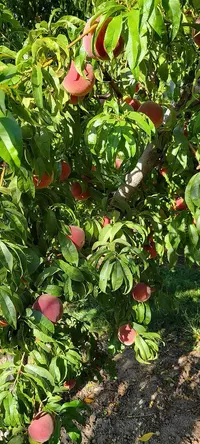
- Peaches mid June through end of September; farm store seasonal.
- Getting there
- Just a 10-minute detour off I-15 on the way to St. George; 1468 S Flora Tech Rd, Hurricane.
- Hours
- September 25 & 26, 10am - 2pm; starting October 1, Tuesdays - Thursdays 5pm - 8:30pm, Fridays & Saturdays 3pm - 8:30pm.
- Access
- Stand hours shift week to week at season's end and open days are posted weekly on Instagram; some days the stand opens only if produce remains.
- Phone
- (385) 375-7477
- Website
- cherryhillfarms.com
- Managed by
- Rowley Family.
- Established
- Joined Cherry Hill Farms family in 2022.
The corn maze at 1468 Flora Tech Road in Hurricane opened on October 1, 2026. It runs in the evenings, Tuesday through Saturday, from five o’clock midweek and from three on Fridays and Saturdays, closing at half past eight. Cherry Hill Farms laid it out in partnership with the City of Hurricane and calls it a new fall tradition, one the farm says it is “just getting started” on. Through September the farm posted photographs of the ground going from what it called “an empty dirt field” to standing corn, and it advertised for a maze crew of anyone fifteen or older. Organized groups of ten or more, such as clubs, teams, homeschool, school, and church groups, get in for five dollars a person if they buy their tickets together at the gate. The state agritourism directory lists a pumpkin patch and a fall festival for the farm as well, along with summer u-picks and a seasonal farm store.
The farm stand shares the address, about a ten-minute detour off I-15 on the way to St. George, and from October 1 it keeps the maze’s hours. The farm goes by Cherry Hill Farms – Zion. It belongs to the Rowley family, whose other farms are in Alpine and Santaquin, Utah, and in Caldwell, Idaho.
Peaches, melons, and Peach Days
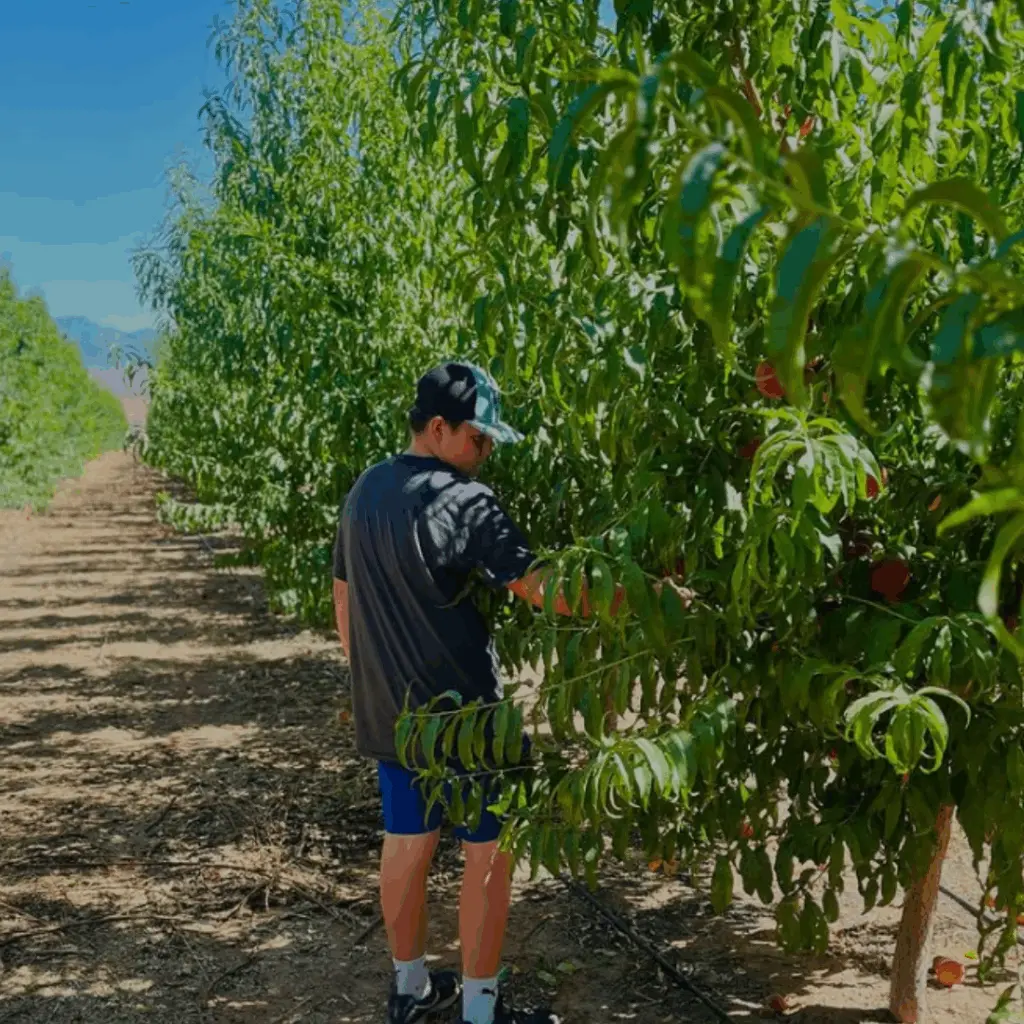
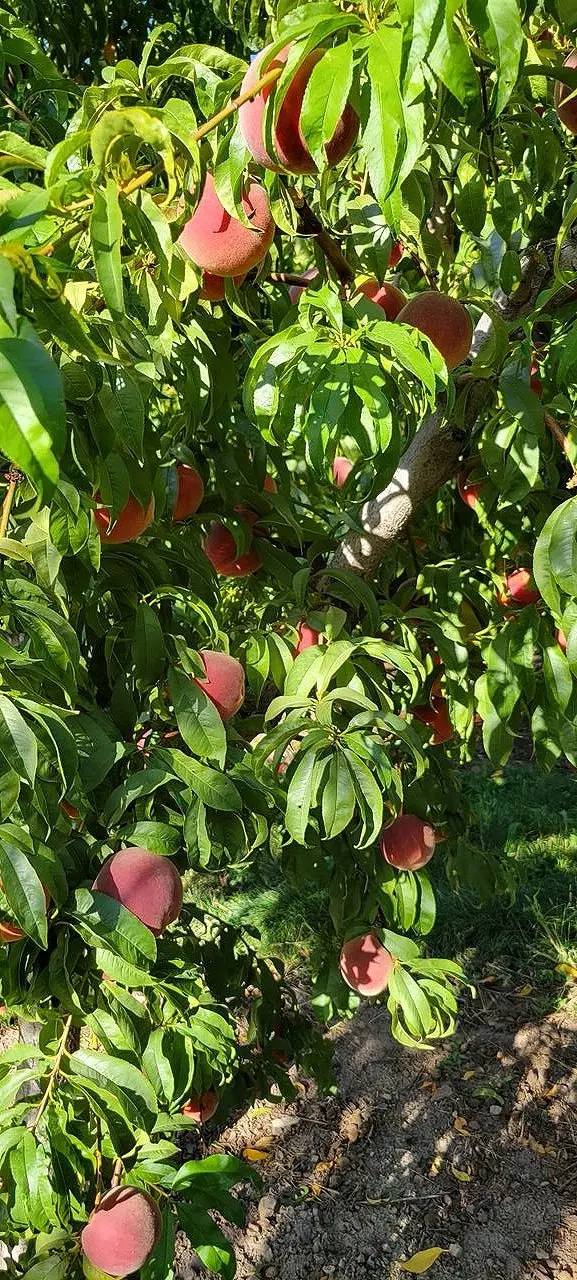
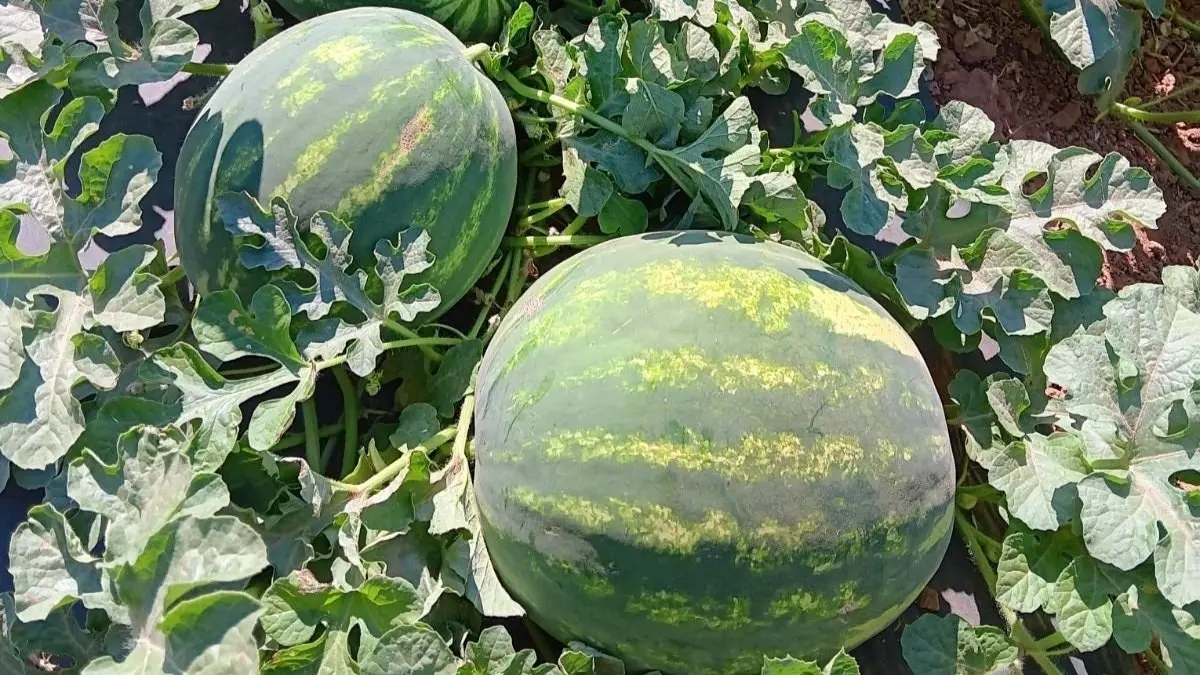
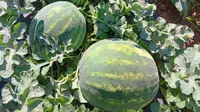
The stand’s calendar follows the orchard. Apricots come in around late May and run through early July. Sweet cherries come in June and July, and peaches run from mid-June to the end of September. The farm calls its watermelon “the worst kept secret in Southern Utah,” and the cantaloupe is grown on the place. Vegetables are announced as they ripen. In September 2026 the stand gave away a second bag of Gala or Honeycrisp apples with every bag bought, for as long as the apples lasted.
Late summer turns on Hurricane Peach Days. For the 2026 event, held September 3 through 5, the farm closed the stand on the Friday and Saturday and sold discounted peach boxes from a booth instead. It rode in the parade on Saturday morning, and its booth was marked by what the farm described as “this happy guy constantly waving.” A week before, the farm had written, “This year has brought its own set of unique challenges, but it’s the hope and the people around us that help us keep on going.” Afterward one customer posted that her family had stocked up at Peach Days: “3 gallon size bags!”
The season wound down in short notices. On September 21 the stand closed early for rain. The next day a post said peaches were still on hand, and an edit later that day read “SOLD OUT.” On September 23 the farm wrote, “Just like that, peach season has come to a close.” At the end of a season the open days change week to week and are posted on Instagram, and on some days the stand opens only if produce is left. The farm has announced a second store, “coming soon,” at Green Gate Village, 76 West Tabernacle Street in downtown St. George.
The Stirlings behind Sand Hollow
Until 2022 this was Stirling Fruit & Vegetable Company. Cherry Hill Farms says the farm was part of Washington County life for five generations, and the Stirlings called theirs a fifth-generation family farm. A 2019 Utah Stories article placed its fields behind the Sand Hollow Dam, spread across Hurricane and Leeds, and run by David and Danielle Stirling.
When David took over the family farm more than twenty years before that article, it held a handful of peach trees, melons, and grapevines. By 2019 it covered approximately 300 acres. He had expected, the article says, to spend most of his time flying the recreational airplanes he built himself. The flying gave way to days that began at four in the morning and ended no earlier than ten at night, in weeks of 110 hours. The Stirlings were the first generation of the family to sell to local stores. They started by “putting the watermelon and peaches in the back of our truck and peddling the watermelon at the back of stores. We would say, ‘Just taste the watermelon, and see if you like it.’” The fruit came off the trucks by hand. “We were crazy.” Danielle credited Harmons Grocery with carrying their product and growing their brand. She also recalled a produce buyer who told her, “We won’t buy any other watermelons until yours come out.” The farm watered its crops with clean water from its own pond.
Not every year went well. In August 2013 the Associated Press reported a grasshopper outbreak in southern Utah. David Stirling had lost as many as 50,000 pounds of cantaloupe, about 1,000 cherry trees, and 500 peach trees since May. “I’ve never seen anything like it,” he said. “They ate the rinds right off the melon.”
The Stirling stand stood at the corner of SR-9 and Sand Hollow Road, the corner the state directory still gives for Cherry Hill Farms – Zion. In August 2020 it sold peaches by the 20-pound lug box: $35 for premium, $25 for seconds with small blemishes, and $20 for a box ripe that day. A second stand stood in the Cal Ranch parking lot in Cedar City. In March 2021 the Stirlings sold $35 permits for blossom photo sessions in the Leeds and Sand Hollow orchards, first the white plum, then cherry, then peach. That May they opened a cherry u-pick at the Hurricane farm, “at the Red Warehouse” on the corner of Flora Tech and 3400 West, from five to seven every evening but Sunday. Pickers paid $6.50 a pound and brought their own bucket or bag.
On July 12, 2022, the Stirling page posted: “We retired! Thank you so much for your friendship and support during our farming era!” The farm joined Cherry Hill Farms the same year.
Tart cherries in Orem and Santaquin
The Rowleys give two starting points. The state directory says the family began farming on a few acres in Orem in the early 1900s. The family’s own history starts in 1927, when Moses Aaron Rowley began growing fruit and became one of the first in Utah to grow tart cherries. Four of his sons kept farming. One of them, Moses Alvin Rowley, started a farm in Orem in 1937, where he and Myrtle raised their children picking cherries, raspberries, and other fruit by hand and furrow-irrigating at all hours of the day and night. In 1957 Claude Alvin Rowley and Karen started a farm in Santaquin, thinking, the family history says, that “just maybe they could grow some trees too.”
Machines changed the harvest. In 1969 the farm bought its first “Friday” limb shaker, which shook one limb at a time. In 1974 the Kilby cherry shakers arrived, and “everyone celebrated” when the family could shake two full trees in one minute. The newest shakers do three to four. Claude turned the farm over to his sons in 1991 and kept helping. In 2012 the family added farmland in Caldwell, Idaho, as a fifth generation came into the work. In 2020 the Rowleys opened their farms to the public and started the fruit stands.
Cherry harvest still puts the children to work as soon as they are old enough. They begin on the pad, cleaning out anything that does not belong in a cherry bin, and move up to tractors, forklifts, conveyors, and the shakers. Grandma Karen worked the pad too, as the forklift driver.
Notable Events
- 1927Moses Aaron Rowley started the family fruit-farming legacy and was one of the first people in Utah to grow tart cherries. cherryhillfarms.com
- 1937Moses Alvin Rowley started his farm in Orem, where he and Myrtle raised their children picking fruit by hand and irrigating by furrow. cherryhillfarms.com
- 1957Claude Alvin Rowley started his farm in Santaquin, Utah. cherryhillfarms.com
- 1969The farm bought its first Friday limb shaker, which shook one limb at a time and replaced some hand picking. cherryhillfarms.com
- 1974Kilby cherry shakers let the family shake two whole trees in one minute. cherryhillfarms.com
- 1991Claude Rowley turned the farm over to his sons while continuing to help. cherryhillfarms.com
- 2012Cherry Hill Farms began moving into its fifth generation as it expanded to farmland in Caldwell, Idaho. cherryhillfarms.com
- 2020Cherry Hill Farms opened its farms to the public and started fruit stands at its locations. cherryhillfarms.com
- 2022The five-generation Washington County farm joined the Cherry Hill Farms family. cherryhillfarms.com
- David Stirling's Hurricane operation lost as many as 50,000 pounds of cantaloupe, about 1,000 cherry trees and 500 peach trees since May. ksl.com
- David took over the fifth-generation farm when it held only a handful of peach trees, melons and grapevines. utahstories.com
People
- Claude Alvin Rowley, Started the Rowley farm in Santaquin, Utah (1957).
- Karen, Raised the family with Claude on the farm and worked as a forklift driver during cherry harvest.
- Moses Aaron Rowley, Started the Rowley family fruit-farming legacy and was one of the first Utah growers of tart cherries (1927).
- Moses Alvin Rowley, Started the Rowley farm in Orem, Utah (1937).
- Myrtle, Raised her children with Alvin while the family picked fruit by hand and irrigated by furrow.
- David Stirling, Co-operator of Stirling Fruit & Vegetable Co (Took over over 20 years ago).
- Danielle Stirling, Co-operator of Stirling Fruit & Vegetable Co.
Sources
- cherryhillfarms.com/hurricane-ut
- cherryhillfarms.com/our-history
- agritourism.utah.gov/farm-directory/listing/cherry-hill-farms-zion
- instagram.com/cherryhillfarms.zion
- facebook.com/cherryhillfarms.zion
- cherryhillfarms.com/hurricane-ut
- utahstories.com/2019/11/stirling-fruit-vegetable-co-finding-the-silver-lining-in-todays-farm-economy
- facebook.com/stirlingfarmsut