

Caretakers Cabin
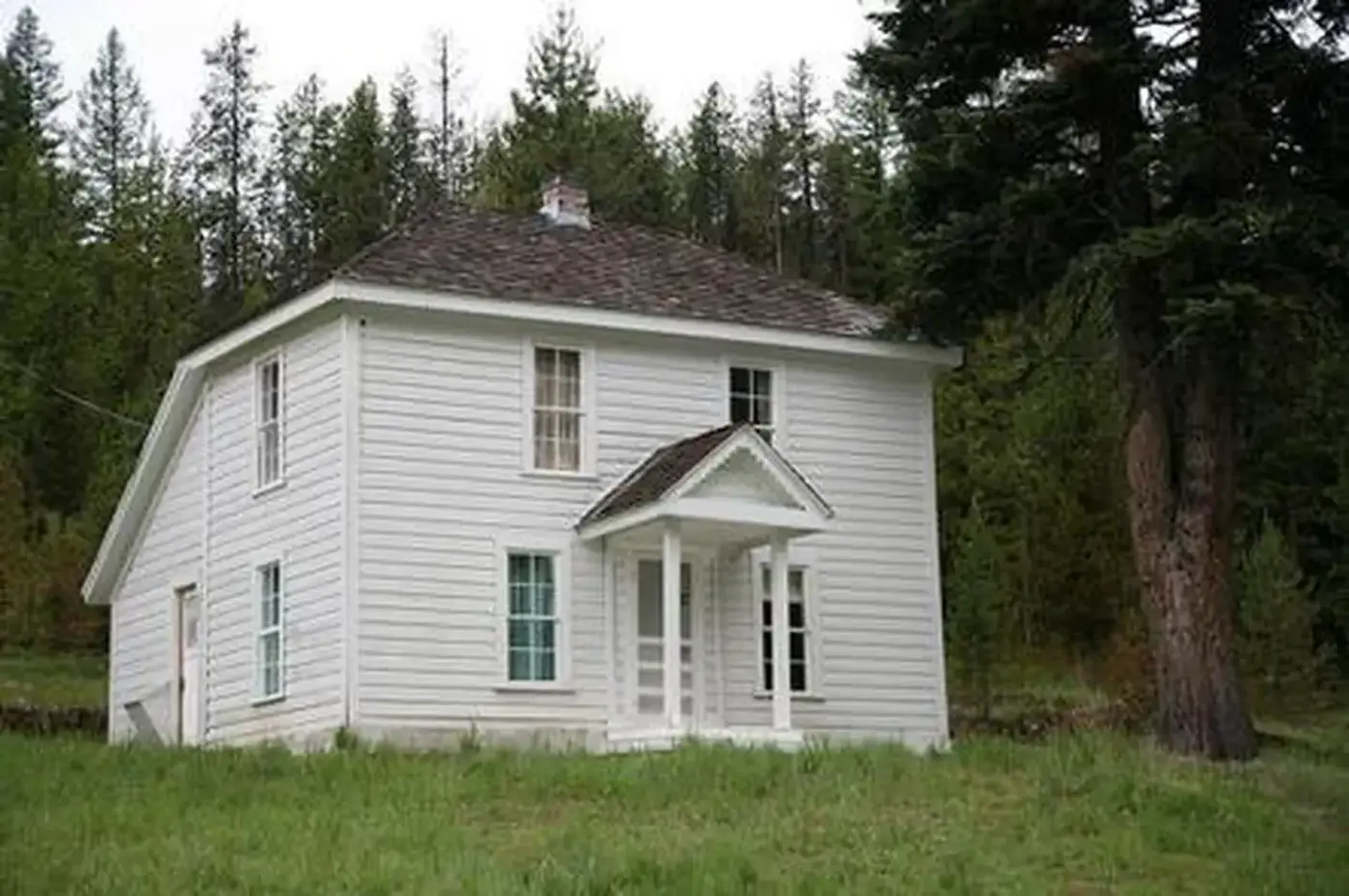
Granite, Grant County, Oregon. 2-storied cabin.
Details

- Where
- Granite, Grant County, OR. No street address stated. Directions
- When
- May - November.
- Season
- Available to rent year-round; May through November is the typical operational season.
- Getting there
- From Granite, go west on County Road 24 for approximately 6 miles. The main road veers left along the creek bed. At this junction go right (uphill) on FSR 10 and follow the signs to the Fremont Powerhouse.
- Fees
- $80 per night (up to 10 people).
- Access
- Open and available to rent during the winter months though may be accessible by snowmobile only. Check with the North Fork John Day Ranger District.
- Walk-in or reserve
- Entry is by combination lock; the cabin code is provided by email.
- Phone
- 541-427-3231
- Website
- fs.usda.gov
- Managed by
- Umatilla National Forest.
- Established
- 1930s.
- Coordinates
- 44.79694, -118.49806.
The Caretaker’s Cabin stands on a small rise under a large spruce, farther north than any other building on the Fremont Powerhouse grounds. It is a two-story house with wood siding and a shake shingle roof. A grassy lawn runs from its front to three other rental cabins, Congo Gulch, Hilltop Hideaway and Miner’s Retreat, all within a couple hundred feet of one another. The Forest Service gives the elevation as 4,939 feet; Recreation.gov calls it about 5,000. Granite, the nearest town, lies about six miles back down County Road 24. It still sells groceries and fuel.
The house under the spruce
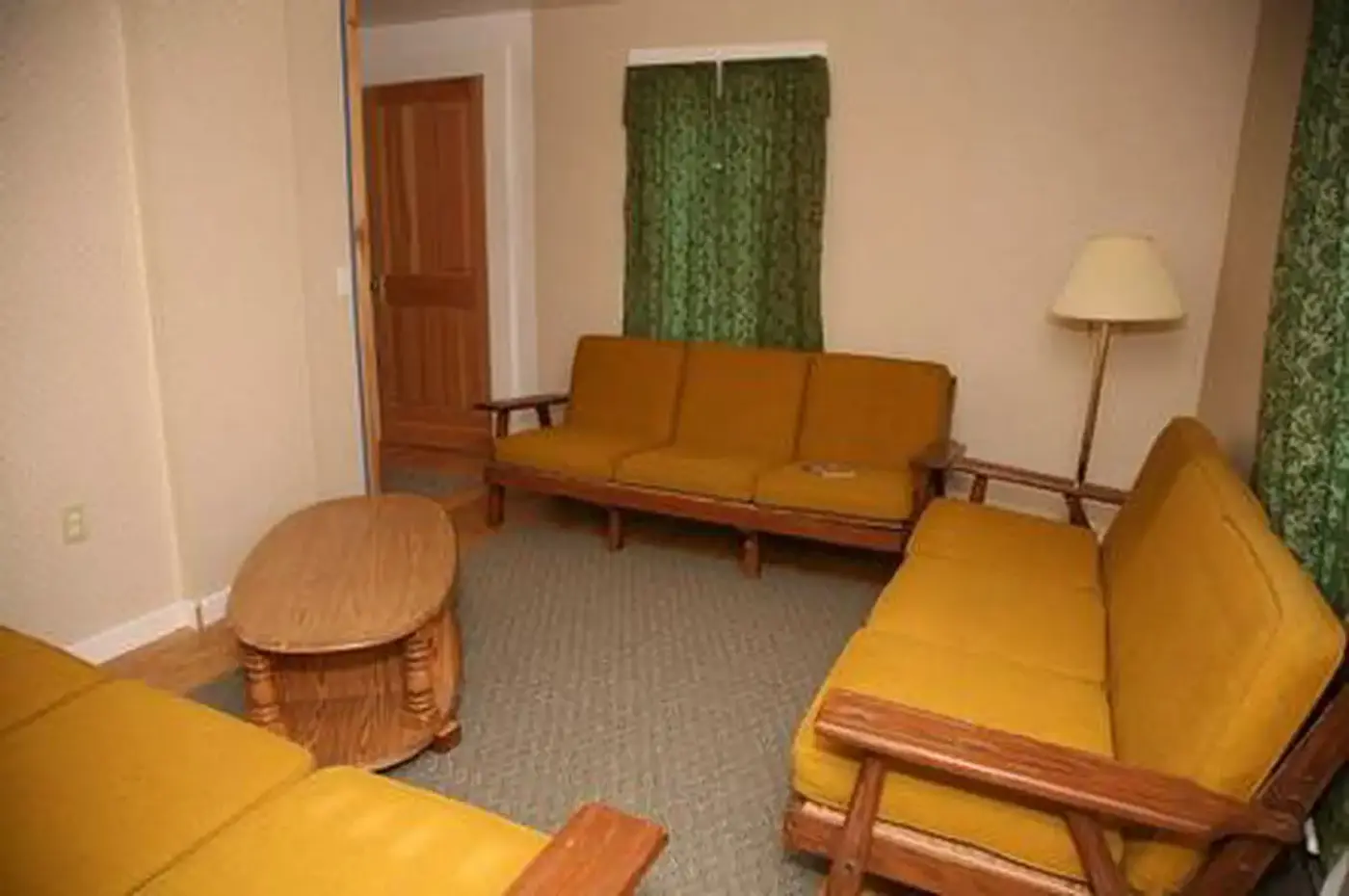
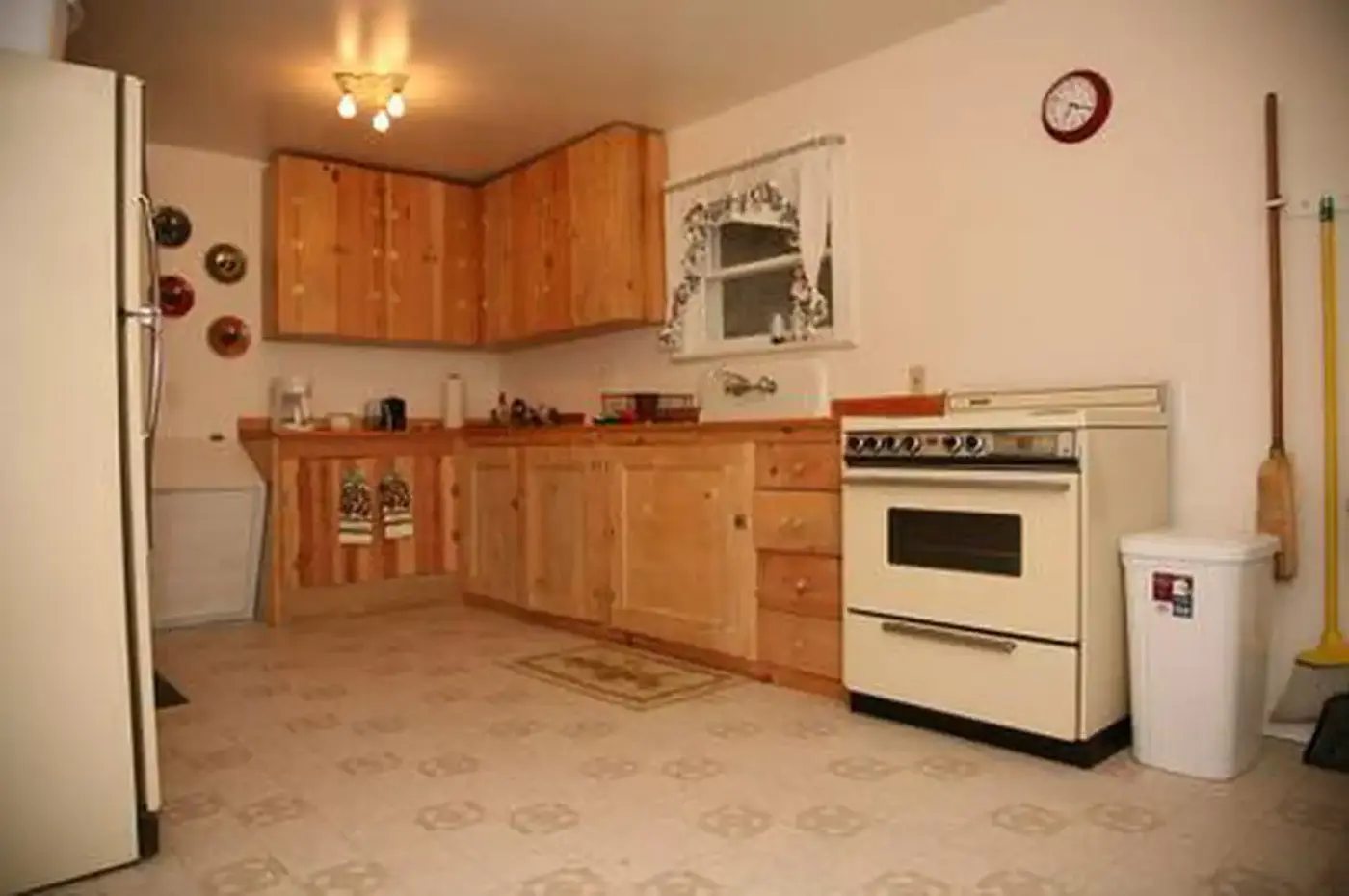
Upstairs are two bedrooms with dressers, two twin beds and two full-over-queen bunk beds. Downstairs are a parlor with two futons, a dining room with a table and chairs for ten, and a kitchen with an electric stove, refrigerator, microwave, coffee pot and toaster. The bathroom has a flush toilet and a claw-footed tub but no shower. Electric wall heaters warm the rooms. Water runs June through September only. From October through May the plumbing is shut off, renters haul in their own water for drinking, cooking and washing, and an outhouse near the house takes the place of the bathroom. Outside are a fire ring and a picnic table, and tents may be pitched on the lawn. The door opens by combination lock, with the code sent by email. Cleaning supplies are left in the house, and renters scrub it before they go.
The forest around it is ponderosa pine, lodgepole pine, larch and Douglas-fir. Recreation.gov lists black-backed woodpeckers, American kestrels and boreal owls among the birds, and black bear, cougar, wolves, elk and deer among the mammals. Guests pick huckleberries and mushrooms, hike into the North Fork John Day Wilderness, and drive to Olive Lake, 7 miles west, to fish, boat and swim.
The house rents year-round, but winter changes the road. Forest Service Road 52, the way in from Ukiah, is not maintained from October through May. In those months the only access is the plowed route from Baker City through Sumpter. Recreation.gov warns that “many people have gotten stuck in snow drifts they thought they could push through,” and there is no cell coverage. Skis, snowshoes or snowmobiles may still be needed for the last stretch. In 2013 the East Oregonian reported that the Forest Service would plow the powerhouse entrance road from Granite for the first time that season, opening the site in winter to more than snowmobiles.
Marble, Pelton wheels and Lake de Puddle
The powerhouse below the cabins is a one-story building of concrete blocks cast on the site and rock-faced on the outside, about 83 by 28 feet. It has rounded arched windows along both long walls and a wheel window under the west gable. The National Register nomination traces its Richardsonian Romanesque lines to its designer, the engineer E. W. Cummings of Seattle. Inside, two 500-kilowatt Westinghouse generators sit in separate concrete wells in the floor, each driven by a cast steel Pelton wheel. On the north wall is the control panel, four slabs of blue Florentine marble nearly 11 feet wide, set with brass-cased instruments. Mitch Fielding, the caretaker, historian and tour guide profiled by the East Oregonian in 2013, explained that the stone kept the instruments perfectly grounded. “It was the most expensive stone they could buy,” he said, “but necessary and fitting for the building’s Romanesque design.”
The Forest Service says the building holds pictures and artifacts and that a local caretaker gives tours when he is on site. About 1,000 visitors stopped at the powerhouse in 2012, by the East Oregonian’s count, and the Blue Mountain Eagle gave the same yearly figure in 2019. Fielding was said to greet most of them with historic tales and the occasional ghost story. An interpretive sign stands on the north side of the building. The volunteer who logged it for the Historical Marker Database asked visitors to keep their exploring to the powerhouse and leave the renters their privacy.
The cabins cluster around a small holding pond that Fielding called Lake de Puddle. The nomination form describes it more plainly: a creek diverted through a buried pipe into a landscaped fish pond, partly enclosed by a rail fence. “It took 12 people to keep this place online,” Fielding said. Some of the workers had families, and single men lived in a separate cabin.
Water from Olive Lake
Gold and silver mining filled the North Fork John Day drainage through the 1800s. By the Forest Service’s account, local mines began seeing their earnings fall around 1903 and pushed for a cheaper source of power. The steam-powered Red Boy Mine led the effort. In August 1905, Ray Nye, John Thomsen, Walker Fernald and John Waterman incorporated the Fremont Power Company, named for Fremont, Nebraska, Nye’s hometown. In November the company bought its powerhouse claims from Thomsen, who was also general manager of the Red Boy Mines Company. Its mortgage, dated January 2, 1906, was handled through the Northern Trust Company of Chicago. Cummings made the first feasibility study, designed the plant and supervised its building.
The water came from Olive Lake, about eight miles to the west at 5,934 feet. The lake was left behind by Ice Age glaciers, held in by a pile of moraine rock. Engineers built a log-crib earthfill dam on top of that natural dam, raising the lake 35 feet and enlarging it from 95 to 165 surface acres. A second reservoir, Upper Olive Lake, flooded a wet meadow in a glacial basin above. Workers dug five miles of trench by hand for a pipeline of redwood staves bound with steel. Its milled tongue-and-groove joints swelled watertight when wet, and wooden trestles carried it across the canyons in between. The pipe dropped 1,068 feet over eight miles. The nomination puts the pressure at the intake at 425 to 485 pounds per square inch; Fielding gave it as 450 and said the last steep run was cast iron to stand it. “They inspected the entire pipe every day for leaks,” he said. Sections of the old wooden pipe can still be seen beside Forest Service Road 10 between the powerhouse and Olive Lake.
The nomination dates the start of operation to August 1908, and most sources give 1908 as the year the powerhouse was built. The Blue Mountain Eagle gives 1903. For its part in the venture, the Red Boy received free electricity for three years. The plant later lit Granite, Greenhorn and Sumpter, and the Eagle adds that it powered the gold dredge at Sumpter, which has since been restored for tours. Accounts of the regional company differ. The nomination has Eastern Oregon Power and Light operating the plant from 1911 to 1940 after title passed to it. The Eagle says the plant was tied to generating plants at Cove, La Grande and Baker to form Eastern Oregon Power & Light as mining slowed in the 1920s.
Two houses and a storage shed went up shortly after the powerhouse, and three more residences followed in the late 1920s or early 1930s, according to the nomination. Recreation.gov dates the Caretaker’s Cabin to the 1930s. The pipe itself was replaced twice, in the early 1920s and again in the 1950s, each time with metal-bound wood staves like the first. In 1958 the spillway at Upper Olive Lake washed out and was not replaced, and the basin went back to wet meadow.
Snow on the roof, guardsmen on the job
In October 1967, after 59 years of service, the powerhouse generated its last power. The Eagle says it had been sold to California Pacific Public Utilities Co. before it shut down. The date of the gift to the Forest Service is given as 1967 by some sources and 1968 by others. The nomination records that the complex was officially accepted from the California-Pacific Utilities Company on March 14, 1969. Joe Batty, a longtime Oregon National Guardsman, worked at the powerhouse with his wife, Sharon, from 1968 to 1981. On August 19, 1983, the powerhouse, lake, dam, pipeline corridor and outbuildings were listed together on the National Register of Historic Places as a historic district.
A heavy snow load brought down a large part of the building in 1992, by the Forest Service’s account. The Eagle puts the roof collapse in 1993 and says the Forest Service considered dismantling the building and its generating equipment. Batty, by then a retired Command Sergeant Major, led a crew of guardsmen who rebuilt the 2,300-square-foot powerhouse and the four cabins from 1999 through 2005.
In April 2006 the Baker City Herald listed three rental houses at the site: Congo Gulch, Miners Retreat and Hilltop Hideaway. By 2013 the East Oregonian counted four, rented by the night year-round and booked for holidays, reunions and weddings. Fielding, asked about the place, answered with a question of his own: “Where do you go on vacation when you live in paradise?”
Notable Events
- 1903The powerhouse was built to furnish power for the Red Boy Mine, which relied on steam power. bluemountaineagle.com
- 1903Declining earnings prompted local mines to promote construction of a cheaper power source. fs.usda.gov
- 1905The Fremont Power Company was formed. eastoregonian.com
- 1906The mortgage was handled through Northern Trust Company of Chicago. npgallery.nps.gov
- 1908Olive Lake had been dammed and eight miles of pipe were in place to bring water to the newly finished powerhouse. eastoregonian.com
- 1908The Fremont Powerhouse was built to produce electricity for nearby mines and towns. hmdb.org
- 1911Eastern Oregon Power and Light operated the powerhouse after title was transferred to it. npgallery.nps.gov
- 1920sThe original water pipe materials were replaced. npgallery.nps.gov
- 1920sThree additional residences were built in the late 1920's or the early 1930's. npgallery.nps.gov
- 1930sThe cabins originally housed powerhouse employees. eastoregonian.com
- 1930sThe house sheltered workers monitoring pipeline leaks and keeping the powerhouse operating. recreation.gov
- 1950sThe original water pipe materials were replaced again. npgallery.nps.gov
- 1958The spillway washed out and was not replaced; the undammed glacial basin became a wet meadow again. npgallery.nps.gov
- 1967The powerhouse shut down after being sold to California Pacific Public Utilities Co. bluemountaineagle.com
- 1967The powerhouse closed and was donated to the United States Forest Service. hmdb.org
- 1967After 59 years of service, the Fremont Powerhouse generated its last electric power. npgallery.nps.gov
- 1968California Pacific Utilities Company donated the entire complex to the U.S. Forest Service. fs.usda.gov
- 1983The Fremont Powerhouse historic district was individually listed. heritagedata.prd.state.or.us
- 1992A large portion of the building collapsed under a heavy snow load. fs.usda.gov
- 1993Winter storm snow collapsed the powerhouse roof; the Forest Service considered dismantling the building and generating equipment. bluemountaineagle.com
- 1999Batty and guardsmen rebuilt the 2,300-square-foot building and four cabins. bluemountaineagle.com
- The company donated the entire complex to the U.S. Forest Service. bluemountaineagle.com
People
- Joe Batty, retired Command Sergeant Major who led the Oregon National Guard reconstruction of the powerhouse and cabins (1999 through 2005).
- Sharon, Joe Batty's wife; worked with him at the powerhouse (1968-1981).
- Mitch Fielding, Powerhouse caretaker, historian and tour guide.
- E. W. Cummings, engineer who conducted the initial feasibility study, designed the power plant and supervised its construction.
- John Thomsen, Incorporator of Fremont Power Company (August 1905).
- John Waterman, Incorporator of Fremont Power Company (August 1905).
- Ray Nye, Incorporator of Fremont Power Company (August 1905).
- Walker Fernald, Incorporator of Fremont Power Company (August 1905).
Sources
- fs.usda.gov/r06/umatilla/recreation/fremont-caretakers-cabin
- recreation.gov/camping/campgrounds/234279
- fs.usda.gov/r06/umatilla/alerts/phase-public-use-restrictions-0
- fs.usda.gov/r06/umatilla/recreation/fremont-caretakers-cabin
- npgallery.nps.gov/GetAsset/404d686c-4ce9-4afe-887b-36ddff540359
- hmdb.org/m.asp?m=106762
- fs.usda.gov/r06/umatilla/recreation/fremont-power-house-interpretive-site
- npgallery.nps.gov/AssetDetail/NRIS/83002151
- heritagedata.prd.state.or.us/historic/index.cfm?do=v.dsp_siteSummary&resultDisplay=37383
- bakercityherald.com/2006/04/27/rustic-forest-service-cabins-available-for-rent