Cape Horn Winter Rental
Stanley, Custer County, Idaho. Cabin.
Details

- Where
- 311 North U.S. Highway 93, Challis, Stanley, ID 83226. Directions
- Season
- Open for reservations during the winter only.
- Getting there
- The guard station is less than two miles by skiing cross-country from State Highway 21 or approximately four miles by following the Stanley-Landmark Snowmobile Trail.
- Access
- There is no winter road access to the cabin. Be prepared to ski, snowshoe, or snowmachine from the parking pull out. Walk-in use is not allowed. Pets are not allowed. Pack it in, pack it out.
- Walk-in or reserve
- Walk-in use is not allowed; reservations must be made via the website or call center prior to arrival.
- Phone
- 208-879-4100
- Managed by
- Salmon-Challis National Forest.
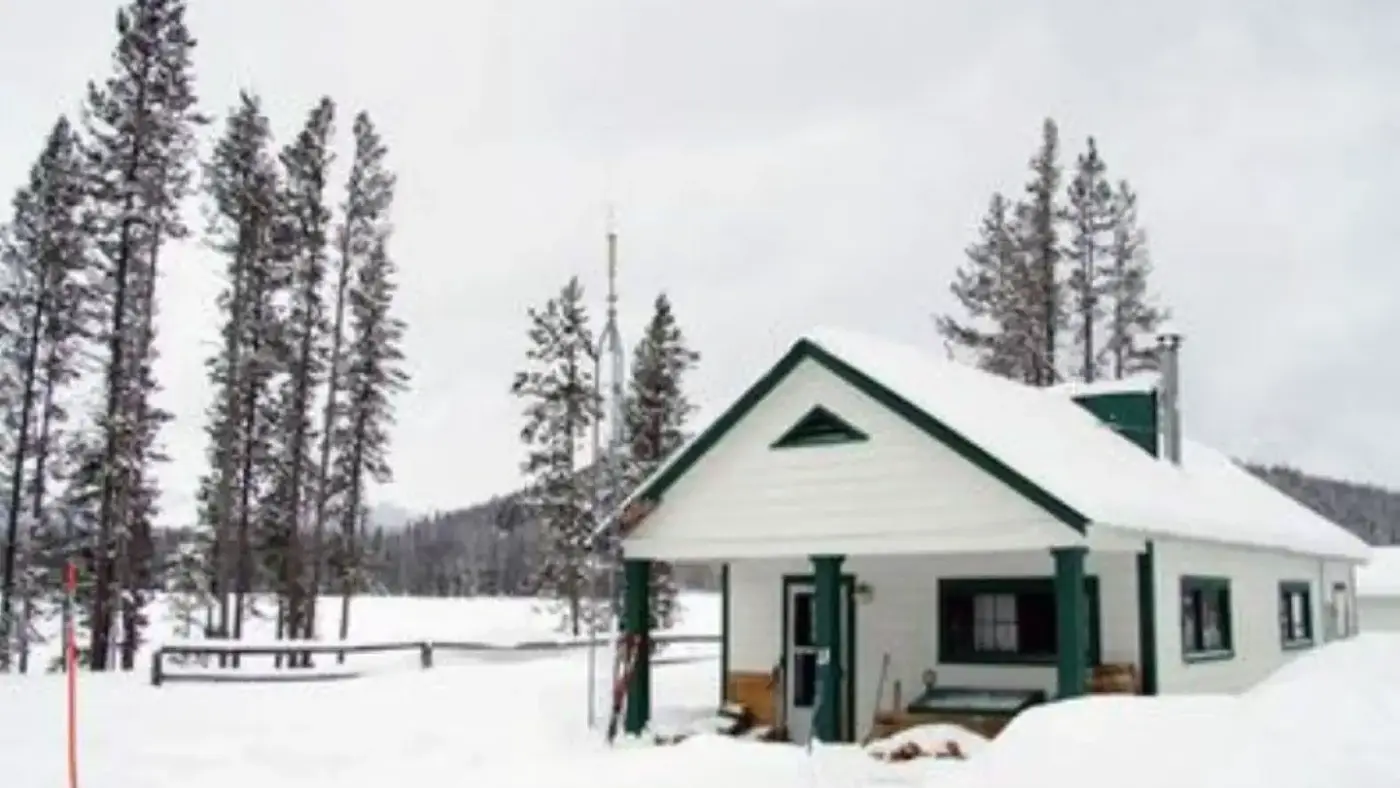
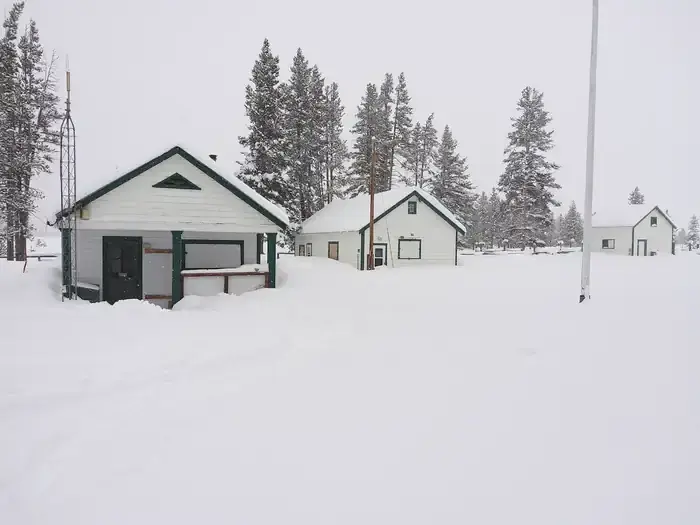
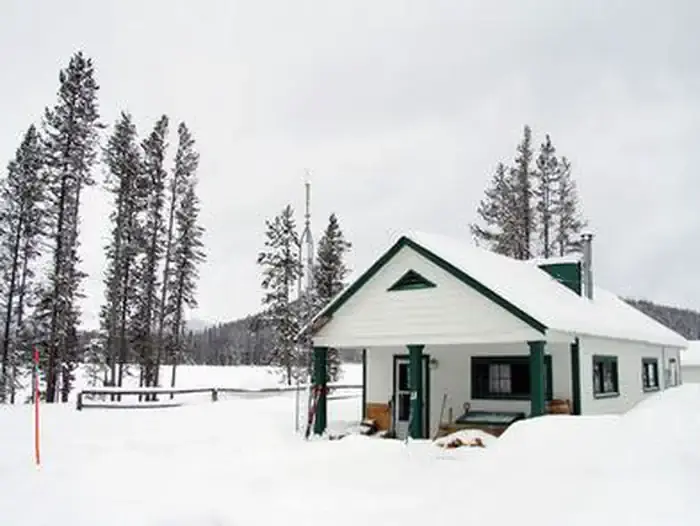
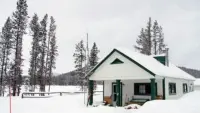
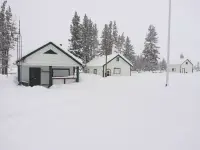
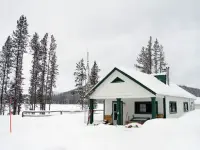
Cape Horn Guard Station stands in a stand of lodgepole pines at 6,660 feet, about 16 miles northwest of Stanley in the Salmon-Challis National Forest. Recreation.gov places it in Elk Meadow. The Forest Service calls the ground Cape Horn Meadows. Its directions also put the station northeast of Stanley, though its other descriptions say northwest. On clear days the front porch looks south to the Sawtooth Mountain Range. In summer Forest Service employees work out of the building as a guard station. From December 15 to March 15, by the Forest Service’s dates, it is rented to the public at $50 a night.
The pullout across from Swamp Creek
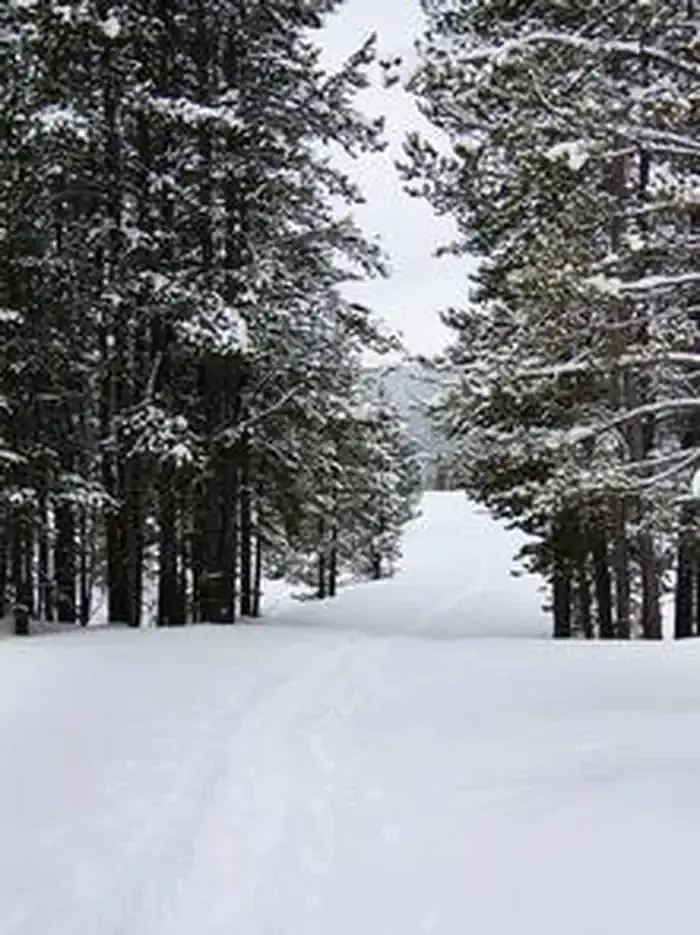
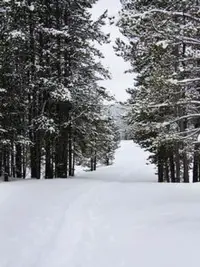
No road reaches the cabin in winter. Visitors park at a pullout on State Highway 21, near and across the highway from Forest Service Road 195 and Swamp Creek. A marked trail runs from there to the station. Recreation.gov gives the ski as 1.7 miles, and the Forest Service gives it as 1.75. By the Stanley-Landmark Snowmobile Trail it is about four miles. When the highway in the Stanley Basin has not been plowed as far as the pullout, the ski in is nearly 9 miles.
The Forest Service puts the drive from Boise at about three hours. One route follows Highway 21 through Idaho City and Lowman and over Banner Summit. The other takes Highway 55 through Horseshoe Bend, turns at Banks for Garden Valley, and joins Highway 21 at Lowman. Heavy snow sometimes closes Highway 21. The way in then runs through Sun Valley and over Galena Summit to Stanley, about two hours from Sun Valley.
A wood stove and plywood shutters
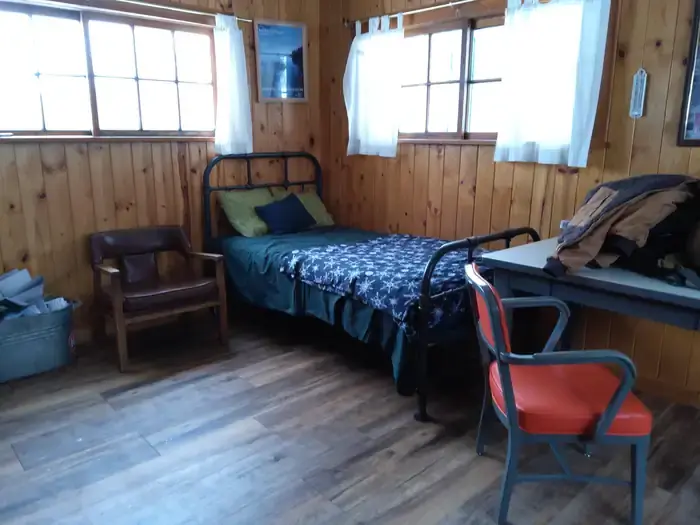
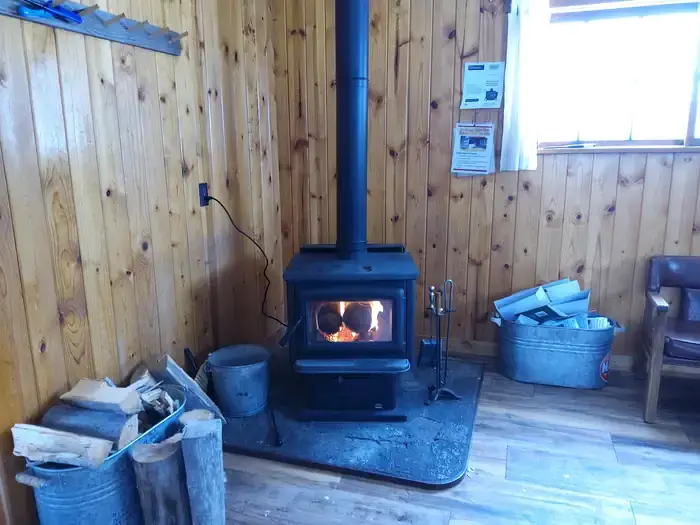
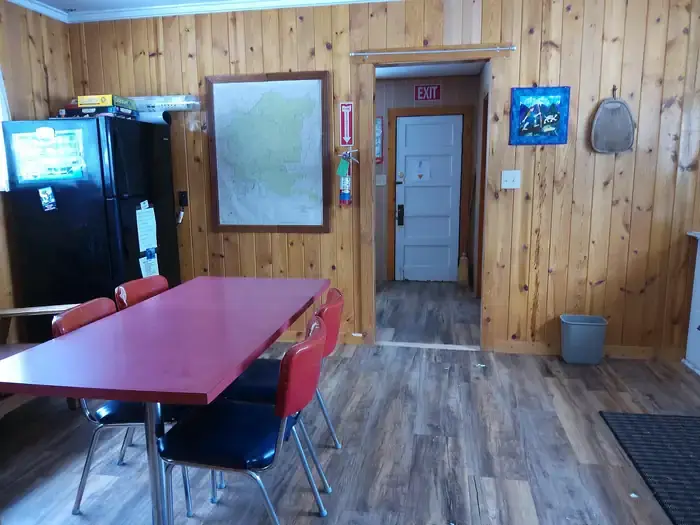
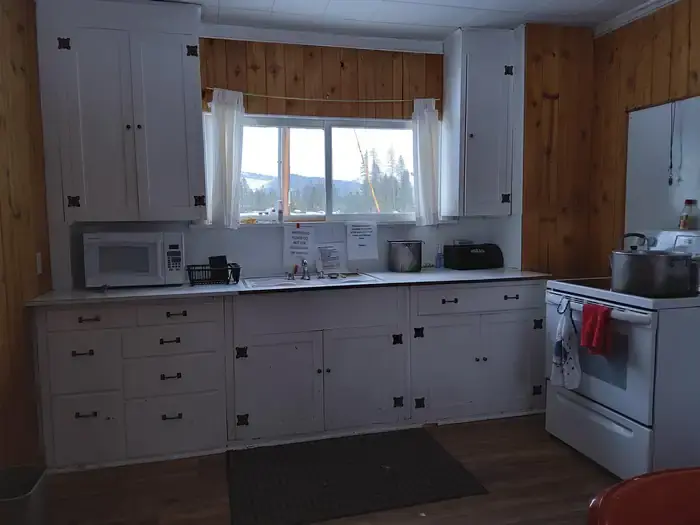
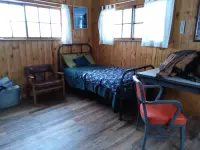
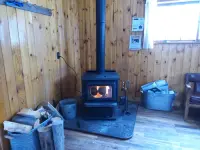
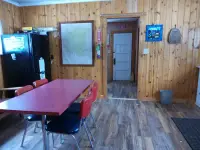
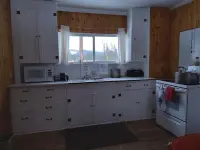
The front door opens by combination. Inside are one double bed, one single bed, and a couch, which sleep four in comfort. More guests can lie in sleeping bags on the floor, but the cabin’s size holds a group to eight. The cabin has a table and chairs, a battery-powered lantern, a wooden rack for drying clothes, pots, pans and dishes, and snow shovels. Electricity runs the lights and a four-burner stove and oven. The Forest Service warns that storms and heavy snow on the power lines can cut it for long stretches. Cooking, heating, and melting snow then fall to the wood stove.
Firewood comes from a covered woodshed near the cabin, and it may need splitting. An axe is provided, and the instructions read: “SPLIT WOOD OUTSIDE USING THE CHOPPING BLOCK.” Large plywood shutters are stored on the front porch, and putting them up over the windows helps the cabin hold heat. The water system is shut off for the season, so the indoor flush toilet and taps are dry. A vault toilet stands behind the station. Guests bring their own food, bedding, towels, and trash bags, and they carry out what they carry in. Pets and horses are not allowed.
The meadows around the station are open to cross-country skiing, snowshoeing, and snowmobiling. Recreation.gov lists downhill skiing on the slopes behind the cabin, and the Forest Service calls the same slopes telemark ground.
A name from the bottom of South America
The forest’s visitor guide calls the station “inexplicably named for the southern tip of South America.” The name was in Custer County before the station. Hubert Howe Bancroft’s history, published in 1890, lists Cape Horn among the county’s mining camps, with Galena, Robinson’s Bar, Custer, and Bay Horse. A post office called Cape Horn ran from 1909 to 1912.
The guide dates the station’s use to about 1910. Beginning in 1933, the Civilian Conservation Corps’ Beaver Creek Camp built a house, garage, barn, and spring house on the site. No page records who built the first station. In July 1939 the photographer P. S. Bieler photographed people fishing for salmon on Marsh Creek near the station, along the Stanley Road. The visitor guide prints a picture of the station from about 1948. A toilet, a gas house, and a pumphouse came with alterations in 1973. In 2002 Cape Horn became a winter rental cabin. Yellowjacket Guard Station, elsewhere in the forest, went onto the rental rolls the same year. Both sites are eligible for listing on the National Register of Historic Places.
Notable Events
- 1933Beginning in 1933, the Civilian Conservation Corps' Beaver Creek Camp made improvements to the site with a house, garage, barn, and a spring house. challischamber.com
- 1973More alterations and additions came in 1973, including a toilet, gas house, and pumphouse. challischamber.com
- 2002Cape Horn has been a winter rental cabin since 2002. challischamber.com