Cabot's Pueblo Museum
Desert Hot Springs, Riverside County, California. Hopi-Pueblo Revival homestead museum.
Details

- Where
- 67616 E Desert View Avenue, Desert Hot Springs, CA 67616. Directions
- When
- Summer hours late June through late September. Off-season October through May with multiple tour slots. Full schedule on the visit page.
- Fees
- Ticketed: Guided Tour and Self-Guided Tour with senior, military, and children discounts; Grounds-Only option; members free.
- Walk-in or reserve
- Online tickets required for guided and self-guided tours, available 24 hours a day; final tour entry mid-afternoon.
- Phone
- 760.329.7610
- Website
- cabotsmuseum.org
- Managed by
- Cabot's Museum Foundation (501(c)(3)); pueblo, property, and collection owned by the City of Desert Hot Springs.
- Established
- 1941 (building began).
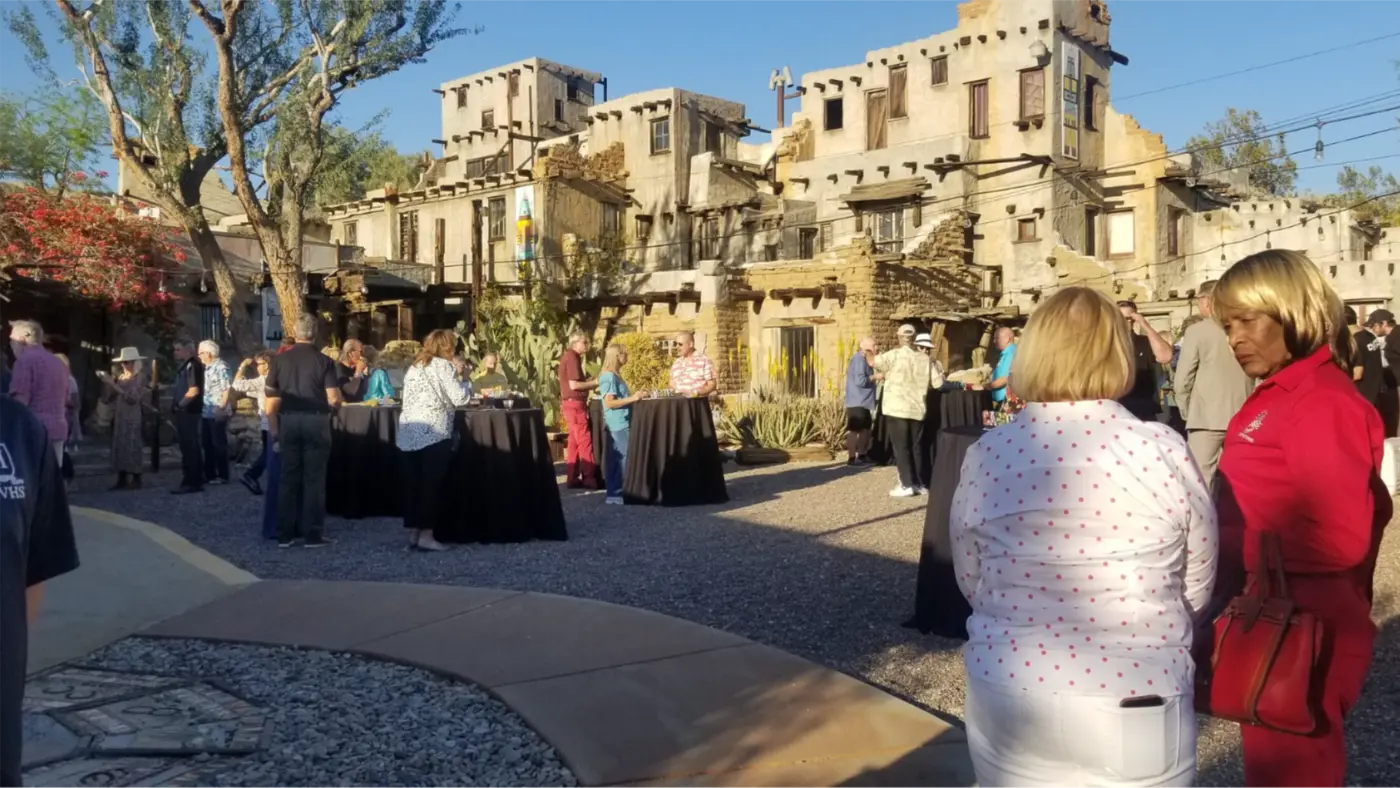
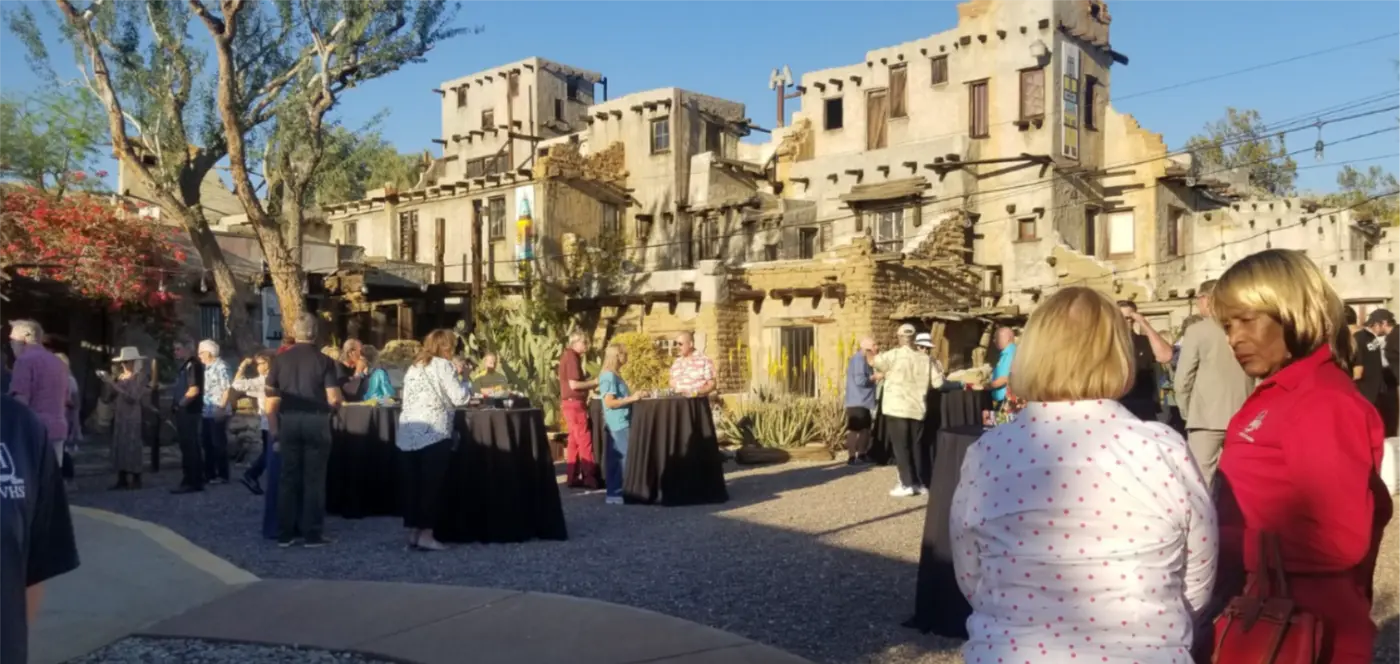
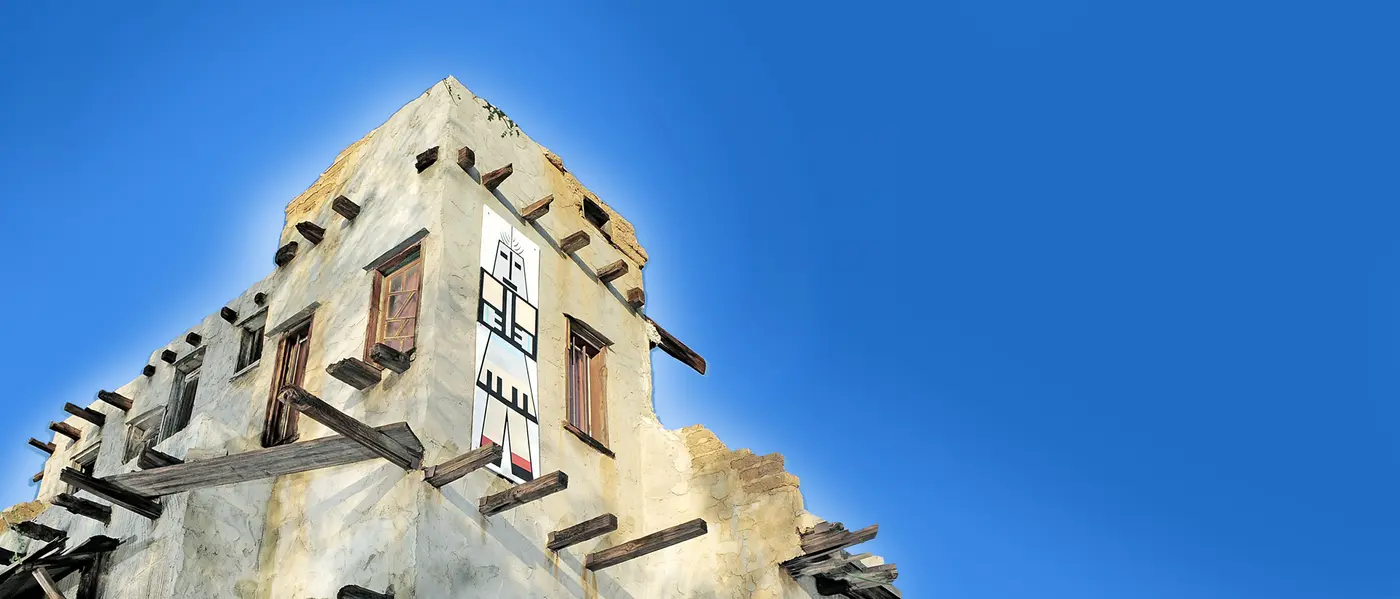
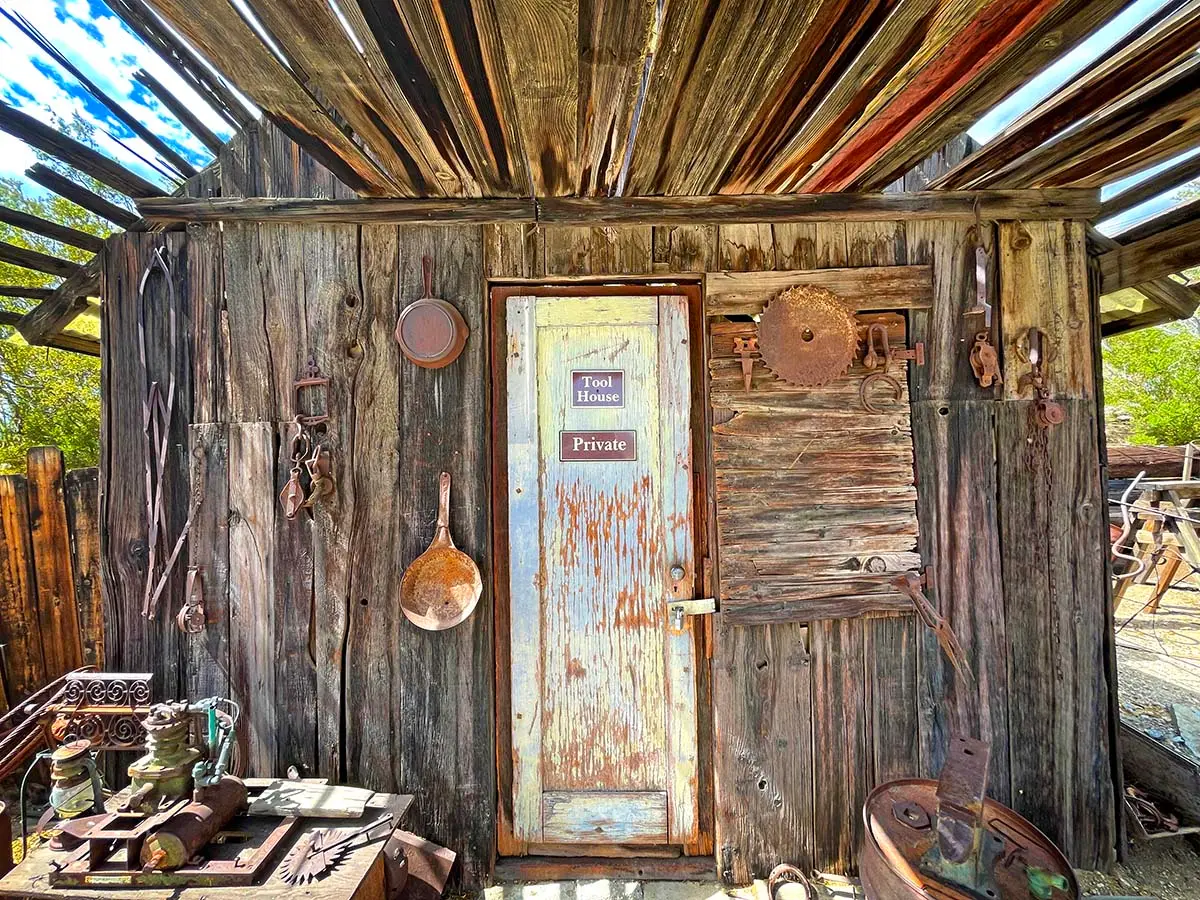
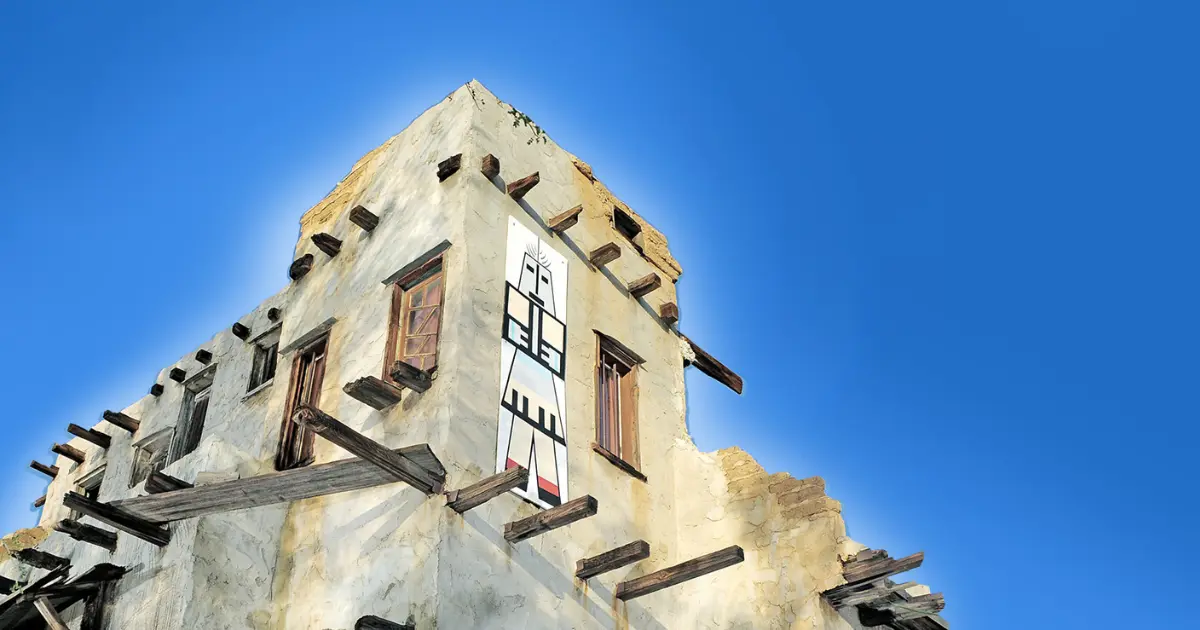
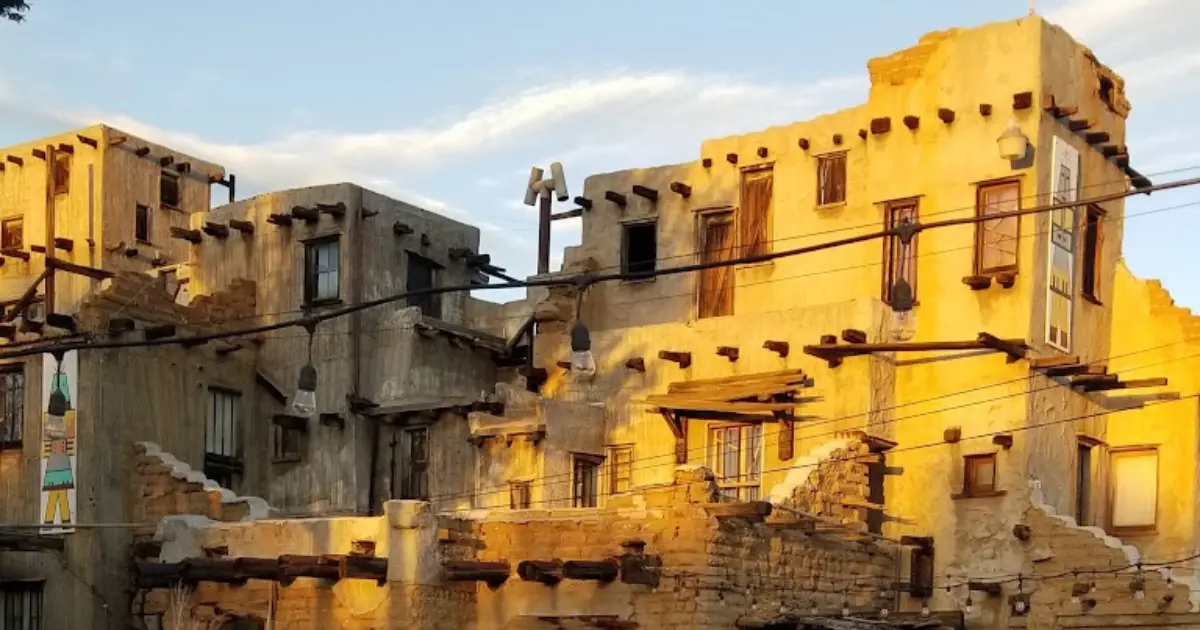
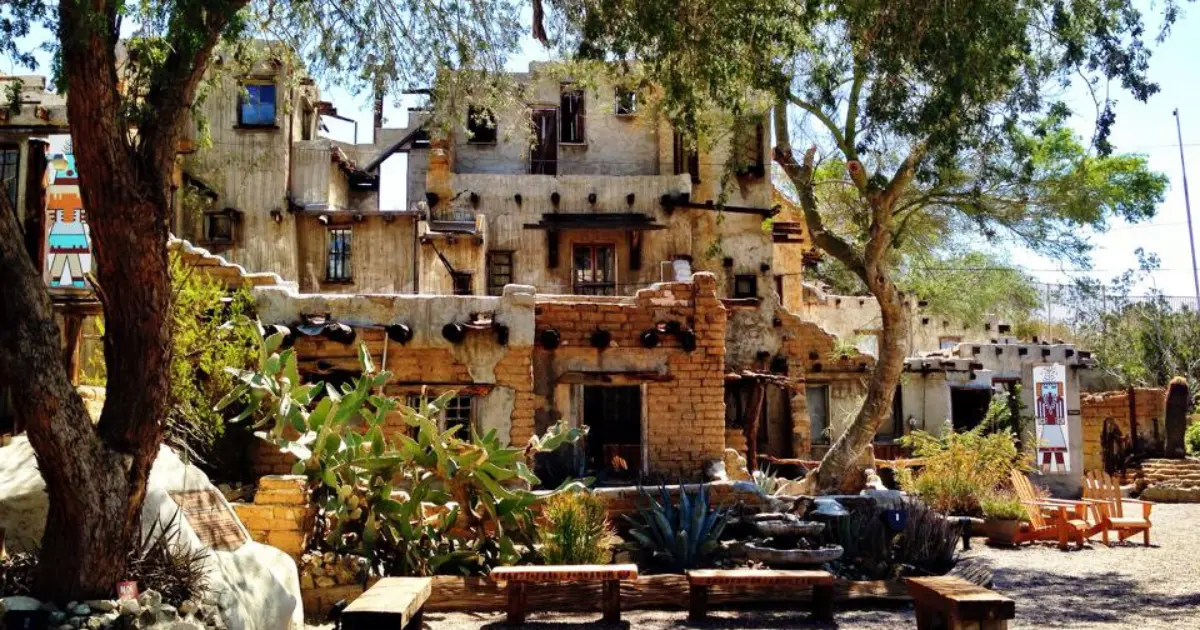
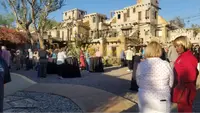
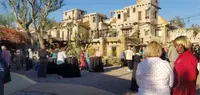
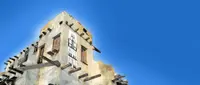
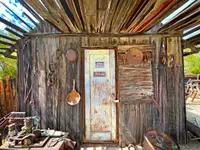
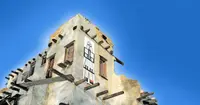
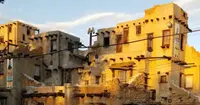
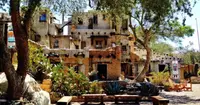
Cabot’s Pueblo Museum stands on Miracle Hill in Desert Hot Springs, in the foothills of the Coachella Valley. It rises four stories, built of adobe-style sun-dried brick and salvaged wood under 30 separate rooflines. The museum counts 35 rooms, 150 windows, and 65 doors in its 5,000 square feet. Cabot Yerxa built it by hand from what he could recover. He used lumber from his own first homestead and the timbers of abandoned cabins he bought and took apart. He also used old telephone poles and the parts of buckboard wagons. The museum says he went so far as to straighten the used nails. Irene Rodriguez, the museum’s executive director, has also pointed to parts of a tree worked into the building.
Thirty rooflines on Miracle Hill
Visitors check in at the Trading Post. A guided tour of about 45 minutes leads into the rooms of the pueblo and covers how Yerxa built the place and how he made Desert Hot Springs his home. A self-guided audio tour covers the same rooms on the visitor’s own phone. The rooms hold Native American art and artifacts, souvenirs of Yerxa’s travels, and his own artwork. A grounds-only ticket opens the courtyard and the outer buildings, the view across the Coachella Valley, and two rooms. One is the Exhibition Gallery. The other is the Water Gallery, which documents Yerxa’s water discovery on the hill. County of Riverside Historical Marker No. 054 is set into a boulder in the courtyard. Over the garden rises Waokiye, a redwood head carved by the Hungarian-born sculptor Peter “Wolf” Toth. The name means “Traditional Helper” in the language of the Lakota Sioux.
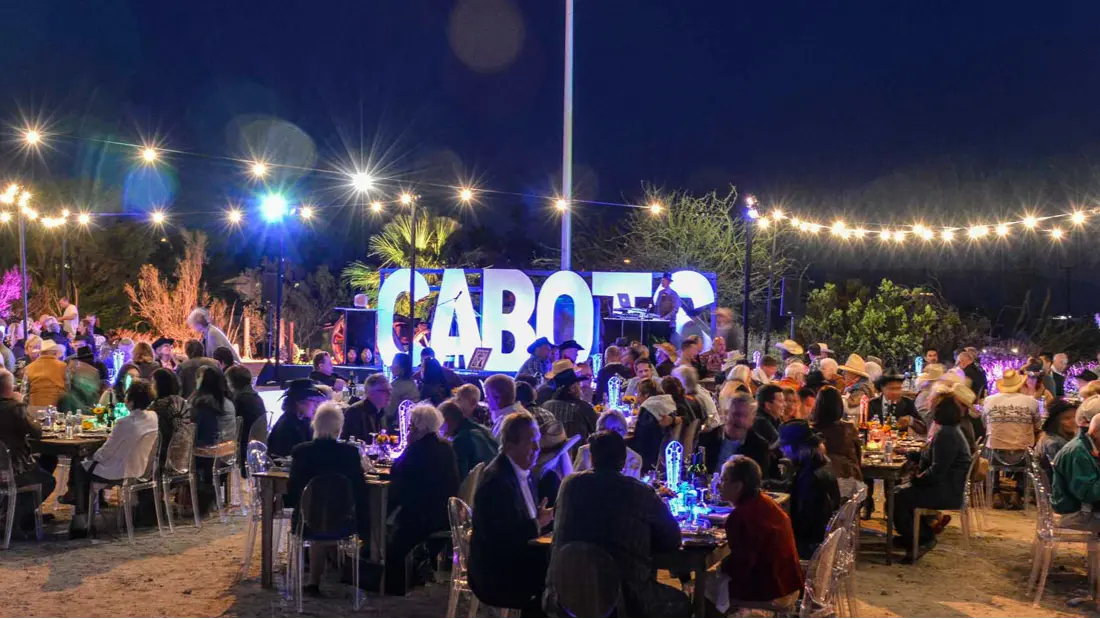
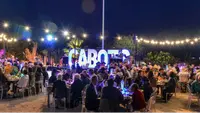
The city of Desert Hot Springs owns the pueblo, its land, and its collection. Cabot’s Museum Foundation, a nonprofit, operates it. The staff includes Rodriguez, museum educator Ruth English, and a crew of visitor experience associates, along with volunteers the museum calls Team Yerxa. The foundation holds Artisans at the Pueblo, cultural weekends, and an annual gala. In late October it puts on Cabot’s Haunted House, with games and movies for families and a Halloween house suited to ages 8 and up. The museum’s 2026 pages list it for Oct. 23–31.
A pottery shard and a stick map
Yerxa homesteaded 160 acres here in 1913, at the age of 30. He told the story years later in his Desert Sentinel column, “On the Desert Since 1913.” He and a companion he names only as Bob tramped the desert for days, “sleeping where night overtook us, but returning to Two Bunch for water.” Bob chose land next to Two Bunch. Yerxa went out alone for one more day. Late in the afternoon he found broken pottery on the slope of a big hill and reasoned that Indians had lived nearby. “Good enough for Indians, good enough for me,” he wrote, and he took the hill. After paying his filing fees at the government land office in Los Angeles, he had less than 10 dollars left.
Thornton Green met him at the railroad station with a team of mules and a small wagon. They loaded it with a trunk, potatoes, onions, flour, canned goods, coal oil, blankets, a tin stove, and a few tools. The wagon was full, so the two men walked the seven or eight miles through the sand. Green and the mules left at sundown. “Here I was with one canteen of water, all my earthly possessions scattered about, and the future in my own hands,” Yerxa wrote. “I felt as rich as Rockefeller! There was not another building to be seen, and as darkness increased, not a light. Coyotes yapped up toward the mountains, and I went to sleep with a happy heart.”
Water was the trouble. According to Palm Springs Life, Yerxa marked a canteen to commemorate the year he arrived, when he had to walk 14 miles for water. The museum tells of an evening at the Palm Springs fire of his friend Carl Eytel, when a Cahuilla elder joined them for frijoles and coffee. The talk ran in English, German, Indian, and Spanish. Yerxa scratched a map in the ground with a stick to show where his cabin stood. The old man asked how he got water and listened to how far Yerxa carried it in pails. Then he answered in Spanish: “You go too far. Indian find water here.” With the stick he marked a spot close to the cabin.
Yerxa dug with a pick and shovel and struck hot mineral water. The museum dates the find to 1914 and puts the water at 132 degrees. A second well, 600 yards from his home, reached the cold water of the Mission Springs Aquifer. He named the place Miracle Hill for the hot water at its base and the cold on the other side. He gave a further reason in the same column: the hill was ringed by red and blue clay from which Indians had made pottery.
Twenty years of straightened nails
After proving up the homestead, Yerxa moved to Washington, was drafted into the U.S. Army, and traveled in South America and Europe. Palm Springs Life notes that he also studied in Paris. He came back in the late 1930s to settle in Desert Hot Springs. In 1941, at 58, he began the pueblo as a home for himself and his wife, Portia, and as a museum. It opened to the public in 1950. Palm Springs Life says it remained in a constant state of construction and dates the work from 1941 to 1965. The museum says it took 20 years. The magazine quotes Yerxa on the site: “There is no place … just like this place… anywhere near this place … so this must be the place.”
The Yerxas lived in the pueblo and promoted it as a museum. Portia gave tours and minded the trading post. Alongside the artifacts were displays on desert plants and animals, and newspapers and magazines often called the building a “castle.” Yerxa’s constant companion was a burro named Merry Xmas. By his own account he kept about 23 desert tortoises at the Old Indian Pueblo “as pets and for observation.” They went into hibernation in November and did not wake until the middle of March. “If you feel all in a dither, flustered and hurried, just sit down and watch a tortoise for half an hour and you will calm down,” he advised his readers.
He died of a heart attack on March 5, 1965, at 81. More than 400 people attended his funeral at the Eighth Street Community Center, a service conducted by the town’s American Legion post and Masonic Club. His ashes lie at Desert Memorial Park in Cathedral City, under a marker that reads “He led us to the miracle waters.”
“Deserted, Alone”
On Jan. 26, 1967, the Desert Sentinel ran the headline “Familiar Landmark Here Stands Deserted, Alone.” The paper reported that the building “has been bashed in by rock-throwing kids and is being barked at by wild coyotes.” Palm Springs Life records that squatters took it up. Jean Ann Hirschi, the lawyer appointed as Portia Yerxa’s conservator, wrote to city manager William D. Williams that the property was for sale. Williams replied that the city was in no position to consider buying it. He added, “Our latest concern is the ‘hangout’ situation for our ‘migratory’ young people we have in this modern day, hippies.” The building department called demolition “the logical recommendation.” The city council gave local groups until Jan. 1, 1968, to find a plan to save the building.
On Nov. 30 the Los Angeles Times carried a story about plans to tear the pueblo down. Cole Eyraud was then part owner and general manager of Trio-Tech, a Burbank maker of aerospace test equipment and medical centrifuges. “We’ve been watching a lot of wonderful old places go down the drain in this speedy world of ours,” he told a Times reporter. “When we saw the story about plans to tear down the late Cabot Yerxa’s castle in the Los Angeles Times on Nov. 30, we decided it was time to act.” On Dec. 5, 1968, the Sentinel announced that five men from Burbank and Saugus had bought the pueblo. Eyraud said their corporation would “renovate the castle, make sure it is structurally sound, then fulfill Yerxa’s dream and open the building to the public as an Indian museum.”
Portia Yerxa died on April 1, 1969, three days after executing the deed of trust. On the Fourth of July that year the building reopened as Cabot’s Old Indian Pueblo and Museum.
A burro, an art center, and a redwood giant
In December 1970, The Daily Enterprise reported that Eyraud’s mother had donated a burro resembling Merry Xmas. The paper said “Merry Christmas the Second” and a pair of Shetland ponies were drawing the youngsters. Eyraud, it added, hoped to make the burro the nucleus of a zoo. In time he kept burros, tortoises, snakes, and a coatimundi on the property. In 1971 The Desert Sun described his plan for a 49-unit motel, The Pueblo Inn, to be “the most Indianish fun and health resort in the desert.” He apparently could not find investors. He opened the Pueblo Art Center instead. In its second season, in 1973, local artists hung work beside paintings from Germany. That same year he explained the pueblo’s history to visiting fifth graders. In 1979 he took UCLA Extension workshops in artifact conservation and museum grant writing.
Eyraud first asked the city in 1969 to recognize what Yerxa had built. In January 1977 the council voted the pueblo its first historical landmark, and a resolution dated Feb. 1, 1977, made it an “official landmark of the city.” On April 26, 1981, Eyraud hosted the dedication of the county marker.
Accounts of Waokiye’s date differ. The museum says a winter resident, Herb Miller, proposed that Toth’s next Whispering Giant go up in Desert Hot Springs. By the museum’s account, Toth carved it on site, and it met the public on May 20, 1978, with Dennis Banks as guest speaker and about 250 people attending. Palm Springs Life places the carving less than a year after the 1981 marker dedication. It calls Waokiye the 27th sculpture in Toth’s Trail of the Whispering Giants. In the magazine’s account the face stands 22 feet tall and 8 feet across. Toth cut it from a log of a 200-foot redwood in Sequoia National Forest that had been struck by lightning in the 1950s. The feather in the headband is incense cedar from Idyllwild. Eyraud and volunteers built the concrete pedestal, and the monument rises more than 40 feet from the ground.
Eyraud won a city council seat in 1976 and again in 1982 and 1986. He died in October 1996, and the pueblo again fell into abandonment. On Sept. 23, 1998, his daughter Trudine signed a quitclaim deed transferring the property to the city. The museum reopened on Feb. 10, 2001. A Valley Breeze writer described that “cold, blustery day” and wrote, “It is still standing today, due to Cole Eyraud.” In 2002 the city formed Cabot’s Museum Foundation to operate the pueblo, and in 2012 it was named to the National Register of Historic Places. “Maybe one day when I went to visit Cabot,” Eyraud is quoted as saying, “he was looking out a window and saw me coming.”
Notable Events
- 1913At thirty, Cabot homesteaded the land now in Desert Hot Springs and dug a well that rediscovered hot minerals. cabotsmuseum.org
- 1914Using little more than a pick and shovel, Cabot Yerxa unearthed the curative mineral waters of Desert Hot Springs, the first modern rediscovery, at 132 degrees; 600 yards from his home he dug a second well delivering drinking water. cabotsmuseum.org
- 1930sAfter Washington, Army service and travel to South America and Europe, Cabot returned to the area. cabotsmuseum.org
- 1941Cabot began building the pueblo as a museum and home for himself and Portia. cabotsmuseum.org
- 1950The museum officially opened with Native American art and artifacts, travel souvenirs and Cabot's artwork. cabotsmuseum.org
- 1965An obituary reported more than four hundred attended a funeral service conducted by the American Legion post and Masonic Club. cabotsmuseum.org
- 1965By the time of his death, Cabot Yerxa had hand-built a 35-room pueblo with 150 windows, 65 doors, and 30 rooflines. cabotsmuseum.org
- 1967With Cabot gone, the public attraction faced a precarious future; the Jan. 26, 1967, edition of Desert Sentinel newspaper sounded the alarm with "Familiar Landmark Here Stands Deserted, Alone.". palmspringslife.com
- 1968The Desert Sentinel reported that the property had been sold to a group of individuals in Burbank and Saugus. cabotsmuseum.org
- 1969Cabot's Old Indian Pueblo and Museum opened under Cole Eyraud's ownership. cabotsmuseum.org
- 1977The Desert Hot Springs city council voted to recognize the pueblo museum as its first historical landmark. cabotsmuseum.org
- 1978Hungarian-born sculptor Peter "Wolf" Toth built Waokiye ("Traditional Helper" in the language of the Lakota Sioux) on site at the museum; on May 20, 1978 it met the public with Dennis Banks as guest speaker and about 250 people attending. cabotsmuseum.org
- 1981Cole Eyraud hosted a dedication program for County of Riverside Historical Marker No. 054. cabotsmuseum.org
- 1998After Cole Eyraud's death in October 1996, his heirs assigned title to the pueblo property to the City of Desert Hot Springs. cabotsmuseum.org
- 2001A commission was formed to reopen the museum, which happened in 2001. cabotsmuseum.org
- 2001The museum reopened on Feb. 10, 2001; the Valley Breeze reported the reopening in its March 2001 issue under the headline "Cabot's Old Indian Pueblo Writes a New Chapter in Desert Hot Springs Story.". palmspringslife.com
- 2012Cabot's Pueblo Museum was added to the National Register of Historic Places. cabotsmuseum.org
People
- Cabot Yerxa, Builder of the pueblo museum and home (began building in 1941).
- Portia, Cabot's wife, for whom the pueblo was also to be a home.
- Bob, Companion who walked the desert with Cabot while searching homestead land.
- Carl Eytel, Cabot's friend, whom he was visiting when a Cahuilla elder explained the wells near his cabin.
- Cole Eyraud, Rescued Cabot's Pueblo Museum from demolition (died October 1996).
- Herb Miller, winter resident who proposed that Toth's next Whispering Giant be erected in Desert Hot Springs.
- Peter Toth, sculptor who carved the redwood Waokiye totem placed at the museum in the '70s.
- Portia Yerxa, Cabot's wife; helped operate the pueblo as a museum, giving tours and minding the trading post (died April 1, 1969).
- Thornton Green, Brought Cabot's possessions by mule wagon from the railroad station toward his homestead claim.
- Irene Rodriguez, the museum's executive director.
- Trudine, Eyraud's daughter who signed the quitclaim deed transferring the property title to the city (1998).