Bull River Guard Station
TROUT CREEK, Sanders County, Montana. Guard station; Year Round.
Details

- Where
- Cabinet Ranger District 2693 MT Hwy. 200, TROUT CREEK, MT 59874. Directions
- When
- Check-in 2:00 pm / Check-out is 11:00 am.
- Getting there
- From US Highway 2 (to the north) or State Highway 200 (to the south), travel on State Highway 56 to the East Fork Bull River Road #407 at approximately the 8 mile marker. Take Road #407 for about 1.5 miles and turn right on Road #2701. The cabin is approximately .5 miles past the junction of #407 and #2701. Directional signs are present.
- Fees
- $75.00 a night.
- Access
- There is no indoor plumbing at the cabin; an outhouse with vault toilet is located nearby. A horse corral is located behind the cabin. Drinking water is also not available; guests must bring plenty of their own.
- Walk-in or reserve
- 5 consecutive day stay limit. A break of 7 days is requested before making another reservation.
- Phone
- 406-827-3533
- Website
- fs.usda.gov
- Managed by
- Kootenai National Forest.
- Established
- 1908.
- Coordinates
- 48.10972, -115.78139.
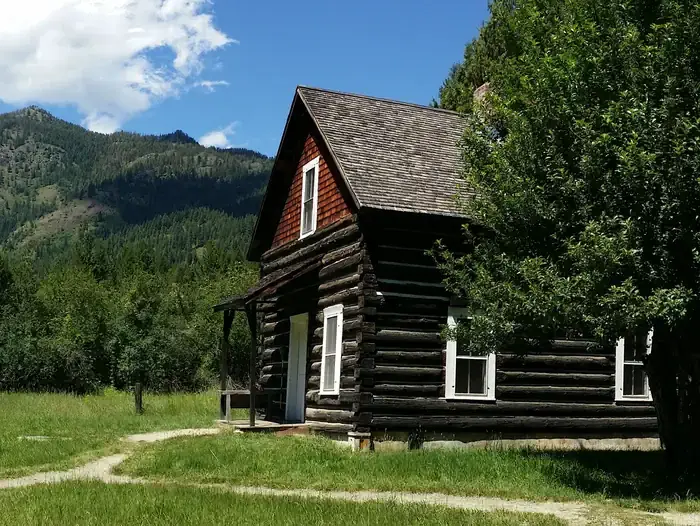
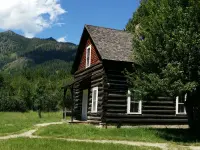
A log house stands on the broad flood plain where the East Fork joins the Bull River, about nine air-miles north of Noxon in Sanders County, Montana. To reach it, a driver turns off State Highway 56 onto the East Fork Bull River Road, then onto Forest Road 2701. The house is one and one-half stories under a steep gable roof of wood shingles, with a brick chimney rising through it. Open shed-roofed porches on finished columns cover the front and back doors. The corners are joined with square notches. Between the logs the daubing is mortar, held in place by split poles. Inside, the wall logs are hewn and chinked with more split poles. The main-floor windows are two-over-two double-hung.
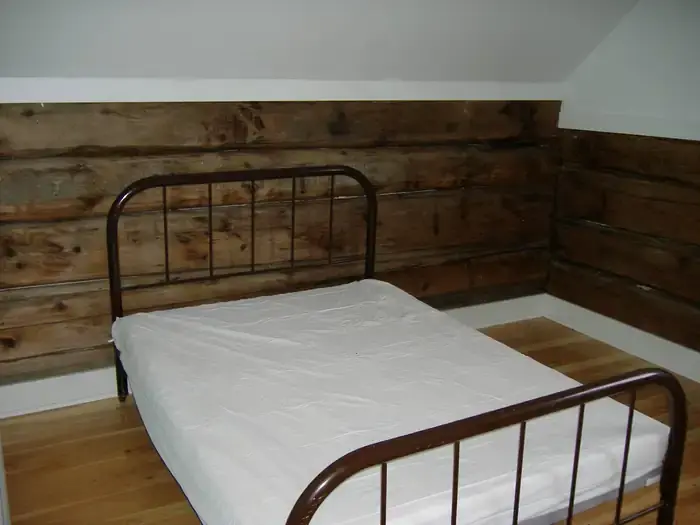
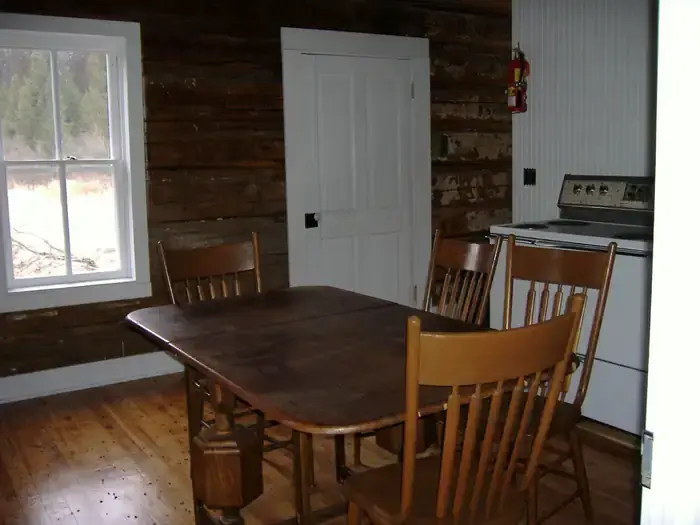
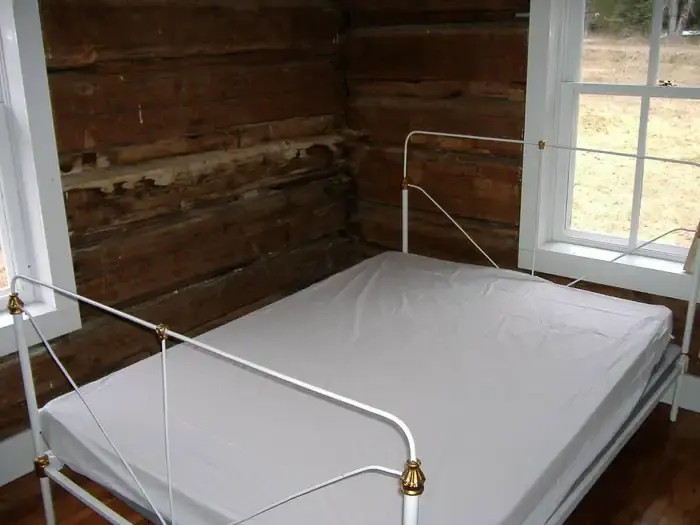
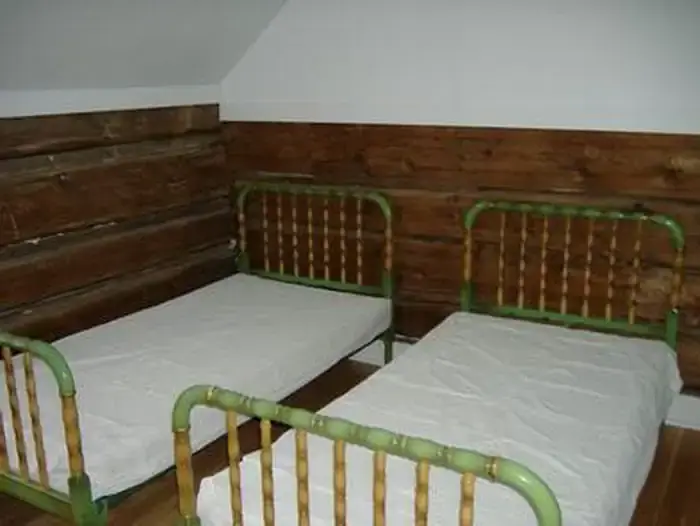
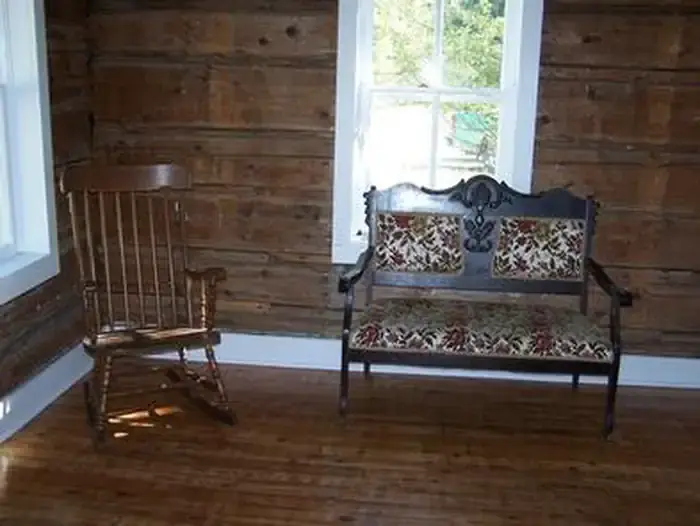
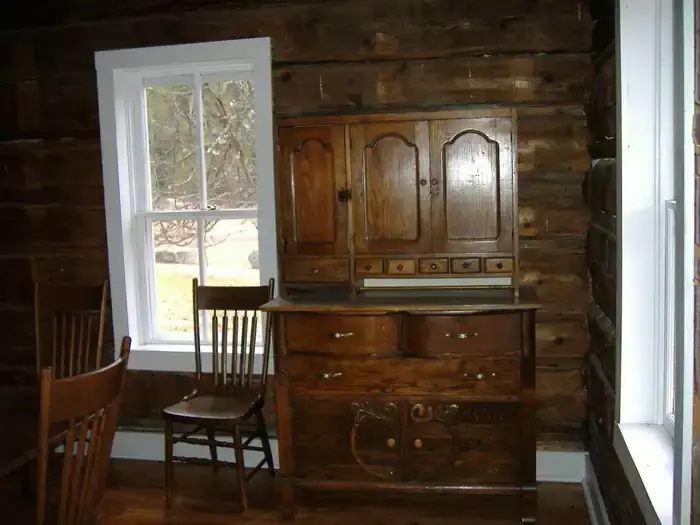
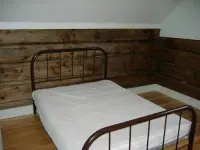
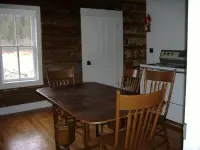
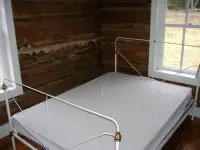
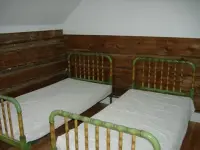
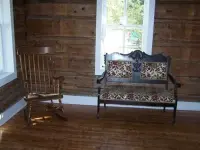
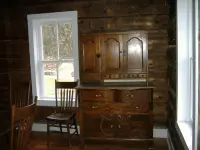
The Kootenai National Forest rents the house overnight, all year. Its 700 square feet hold period furniture: three full beds and two singles, a sitting room with chairs, and a kitchen and dining room with a hutch, table, chairs, and an electric range. A forced-air electric furnace heats it, and it sleeps eight. There is no plumbing. An outhouse with a vault toilet stands nearby. No drinking water is provided, and Recreation.gov tells renters to bring their own for drinking, cooking, and washing. Visit Montana adds that all open water there is considered contaminated. The cabin is not cleaned between visits, so renters bring their own bedding and clean up before and after. The Cabinet Ranger District in Trout Creek gives out the lock combination before arrival. Dogs may come but must stay off the furniture.
A volunteer group built a horse corral several hundred feet behind the house in 2007. Stock is kept out of the cabin area, and riders tie up across the road or 50 yards behind the station. Certified weed-free hay is required. In winter the road is normally plowed to within a mile of the cabin, and whether a vehicle can go the rest of the way depends on the weather.
The Cabinet range and the river
Early French settlers named the Cabinet Mountains, the Forest Service says, because the range looked like a cabinet when seen from the valley floor. The Cabinet Mountains Wilderness lies minutes from the cabin. Mountain goat, mountain sheep, pika, and golden eagle keep to the high rocks there. Beaver, woodrat, and western tanager live on the lower slopes and in the brushy canyon bottoms. In fall the hillsides turn with the scarlet of mountain maple, the red of mountain ash, the brown of alder, and the yellow of larch.
The Bull River runs 24.7 miles from its headwaters to the Cabinet Gorge Reservoir and holds westslope cutthroat trout, largescale sucker, and mountain whitefish. Two day-hiking trails start near the station, Pilick Ridge Trail #1036 and Berray Mountain Trail #967, and each climbs to a lookout above the range. The Berray Mountain tower was built in the 1930s and is listed on the National Historic Lookout Register.
Green’s claim and Cotton’s pasture
According to the station’s National Register nomination, miners, homesteaders, and lumbermen all reached the Clark Fork and its tributaries before the Forest Service did. Fire burned the entire Bull River area in 1880. Sometime afterward someone put up a “worthless log shack” on the flat, possibly before the homesteader O.C. Green arrived. Oral histories collected by the local historian Mona Vanek suggest that others lived on the parcel before Green. Even so, the land has never been patented.
Forest Service records credit Green with the first improvements. He built a one-and-one-half-story house and a 14-by-18-foot log root cellar with a shake roof and a dirt floor. He also put up a 36-by-30-foot log barn and the frame of a second barn, 26 by 30. The house was reported burned in 1905 or 1906. In the fall of 1906 Green sold the improvements to Patrick Moran, who disappeared in November of that year. No explanation is recorded. Moran’s neighbor and partner, Marion Cotton, kept up the property, and the old cabin stood empty.
In 1907 the new Cabinet National Forest wanted 6.6 acres of Green’s claim for its first ranger station. The Forest Service judged Cotton’s pasture, held only by squatter’s right, to be the one suitable piece of land along the Bull River without a prior valid homestead claim. On July 8, 1907, Cotton wrote directly to Gifford Pinchot. He said he had cut enough hay there to “feed my cows there even last winter. I have oats and barley sown on the land now.... Would it not be a matter of justice for the forestry to improve their own land than to take improvements that virtually belongs [sic] to me ...?” Acting Chief J.D. McMean replied that “the Forest Service does not want settlers treated harshly or unjustly.” He promised that if another site in the neighborhood could serve, the land along the river would be listed on Cotton’s application.
No other site would do. An unsigned letter from Thompson Falls ruled that the claim had been held through Moran’s residence, not Cotton’s, and called the location “without exception the best that we can hope to secure in this Forest.” The site had pasture, water, two barns, and a root cellar “that could be put to good advantage.” It lay on the Bull River road, within miles of both the Northern Pacific and the Great Northern railroads, and close to the homestead and mining claims and timber sales the ranger would oversee. To “avoid any feeling that the land had been confiscated,” the Forest Service paid Cotton $100 for the improvements.
Not everyone in the region accepted such arrangements. In May 1907 The Western News printed this: “Give us our public domain and let the country become settled up under the operations of the land laws of the United States.... Cut out the paternalism business; it is Irksome.” More than seventy years later Vanek wrote of the Forest Service’s arrival: “slowly but inexorably government grew. Private enterprise, at best risky and fluctuating, was squeezed to near extinction.”
Granny Gordon’s station
Soon after the land was withdrawn, Granville “Granny” Gordon began building the log house. The nomination calls him a Wyoming cowboy and “one of Teddy Roosevelt’s ‘instant rangers.’” The Western News in 2004 called him the first appointed ranger of the Cabinet National Forest. The Forest Service and the nomination date the building to 1908. Visit Montana gives 1907, the year the station itself was established. Gordon lived there with his wife and three daughters.
From 1908 to 1920 the house was the ranger’s dwelling and the district office, headquarters of the Noxon Ranger District. The ranger posted there checked homestead, timber, and mining claims across the district and enforced federal rules. Neal M. Rahm, a former regional forester, called this period “Crusading-Custodial,” a time when “forest rangers were cowboys and lumberjacks who often literally had to fight to wrest control of the lands from local interests and pioneer settlers.” The station came through the 1910 fires. Between 1913 and 1920 it was occupied year-round. By 1915 the Forest Service had pulled down the old cabin, broken five acres for crops, strung 275 rods of fence, and put 77.89 acres to grazing.
In 1920 the district headquarters moved to Noxon. The nomination says Noxon was closer to the public and to town amenities. Visit Montana says motorized access led the Forest Service to consolidate its work there. Bull River became a guard station, used by the season. Vandals burned one of its two barns in the 1940s. In 1954 the Cabinet National Forest ceased to function, and the part containing the station went to the Kaniksu National Forest, administered by the Kootenai from Libby.
Accounts of the closing differ. The National Register nomination says the station closed permanently in 1966 and was the last of the early Cabinet stations still standing. The Western News says it closed in the 1970s. Visit Montana says the Forest Service last used it as a guard station in the late 1970s.
Sheetrock, volunteers, and a couch
In 1982 the Kootenai National Forest archaeologist Rebecca Timmons recorded the building. Sheetrock then covered the interior walls. By the time the National Register nomination was written, the sheetrock had been taken off and the squared logs were bare again. The nomination found the station significant for its connection with the Forest Service and for the architecture of the office and dwelling. It described a building in poor repair. The foundation had settled, several windows had lost their glass, and others were partly boarded. Behind the house stood a clothesline of log posts with beveled crosspieces, and a concrete foundation marked where a barn had been. Near the road was an old sign post with a hole drilled near the top for a crossbar, a style shown in early Forest Service use books. Some said a grassy mound near the outhouse was the first settler’s root cellar. The nomination found no structure beneath it and suggested it had served as a ramp for backing trucks up to a pole-treatment barrel.
Work began in the late 1980s, when the Forest Service and a local group started volunteering at the site. In 1989, Visit Montana says, Forest Service employees, members of the Cabinet Wilderness Historical Society, and other volunteers gave hundreds of hours. For a time the building was open to the public as an outdoor educational facility, but it earned nothing toward its upkeep.
In August 2004 Forest Service historic preservation carpenters from Missoula were restoring the house from historic documentation and converting it into a rental. “If you’re not living in the buildings or keeping them heated in the winter, they start to deteriorate,” said Kirby Matthew of the preservation team. “That, and lack of funding, made us decide that we want to go to a cabin rental.” The Forest Service archaeologist Becky Timmons called it “an incredible solution because it generates maintenance dollars and it provides opportunities for the public to experience a historic building at an affordable rate in these primitive settings.” The heating and electrical work were still to come, and Matthew expected the first renters by mid-October.
“We’re going to furnish it with period furniture, all of it with the idea that it’s going to be used,” Matthew said. “That’s part of this. We want people to sit on the couch.”
Notable Events
- 1880A 'worthless log shack' at the property was built sometime after the 1880 fire that burned the entire Bull River area, and may have predated Green's tenure. npgallery.nps.gov
- 1905Homesteader O.C. Green's one and one-half story house was reported to have burned in 1905 or 1906. npgallery.nps.gov
- 1906In the fall of 1906, Green sold the improvements to Patrick Moran. After Moran's unexplained disappearance in November of the same year, his neighbor and partner, Marion Cotton, maintained the property. npgallery.nps.gov
- 19076.6 acres of the property originally claimed by Green was included in the proposed administrative withdrawal for the first Ranger Station on the nascent Cabinet National Forest. npgallery.nps.gov
- 1907To 'avoid any feeling that the land had been confiscated,' the Forest Service paid Cotton $100.00 to cover the cost of the improvements. npgallery.nps.gov
- 1908The Bull River office/dwelling, a one and one-half story log bearing building, was built. npgallery.nps.gov
- 1910The station survived the legendary 1910 fires that swept through the area. fs.usda.gov
- 1913Between 1913 and 1920 the station was occupied year-round. npgallery.nps.gov
- 1915The Forest Service had removed the old cabin, developed five acres for cultivation, strung 275 rods of fence and was using 77.89 acres for grazing land. npgallery.nps.gov
- 1920District headquarters were moved to Noxon, a site closer to the public and urban amenities. npgallery.nps.gov
- 1940sOne of the two barns at the guard station had been burned by vandals in the 1940s. npgallery.nps.gov
- 1954The Cabinet National Forest ceased to function; the part containing Bull River Station became part of the Kaniksu National Forest, administered by the Kootenai National Forest from Libby, Montana. npgallery.nps.gov
- 1966Bull River, one of the first Ranger Stations on the Cabinet National Forest and the last of the early stations still standing, was permanently closed. npgallery.nps.gov
- 1970sThe ranger station was closed in the 1970s. thewesternnews.com
- 1980sThe Forest Service and a local group began volunteering at the site, kick-starting the restoration process. thewesternnews.com
- 1989Forest Service employees, members of the Cabinet Wilderness Historical Society and volunteers donated hundreds of hours toward restoration efforts. visitmt.com
- 2004U.S. Forest Service historic preservation carpenters out of Missoula were restoring the ranger station and converting it into a cabin rental. thewesternnews.com
- 2007A volunteer group installed a horse corral several hundred feet behind the cabin in 2007. visitmt.com
People
- Granville "Granny" Gordon, Builder of the office/dwelling; a Wyoming cowboy and one of Teddy Roosevelt's 'instant rangers'.
- Gifford Pinchot, Forester who received Marion Cotton's direct plea over the Bull River pasture (1907).
- J.D. McMean, Acting Chief who assured Cotton the Forest Service did not want settlers treated harshly (1907).
- Jim Mershon, Cabinet District Ranger who explained the closure.
- Marion Cotton, Moran's neighbor and partner who maintained the property; the Forest Service paid him $100.00 for the improvements.
- Mona Vanek, Local historian whose oral histories document the property's earlier occupants (interviewed March 27, 1990).
- O.C. Green, Homesteader who built the first improvements at the property.
- Patrick Moran, Bought Green's improvements; disappeared unexplained (1906).
- Becky Timmons, Forest Service archaeologist.
- Kirby Matthew, member of the historic preservation team.