Bonneville Hatchery
Cascade Locks, Multnomah County, Oregon. Hatchery facility.
Details

- Where
- 70543 NE Herman Loop, Cascade Locks, OR 70543. Directions
- When
- A birthday party for Herman is held on the hatchery grounds each June, every year since 2018.
- Season
- All year for display ponds. September - October for adult fall Chinook and coho salmon spawning.
- Getting there
- Take I-84 to exit 40; the hatchery is about 40 miles east of Portland.
- Fees
- Free of charge; abundant parking.
- Hours
- 7:30 - Dusk, 7 days a week; gate controlled.
- Access
- Visiting is gate controlled; grounds are ADA accessible with picnic tables, accessible restrooms, a camp host and a boat ramp nearby. The Sturgeon Viewing and Interpretive Center and its ponds have been worn by Gorge weather and need repairs; the Oregon Wildlife Foundation is fundraising for a new roof, structural work, pond habitat and refreshed interpretive messaging.
- Walk-in or reserve
- Open to the public year-round; a walk-in visitor is admitted without a reservation or ticket.
- Phone
- (541) 374-8393
- Website
- myodfw.com
- Managed by
- Oregon Department of Fish and Wildlife.
- Established
- 1909.
Inside the gate off Exit 40, two display ponds hold rainbow trout. Machines beside them sell fish food for a quarter. The hatchery does not raise these trout; it brings them in for visitors and spends the quarters on keeping the grounds up. A posted caution is short: “Trout can bite! Please do not tease or touch them!” Past the trout is an outdoor pond of young white sturgeon, and beyond it stands a small white building a visitor can walk into. That is the Sturgeon Viewing and Interpretive Center, built in 1998, and the fish inside is Herman.
Herman’s pond under the trees
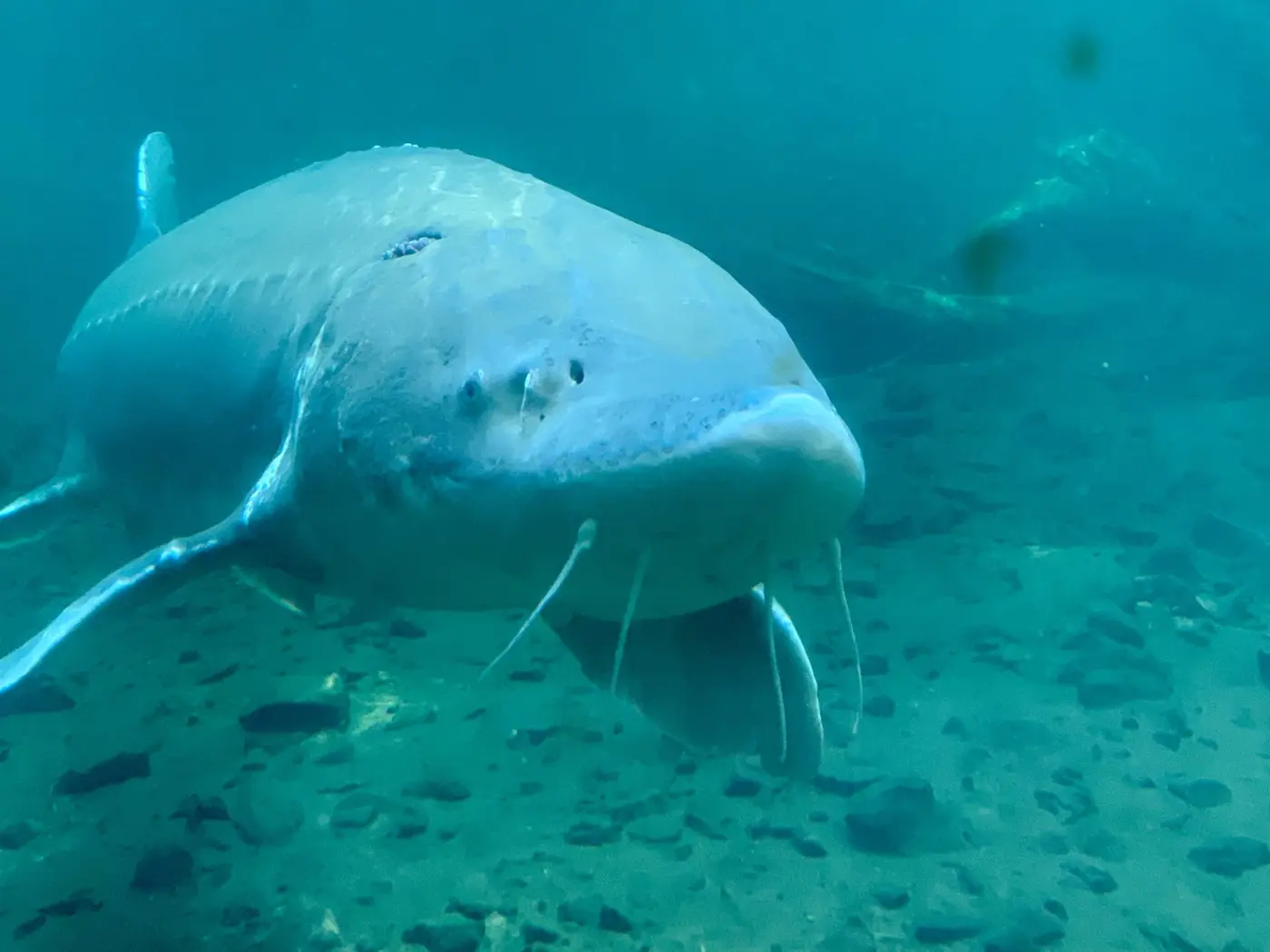
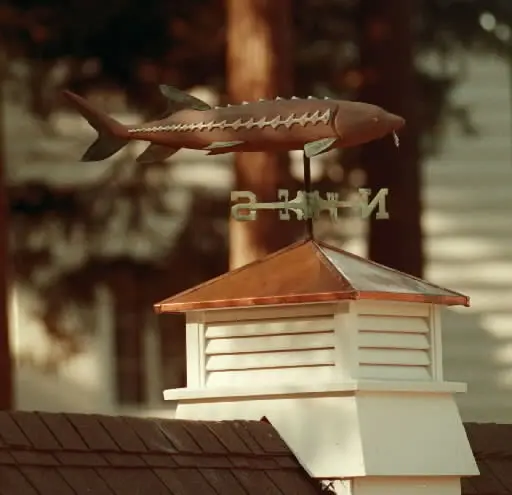
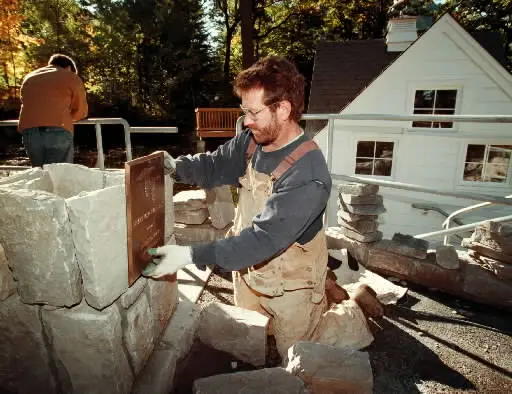
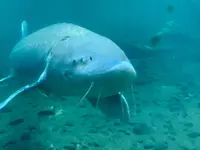
The center sits under a forest canopy and is fed by a continuous flow of cool, fresh water. ODFW engineers designed it to match the hatchery’s older architecture, which is mostly native stone and vegetation. A paved path runs part way around Kelly’s Pond to a platform that looks down on Herman, the smaller sturgeon, and some oversized trout. A few steps away, a covered kiosk has a large window set below the waterline. The Oregon Encyclopedia describes the tank as 85,000 gallons of bedrock and plexiglass. An older ODFW guide asks visitors not to tap the glass, because fish “hear” noise five times louder than people do.
Herman is a white sturgeon about 10 feet long. His other figures depend on the source:
- ODFW’s visitors’ guide gives 500 pounds and over 80 years.
- The department’s 2023 article estimated his age at 85 as of that year.
- The Oregon Wildlife Foundation’s page says nearly 11 feet, over 500 pounds, and more than 90 years.
- A June 2026 notice put him “in his 80s or early 90s.”
The Columbia Gorge News observed in 2024 that the only way to be certain of a sturgeon’s age involves a post-mortem dissection, “so nobody’s really sure.”
Hatchery technicians feed him fresh salmon. In 2023, eight smaller sturgeon shared his pond: two 8-footers, a 7-footer, and four smaller fish. ODFW wrote that one of them may someday become the next Herman. An older, smaller pond holds approximately 18 sturgeon, none as long as four feet. A marker at the viewing center explains that sturgeon, unlike salmon, do not use fish ladders, and that an ideal spawning area lies just several miles below Bonneville Dam. The rap musician Aesop Rock once came here to film a music video with Herman. Estimates of the crowd differ: ODFW in 2023 counted about half a million visitors a year at the center, while the Oregon Encyclopedia reports a million.
Twenty-some years of Gorge weather have worn the building and its ponds. The Oregon Wildlife Foundation is raising money for a new roof, structural work, better pond habitat, and new interpretive messaging. The foundation also runs Spruce Gifts and Provisions, the hatchery’s year-round shop, which sells sturgeon stuffies and Herman hoodies.
Salmon in the working ponds
Herman is a sideline. Bonneville is the Oregon Department of Fish and Wildlife’s largest hatchery and, by a 2026 count, produces over 12 million salmon and steelhead a year. Crews here:
- collect adult Tule fall Chinook, then incubate and rear their eggs
- collect and spawn coho, whose eggs are incubated at Cascade Hatchery
- rear summer steelhead, winter steelhead, and coho
The hatchery also has egg and fingerling quarantine facilities that other hatchery programs in the basin often use.
Visitors walk among the rearing ponds. Because the grounds are a work site, ODFW asks them to watch for equipment and keep off the pond walkways. The spawning room opens in season, and the sources give different calendars for it:
- The visitors’ guide names September and October for watching adult fall Chinook and coho spawn.
- A 2023 ODFW article puts the adults on view from August through November, with spawning viewing in early September and late October.
- An older ODFW page says adults arrive in September and spawning runs from the last week of October into early December. It also notes that all Pacific Northwest salmon die after spawning.
The same older page counts at least 40 species of birds on the grounds, including birds of prey, songbirds, waterfowl, and wading birds. Plaques and bas reliefs at the hatchery commemorate the visit of Lewis and Clark. Next door, Bonneville Dam’s visitor center has a window onto the fish ladder.
Cupcakes in June
Every June since 2018 the hatchery has held a birthday party for Herman. The 2026 party ran from 10 a.m. to 2 p.m. on Sunday, June 21, in two sittings:
- Morning: activities, then a happy-birthday sing-along inside the center at 10:45 and cupcakes at 11:30.
- Afternoon: activities from 12:30, a second sing-along at 1:15, cupcakes at 1:30, and a raffle drawing at 1:45.
At the 2024 party, visitors could sign Herman’s birthday card and take home a hat, a sticker, or a coloring page. That year Tim Greseth, the foundation’s executive director, said the center moves visitors to become “advocates for cleaner water, cooler water, and better environments for everybody.”
Up the river in Hood River, Jenn and Dan Peterson of Ferment Brewing launched “High Five, Herman!” IPA on June 22, 2024. They brewed it with Salmon-Safe malt from Mainstem Malt, hops from Crosby, and a Norwegian kveik yeast called lutra. The first run came to two batches, 40 kegs in all. The beer returned for the 2026 party. Jenn Peterson remembered moving to the Gorge 14 years before the launch: “we learned about Herman and thought it was such a cool thing. And we brought our kids, our toddlers, there.”
Tanner Creek, 1909
In 1909 the Oregon legislature appropriated $12,000 for a Central Hatchery on the Columbia. Master Fish Warden R. E. Clanton examined candidate streams with Henry O’Malley of the U.S. Bureau of Fisheries. He chose Tanner Creek at Bonneville for its superior water and its closeness to the river. The locality took its name from Captain Benjamin Bonneville, an early nineteenth-century army explorer and booster of the Oregon Country.
That first fall and winter, the station received 16,059,450 Chinook eggs. Despite losses of more than 850,000 eggs and fry, it released an estimated 15.2 million fry into Tanner Creek and nearby stretches of the Columbia. In 1910 Clanton raised $1,500 from Columbia River cannerymen and packers, and his crews built three rearing ponds, each 100 feet by 20 feet and three feet deep. By 1921, when Oregon hatcheries released 50,828,232 fry, the Central Hatchery was incubating and rearing more than a fifth of all the fish produced artificially in the state. By the 1930s most people called it the State Fish Hatchery or the Bonneville Hatchery.
Then the dam came. In 1934 the Army Corps of Engineers needed a strip along the hatchery’s east boundary, near Tyrrell’s Tavern, for an access road and for a railroad rerouted onto a viaduct. On October 11, 1934, the Fish Commission received a report from Hugh C. Mitchell, director of the Department of Fish Culture, recommending that the state sell the land. The taking of nearly 10 acres cost the hatchery its feed room, cold storage plant, ponds, and three residences. In 1935 the commission hired the Portland firm Claussen & Claussen to plan a new complex and contracted with the Parelius Construction Company for $14,484.00 to build it. The Colonial Revival incubation building was first used in the fall of 1936, fitted with 120 cedar troughs on a new filtered water supply.
The worst flood came in 1948. The freshet that destroyed Vanport downstream poured into the cold storage plant, overflowed the ponds, and carried off the silver salmon fingerlings.
In 1949 the Corps took official control of the hatchery and accelerated its program. Concrete rearing batteries A and B, rebuilt in 1954–55, survived every later reconstruction. In 1957 the hatchery was remodeled and expanded under the Mitchell Act program to restore declining Columbia runs. Two years later the Corps program introduced the Oregon moist pellet, a feed that protected juvenile salmon from disease as tuberculosis losses climbed in Columbia hatcheries. In 1974–75, as mitigation for fish lost to the John Day Dam, about $8,000,000 of new work added batteries C and D, a spawning building, offices, and holding ponds. The hatchery could then handle 34,000,000 eggs a year. The Bonneville project, hatchery included, went on the National Register of Historic Places in 1986 and was later made a National Historic Landmark. In 1998 a captive broodstock facility was completed for Grande Ronde Basin spring Chinook.
Herman before Bonneville
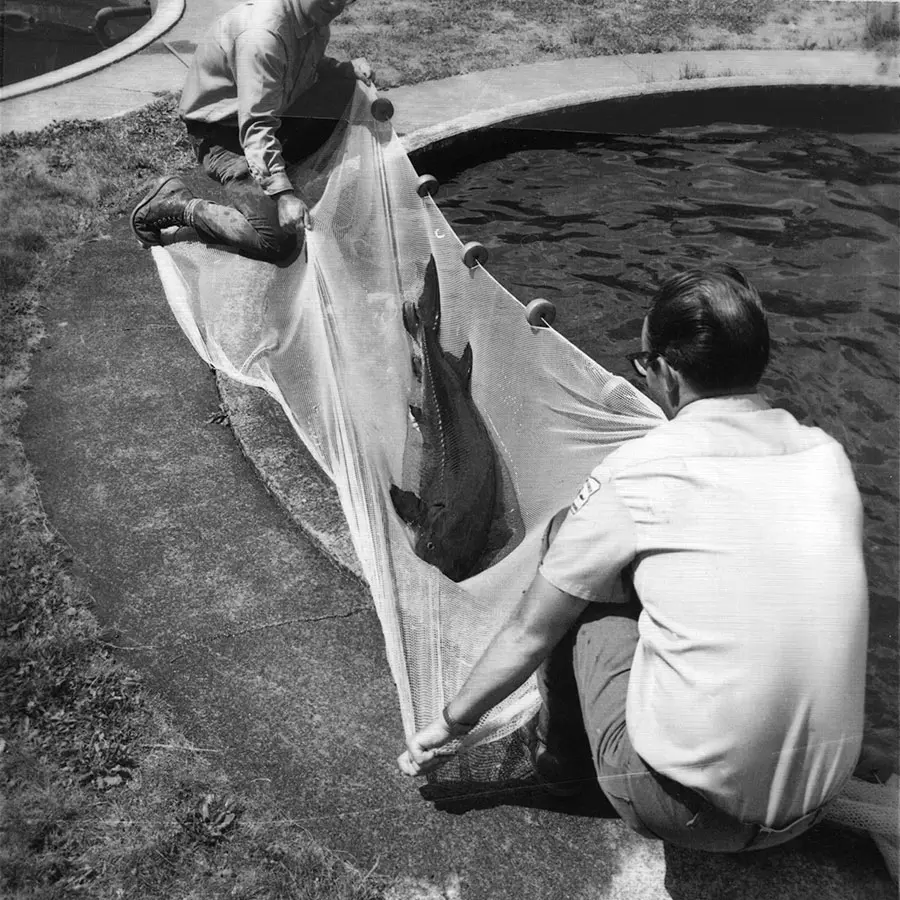
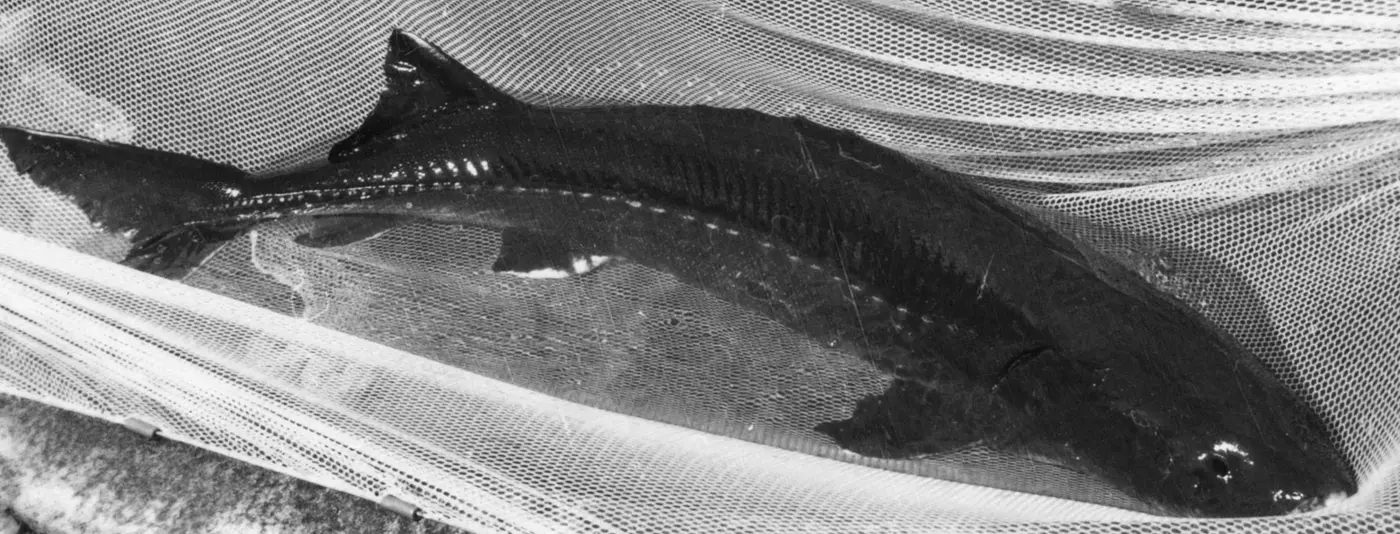
Herman is older than his pond, or at least his name is. ODFW finds a first mention of a Herman the Sturgeon in 1925. By the department’s account, in 1932 the Roaring River hatchery manager carried a large white sturgeon named Herman from the old Clackamas River Hatchery to the Oregon State Fair. The Oregon Encyclopedia tells it differently. It names earlier fair sturgeon, Elmer and then Steve, and suggests the first Herman may have been “a 24-year old sturgeon from the Roaring River hatchery” shown at the 1958 fair. That fish had been caught in the Clackamas by Percy Southwick, Roaring River’s superintendent, and Southwick’s daughter Betty claimed the “honor” of naming it.
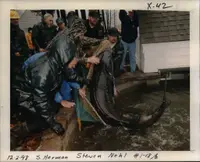
Moving him was a job. Hatchery workers corralled Herman in his pond, lifted him onto a wet blanket, carried him to a fish tank on a truck, and slid him in through its gate. At the fairgrounds, someone climbed into the tank to point him headfirst at the door, and the blanket became a sling again to hoist him into the pond. There he lay for 11 days while as many as 350,000 fairgoers filed past.
In 1976 biologists worried about disease and quietly sent a substitute Herman from Bonneville. Eleven-year-old Scott Finney noticed the difference and outed the impostor. The original returned in 1979. In 1982, according to the Statesman Journal, “the fair officially opened when Herman the sturgeon was unceremoniously dumped into a State Fair pool” after a speech by Governor Vic Atiyeh.
The record also runs to crime. In 1960 thieves tried to take Herman and dropped him about fifty feet from his pool, where he was found alive the next day. In 1969 an unidentified assailant entered the sturgeon pool at Bonneville and stabbed five fish repeatedly. Another Bonneville sturgeon vanished in 1980, and in 1982 vandals took two more and cut a third. On May 1, 1983, Herman was stolen from Roaring River and never found. Ten days later, Bonneville delivered a six-foot, thirty-year-old replacement called Herman II, who made the fair that summer.
The end of the fair years is dated two ways. ODFW says managers stopped the trips in 1985 because of the stress on the fish. The Encyclopedia says Herman II died during the 1990 fair, along with other fish and an orphaned fawn, and that live wildlife displays ended there. After that, Herman appeared at the fair as a human in a costume. Sometime in the early 1990s, thieves failed to take a Herman from a shallow pond at Bonneville and mangled him so badly that workers nursed him for months before releasing him into the Columbia. ODFW managers estimate four sturgeon have played the part; the Encyclopedia counts the present fish as the third.
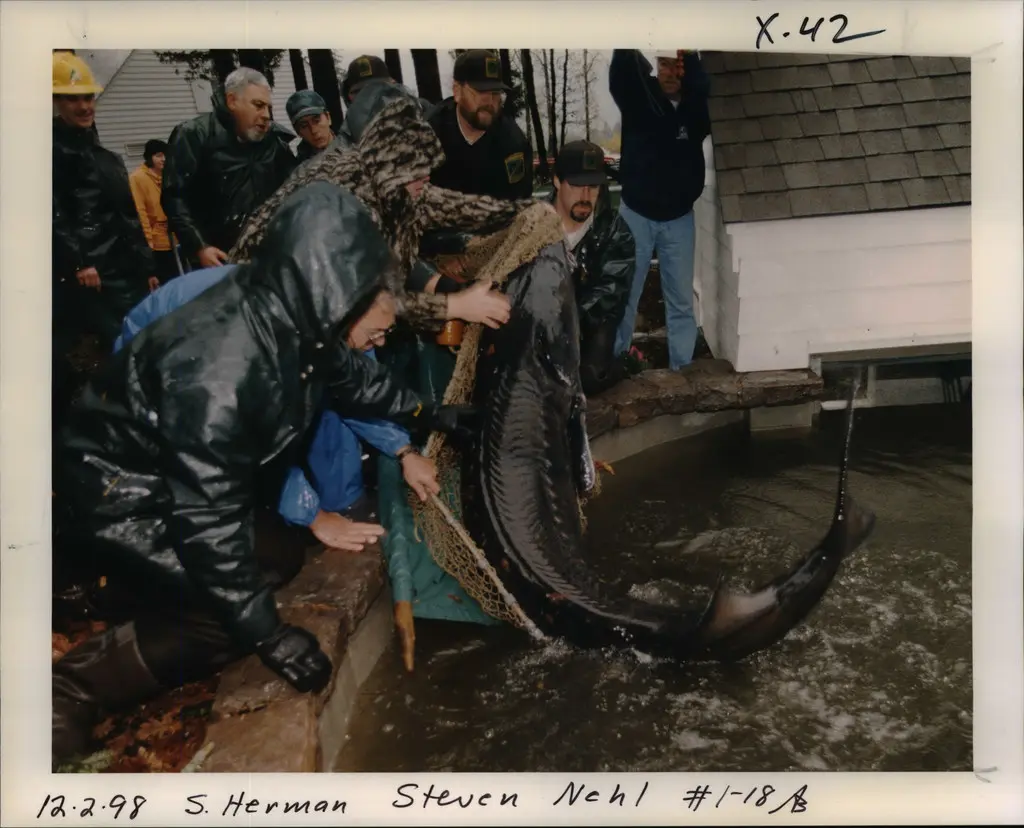
The Oregon Wildlife Foundation began raising money in 1997 and collected more than $350,000 toward a permanent home. Ground was broken on September 27, 1998, and Herman was released into the new pond on December 2, 1998. In 2007, seven other sturgeon were stolen from the hatchery. In 2017, over Labor Day weekend, the Eagle Creek Fire forced the evacuation of Bonneville and two neighboring hatcheries. Herman stayed at the viewing center and survived.
Notable Events
- 1909The Oregon legislature appropriated $12,000 for a Central Hatchery on the Columbia River; Fish Warden R. E. Clanton chose Tanner Creek at Bonneville. npgallery.nps.gov
- 1909During the fall and winter of 1909 the facility received 16,059,450 chinook eggs and, despite losses of eggs and fry in excess of 850,000, incubated and released an estimated 15.2 million fry into Tanner Creek or at nearby points along the Columbia. npgallery.nps.gov
- 1910Warden Clanton secured $1,500 from Columbia River cannerymen and packers and had hatchery crews build three rearing ponds. npgallery.nps.gov
- 1921Oregon hatcheries released 50,828,232 fry in 1921, and the Central Hatchery incubated and reared more than 20% of all the fish artificially produced in the state. npgallery.nps.gov
- 1934For the Bonneville project the Corps took a strip along the east boundary of the hatchery property near Tyrrell's Tavern for a new access road and rerouted the railroad on a viaduct; the taking of nearly 10 acres forced removal of the feed room, cold storage plant, ponds and three residences, and replacement of the flume and two major pipe lines. npgallery.nps.gov
- 1934On October 11, 1934 the Fish Commission received Hugh C. Mitchell's report recommending the state dispose of hatchery lands needed by the Corps for Bonneville Dam and the relocated railroad. npgallery.nps.gov
- 1935With the dam works confining the hatchery, the Fish Commission secured the Portland architectural firm of Claussen & Claussen to draw plans for a new complex, and contracted with the Parelius Construction Company, Inc., for $14,484.00 to build the new hatchery facilities at Bonneville. npgallery.nps.gov
- 1936The Incubation Building (hatchery), a Colonial Revival wood frame building, was built in 1936. npgallery.nps.gov
- 1936The new construction was finished by 1936, and the hatchery building was first used in the fall of 1936 with the installation of 120 cedar troughs connected to the new filtered water supply. npgallery.nps.gov
- 1948The worst flood, the 1948 freshet that destroyed Vanport miles downstream, poured into the cold storage plant, overflowed the ponds, and carried off the silver salmon fingerlings. npgallery.nps.gov
- 1949Responding to the inadequacy of fish passage alone, the Corps of Engineers accelerated its hatchery program and took over official control of the hatchery to further federal involvement in maintaining the fishing industry. npgallery.nps.gov
- 1954The concrete rearing-pond batteries A and B were redesigned and constructed anew in 1954-55, surviving the later rebuild of the rest of the grounds. npgallery.nps.gov
- 1957The facility was remodeled and expanded as part of the Columbia River Fisheries Development Program (Mitchell Act), a program to enhance declining fish runs in the Columbia River Basin. myodfw.com
- 1959A research milestone of the Corps hatchery program, the Oregon moist pellet inoculates juvenile salmon against disease using feed, answering rising tuberculosis mortality in Columbia hatcheries. npgallery.nps.gov
- 1969An unidentified assailant entered the sturgeon pool at Bonneville and stabbed five fish repeatedly. dfw.state.or.us
- 1974The hatchery underwent another renovation as part of the U.S. Army Corps of Engineers' mitigation of fish losses from the construction of the John Day Dam. myodfw.com
- 1974The project cost an estimated $8,000,000 and brought the hatchery to a new capacity of handling 34,000,000 eggs each year with rearing facilities for 19,000,000 chinook and 2,000,000 cohoe salmon. npgallery.nps.gov
- 1974Funded as part of the John Day Lock and Dam project, the new facilities at Bonneville were planned in 1974 and constructed in 1974-75, adding new Batteries C and D, a Spawning Building, offices, and holding ponds. npgallery.nps.gov
- 1983After the original Herman was stolen from Roaring River, the Bonneville Fish Hatchery delivered a six-foot, thirty-year-old sturgeon named Herman II to Roaring River on May 11. oregonencyclopedia.org
- 1986The Bonneville Lock and Dam project, which includes the hatchery, was placed on the National Register of Historic Places; it was later elevated to National Historic Landmark status. oregonencyclopedia.org
- 1997A fundraising campaign garnered more than $350,000 to build the center. columbiagorgenews.com
- 1998Construction was completed on the Captive Broodstock Facility for the Grande Ronde Basin spring Chinook supplementation program. myodfw.com
- 1998The small white Sturgeon Viewing Center building, home to Herman the Sturgeon, was built. myodfw.com
- 2017Over Labor Day Weekend, the Bonneville Hatchery was one of three ODFW fish hatchery facilities in Cascade Locks evacuated due to the Eagle Creek Fire. columbiagorgenews.com
- 2023On the anniversary of the center's dedication, OWF readied a fundraising campaign for essential repairs to the building, improvements within the pond, updated sturgeon messaging, and improved wayfinding. columbiagorgenews.com
- Oregon Wildlife Foundation formally dedicated the Sturgeon Interpretive and Viewing Center at Bonneville Fish Hatchery, home to Herman the Sturgeon - 25 years before this story. columbiagorgenews.com
People
- Mo Montgomery, Oregon Wildlife Foundation communications and public relations manager; the foundation are stewards of Herman.
- Tim Greseth, Executive director of Oregon Wildlife Foundation, which built the Sturgeon Interpretive Center at the hatchery and readies its repairs.
- Bruce Eddy, ODFW East Region Administrator who led the agency's response as the Cascade Locks hatcheries were evacuated in the Eagle Creek Fire.
- H. C. McAllister, Proponent of a pond program of rearing fry at the state hatcheries.
- Henry O'Malley, U.S. Bureau of Fisheries official who accompanied the reconnaissance of candidate hatchery sites on Columbia tributaries.
- Hugh C. Mitchell, Director of the Department of Fish Culture who prepared estimates for replacing all properties at Bonneville; his report led the commission to sell hatchery tracts to the Corps (1934).
- John C. Veatch, Chairman of the Oregon Fish Commission who reported the Corps' need for part of the hatchery site and proposed that Oregon transfer its hatchery lands to the federal government.
- Lewis and Clark, Explorers whose visit is commemorated by plaques and bas reliefs displayed at the hatchery.
- R. E. Clanton, Oregon Master Fish Warden who, with Henry O'Malley of the U.S. Bureau of Fisheries, examined candidate streams and located the Central Hatchery on Tanner Creek; he later built the station's first rearing ponds.
Sources
- myowf.org/events
- myowf.org/blog/celebrate-herman-the-sturgeons-birthday-at-bonneville-fish-hatchery
- myodfw.com/articles/herman-sturgeon
- myodfw.com/bonneville-hatchery-visitors-guide
- hmdb.org/m.asp?m=92687
- dfw.state.or.us/resources/visitors/bonneville_hatchery_more.asp
- nwcouncil.org/history/Hatcheries
- columbiagorgenews.com/news/sturgeon-interpretive-viewing-center-readying-improvements/article_b5e7b172-620a-11ee-a622-4fdb02cbe955.html
- columbiagorgenews.com/gorge-life/gorge-local---in-business-herman-the-sturgeon-gets-special-beer-for-his-birthday/article_71c3be34-3025-11ef-bcfa-d3d0857203e0.html
- columbiagorgenews.com/thedalleschronicle/news/gorge-hatcheries-evacuated-due-to-fire/article_2dc02266-88c4-5ea1-92fe-80ee3b1e39cc.html
- oregonencyclopedia.org/articles/bonneville_dam
- npgallery.nps.gov/GetAsset/f2ae0589-cc1d-4b84-960d-c4c3da6a6821
- oregonencyclopedia.org/articles/herman-the-sturgeon
- dfw.state.or.us/resources/visitors/bonneville_hatchery_herman.asp