
Bodie State Historic Park
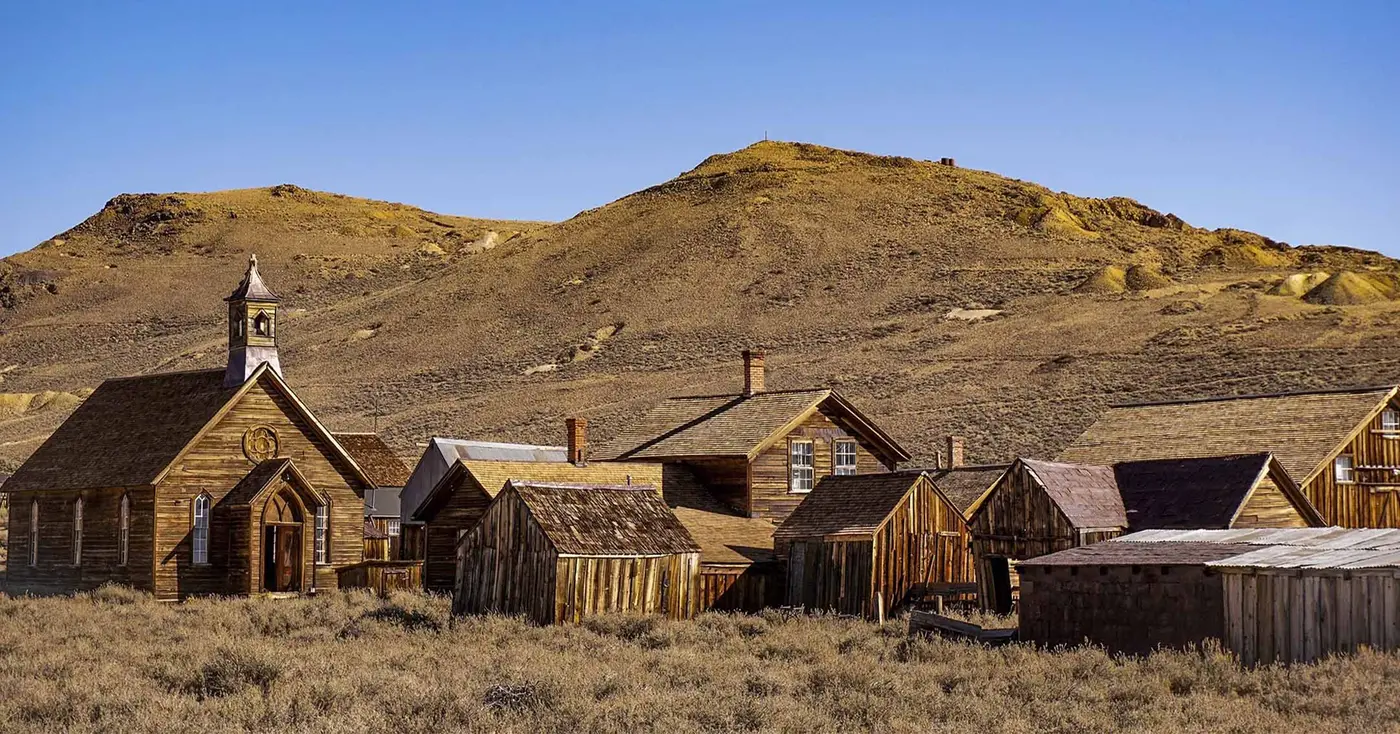
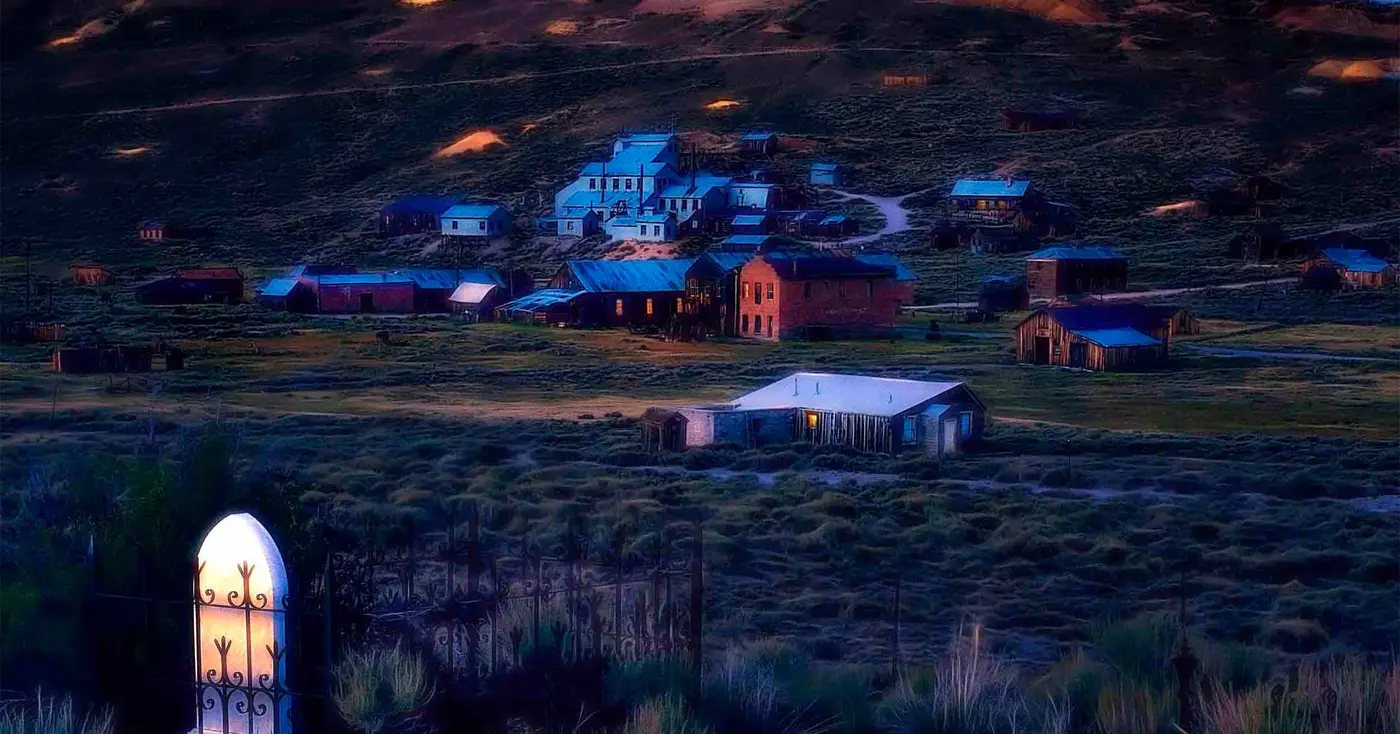
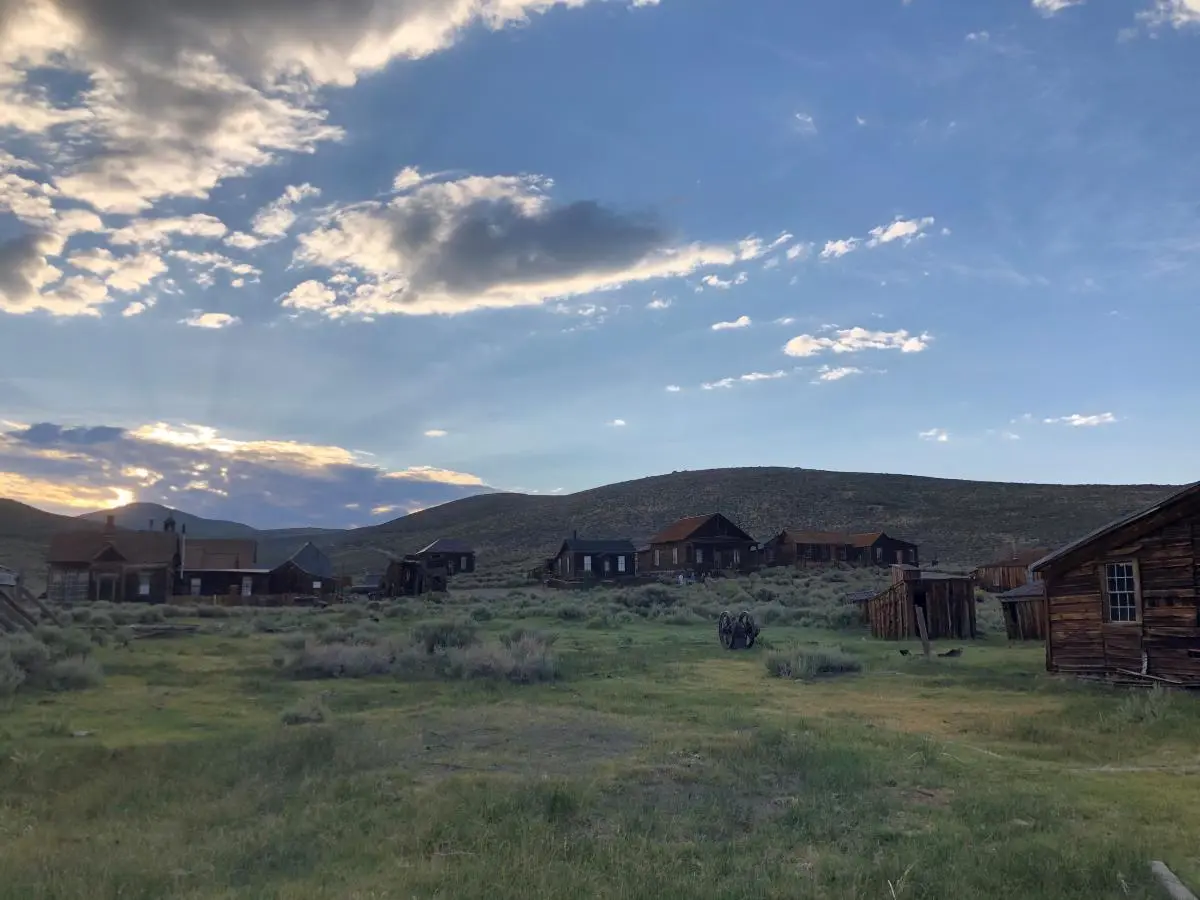
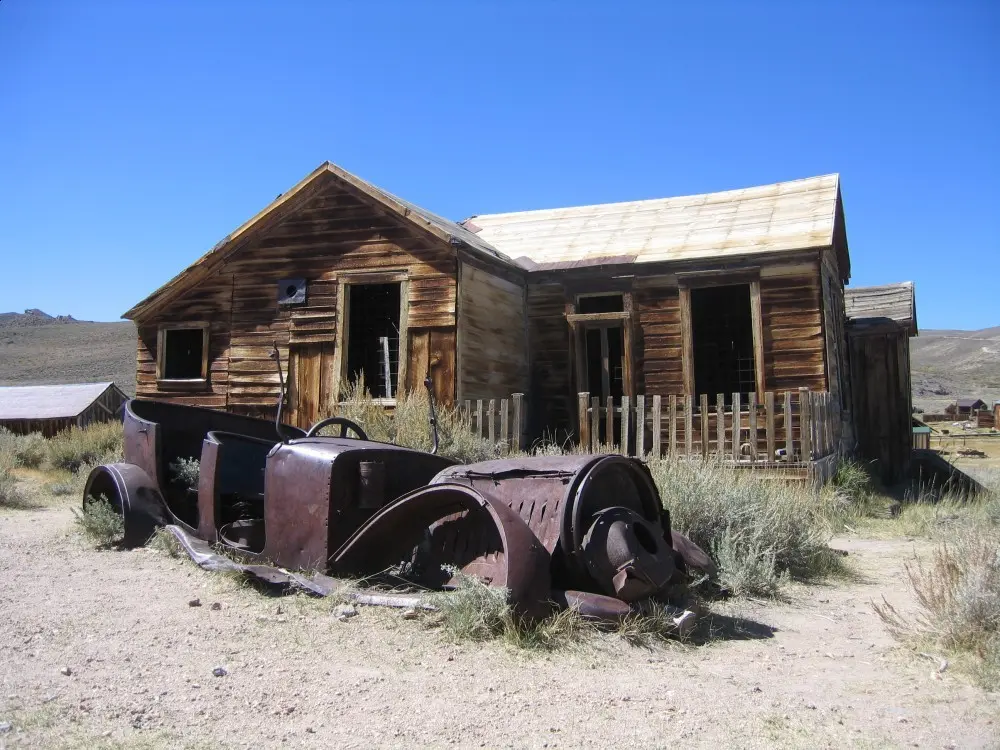
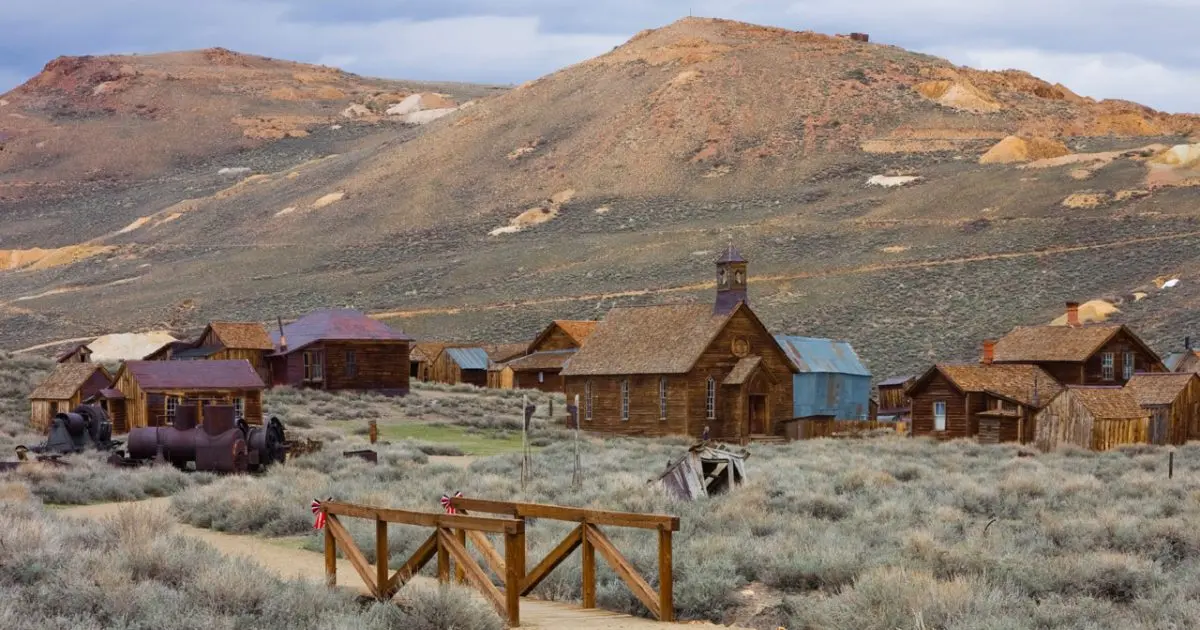
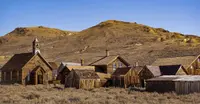
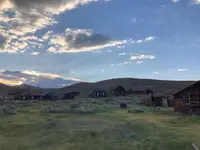
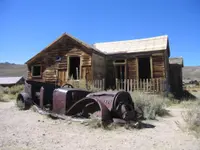
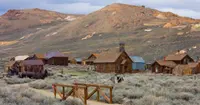
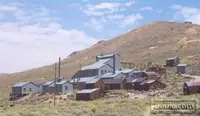
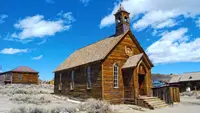
Bridgeport, Mono County, California. Historic ghost town and once thriving mining camp preserved in a state of "arrested decay".
Details

- Where
- 12515 Bodie Road, Bridgeport, CA 12515. Directions
- When
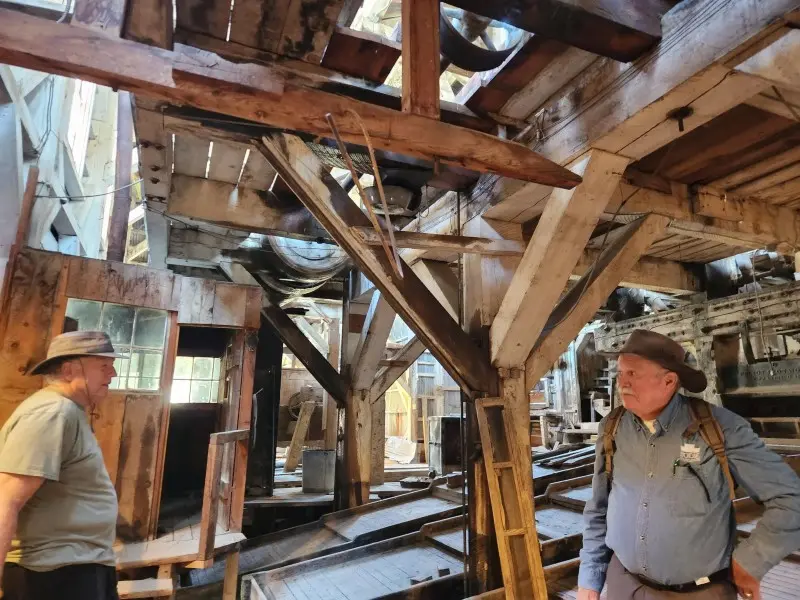
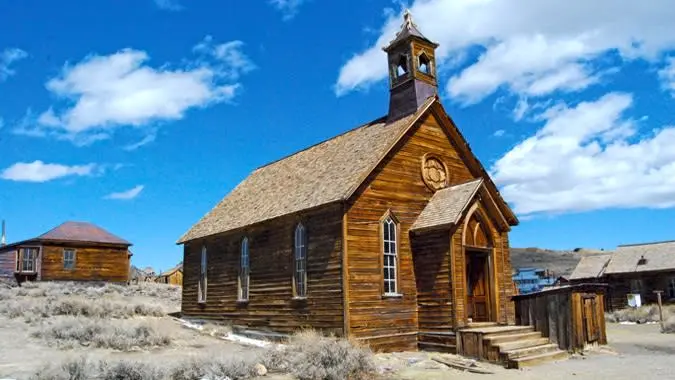
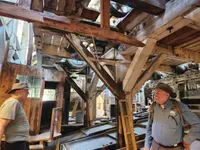
- History talks 10:00 am in front of the church and 4:00 pm in front of the museum; stamp mill tours 1:00 pm; museum and gift shop open every day 9:30am to 5:00pm.
- Season
- The Museum & Visitor Center is open from mid-May to mid-October; park and museum hours vary seasonally depending on the weather.
- Getting there
- From U.S. 395 seven miles south of Bridgeport, take State Route 270, east 10 miles to the end of the pavement, then 3 miles on an unsurfaced road to Bodie; the last 3 miles can be rough and reduced speeds are necessary.
- Fees
- Day-use entry fee, includes parking: Adult $8; Ages 4-17 $5; Ages under 4 years free.
- Hours
- Summer 9 AM - 6 PM, May 1st - November 1st; winter 9 AM - 4 PM, November 1st - May 1st; currently open daily from 9am to 6pm.
- Access
- Winter visits require snow transportation; four-wheel-drive vehicles often get stuck in snow deeper than it appears and towing facilities are not available; snowmobiles must stay on designated roads within the park and on surrounding public lands as posted.
- Walk-in or reserve
- No reservation - stamp mill tour tickets are sold only in person, first come first served, at the museum/gift shop.
- Phone
- (760) 616-5040
- Website
- parks.ca.gov
- Managed by
- California State Parks.
- Established
- 1962, designated a National Historic Site and a State Historic Park.
- Coordinates
- 38.2114891, -119.0125867.
A genuine California gold-mining ghost town; visitors walk the deserted streets of a town that once had around 2,000 structures and roughly 8,000 people.
Notable Events
- 1859W. S. Bodey perished in a snow storm; he and his mining partner Black Taylor were caught in the severe storm. bodie.com
- 1859Gold was discovered here by W.S. Bodey, after whom the town was named. hmdb.org
- 1875A mine called the Bunker Hill caved, exposing an ore body that attracted San Francisco speculators. bodiehistory.com
- 1875A mine cave-in revealed a rich vein of ore. parks.ca.gov
- 1876Industrial-scale mining spawned bullion shipments and stock dividends that turned Bodie into a gold mining sensation. bodiehistory.com
- 1876New quartz discoveries touched off a great gold rush to Bodie in 1878. npgallery.nps.gov
- 1877The Standard Co. declared a dividend on December 4, 1877. bodie.com
- 1877The Standard Mill began production on July 10, 1877. bodie.com
- 1877The Standard Company produced $784,523 in bullion and rewarded stockholders with four consecutive monthly dividends. bodiehistory.com
- 1878By late 1878 twenty-two mines sported expensive steam-powered hoisting machinery, and the booming town's startup newspaper cried 'Ho for Bodie!'. bodiehistory.com
- 1879The Standard Gold Mining Company reorganized as the Standard Consolidated Mining Company. historycooperative.org
- 1881A narrow gauge railroad was constructed from Mono Lake to Bodie to carry in fuel and lumber. npgallery.nps.gov
- 1881Bodie's bust began and the town's population declined drastically. parks.ca.gov
- 1883The boom was over and all but the Bodie and Standard mines closed down. npgallery.nps.gov
- 1887The two mines finally consolidated. npgallery.nps.gov
- 1890The Standard Company renovated its mill, adopting the Boss Continuous Process to augment a new ore treatment method introduced by Superintendent Arthur Macy, a recently hired college-educated mining engineer. bodiehistory.com
- 1892A crowd met at the mill, a telephone signal was sent to Green Creek and the switch was thrown, and the motors at the mill began to hum. bodie.com
- 1892Two large fires reduced the town's remaining structures to less than a tenth of the 2,000 that once stood. parks.ca.gov
- 1893A large fire destroyed most of the business section on Main Street; only a few brick buildings escaped. npgallery.nps.gov
- 1895Bodie had a small revival when the cyanide process of recovering gold was put in use. npgallery.nps.gov
- 1898The original mill, built mostly of wood, burned down on October 6, 1898, and rebuilding began immediately despite winter snow. bodie.com
- 1898In the early-morning hours of the 5th a fire broke out in the boiler room and spread through the entire mill, destroying it completely; the company decided to rebuild immediately. historycooperative.org
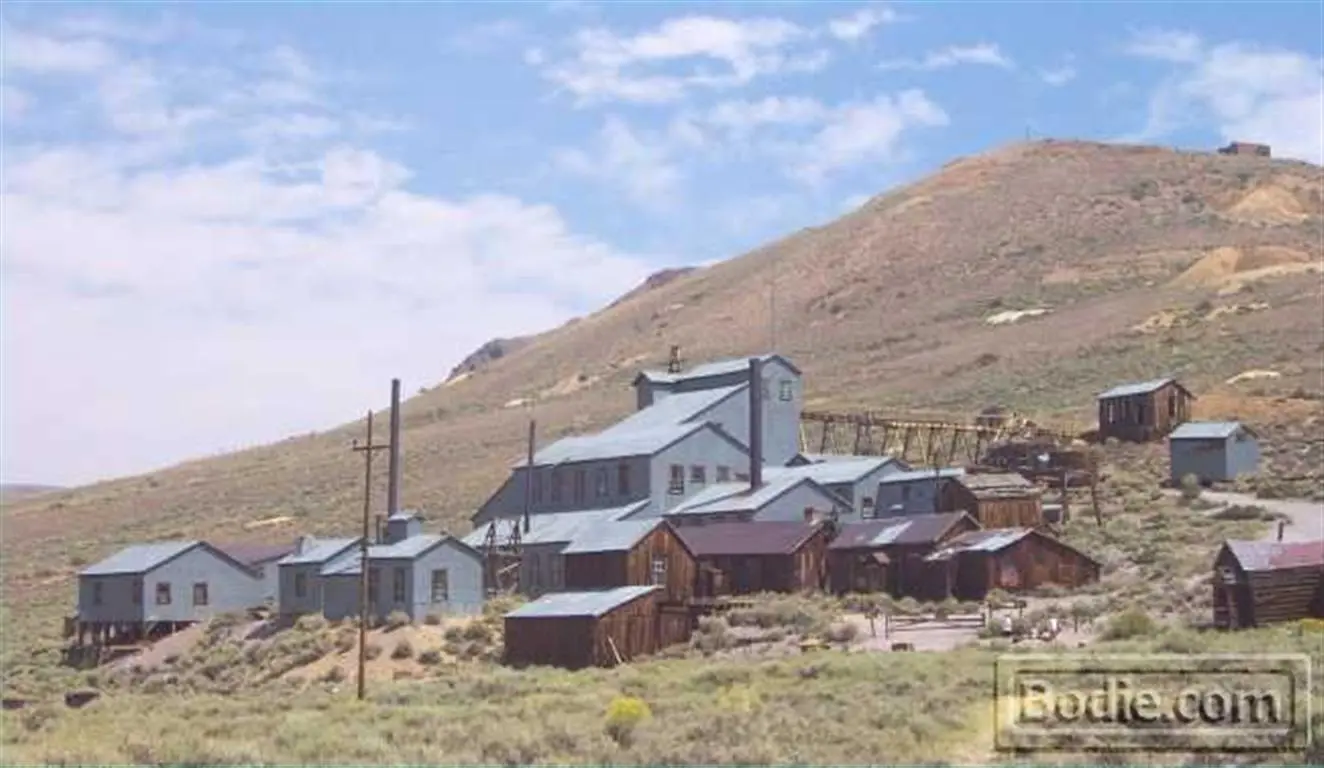
- 1899Just a few months after the fire, the Standard Mill re-opened on February 1, 1899, wood framed but mostly covered with sheets of corrugated steel. bodie.com
- 1899The combination of plate amalgamation, mechanical concentration, and cyaniding was reproduced when the Standard mill that survives today at Bodie State Historic Park replaced the original mill destroyed by fire. bodiehistory.com
- 1899The new mill was operating by early February 1899, built according to the plan of a modern California twenty-stamp mill. historycooperative.org
- 1912The Standard Consolidated Mining Company treated ore at its stamp mill and tailings with cyanide until late 1912; that winter it closed the stamp mill and cyanide plant and focused on exploring the mine workings. historycooperative.org
- 1913Industrial-scale mining ceased; a well dug in the millyard provided water during the final years. bodiehistory.com
- 1915Bodie banker J. S. Cain took over the Standard Company's property; the milling process changed again. bodiehistory.com
- 1929The mining conglomerate Treadwell-Yukon reopened the Red Cloud Mine and repaired the Standard mill. bodiehistory.com
- 1932The second of two major fires destroys more of the town, leaving what is now seen in Bodie. bodie.com
- 1932A second fire again swept the business district. npgallery.nps.gov
- 1935The leasers' milling period lasted until the mill ran for the last time in 1935. bodiehistory.com
- 1939Registration date 8/8/1939; location Bridgeport, Mono County. ohp.parks.ca.gov
- 1942Mining officially ceased, the final nail in the coffin for the township. parks.ca.gov
- 1956The California State Division of Beaches and Parks began acquiring land and buildings at Bodie to preserve the mining town. npgallery.nps.gov
- 1961Bodie is dedicated as a National Historic Landmark. bodie.com
- 1964The marker was erected by the California State Park Commission, Mono County agencies, and the Mono County Historical Society. hmdb.org
- 1966The National Register asset for the Bodie Historic District is dated 10/15/1966. npgallery.nps.gov
- Macy's successor at the Standard brought in the cyanide process and removed the mill's pans and settlers. bodiehistory.com
People
- Herbert Hoover, Theodore's brother, the future president, who occasionally visited Bodie and stayed at the Hoover home.
- Mildred Hoover, lived with Theodore Hoover in the mill's Hoover House (until around 1905).
- Theodore Hoover, Superintendent of the plant; lived in the house to the right of the mill.
- Andrew Hallidie, designed and built the gondola system that carried ore from the mine directly to the mill; inventor of the San Francisco cable railway.
- Dan Cook, San Francisco capitalist who bought the claim and erected the twenty stamp mill as The Standard Consolidated Company.
- Ella M. Cain, author of the excerpted story; born in Bodie and later taught school in town.
- Essington, Swedish prospector on the Bunker Hill claim who struck the ledge when the tunnel caved.
- F. T. Bechtel, Judge; Secretary of The Bodie Bluff Consolidated Mining Company.
- J. D. Whitney, geologist professor whose good report on the property brought in new capital.
- James S. Cain, one of Bodie's early settlers and later one of the principal land owners by the time California State Parks took over the land.
- James Stark, actor who bought the Bunker Hill claim with jeweler John W. Tucker.
- John Boyd, San Francisco capitalist who bought the claim and erected the twenty stamp mill as The Standard Consolidated Company.
- John W. Tucker, jeweler who bought the Bunker Hill claim with actor James Stark.
- Leland Stanford, then Governor of California; elected President of The Bodie Bluff Consolidated Mining Company.
- Lockberg, Swedish prospector on the Bunker Hill claim who struck the ledge when the tunnel caved.
- Seth Cook, San Francisco capitalist who bought the claim and erected the twenty stamp mill as The Standard Consolidated Company.
- William Lent, San Francisco capitalist who bought the claim and erected the twenty stamp mill as The Standard Consolidated Company.
- William O’Hara, an Irishman by name and African by birth who grub-staked the prospectors and took the claim for the debt owed him.
- Thomas H. Leggett, Macy's successor at the Standard who brought in the cyanide process.
- Black Taylor, W. S. Bodey's mining partner, caught with him in the 1859 snow storm.
- Wakeman S. Body, the prospector whose wintry death gave the diggings its name; historic records say his name was really Wakeman S. Body, sometimes spelled Bodey.
- Arthur Macy, Superintendent of the Standard; a recently hired college-educated mining engineer whose modifications made the renovated mill a combination mill (1890).
- Marvin P. Boss, originator of the Boss Continuous Process, tested at Bodie and adopted at the renovated Standard mill.
- Waterman S. Body, the man for whom the town is named, who discovered small amounts of gold in hills north of Mono Lake.
- Thomas Leggatt, superintendent of the mine and mill at Bodie who added the cyanide process and shifted the operation from steam to electrical power.
- W.S. Bodey, discoverer of the gold here in 1859, after whom the town was named (1859).