Blacksmith Fork Guard Station
Hyrum, Cache County, Utah. Forest Service cabin rental; Site Open.
Details

- Where
- Hyrum, Cache County, UT. No street address stated. Directions
- When
- Check in 2:00 PM, check out 11:00 AM.
- Getting there
- From Logan, Utah, drive south on US 89 for approximately 1 mile then merge left onto State Route 165. Travel south for about 5.8 miles then turn left onto State Route 101 and follow it east up Blacksmith Fork Canyon for approximately 9 miles. Turn left into Left Hand Fork Canyon and travel approximately 3 miles on the improved gravel road to the Guard Station.
- Fees
- See Recreation.gov for current pricing; 2-night minimum on weekends and holidays.
- Access
- Seasonal road is closed to wheeled vehicles from 12/1 through 4/15. Access is limited to over-snow vehicles during this time. There is no drinking water available at the cabin. The nearest water source is located in the city of Hyrum. The area is common for rattlesnakes.
- Walk-in or reserve
- There is 2 night minimum on weekends and holidays.
- Phone
- (435) 755-3620
- Website
- fs.usda.gov
- Managed by
- Uinta-Wasatch-Cache National Forest, Logan Ranger District.
- Established
- 1934.
- Coordinates
- 41.659272, -111.674624.
The Blacksmith Fork Guard Station is a small green and white cabin on the bank of the Left Hand Fork of the Blacksmith Fork River, at 5,400 feet in the Cache National Forest. Box elder and oak stand around it, and behind it the canyon wall rises steeply, covered in Douglas fir. The Forest Service gives its distance from Hyrum as about 11 miles east. The Cache Valley Daily, in 2015, put it at about 12.
The way in runs south from Logan on US 89 and State Route 165, then east on State Route 101 up Blacksmith Fork Canyon for about 9 miles. From there it turns left onto the Left Hand Fork road, Forest Service Road 245, for about 3 miles of improved gravel, and the cabin stands on the south side of the road. In summer the road is open to all motorized use, and full-sized vehicles, side-by-sides, four-wheelers and motorcycles pass the yard. From December 1 through April 15 it is closed to wheeled vehicles, and the cabin can be reached only by over-snow vehicle.
Propane light and a wood stove
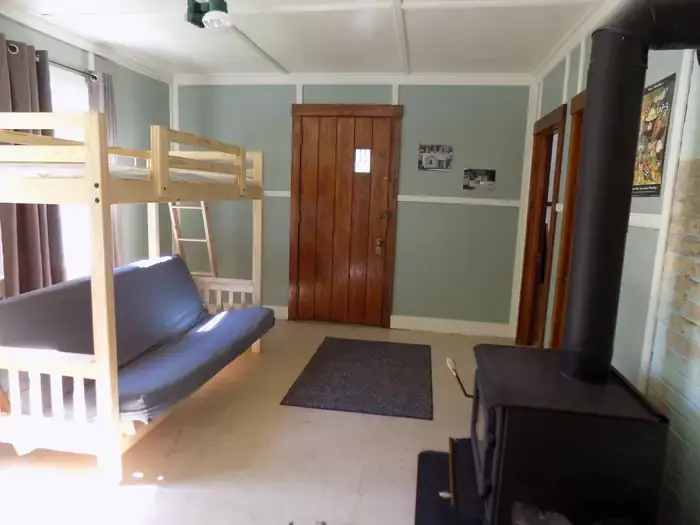
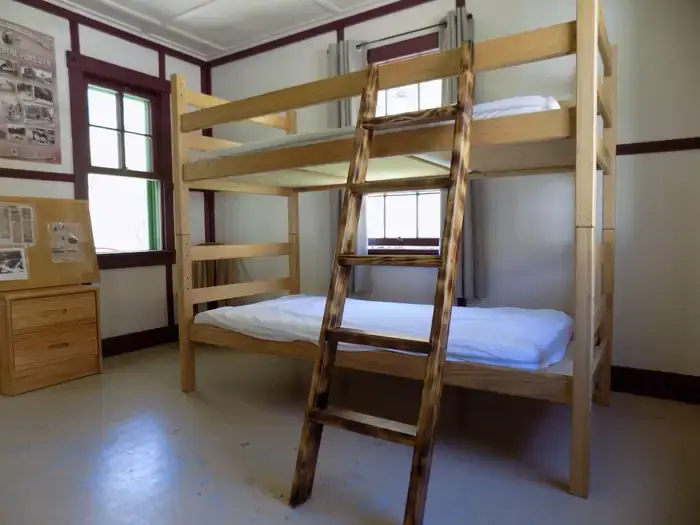
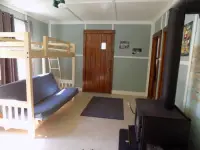
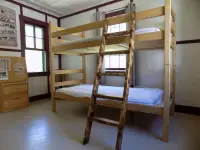
The cabin sleeps five. Up to four tents may be pitched outside, and a small travel trailer fits in the driveway. No vehicles are allowed on the grass. Inside are beds with mattresses, a propane stove, a propane refrigerator, propane fixtures for light, and a wood-burning stove for heat. The Forest Service lists cooking utensils, pots, cleaning supplies and firewood among the furnishings. The Recreation.gov listing asks guests to bring their own cleaning supplies and warns that firewood may not be available. There is no electricity and no drinking water, and the nearest water is in Hyrum. A vault toilet in the front portion of the complex is shared with other forest users along the road. The Standard-Examiner reported in 2016 that cell phones get no reception there.
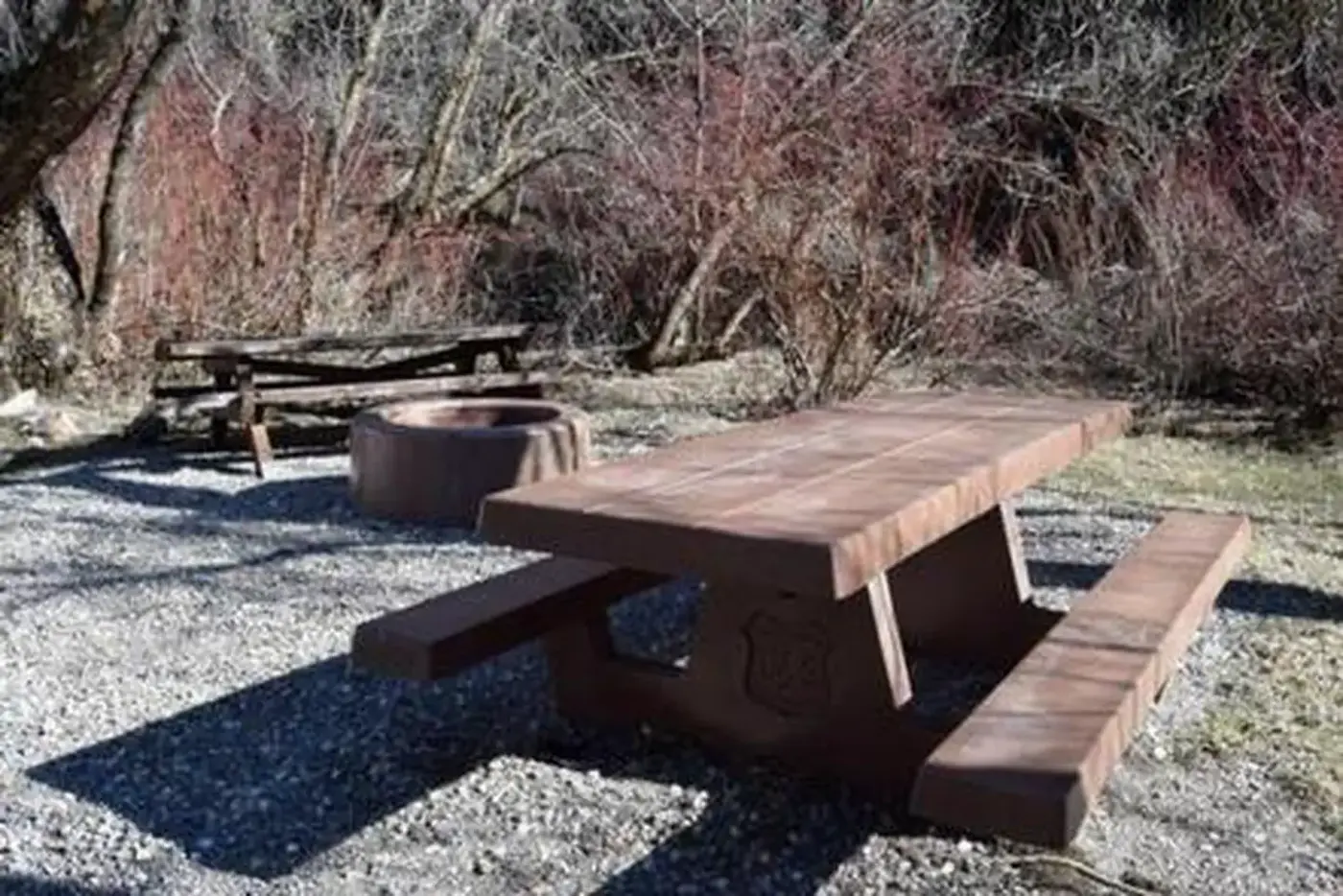
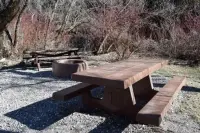
Outside are a horseshoe pit, a clothesline, grills, a fire pit, and a horse stall and corral. Pack animals are allowed if they are fed weed-free hay. The river runs a stone’s throw from the cabin, and there is fishing just off the back. Trails for hiking, biking, horseback riding and off-road vehicles cross the country around it. Richards Hollow Trailhead and Friendship Campground lie less than a mile off, and Hardware Ranch Wildlife Management Area is about 5 miles southeast along the main fork and State Route 101. Rattlesnakes are common. The door is kept on a combination lock, and guests confirm the combination by telephone with the Logan Ranger Station.
A trappers’ forge and a day’s ride by horseback
The canyon takes its name from 1878, when Neils C. Nielsen found an old, roughly made stone blacksmith forge up the canyon. Fur trappers had used it to repair their gear. Everything from the canyon mouth to Hardware Ranch carries the name. Utah passed state prohibition on August 1, 1917. A self-guide to Blacksmith Fork Canyon says the canyon then became a major bootlegging route into Cache Valley.
The guard station went up in 1934. The Forest Service and most accounts credit the building to the Civilian Conservation Corps, as part of President Franklin D. Roosevelt’s New Deal. The Standard-Examiner wrote that the Forest Service built it with the Corps’ help, as a seasonal home for the district ranger. Kathy Jo Pollock, a public affairs specialist for the Uinta-Wasatch-Cache National Forest, described the program as “aimed at creating jobs for young men as a means to recover from the Great Depression.” “The Civilian Conservation Corps was a work relief,” she said.
Rangers lived and worked out of such stations, often with their families. The early stations stood typically “a day’s ride by horseback” apart, and the districts were small. A ranger spent his days in the saddle, mending fences, repairing phone lines, surveying the terrain and scouting for wildfire. The 1930s were also when rangers across the forest began encouraging organized recreation. Before then they had managed the land mostly for fire suppression, grazing and timber.
Trucks ended that arrangement. “Once you had the introduction of trucks, people were able to get around and do more work quicker, and you could expand the area they were responsible for,” said Logan District Ranger Jennefer Parker. Over the decades the stations were used less and less, then vandalized. “So you once had permanent employees, then they eventually get turned over to summer, seasonal employees. Then something happens to them and they’re not livable anymore, so they sit empty,” Parker said. “Windows get shot out … that’s what you see when there’s not anyone having a presence there all the time.” Of the forest’s guard stations, the Blacksmith Fork cabin took the biggest hit.
Cedar shakes and leaded glass
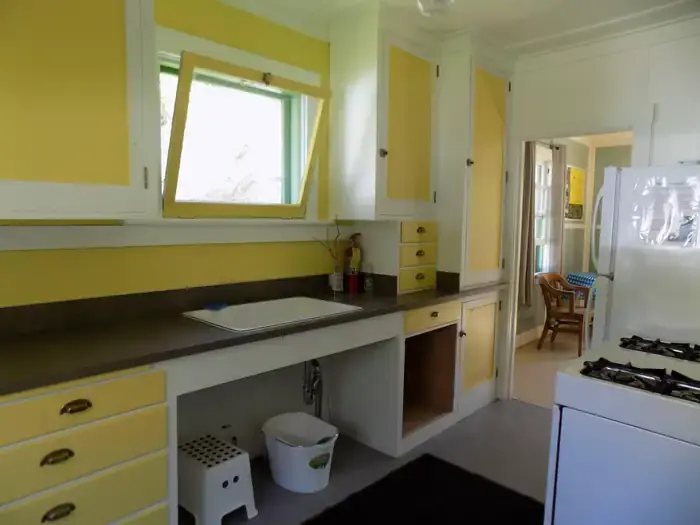
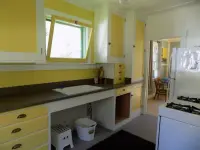
“It was on the verge of a tear-down,” said Charlie Rosier, a Forest Service recreation specialist. “Doors had been kicked in, and people had kicked out a bunch of windows.” Rosier and Rachelle Handley, the forest’s Heritage Program archeologist, studied historical photographs and old Forest Service architectural plans. Volunteers from across the country came through the Forest Service’s Passport in Time program. They re-roofed the cabin with cedar shakes, repaired the leaded glass windows, repainted the exterior and refinished the old woodwork. The kitchen was returned to its 1930s condition, with a working range and refrigerator. A Labrador named Leo served as the crew’s “unofficial mascot.”
“We started work in 2012 so it’s taken about three years,” Handley told the Cache Valley Daily in May 2015. “We have really tried to restore this place to its original ‘feel’.” The forest held an open house at the station on Friday, May 29, 2015, from 10 a.m. to 3 p.m. It was tied to the 50th anniversary of the National Historic Preservation Act and to Utah Archaeology & Historic Preservation Month. “We are getting some of our guard stations available for public use and the Blacksmith Fork Guard Station is the first to come online,” Handley said.
The Standard-Examiner dates the cabin’s opening for nightly rentals to May 2015. A year later it rented for $75 a night, and Handley said it had been booked through the previous summer and winter. By then she and Rosier had opened a second station, at Payson Lakes in the Spanish Fork Ranger District, and were at work on others in Logan Canyon and at Diamond Fork. Handley said she wanted to restore all of them.
“They’re great for families, couples, you name it,” Handley said. “They can come out, bring a minimal amount of equipment and still have a good time enjoying public lands.”
Notable Events
- 1934The Civilian Conservation Corps constructed the guard station as part of the New Deal Program. fs.usda.gov
- 2012Handley said work began to restore the station to its original feel. cachevalleydaily.com
- 2015After repair and restoration, the guard station opened to the public for nightly rentals. standard.net
People
- Rachelle Handley, Uinta-Wasatch-Cache National Forest Heritage Program archeologist advocating preservation of the guard stations.
- Neils C. Nielsen, founder of the canyon's name, having found the old stone blacksmith forge the canyon honors (1878).
- Franklin D. Roosevelt, President whose New Deal Program included construction of the station.
- Kathy Jo Pollock, Uinta-Wasatch-Cache National Forest public affairs specialist explaining the station's CCC and New Deal origins.
- Charlie Rosier, U.S. Forest Service recreation specialist helping oversee restoration projects; described the station's severe damage before preservation.
- Jennefer Parker, Logan District Ranger explaining how trucks enabled larger ranger districts.
Sources
- recreation.gov/camping/campgrounds/251565
- fs.usda.gov/r04/uinta-wasatch-cache/recreation/blacksmith-fork-cabin-guard-station
- ksl.com/article/news/utah/historic-1930s-guard-station-restored-in-utah-national-forest/34803982
- cdn.ymaws.com/www.utahmuseums.org/resource/resmgr/conference/2019resources/selfguide_bsfc.pdf