Black Hills Rockhound Area
Safford, Graham County, Arizona. Rockhound area.
Details

- Where
- Safford, Graham County, AZ. No street address stated. Directions
- Season
- Black Hills Rockhound Area is open year-round, but the summers can be hot and dry with temperatures reaching above 100 degrees Fahrenheit.
- Getting there
- Black Hills rockhound area is located on the north side of Arizona route 191, between Safford and Clifton, about 18 miles north of Safford. Access is easiest from U.S. Highway 191, just east of milepost 141.
- Fees
- None.
- Access
- The site is open for digging by the public without fees or permits. Camping throughout the area is allowed for up to two weeks.
- Walk-in or reserve
- Open for digging by the public without fees or permits.
- Phone
- 928-348-4400
- Managed by
- Bureau of Land Management, Safford Field Office.
- Coordinates
- 32.87397, -109.39496.
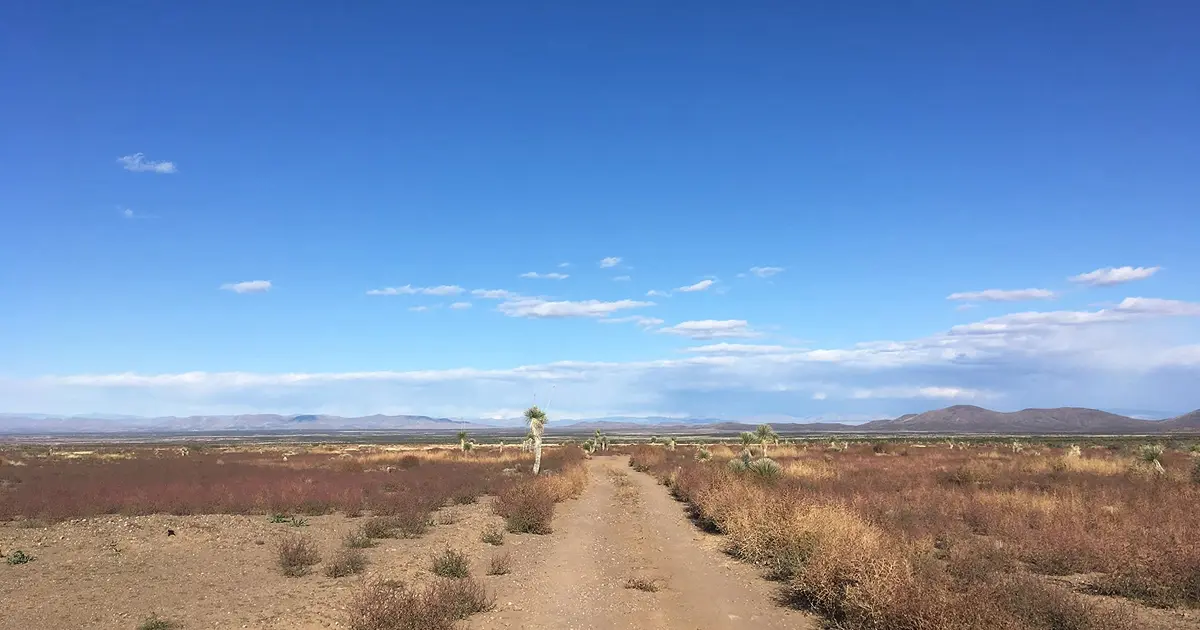
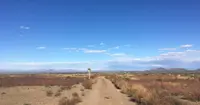
Two miles of graded dirt leave U.S. 191 just east of milepost 141 and end at the fire agate digs. A sign marks the turn. The Eastern Arizona Courier, writing in July 2002, reported the road normally suitable for passenger cars; Visit Arizona notes that most points can be reached in a passenger vehicle but that four-wheel drive is highly recommended, and advises calling the BLM Safford Field Office to check road conditions first. The Bureau of Land Management places the area on the north side of Arizona route 191 between Safford and Clifton, about 18 miles north of Safford, at 4,100 to 4,400 feet. Visit Arizona puts it about 20 miles northeast of town, two hours northeast of Tucson, three hours east of Phoenix.
What people come for is in the ground rather than on it. At Round Mountain, the other fire agate ground the BLM administers out of Safford, stones lie on the surface like gravel in places. Here the Courier found them “not as plentiful on the surface” and reported that they must be dug up with picks and shovels, most specimens within the top two feet. Suggested tools, per Visit Arizona: gloves, safety goggles, a rock chisel or hammer, brushes, a pry bar. “Fire agate is fairly small, but there’s a lot of it out here so people don’t have any trouble finding it,” says Scott Cooke, the BLM Safford field manager. If a rockhounder wants a particular shape, that adds time to the hunt.
Twenty-five pounds a day, and the water you carry in
No fees, no permits. The BLM’s Arizona rockhounding pamphlet sets the reasonable personal-use limit at 25 pounds per day and 250 pounds per year, for specimens that may not be sold or bartered; a group may not pool its yearly allotment to take a single piece over 250 pounds. Collection may not be aided by motorized or mechanical devices, heavy equipment, or explosives. Metal detectors are acceptable. The pamphlet also advises checking for mining claims before visiting a site, since claimants may have the right to exclude others.
There is no potable water and no power where the digging happens, and no restrooms. Water in the area is for livestock and not meant for people. Camping is allowed throughout for up to two weeks; after fourteen days a dispersed camper must move at least 25 miles. The campsites are primitive — no tables, no water, no trash removal. The Courier’s 2002 advice holds that many eastern Arizona campers are used to this sort of camping and that those who are not should pack accordingly, leaving a site clean and ready for the next campers. Developed campgrounds with vault toilets and picnic tables lie 40 to 50 minutes off, at Owl Creek above the Old Safford Bridge and at Riverview in the Gila Box Riparian National Conservation Area, where fees apply.
The area is open all year. The BLM notes summer temperatures above 100 degrees; Visit Arizona says up to 110, with winter lows dipping into the 20s, and names October through November and March through May as the best months. “It is best to go in the early morning when it’s a little cooler, especially if you plan on rockhounding,” Cooke says. He also tells visitors to watch the weather: “Heavy downpours and thunderstorms with lightning can creep up pretty quick during June, and potentially through September.”
Between digs there is stargazing, hiking, bird-watching, quail and javelina and mule deer, and ramadas at the Canyon Overlook Picnic Area with views of the mountains and the Gila River.
A gemstone recognized in the 1930s
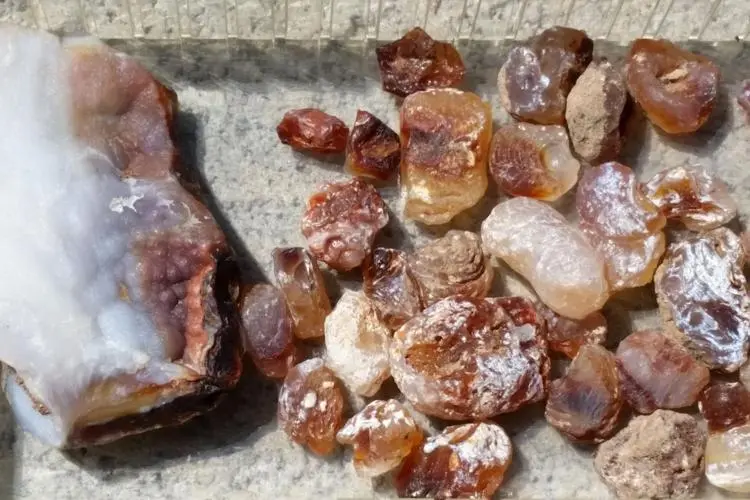
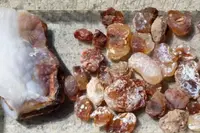
Fire agate was identified and formally recognized only in the 1930s. It has the color play of precious opal with gem-quality reds, greens, and blues, and the deserts of Arizona, southern California, and central Mexico are the only places in the world where it is known to occur. Its origin is unknown, the BLM says, but it is always associated with volcanic deposits.
Agate is a form of chalcedony and belongs to the quartz family. William Ascarza, writing for the Arizona Daily Star in May 2016, describes agates forming where volcanic activity created cavities and gas pockets in ash; the voids were later filled by silica-rich volcanic water carrying minerals that acted as coloring agents, and solidified. Fire agates, he writes, are a variety of chalcedony containing inclusions of limonite or goethite that produce the opal-like iridescence.
The Courier’s account is a cutter’s: outwardly similar to quartz, but with swirls, bubbles, and patterns, its colors highlighted by the refraction of light inside the stone. Compared to opal for its iridescence, “but is much harder and more difficult to cut.” Many of the stones are white. The best specimens contain deep browns and reds, “hence the name fire agate.” Those in the know cut, polish, and mount them into jewelry.
Pumice, cinder blocks, and a road built by prisoners
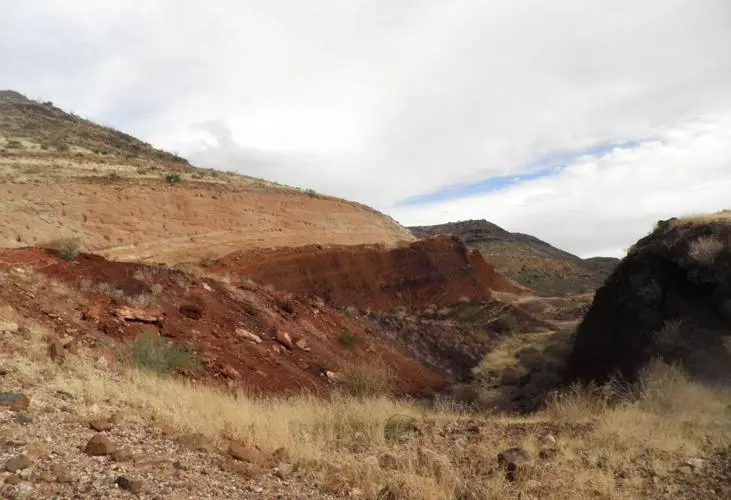
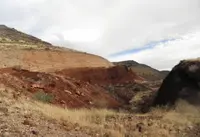
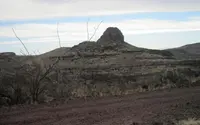
The Black Hills stand at the northern end of the Peloncillo Mountains in Graham County, and the Peloncillo mining district’s long business was not gemstones but pumice and scoria. The rock dates to volcanic activity 20 million years ago: andesite, dacite, and rhyolite, with dark gray and gray brown lava flows mixed into light gray, red, and yellow ash, forming minable deposits of cinders, tuffs, and pumice. Pumice forms when dissolved gases expand rapidly out of viscous siliceous magma. It is strong, light, and inert, used as aggregate in residential building blocks, as insulation, in landscaping, as railroad ballast, and once as an abrasive in the manufacture of designer jeans.
The Black Hills cinder mine, just north of the rockhound area, operated in 1942 under C.N. Greer, working a pumice deposit averaging 80 feet thick over volcanic cinders; the overburden went to highway construction. A.C. Haigler’s Pumice and Pumicite Co. held the site in the mid-1950s and later sold 200 acres to the Gila Valley Block Co., a subsidiary of the Catalina General Corp. Its manager, Bill Maher, put production at an average of 40 yards of cinders a day, trucked to a brick plant in Safford and pressed into pumice blocks and cinder blocks. A dispute with the BLM in the 1970s over a claim fraction was resolved in the company’s favor. By 1982, 34 claims were staked at the site, one of them covering a projected 72 million cubic feet of pumice. In 1988 the quarry and the Safford brick plant were offered together for $500,000, portable crusher and four-yard loader included, along with two delivery trucks, two dump trucks, four forklifts, and two tractor loaders. Mining ceased late in 1990.
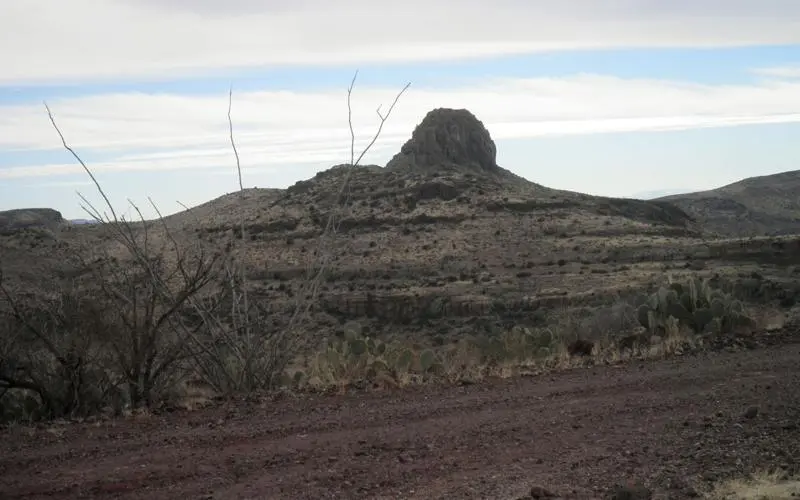
The scenic way in is the 21-mile Black Hills Back Country Byway, once the old Safford–Clifton Road, which reaches the rockhound area 3.2 miles from its access point. Prisoners built it between 1914 and 1920 to speed traffic between the two towns. Several of their graves are marked on the west side of the byway, among them one man who died of natural causes and one shot by a guard during an attempted escape in 1916.
Notable Events
- 1930sFire agate was identified and formally recognized as a gemstone. blm.gov
- Volcanic activity produced the range's andesite, dacite, and rhyolite and mixed lava flows with ash to form cinder, tuff, and pumice deposits. tucson.com
Sources
- blm.gov/visit/black-hills-rockhound-area
- visitarizona.com/like-a-local/arizonas-backcountry-black-hills-rockhound-area
- eacourier.com/two-rockhound-areas-offer-world-class-fire-agate-collecting/article_29ba4a86-9562-5831-845a-b68e5bf0367a.html
- blm.gov/sites/default/files/documents/files/2014%20Rockhounding_14_web_2018.pdf
- tucson.com/news/local/article_3da8b2b7-c9cf-5173-94dc-ed1c4dc3c2b7.html