Berry Blossom Farms
Rathdrum, Kootenai County, Idaho. U Pick Fruit Farm.
Details

- Where
- 14872 N Atlas Rd, Rathdrum, ID 14872. Directions
- When
- Open all daylight hours until further notice!
- Season
- Strawberries-Early June-October | Blueberries-mid July-mid September | Raspberries-mid July-late July | Blackberries-mid August-mid September | Grapes-late September | Walnuts and Hazelnuts-October | Vegetables-mid July-October | Apples-late September-mid October.
- Getting there
- ENTER AT 14872 N ATLAS RD.
- Fees
- Blueberries $3.50 a lb for the remainder of the season.
- Access
- Use the Atlas entrance 14872 n atlas rd. Everything is provided, cash or Venmo. Self serve.
- Phone
- 208-967-2520
- Established
- 2020.
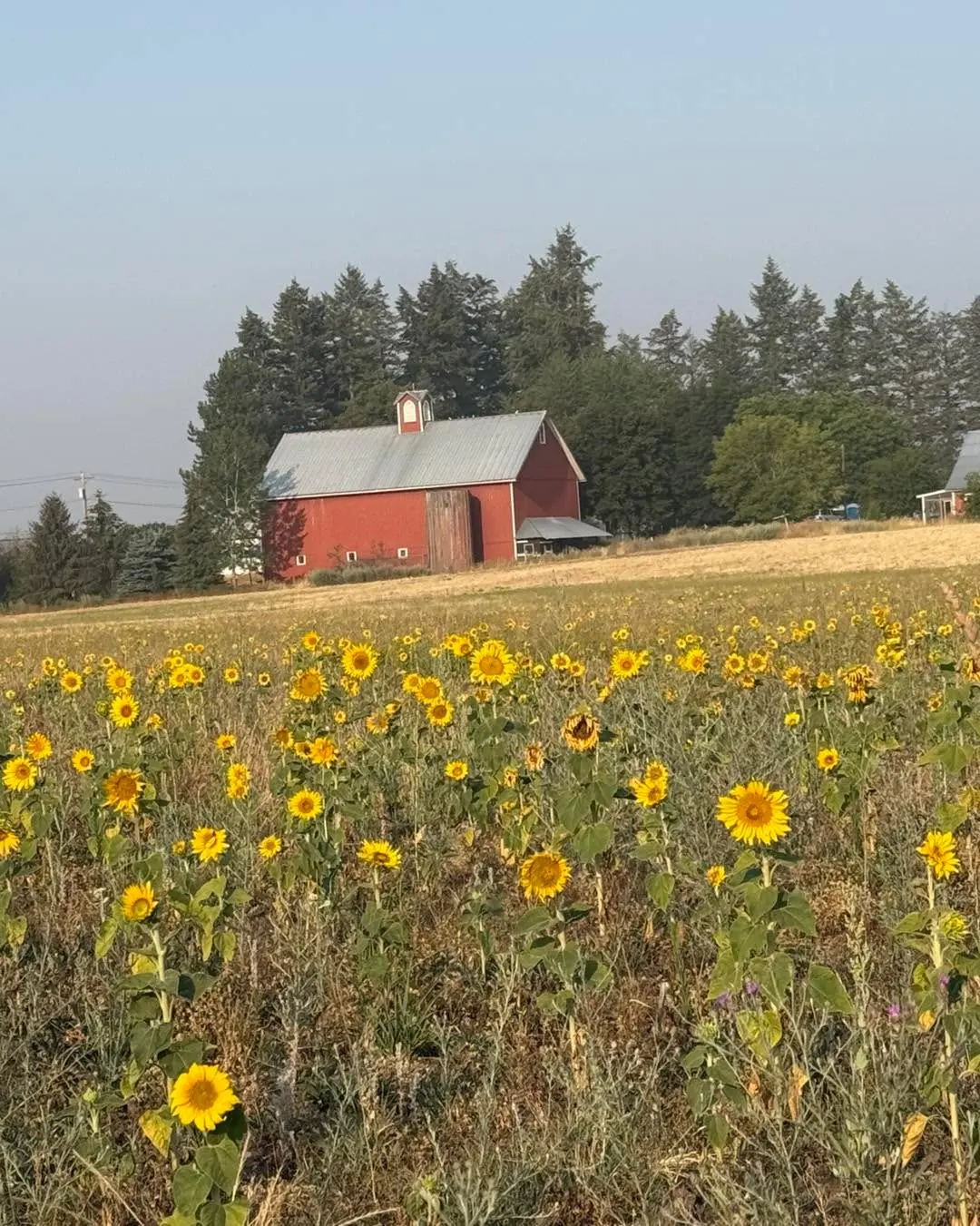
Berry Blossom Farms begins at a checkout stand inside the Atlas Road entrance, 14872 North Atlas Road, in the Kootenai County fields outside Rathdrum. Buckets, bags, and flats are set out there. The farm asks pickers to line each bucket with a bag, walk out to a flagged row, and take only berries that have fully ripened. Back at the stand, the picker sets the bucket on a price-calculating scale, presses the button for the fruit, writes the weight in a logbook, and pays in cash or by Venmo, rounding to the nearest fifty cents. The stand is self-serve.
The farm grows mainly blueberries, strawberries, and pumpkins, with smaller rows of raspberries, blackberries, grapes, apples, corn, vegetables, walnuts, and hazelnuts. Its posted calendar runs from strawberries in early June to nuts and apples in October. The berries are not sprayed. They are fertilized, which is why, by the farm’s own account, it does not call itself organic. The fields close on some days so the fruit can ripen, and the farm asks visitors to check before coming.
Twelve blueberries and nine strawberries
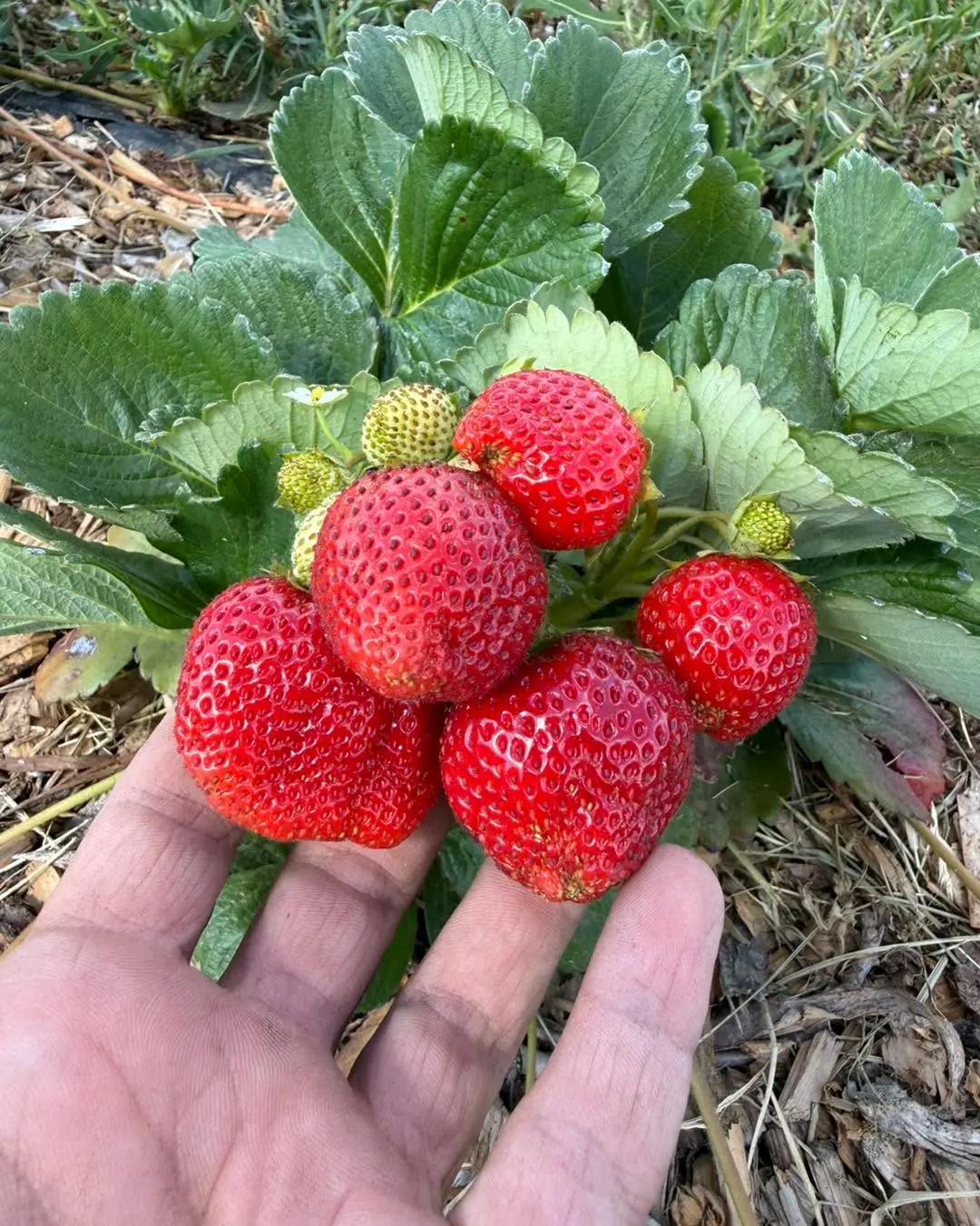
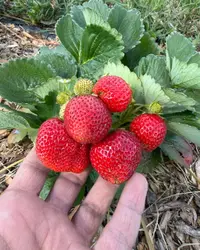
The blueberry rows hold twelve varieties: Blue Gold, Bluecrop, Duke, Chandler, Calypso, Huron, Elliot, Top Shelf, and Valor, plus a few plants each of Patriot, Jersey, and Northland. “Did you know, all varieties taste different?!” the farm’s produce page asks. The strawberry field has nine varieties, among them Galleta, Annapolis, Honeoye, Allstar, Keepsake, Jewel, Albion, and Seascape. The June-bearers give large berries for a short run. The everbearers produce until October, weather permitting. The farm advises washing strawberries only as they are eaten, because unsprayed fruit can change texture if washed and left to sit.
The posted rules are short: respect field closures, don’t yank berries or step on plants, and drive slowly, because “there are mini pickers out and about,” and slow driving keeps the dust down. Parents are asked to help their children be gentle with the plants.
The 2026 season by Facebook post
Through the 2026 season the farm ran its fields from its Facebook page. In mid-July Duke, Bluecrop, and Top Shelf were ripe. The fields were open all daylight hours, and the owner recommended “picking early and picking late to avoid the heat.” Blueberries cost $4.50 a pound, tax included. Each post carried a map of color-coded sections: purple for Top Shelf, green for Valor, red for Bluecrop, blue for Huron, orange for Chandler. Pickers were told to park near the blueberry checkout stand, parallel if possible, and that “in general, the further you get away from the checkout stand the better!” At the end of July the owner reported, “I can pick over 40 lbs an hour in valor right now.” Some posts sent pickers to “the old berry and nut farm side,” which opened on set days. White ropes marked the rows there that were closed.
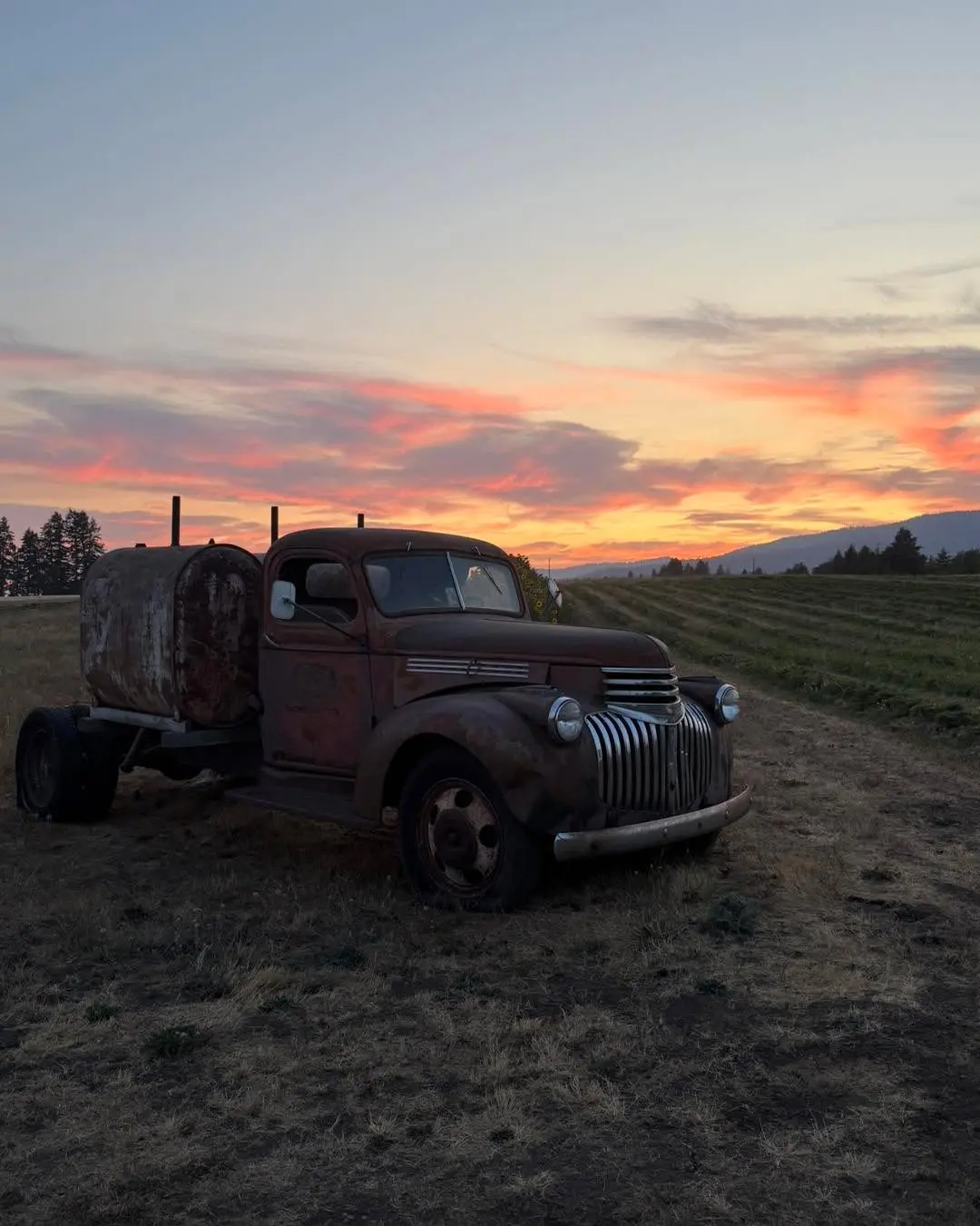
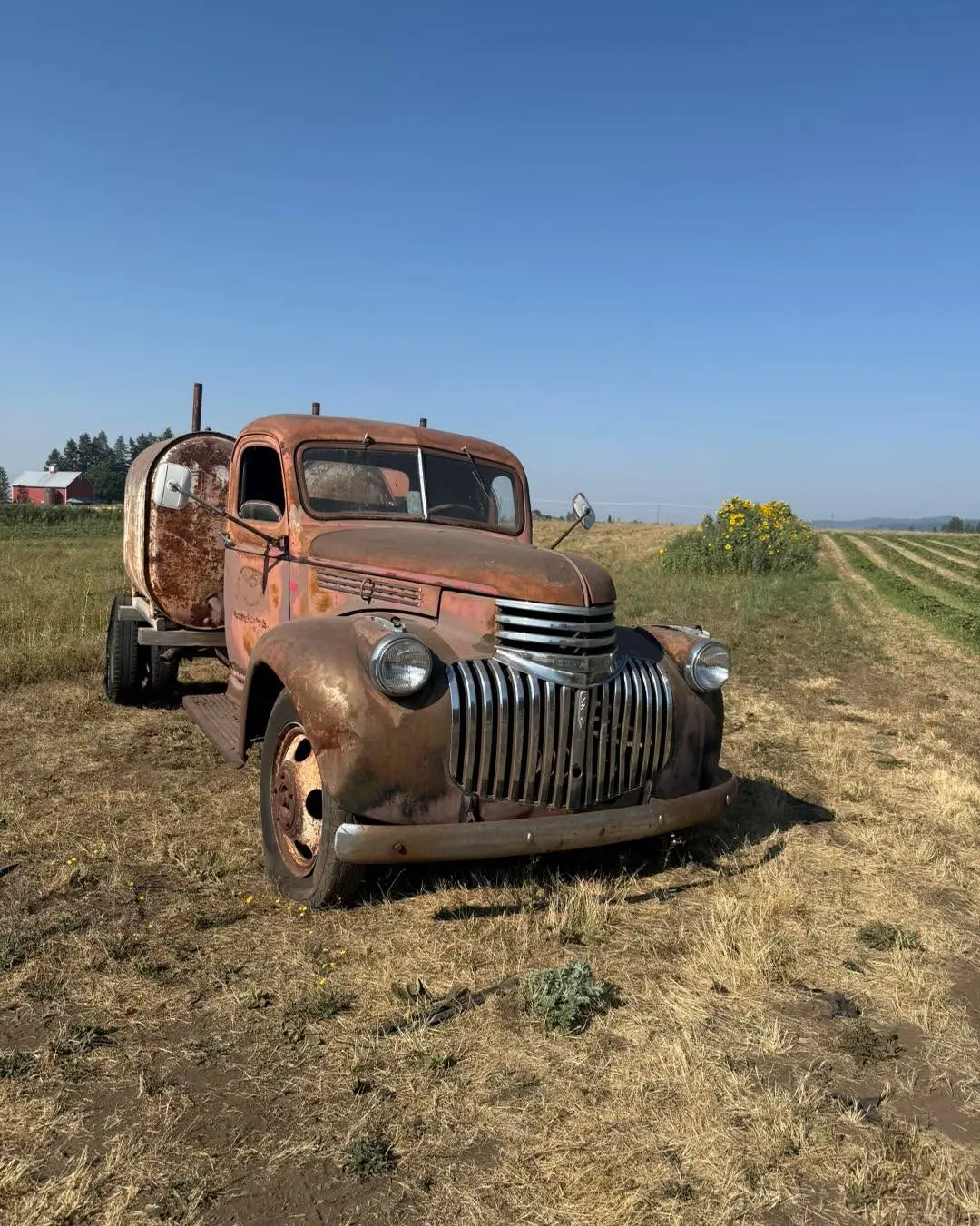
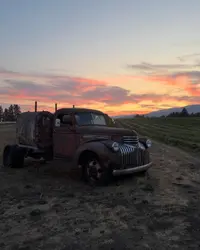
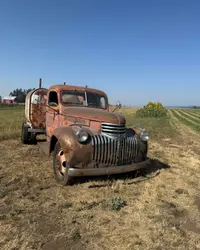
Blackberries opened on August 10 at $6 a pound. The scale had no button for them, so pickers did their own arithmetic. The farm also explained how to judge ripeness: a blackberry is ripe “only if they come off with a light pull.” The same post asked people to drive slowly because “the dust is relentless this year.” On August 13 the blueberry price dropped to $3.50 a pound for the rest of the season. By then a cut-flower patch was selling bouquets, $35 for extra-large and $20 for medium. On August 20 the farm wrote that it was “getting down to our last few honey holes” and told newcomers to wait for another time: “I’m not looking to get new faces out here right now.” The same post announced a small truck parked in the field for visitors “to take pictures with.” By August 28 the blueberry picking was “all but done.”
In mid-September came the apples, Honeycrisp and Gala. The apple block had been sprayed only with organic pest repellents that year, and many apples had worms. The farm sorted the crop into worm-free fruit at $2 a pound and fruit with “usually just one worm hole” at $1, adding that “90% of the wormy apples are still excellent quality.” On October 3 the farm reported that a Monday freeze had hit the strawberries hard. The same post opened the pumpkins, self-serve, with payment by donation: “Pay what you feel is fair.” The large jack-o’-lanterns had not turned out, so most of the 2026 pumpkins were small, in orange, yellow, and white.
Joe Culbreth’s orchard
The “old berry and nut farm side” in those posts belonged to Joe Culbreth. He retired from a tech job in 2007, according to the Coeur d’Alene Press, and wanted to plant and grow things. The sources give different starting dates for his farm. The Press wrote in 2016 that nine years had passed since he bought the property. Berry Blossom Farms says he started the Berry and Nut Farm in 2010. A 2024 Press caption says it had operated since 2008.
Culbreth had no farming experience, so he went to seminars and read every book he could find. “It is rewarding and very educational,” he told the Press in 2016. “I have killed more trees than you can imagine.” The paper described his 15 acres as arcing rows of flowers, berries, and grapes, with apples, nuts, cherries, and pears among the fruit trees. By his own account he “hasn’t made a nickel” from it. In 2024 he was still starting his days at 4:30 a.m. His hazelnuts were husked and laid on drying racks for 10 days, and he was showing visitors his bronze beauty pears. What he liked best was the children. “I see a lot of little happy faces, and that does the old heart good,” he said. “It’s a real treat to see them sat next to a blueberry bush and fill their face, too.”
Twelve hundred huckleberries
The crop Culbreth cared most about was the huckleberry, a fruit most people pick wild in the forest. “I’ve been huckleberrying in Idaho since ‘79,” he said. About 2010 he bought more than 1,200 huckleberry plants from several sources. One was the University of Idaho’s Sandpoint Research and Extension Center, where Dan Barney was trying to domesticate the plant. Barney told him huckleberries like partial shade, so Culbreth planted blueberry bushes and dwarf apple trees on the west side of the huckleberry rows to provide it.
Year after year the bushes bore no fruit. “Next year was the year that if they didn’t produce, they were gone,” Culbreth said in July 2016. That summer, in their sixth season, they finally fruited. Most of the berries looked ripe but tasted green. One bush had good berries, and he marked it, planning to send cuttings to a nursery in Oregon to be cloned. In September 2016 he told the Spokesman-Review that he had enough “for a small pie. … Next year, I’m expecting many pies.” He wanted to have soil from a wild patch analyzed. Some friends told him to sprinkle bear droppings on the bushes.
Talking to NPR in 2017, he counted the wait differently: “On the seventh year I got my first berries.” He had planted for a time when foraging would be beyond him. “I figured in my old days I could just set [up] my wheelchair and roll down the row and pick huckleberries,” he said. The second producing year gave him enough for a “nice pie.” He still had not tasted what he called the true huckleberry flavor, which he said he could not describe but would know when he found it. Asked why the effort was worth it, he laughed. “I don’t know. But once you’ve eaten huckleberries in pancakes or cakes, you’re hooked.”
From walnuts to blueberries
Culbreth eventually sold 10 acres and kept a portion next to them. The present owner had loved picking berries as a child and had set a goal of owning a U-pick farm. When a friend saw the farm for sale, the owner writes, “I jumped at the opportunity immediately!” Berry Blossom Farms began in 2020 and converted the land from mostly walnut trees to blueberries, strawberries, and other fruit trees. Friends, family, and neighbors helped plant 3,400 more blueberry bushes.
In 2021 the farm planted 40,000 strawberry plants by hand, 30,000 June-bearing and 10,000 everbearing. The work took 10 days straight. The farm’s method for weeding is two people riding the back of a tractor as it creeps down each row, pulling weeds as fast as they can. Early in 2025 the farm added 1,000 more young blueberry bushes, which it calls “baby blues,” and hand-planted 50,000 more strawberry plants. The website describes mowing 15 acres every couple of days, repairing irrigation, and weeding constantly. The farm is number seven in the Panhandle Farm Corridor’s 2026–27 guide to North Idaho farm stands. “We are still in the growth stage,” the farm writes, “as we hope to always be in!”
Notable Events
- 2008The Berry and Nut Farm is reported to have been in operation since 2008. cdapress.com
- 2010In 2010, Joe Culbreth started the Berry and Nut Farm. berryblossomfarms.com
- 2020Since starting Berry Blossom Farms in 2020, with the help of amazing friends, family and members of the community, we have added an additional 3400 blueberry plants. berryblossomfarms.com
- 2025So in early 2025, we decided to plant another 1,000 baby blues. We've also extended and added strawberry fields, in which we hand planted 50,000 strawberry plants with several varieties. berryblossomfarms.com
- Culbreth bought more than 1,200 huckleberry plants for the predecessor farm. cdapress.com
- In their sixth season on the property, the huckleberries were growing fruit. cdapress.com
- Culbreth picked his first berries that summer, six years after planting the bushes. spokesman.com
People
- Joe Culbreth, Relied on Barney's expertise to start a huckleberry crop at his Berry & Nut Farm.
- Dan Barney, University of Idaho huckleberry researcher whose expertise helped Culbreth start his crop.