.jpg)
Bar Gulch Cabin
Townsend, Broadwater County, Montana. Cabin; All year.
Details

- Where
- 415 S. FRONT STREET, Townsend, MT 59644. Directions
- Getting there
- From Helena take Canyon Ferry Road over the dam past Kim's Marina; continue east to a left turn onto Magpie Road, go 3.9 miles, turn left on Bar Gulch Road and continue about 1/4 mile; the cabin is on the left.
- Fees
- $50 per night.
- Access
- Potable water is not available at this site.
- Walk-in or reserve
- Entry to the cabin is by combination lock, code provided in reservation email confirmation.
- Phone
- 406-266-3425
- Website
- fs.usda.gov
- Managed by
- Helena-Lewis and Clark National Forest.
- Established
- The cabin was originally constructed in the 1930s on Forest Service lands to be used for mining purposes.
- Coordinates
- 46.69777778, -111.6252778.
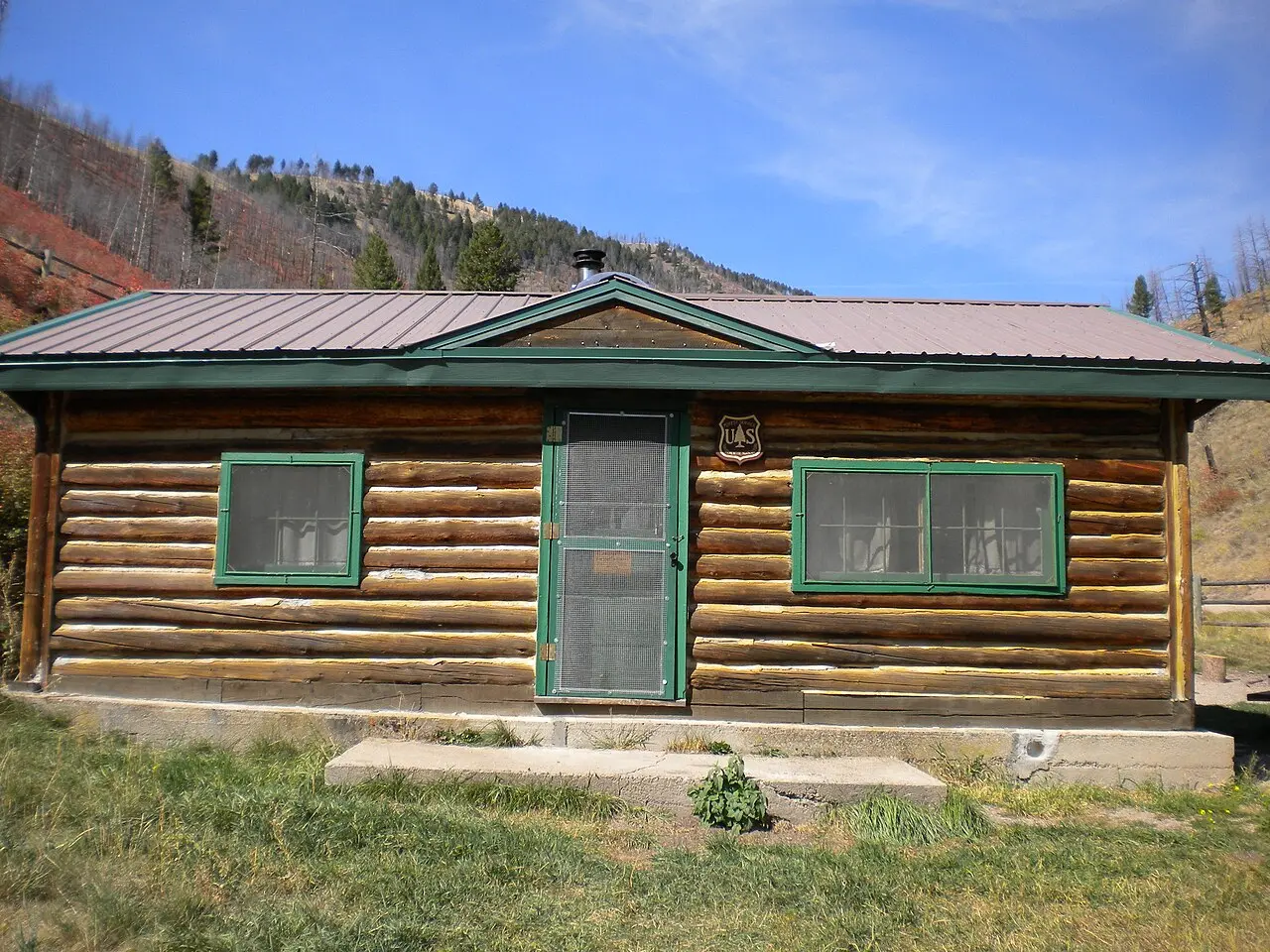
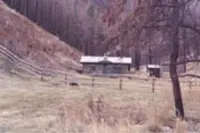
The road to Bar Gulch Cabin crosses Canyon Ferry Dam out of Helena, passes Kim’s Marina, and runs east to the Magpie Road, Forest Road #425. Three point nine miles up Magpie a left turn puts the car on Bar Gulch Road, and about a quarter mile on, the cabin stands to the left in a grassy, open clearing ringed by mixed-conifer forest. It is 24 miles from Helena and 30 from Townsend, in the Big Belt Mountain Range of the Helena-Lewis and Clark National Forest. The Forest Service asks that visitors respect the private lands near the cabin site.
One room, six beds, no water
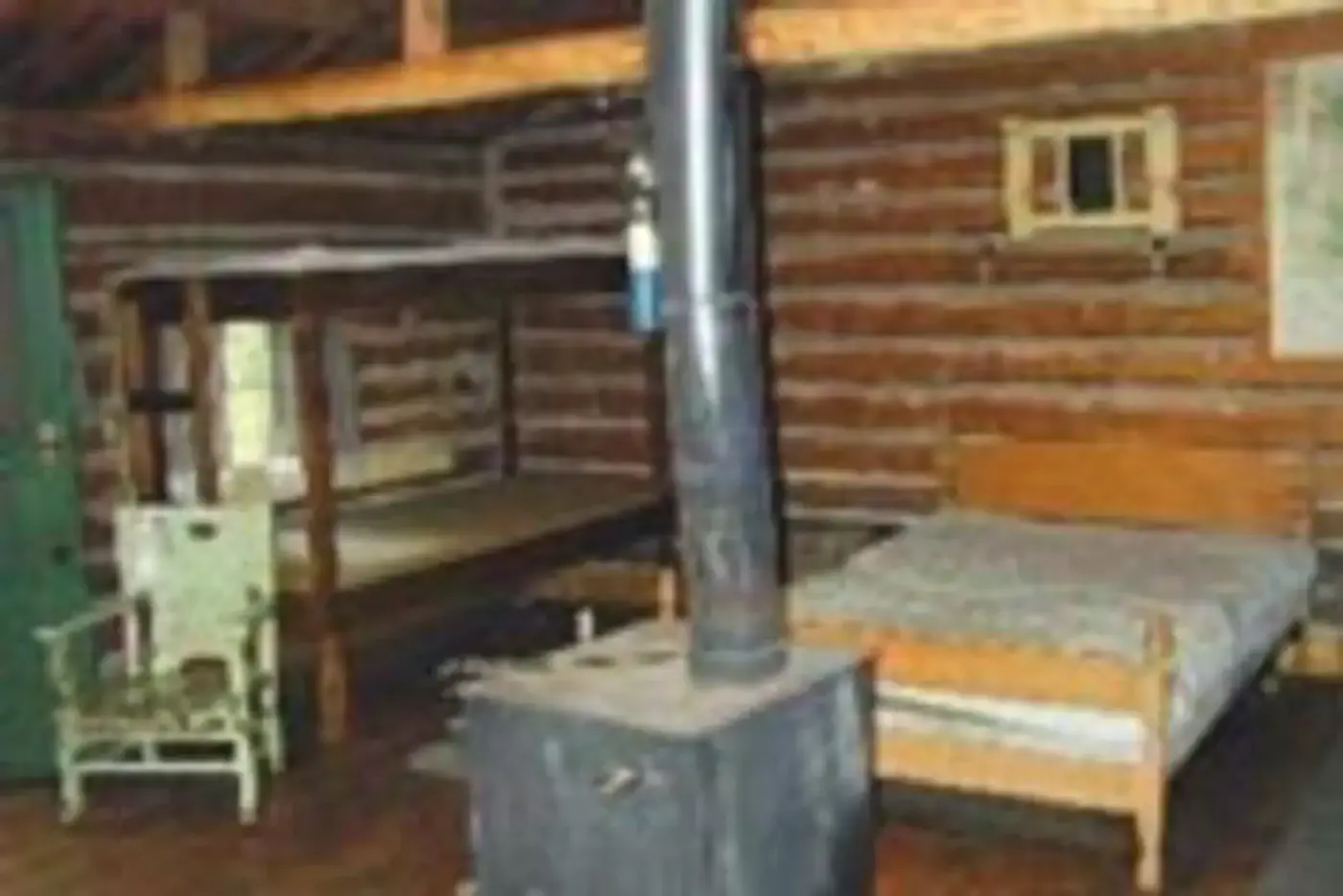
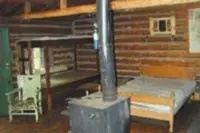
The door opens by combination lock, the code sent with the reservation. Inside is a single small room under a skylight, with two bunk beds and a full-sized bed, mattresses on all three, room for six. Heat comes from a wood stove. Cooking can be done on an antique cook stove or on a propane stove, and propane lanterns supply the light. The kitchen has a table and chairs and some cookware and utensils, though Recreation.gov notes that cookware, utensils, firewood and lanterns “cannot be guaranteed.”
There is no electricity, running water or indoor plumbing. The Forest Service page lists a hand pump among the cabin’s fittings and also states that potable water is not available, so guests haul in their own for drinking, cooking and washing. They bring one or two small propane cylinders for the lanterns and stove, along with sleeping bags, linens, towels, dish soap, matches, toilet paper and garbage bags. Everything brought in goes back out, and the cabin is swept and locked on departure.
Outside are a picnic table, a campfire ring and a toilet, which the Forest Service calls a vault toilet and Recreation.gov calls an accessible pit toilet. An axe and a snow shovel are kept at the cabin. Firewood may be stocked but is not promised, and none is provided from June 1 to August 31.
The cabin is open all year at $50 a night, and the Forest Service does not plow the road. The agency’s two listings differ on winter driving. The Forest Service page says access is good but “usually requires a 4-wheel drive vehicle in the winter.” Recreation.gov says access is good and “does not usually require a 4-wheel drive vehicle.”
Ridges, gulches, and Canyon Ferry Lake
Trails leave from the back door. The Belt Divide Trail and the Bar Gulch Trail are named as local favorites. Bar Gulch Trail is an old road up a timbered gulch, used mainly by hunters. The Ridge Trail follows the crest of the Big Belts, with views across the surrounding ranges and places to camp overnight. The country between runs from river banks to subalpine terrain: valley bottoms, dense forest, meadows and barren ridges, cut by streams.
Elk, bighorn sheep, mule and white-tailed deer, black bear and moose are commonly seen, with a variety of birds. Badger, wolverine, mountain lion and lynx also keep habitat here, though they are seldom sighted.
Canyon Ferry Lake lies about five miles south. Boats go out after rainbow trout, perch, ling and walleye. The Recreation.gov listing calls the lake one of the best places in the country for viewing large concentrations of bald eagles, and a wildlife management area at the end of the reservoir holds a colony of terns and pelicans. Marinas, restaurants, convenience stores and watering holes lie within driving distance.
A mining cabin put to other uses
The cabin went up in the 1930s on Forest Service land, built for mining. It was used for recreation instead, under a special use permit that passed through several owners. The last of them donated it to the Forest Service in 1988. A Forest Service photograph dated 18 September 2009 shows the cabin in its clearing, and the agency has rented it to the public under its own name since the donation.
Notable Events
- 1930sThe cabin was originally constructed on Forest Service lands to be used for mining purposes. recreation.gov
- 1988The cabin was used for recreation under a special use permit transferred to several owners before it was donated to the Forest Service in 1988. recreation.gov