Aspen Guard Station
Mancos, Montezuma County, Colorado. Forest Service cabin; May - November (weather permitting).
Details

- Where
- Mancos, Montezuma County, CO. No street address stated. Directions
- Getting there
- From Mancos: The renovated guard station is located 11.5 miles north of Mancos on Forest Road #561, a chip-seal paved road for 10 miles and then a well-graveled forest road accessible by two-wheel-drive vehicles. Travelers should watch for livestock and wildlife and keep speeds under 30 miles per hour.
- Fees
- Overnight Use: $100 per night (2 nights minimum 4+ night maximum).
- Access
- Potable water is not available at this site; bring your drinking/cooking water.
- Walk-in or reserve
- Reservation via Recreation.gov.
- Phone
- (970) 882-7296
- Website
- fs.usda.gov
- Managed by
- San Juan National Forest (Dolores Ranger District); operated by Jersey Jim Foundation.
- Established
- Built between 1938 and 1941 by the Civilian Conservation Corps (CCC).
- Coordinates
- 37.483078, -108.201622.
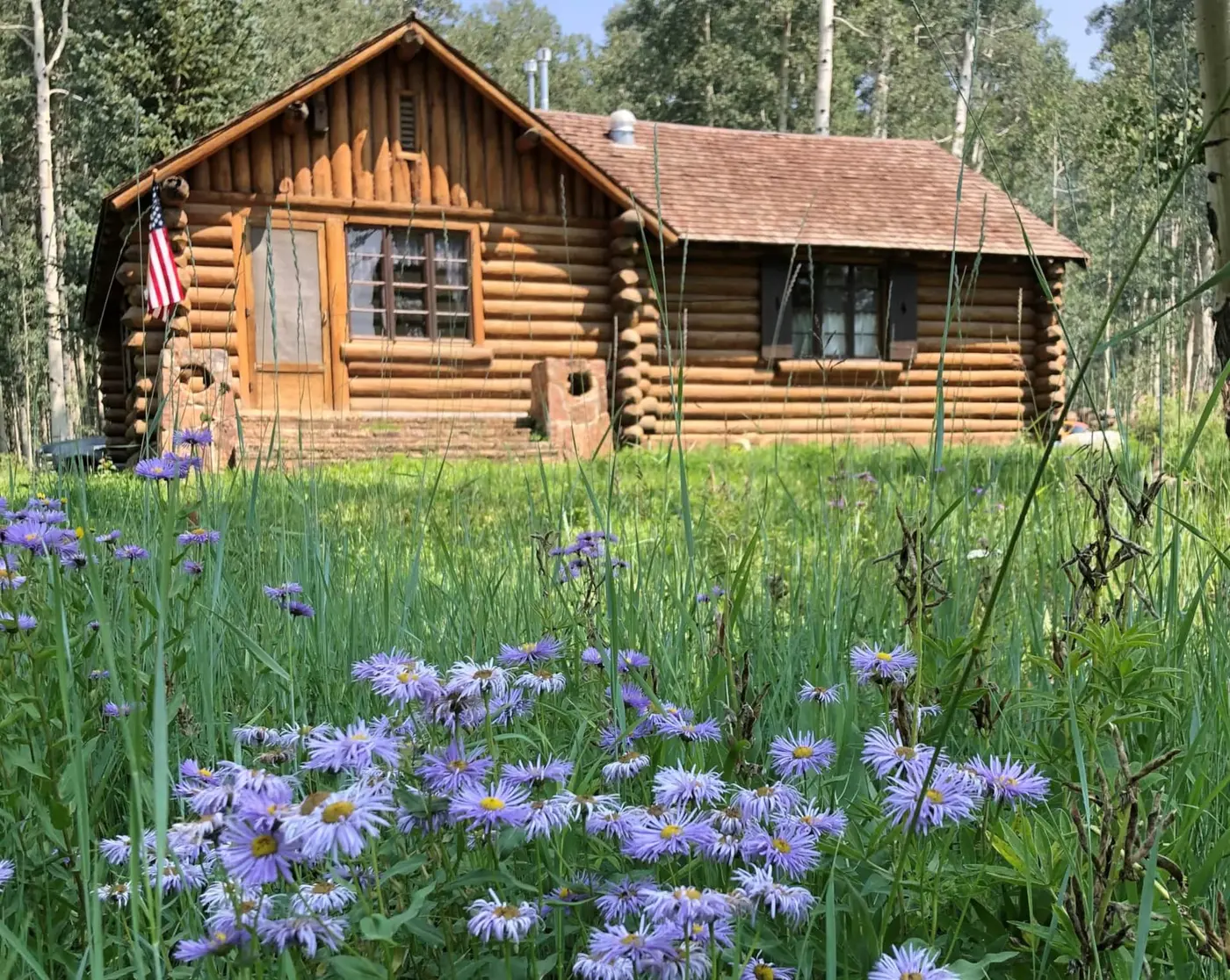
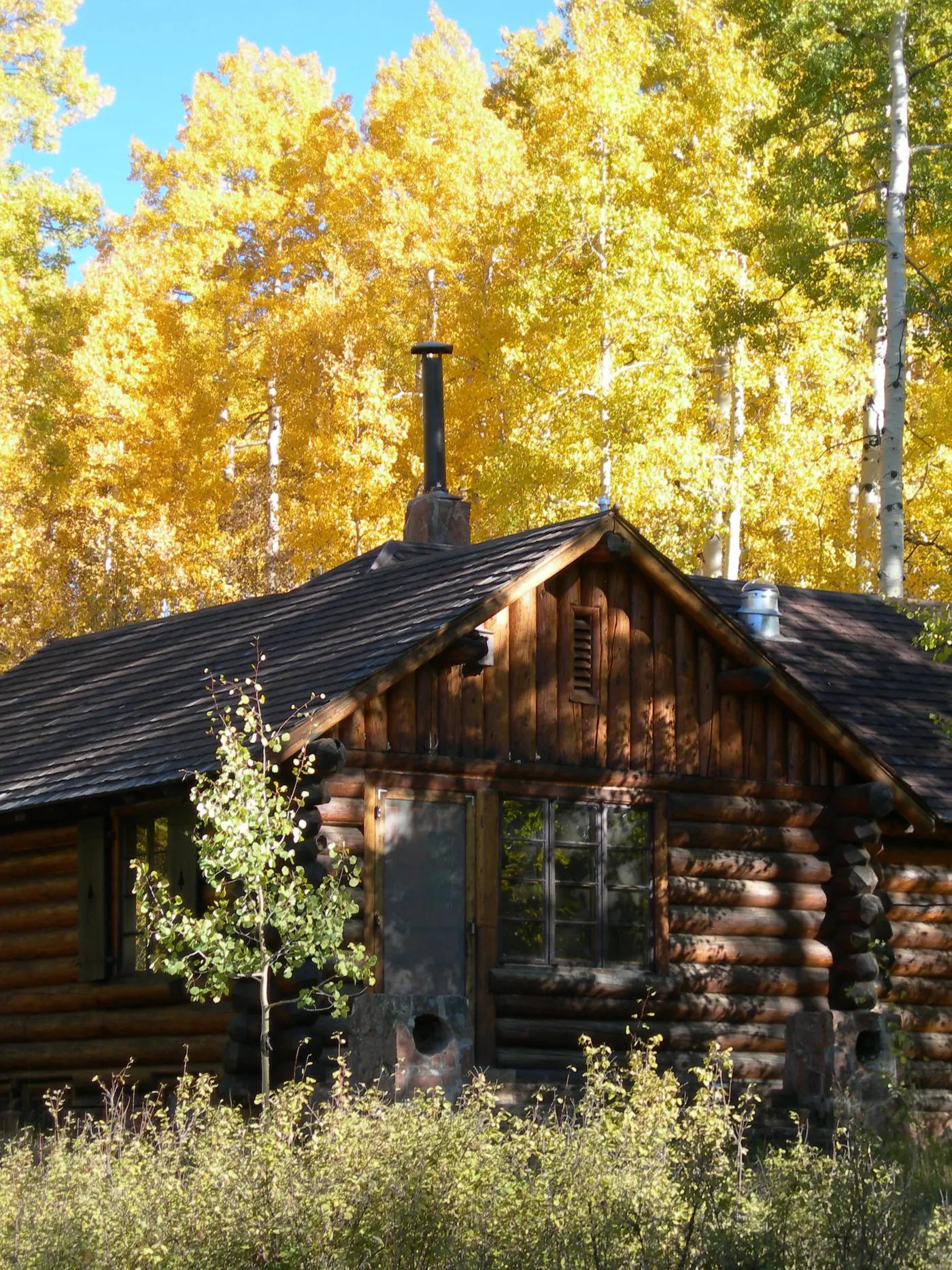
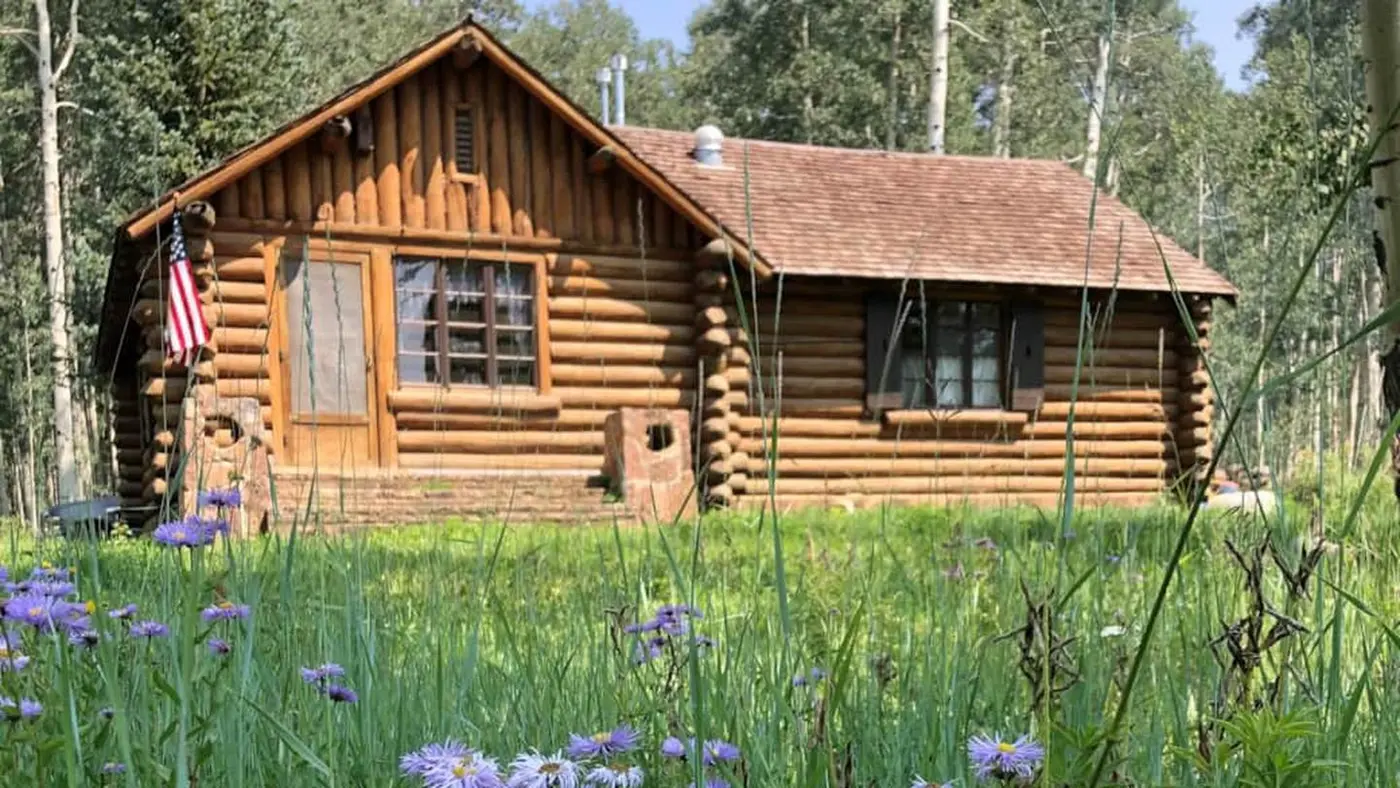
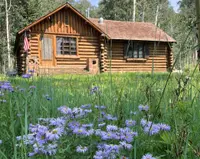
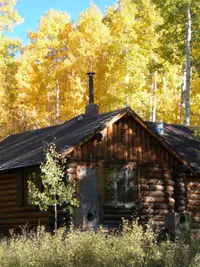
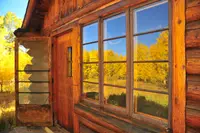
The gate comes first. Eleven and a half miles north of Mancos on Forest Road 561, past Transfer Campground and a mile beyond a fork where the road bears right, a fence encloses a grove of aspen and a log cabin with a garage built onto it. The first ten miles from town are chip-seal. The rest is graveled forest road that a two-wheel-drive car can manage, and the Forest Service asks drivers to keep under 30 miles per hour for the livestock and wildlife on it. The Durango Herald put the cabin at 9,200 feet in the Mancos Valley. The Four Corners Free Press placed it in a meadow on the road to the Sharkstooth Trail, surrounded by what the paper called the largest aspen forest in Colorado.
The key does not wait at the cabin. Guests pick it up at the P&D Grocery on the Frontage Road in Mancos, and the store closes at eight. At the cabin there are two bedrooms, each with a full bed, for four guests. The kitchen is stocked with pots, pans, baking dishes, plates and silverware, and the bathroom has a flushing toilet and a working shower. A furnace and heater warm the rooms. Andrew Gulliford, a history professor at Fort Lewis College who writes for the Herald, reports that heat, light and refrigeration run on propane, that a wood stove keeps the kitchen warm, and that the firewood is stacked dry outside in what he calls a “ranger manger.” Beyond the door are a picnic table, a fire pit with a cooking grill, and a log bench. There is no drinking water on the place, so guests bring their own. No pets are allowed.
Gulliford has stayed here twice over, once as a historian-in-residence for the Forest Service and once as a paying guest with his wife. On their daily hikes they took a short walk on the Big Al Trail, which he describes as graded for wheelchairs, with views of the west side of the La Plata Mountains: Hesperus, Sharkstooth and Centennial peaks. About a mile from the cabin stands the Jersey Jim Fire Lookout Tower. The Forest Service lists hiking, mountain biking and off-highway vehicle riding on the roads around. Its page gives the season as late May through October, weather permitting. The schedule printed in April for the 2026 season set an anticipated opening of June 6 and a closing of October 31.
A district in a day’s ride
The forest around the cabin began with a petition. In 1903 Louis Paquin, a rancher near Mancos, started one asking the Bureau of Forestry for a reserve to protect farms and ranches from an expected water shortage. More than 760,000 acres were withdrawn that summer, and two years later the land became the Montezuma National Forest. The Forest Service dates Theodore Roosevelt’s proclamation to June 15, 1905. The Montezuma kept its headquarters in Mancos until 1940, when it moved to Cortez.
Rangers went out to remote stations, and this was one of them. It was known then as the Aspen Springs Guard Station, or the Aspen Springs Ranger Station. The Forest Service describes the work this way. The Montezuma was divided into five districts, each about 15 miles in radius, so that a ranger could cover his in a day’s ride. To be hired he passed an exam in the rifle, pistol and axe, in stock handling, and in tying a diamond hitch. He was issued a bucket, a rake, an axe, a map and a badge, and was paid $900 to $1,500 a year to look after several thousand acres alone. He bought his own horse, sidearm and clothing. He rode into the high country to find sheep camps and check fire boxes. Most of his time went to grazing: he drew allotment boundaries, kept the peace between sheep and cattle outfits, cleared stock driveways, and helped ranchers whose sheep had foot rot or whose cattle had been poisoned by larkspur.
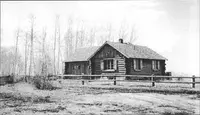
The first buildings at the station went up in 1921: a house, a barn that served as a garage, a tool shed and an outhouse.
Scribed logs from the Aspen Side Camp
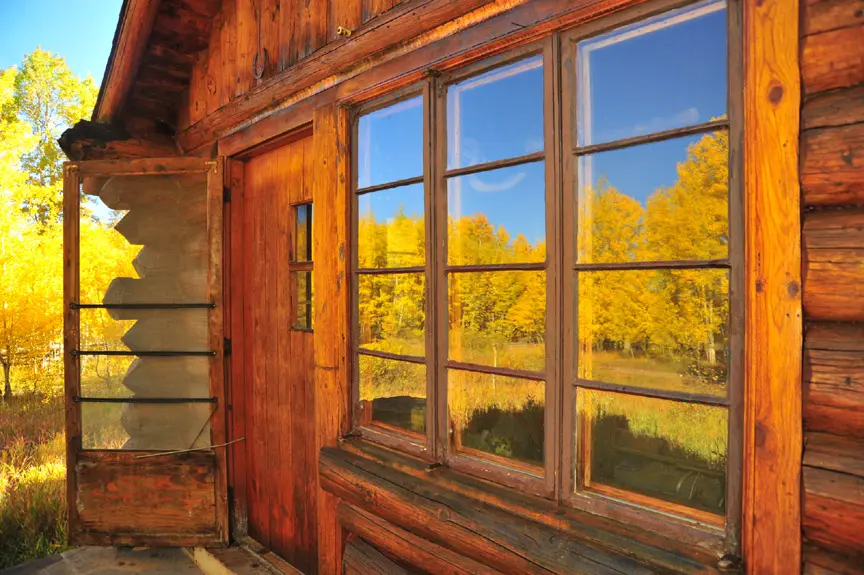
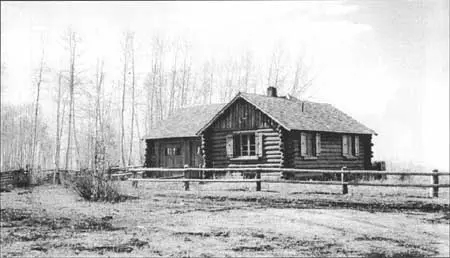
The present cabin was built by the Civilian Conservation Corps. The Herald describes it as part of the federal effort to make jobs after the Great Depression and of the Forest Service’s New Deal campaign of resource work. The sources disagree on the year. The Forest Service gives 1938 to 1941 on one page and 1938 to 1940 on another. A 2017 Herald article says 1938, for Forest Service administration under Superintendent G. Wayne Bauer. The Free Press, captioning a 2006 photograph, says 1933. A statewide assessment of historic Forest Service administrative properties in Colorado lists the dwelling as CCC work in the Rustic style, 1938 to 1940, and the barn as a 1920s bungalow. That study credits CCC camp F-53-C, the Aspen Side Camp, with the work, and says the logs were fabricated and then assembled on the site. The Free Press says the builders used the scribed-log method: custom-notched logs overlap at the corners, which does away with chinking between them.
According to the Herald, the cabin first held office space, a bedroom, storage and a garage, and a small kitchen and dining nook were added later. A Forest Service photograph of the station, looking southwest, was taken in October 1942. The assessment recorded the site as 5MT12554 and found it significant under National Register Criteria A and C. It judged the station less well preserved than some in Colorado and one of the best on the San Juan, and noted that the original fence and gate add to the integrity of the setting.
On May 1, 1947, the Montezuma began its consolidation with the San Juan National Forest. The Forest Service says rangers used the station for another 40 years and lived there until 1987. The Herald says that by the 1950s it was housing seasonal work crews. Ann Bond, a public-affairs specialist with the San Juan, told the Free Press that crews grew scarce: “It became harder to find seasonal crews willing to stay at such an isolated cabin, especially because there is no electricity, only kerosene lighting in the evenings, no television.” By the 1980s, she said, officials were considering tearing the station down.
Two weeks in the aspens
Bond kept the cabin in use with an artist-in-residency program. The sources give different dates for it. The Free Press says Bond created it in 1995 and that it ran until 2011. The Forest Service gives 1994 to 2011. One Herald article says it began in 1994 and ended in 2012, and another says it began in 1995 and was discontinued around 2009. By the Free Press count, 118 artists stayed in the cabin over 16 years. A jury of volunteer arts professionals chose them, and Bond managed the program. Each artist received two weeks in the cabin with no stipend and no travel money. In return they gave a piece of art inspired by the place and presented a workshop for the Montezuma County community. John Peters-Campbell, a professor of Western art history, was one of six jurors.
In those years there was no electricity. The Free Press reported kerosene lamps mounted on the walls and two sky tubes, and a studio room in the converted garage at the back. Ed Singer of Gray Mountain on the Navajo Nation held a residency in 2009 and has since shown large bodies of visual art in galleries and museums. Juantio Becenti of Farmington, New Mexico, composed string quartets that the paper called “elegies to the mountain,” which premiered in New York City. The poet and photographer Jan Duda Dixon, seven years after her stay, told the paper: “I can still remember the fragrance of fallen leaves and the pines outside the cabin door.” Renee Podunovich, a Salt Lake City poet, said she spent her stay “finishing the manuscript for my second book of poems and falling into a timeless rhythm with the natural world, wild horses, mountain arnica, trails leading through new and old-growth aspens, star-watching and drinking tea in the cabin when it rained.”
Derek Padilla, the Dolores District ranger, said the program was lost to budget cuts. It drew 100 to 200 applications a year, and someone had to review them, inspect the cabin and keep it safe. “The residency program was not essential for running the forest,” he said. Tom Rice, the district’s recreation manager, said interest had fallen off after Mesa Verde, Mancos State Park and Canyonlands started residencies of their own. The Herald gave a further reason: the cabin needed costly maintenance and major upgrades.
The foundation from the fire tower
The Herald reported that Recovery Act funding later paid for a safer groundwater well and other repairs. In 2016 Padilla told the Free Press the district would either “utilize the cabin-rental concessionaire or physically remove [the buildings].” Rice described the cabins in 2017 as “really neat buildings that are not getting used,” and said rental income would help keep them maintained. That year’s notice listed a water well, propane, a solar system and three bedrooms. Rice also spoke of a push to list the station on the National Register of Historic Places.
In the spring of 2018 the San Juan National Forest selected the Jersey Jim Foundation of Mancos to run the station as a short-term rental. The foundation had saved the nearby lookout tower from demolition in 1991 and still operates it. Gulliford credits the late Lloyd McNeill, a Forest Service employee from Mancos, with working to save both the tower and the guard station for public use and with helping to create the foundation, whose volunteers maintain both today. Rice had stated his aim in January 2017: “One of my goals is to get the rental program going so they don’t melt back into the forest.”
Notable Events
- 1921The first dwellings were constructed: a home, barn/garage, tool shed and an out house. fs.usda.gov
- 1938The present day cabin with an attached garage was built between 1938 and 1941 by the Civilian Conservation Corps (CCC). fs.usda.gov
- 1947The Montezuma National Forest began its consolidation with the San Juan National Forest; the Aspen Guard Station saw service by rangers for another 40 years. fs.usda.gov
- 1950sRangers had lived in the station when working in the field; by the 1950s it was being used for seasonal work crews. durangoherald.com
- 1980sWith seasonal crews hard to find for the isolated cabin, officials by the 1980s were considering tearing the station down. fourcornersfreepress.com
- 1987The Aspen Guard Station was built between 1938 and 1941 by the Civilian Conservation Corps (CCC) and housed Forest Rangers until 1987. fs.usda.gov
- 1994Beginning in 1994 the dwelling was used for an artist-in-residence program, which ended in 2012. durangoherald.com
- 1995The Forest Service discontinued the artist-in-residency program around 2009 because of maintenance costs and needed upgrades. durangoherald.com
- 2011The residency program at the Aspen Guard Station was lost in 2011 to budget cutbacks. fourcornersfreepress.com
- 2018In the Spring of 2018 , the Jersey Jim Foundation was selected by the San Juan National Forest to operate the Aspen Guard Station as short term vacation rentals. fs.usda.gov
- Soon after, the U.S. Forest Service received Recovery Act funding, which was able to cover the cost of installing a safer groundwater well, among other much-needed fixes. durangoherald.com
People
- Lloyd McNeill, Late USFS employee from Mancos who worked tirelessly to save the Jersey Jim Firetower and the Aspen Guard Station for public use.
- G. Wayne Bauer, Superintendent; the station was built for Forest Service administration under him.
- Rich Hildebrand, Member of the National Smokejumpers Association crew that led Glade Guard Station renovation efforts.
- Tom Rice, Recreation staff officer for the U.S. Forest Service's Dolores district; pushed the rental program.
- Ann Bond, Public-affairs specialist with the San Juan National Forest; created the artist-in-residency program (1995 to 2011).
Sources
- fs.usda.gov/r02/sanjuan/recreation/aspen-guard-station
- recreation.gov/camping/campgrounds/10388407
- flickr.com/photos/47951649@N00/4704289016
- fs.usda.gov/r02/sanjuan/recreation/discover-history
- durangoherald.com/articles/lifestyle/historic-cabins-on-track-for-public-use-in-san-juan-national-forest
- durangoherald.com/articles/columnists/u-s-forest-service-cabins-and-southwest-staycations
- npshistory.com/publications/usfs/colorado-nf/inventory7.htm