Alsea River Fish Hatchery
Alsea, Benton County, Oregon. State fish hatchery.
Details

- Where
- 29050 Fish Hatchery Road, Alsea, OR 29050. Directions
- When
- Dawn to dusk; 7 days a week.
- Season
- Winter is the best season to visit the hatchery.
- Getting there
- At river mile 48.5 on the North Fork Alsea River off Highway 34, 15 miles west of Philomath, Oregon.
- Access
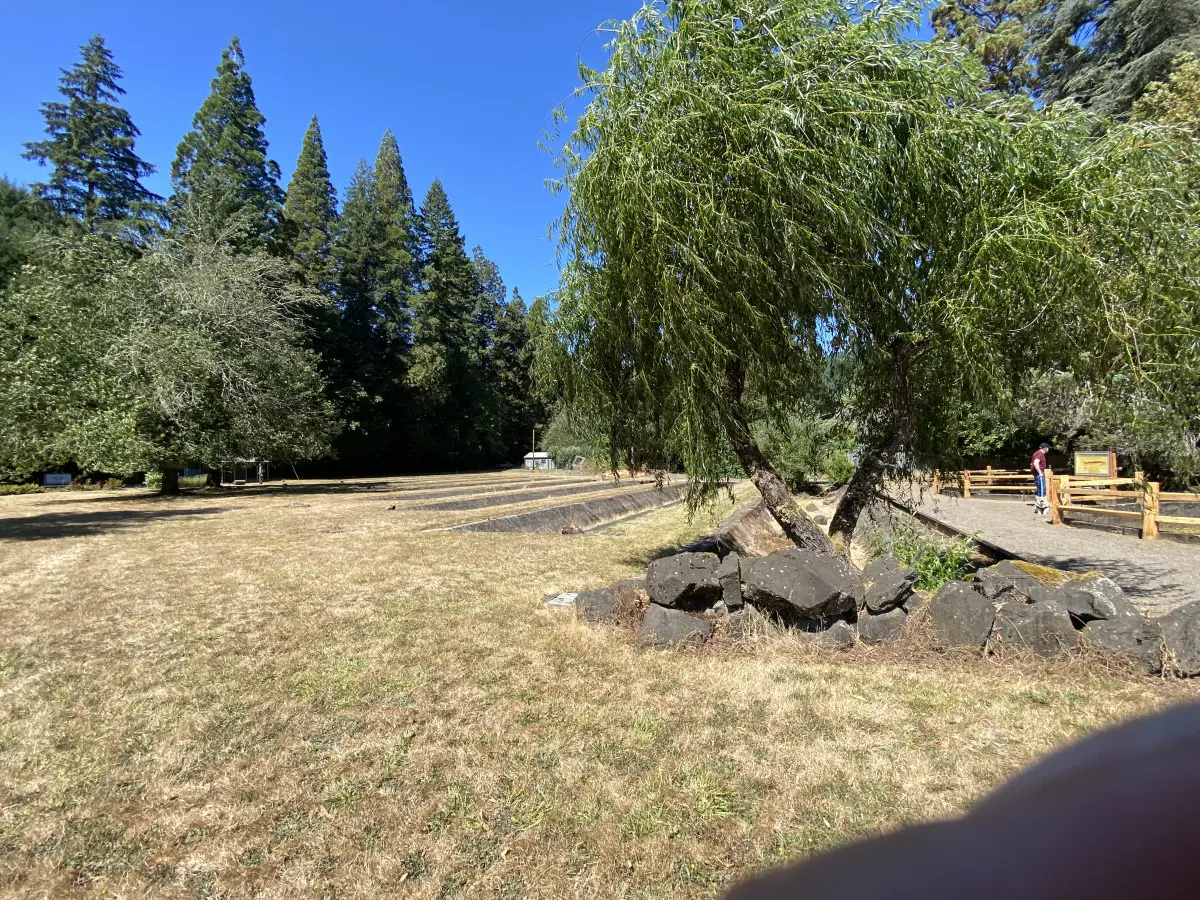
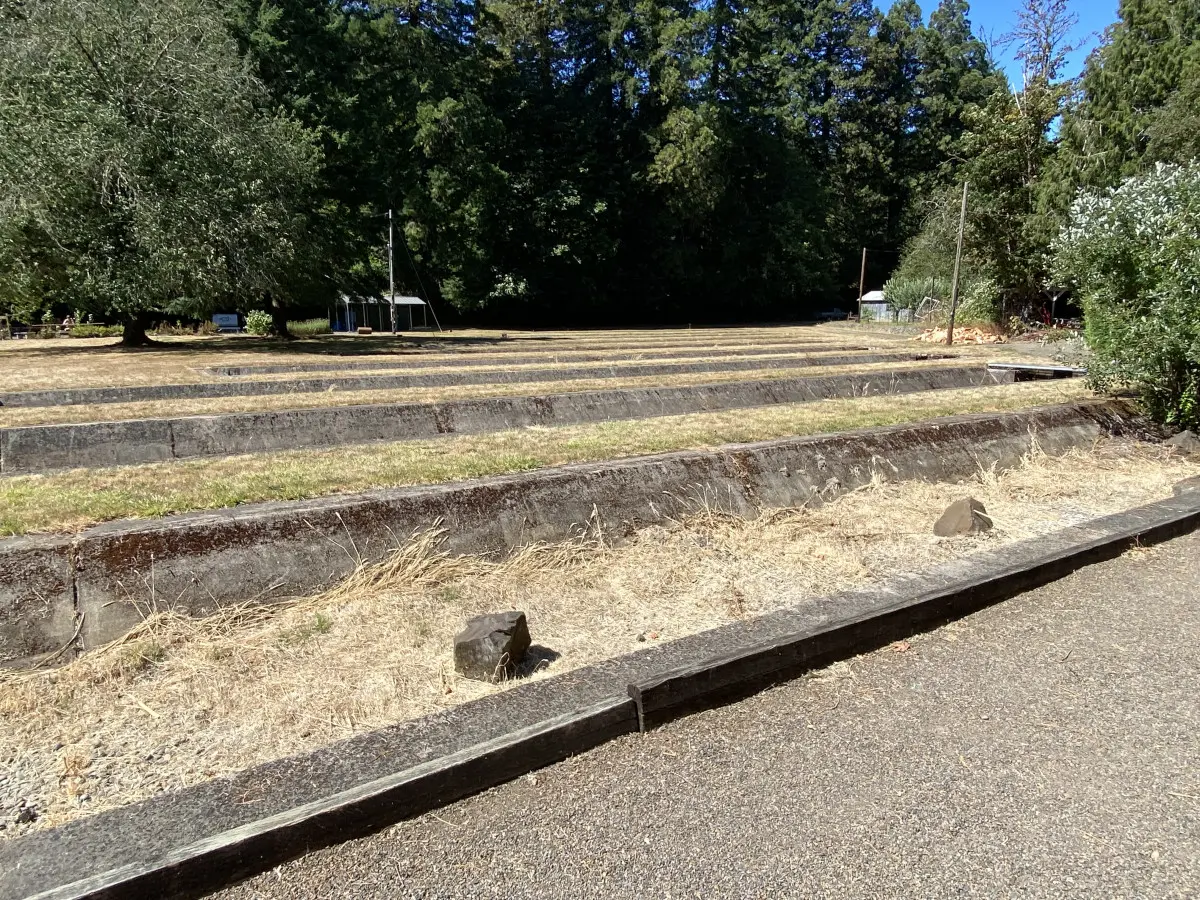
- The hatchery continues to operate, though the historic raceways are no longer utilized.
- Phone
- 541-487-7240
- Website
- myodfw.com
- Managed by
- Oregon Department of Fish & Wildlife.
- Established
- 1936.
- Coordinates
- 44.4228, -123.5658.
In late December or early January the first adult steelhead come up out of the North Fork of the Alsea River, climb the fish ladder, and drop into the trap at Alsea Hatchery. By March, according to the Corvallis visitors bureau, the trap is usually filled with adults held for spawning the next generation. Over the same months steelheaders flock to the river alongside, each hoping for a fish to bring home for dinner. The Oregon Department of Fish and Wildlife, which runs the place, gives December through March as the time to see adult winter steelhead and November through March as the time for spawning.
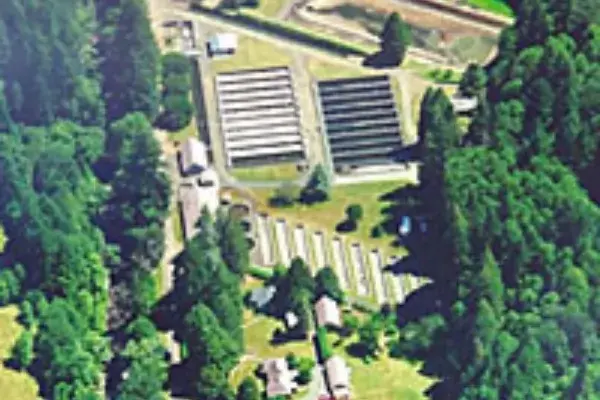
The hatchery stands at river mile 48.5 on the North Fork, 380 feet above sea level, off Highway 34 about 15 miles west of Philomath. A paved road leaves the highway at milepost 43 and runs three-tenths of a mile to the grounds. A Benton County survey of the 1980s placed the complex about three miles east of the town of Alsea, fronting northeast. Its water is drawn from the river 2,300 feet upstream.
The ponds and the sturgeon
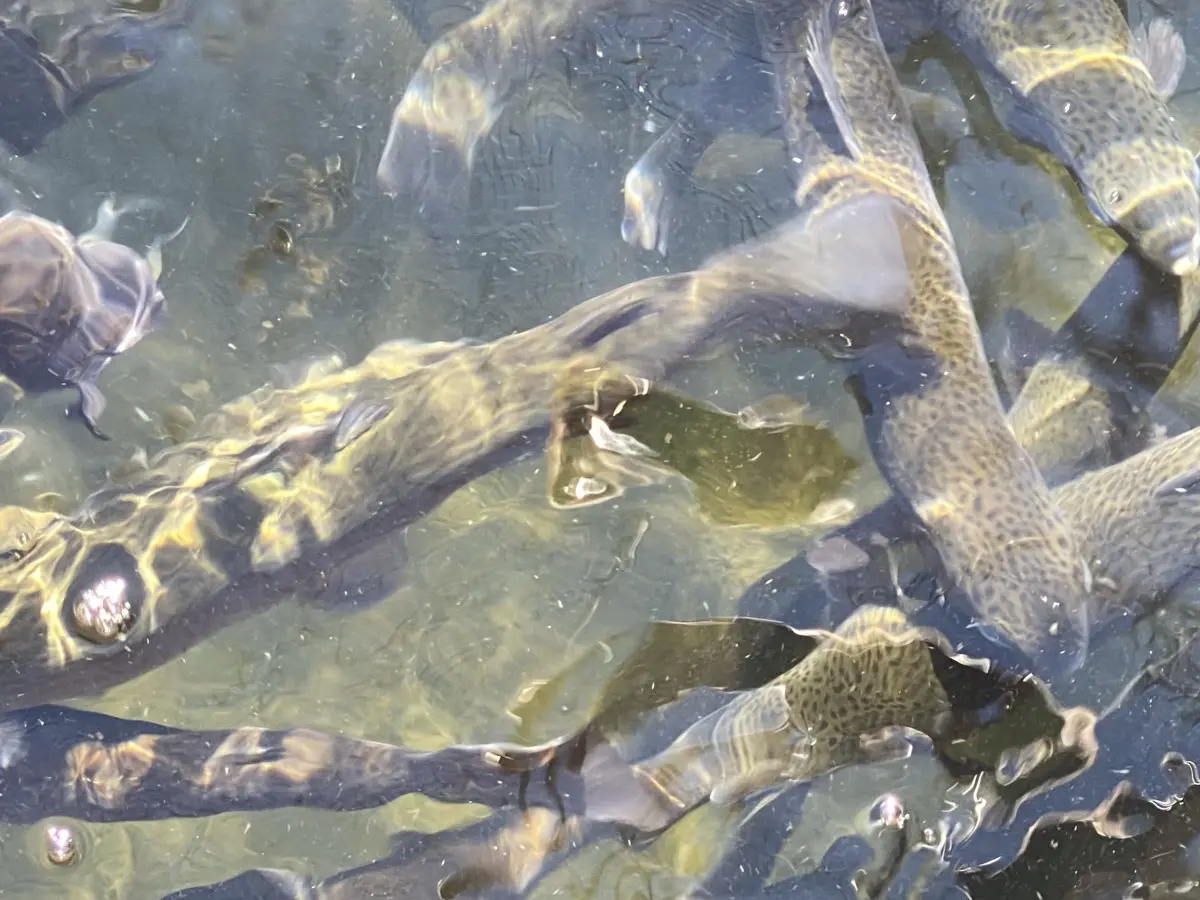
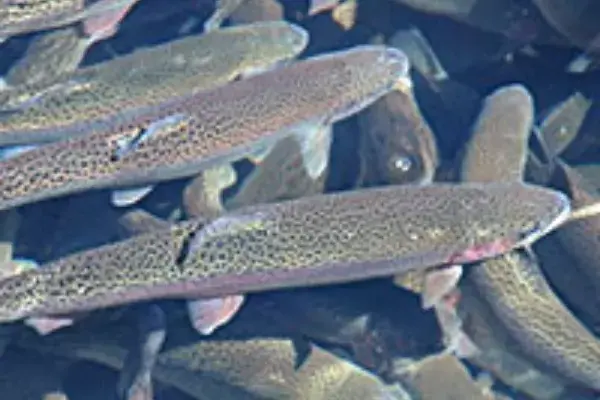
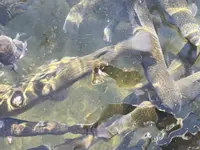
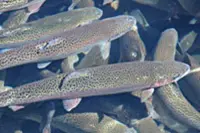
At the back of the facility, rearing ponds hold smolts and trout. Beside them a circular pond holds a white sturgeon. ODFW says adult white sturgeon and rainbow trout can be seen there in every season. The department also keeps a pond laid out as a stream scene and a trophy trout pond for public viewing, with an information kiosk, a picnic area, restrooms, and a camp host on site. Its guide lists birds of prey, shorebirds, and wading birds among the wildlife. Guided group tours are given by advance arrangement. The 2023 management plan staffs the hatchery with four full-time positions.
Smolts in April, trout for the lakes
The 2023 plan sets out the year’s work. Rainbow trout arrive in January as eyed eggs from Roaring River Hatchery, where a Cape Cod triploid broodstock is spawned in December. Alsea finishes the incubation and raises the fish to legal and trophy size for spring stocking of coastal lakes. The plan calls for 117,021 trout, 64,740 pounds of fish, for 22 waters in the Mid-Coast District, with smaller allotments for lakes in the Coast Range and Cascade units of the North Willamette District.
Steelhead come from three rivers. Wild Siletz River adults are taken by anglers in December or at the Siletz trap from January to May. They are trucked to Alsea and spawned from mid-March to mid-April, each family group kept separate. Their 50,000 smolts are acclimated at the Palmer Creek site and released into the Siletz in April, every fish with its adipose fin clipped. From the Siuslaw the hatchery raises eggs only, sending 175,000 eyed eggs on to Roaring River.
On its home river the hatchery is moving from its own hatchery stock to wild broodstock. Wild adults come from anglers, the hatchery traps, and the Fall Creek and Drift Creek traps. They are live-spawned and returned to the Alsea River. In April about 120,000 smolts are released volitionally on site, leaving the hatchery for the river on their own, and another 20,000 are released directly at Rivers Edge Park.
The river they enter is small and changeable. The Oregon Encyclopedia gives its depth as about 1 foot in late summer and 18 feet in flood. It times the steelhead run from December to March, closely tied to Pacific storms and rising water. The 2023 plan notes low flows at the hatchery in severe winter and summer conditions. That same year the state Department of Environmental Quality fined ODFW $16,980 for a water quality violation at the Alsea hatchery.
Relief crews on the North Fork
The river, and the hatchery after it, carry the name of the Alsi or Alseya villagers who lived around the estuary on the lower river. By the early 1930s, the county survey records, fish in the coast streams were declining because improved roads had let more fishermen into the area.
In 1934 the Civil Works Administration funded a new hatchery on the North Fork for the Oregon State Game Commission, to raise cutthroat trout and steelhead for the coast streams. Work went on for two years. The Works Progress Administration joined in, building residences for hatchery employees and landscaping the 21.77-acre grounds. On July 15, 1934, The Oregonian ran the headline “Federal Funds Permit Renaissance of Oregon’s Fish Hatcheries.” The Corvallis Gazette-Times reported $18,000 spent on building construction. Architect G. C. Webb designed the hatchery buildings.
The design drew notice before it was finished. On March 15, 1935, the Gazette-Times ran “Alsea Hatchery Being Studied.” The new hatchery held its brood stock in long, shallow raceways instead of the traditional pools. The county survey says the method let the Game Commission develop and maintain a cutthroat brood stock, which had not succeeded in ponds. The commission’s Biennial Report for 1935–36 recorded that “the Alsea Hatchery ... has been completed and is now in operation with a capacity of 5,000,000 fry.” The report added that “a considerable portion of the work of excavation of ponds and installation of pipe lines has been done with federal relief work at small cost to the state.” Sixteen state hatcheries operated that year. ODFW gives 1936 as the year of construction. The county survey dates the building to between 1934 and 1936.
Later decades left scattered records. Ten nitrate negatives of the hatchery survive in the E. E. Wilson collection at Oregon State University. The Roland Dimick papers there include a photograph of Glock Webb, hatchery superintendent, about 1953. The Gazette-Times centennial edition of March 17, 1959, carried “Alsea Trout Hatchery Feeds Coastal Streams.” The 2023 plan dates a second adult holding pond, twenty larger raceways, and an asphalt abatement pond to 1974, vertical incubators to 1984, and fiberglass troughs to 1994. In 1981 the same paper ran “Its Milking Time at the Alsea River Trout Hatchery.” By the mid-1980s the county survey counted it among the biggest producers of steelhead eggs in the state.
Sequoias, porches, and empty raceways
The survey judged that much of the planting dated to the 1930s and was probably part of the original design. It recorded sequoias interspersed with cedars of Lebanon along the north and south sides, with linden and cherry trees, low cedar hedges, rhododendrons, and hydrangeas. Historic photographs showed rows of conifers between the ponds. Those trees had been removed.
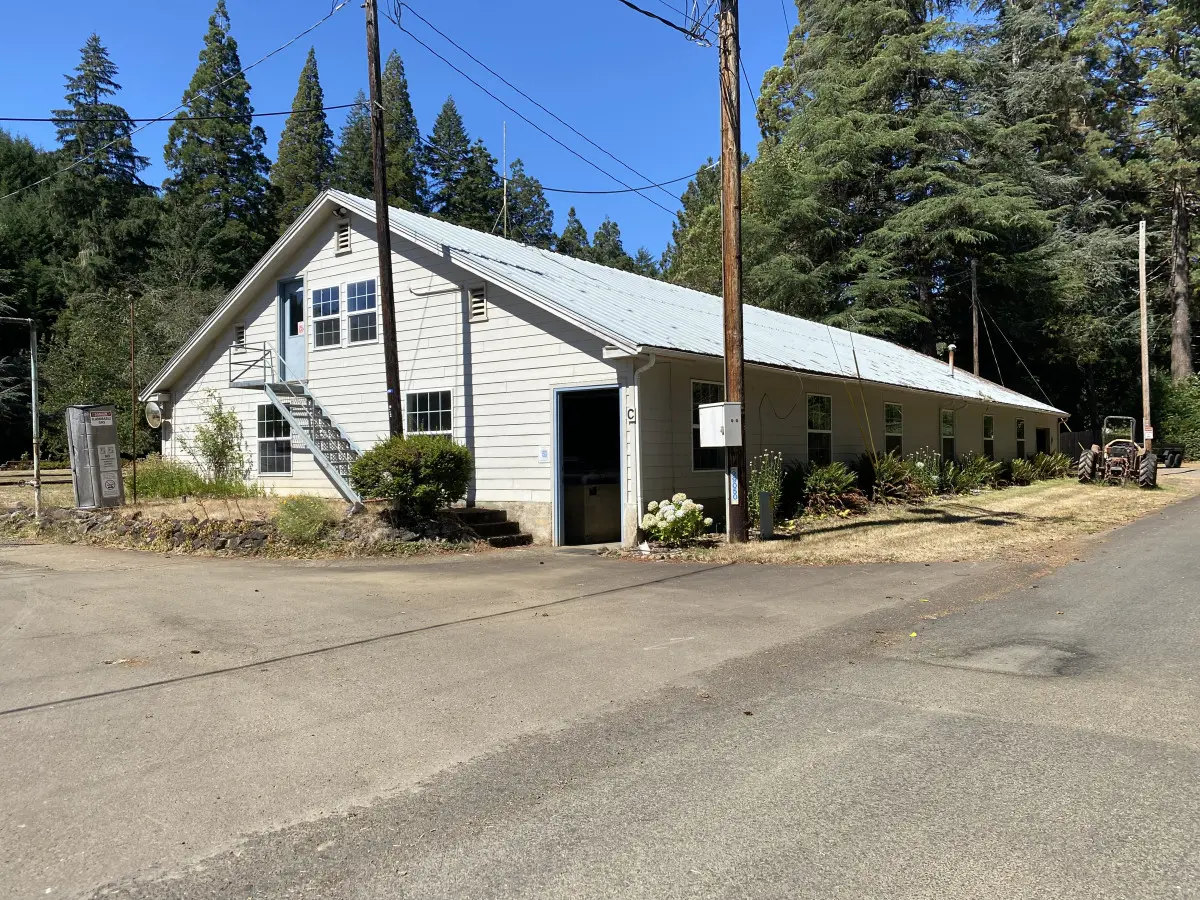
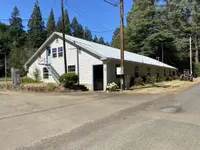
The same survey described the buildings. The main hatchery is a story and a half under a broad gable roof, sided in horizontal lap boards, its windows eight-over-two double-hung sash. The feed room sits on a high concrete foundation under a steep gable, with drop siding and six-over-six windows. For the workers there is a U-shaped, one-story duplex with two small colonial porches, shutters on the front windows, and a jerkinhead-roofed garage behind. A story-and-a-half colonial house has a one-bay entry porch.
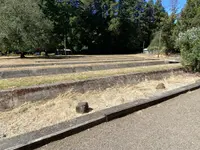
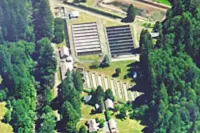
The 2023 plan lists twenty-five concrete deep troughs from 1938, twenty still used for production and five for egg and fry processing. It also lists ten concrete raceways from the same year, each 100 feet long and 9 feet wide. They are rated in poor condition and not used, for insufficient water.
Notable Events
- 1934Much of the 1934 construction work was supplied by the Civil Works Administration as part of the depression era Federal Work Projects. heritagedata.prd.state.or.us
- 1935The Biennial Report of the Oregon State Game Commission for 1935-36 noted that the Alsea Hatchery has been completed and is now in operation with a capacity of 5,000,000 fry. heritagedata.prd.state.or.us
- 1935Local newspapers noted the hatchery was studied for its innovative design: long shallow raceways instead of traditional pools for holding brood stock, with capacity expanded to a maximum of 5,000,000 fry. livingnewdeal.org
People
- Glock Webb, Alsea Fish Hatchery superintendent (circa 1953).
Sources
- apps.oregon.gov/oregon-newsroom/OR/DEQ/Posts/Post/deq-issues-14-penalties-in-april-for-environmental-violations-97375
- myodfw.com/alsea-hatchery-visitors-guide
- dfw.state.or.us/fish/HGMP/docs/2023/Alsea%20HPMP%202023.pdf
- visitcorvallis.com/account/alsea-fish-hatchery
- livingnewdeal.org/sites/alsea-fish-hatchery-alsea-or
- heritagedata.prd.state.or.us/historic/index.cfm?do=main.loadFile&load=NR_Noms/MC100007637.pdf
- guides.library.oregonstate.edu/localhistory/alsea
- oregonencyclopedia.org/articles/alsea_river
- heritagedata.prd.state.or.us/historic/index.cfm?do=main.loadFile&load=28368.pdf